Tag: Energy Sector

  • Uzbekistan to Launch Uranium Extraction at Four New Deposits

    Uzbekistan to Launch Uranium Extraction at Four New Deposits

    President Shavkat Mirziyoyev has reviewed the latest developments and future plans for Uzbekistan’s coal and uranium industries during a recent presentation, according to the presidential press service.

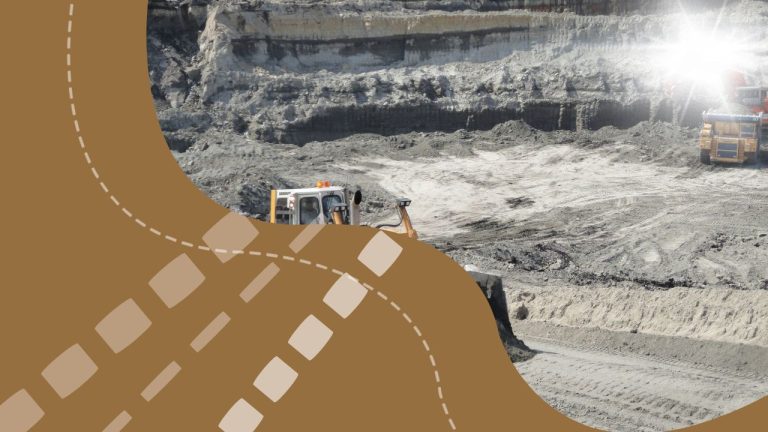
    Discussions centred on increasing coal output, strengthening competition within the sector, and improving the use of existing reserves. It was noted that during the 2025–2026 autumn-winter season, the country plans to extract 10 million tonnes of coal — 1.3 million tonnes more than last season. Production so far has reached 9 million tonnes, up by 590,000 tonnes year-on-year, with next season’s goal set at 11 million tonnes.

    Efforts will focus on faster development of deposits in the Tashkent and southern regions, expanding selective extraction, and engaging additional excavators and outsourced equipment. By supporting private entrepreneurs, authorities expect to produce an extra 2.5 million tonnes of coal in 2026.

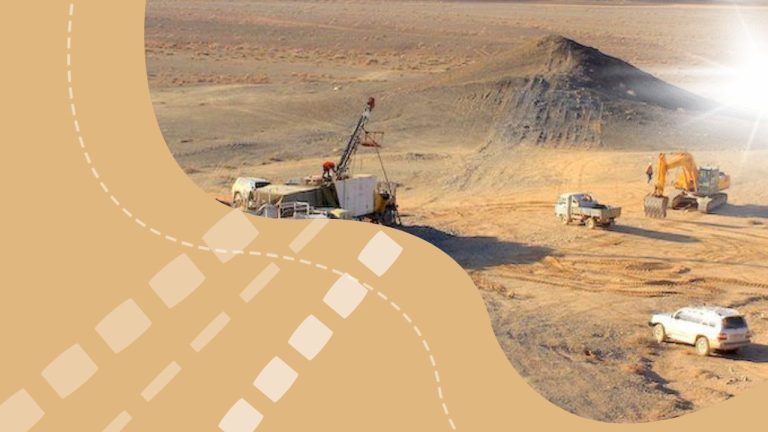
    Particular attention was given to the “Nishbosh” coal deposit in Angren, where a nearly $500 million investment project is set to begin production this year. With reserves of about 233 million tonnes, the site is expected to yield 1 million tonnes of coal in its first year and reach an annual output of 10 million tonnes. The project will also create around 880 permanent jobs.

    Separately, state company Uzkimyosanoat unveiled a $5 billion initiative to establish a new polymer production facility based on the chemical processing of coal. The plant will be capable of converting 8–9 million tonnes of coal into 1.18 million tonnes of polymer products annually.

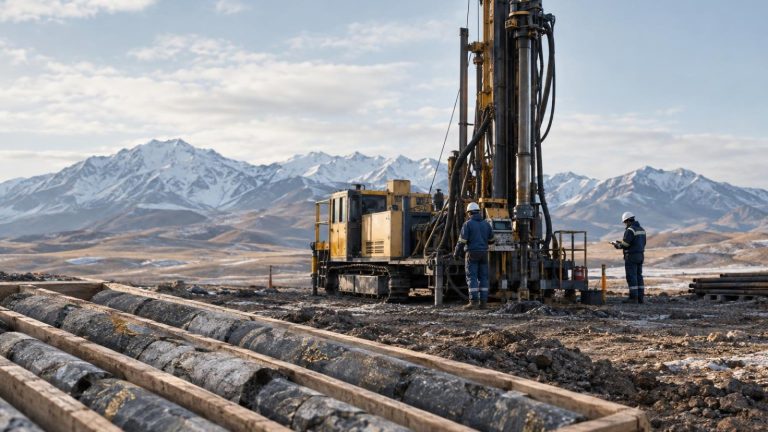
    In 2025, Uzbekistan produced 7,000 tonnes of uranium while confirmed reserves rose to 139,000 tonnes. This year, the government plans to start mining operations at four new deposits — ArnasayWestern KizilkukSouthern Jongeldi, and Eastern Agron. To accommodate rising output, additional uranium processing capacity will be developed, including stable supplies of sulphuric acid and technical sulphur.

  • Kazakhstan Sees Significant Growth in Coal Production and Industry Revenue in January

    Kazakhstan Sees Significant Growth in Coal Production and Industry Revenue in January

    Kazakhstan’s mining sector experienced a notable surge in January, with mineral extraction reaching 10.08 million tons, marking a 12.9% increase compared to the same period last year. According to the Bureau of National Statistics of Kazakhstan, coal production accounted for 9.7 million tons, reflecting a 14.7% year-on-year growth, while lignite extraction declined to 380,700 tons, an 18.8% dropfrom January 2023.

    The production of coal concentrate also showed positive trends, with 292,700 tons processed in the country’s enrichment plants during the first month of the year, a 4.7% increase compared to the previous year. In monetary terms, the industry’s output rose to 52.29 billion tenge, representing a 16.7% growth from 2023. This growth has significantly contributed to Kazakhstan’s industrial production index, which stood at 101.3% compared to January 2023.

    During a February meeting of the Ministry of Industry and Construction, industry stakeholders reviewed last year’s performance, outlined plans for 2025, and discussed preparations for the heating season. The domestic market currently requires 7.9 million tons of solid fuel, with 7.53 million tons already supplied. Additionally, coal reserves at storage facilities have increased to 476,000 tons.

    It is worth noting that industry players have previously expressed opposition to transitioning under the management of the Ministry of Energy.

  • Kazakhstan’s Modern Coal Power Plants May Require Trillions in Investments

    Kazakhstan’s Modern Coal Power Plants May Require Trillions in Investments

    Kazakhstan’s plans to construct modern coal-fired power plants could demand billions of dollars or trillions of tenge, according to Zhakyb Khairushev, Managing Director of the Atameken National Chamber of Entrepreneurs.

    Speaking with LS, Khairushev assessed President Kassym-Jomart Tokayev’s directive to build innovative coal power plants in the country. He emphasized that these efforts aim to bolster energy security, ensure sustainable development, and integrate advanced technologies.

    While these modern stations could enhance fuel efficiency and reduce emissions, they remain among the most carbon-intensive forms of electricity generation. According to Khairushev’s Telegram channel, Haırýshev energy, this complicates Kazakhstan’s ability to meet climate goals.

    Additionally, these projects could lead to higher electricity costs, factoring in environmental payments and renovation expenses. Given the global shift toward decarbonization, Khairushev stressed the importance of evaluating both the economic feasibility and environmental impact of such projects.

    The implementation of “green coal” technologies, including supercritical and ultra-supercritical (USC) steam systems with carbon capture, utilization, and storage (CCUS), could mitigate emissions. However, their construction is highly expensive. Initial investments in such advanced units could be 40-60% higher than traditional coal plants, with costs potentially reaching hundreds of millions or even billions of dollars for 500-1000 MW energy blocks.

    Operating costs would also rise due to emission control systems, as well as CO2 transport and storage under CCUS, making electricity 30-50% more expensive compared to standard coal plants. Khairushev noted that state support and preferential financing mechanisms would be crucial for economic viability.

    Replacing aging coal plants is a long-term process, taking 4-7 years per station and up to 20 years for full-scale replacement. However, Kazakhstan is already working on implementing USC technology at Ekibastuz GRES-2 and planning for GRES-3.

    To accelerate modernization, Kazakhstan must develop a national energy infrastructure plan, attract investors, and localize equipment production. If executed efficiently, the first modernized coal plants could be operational within 5-7 years, with full coal sector modernization projected by 2040.

    Khairushev highlighted the multiplier effect of clean coal projects, stimulating domestic engineering, attracting foreign technology partners, and creating regional jobs. The initiative could also reduce technological lag, foster local expertise, and strengthen Kazakhstan’s eco-technology market presence.

    International development institutions and private investors could be drawn to such high-potential projects, increasing access to long-term financing. Additionally, reducing power outages would stabilize industrial production, lowering maintenance costs and improving Kazakhstan’s global competitiveness.

  • Kazakhstan and Japan Expand Cooperation in Critical Minerals Sector

    Kazakhstan and Japan Expand Cooperation in Critical Minerals Sector

    Kazakhstan’s Minister of Industry and Construction, Kanat Sharlapayev, met with representatives from the Japan International Cooperation Agency (JICA) and the Japan Organization for Metals and Energy Security (JOGMEC) to discuss further collaboration in the critical minerals sector. The meeting, reported by El.kz with reference to the Ministry of Industry and Construction, focused on strengthening ties between the two countries in resource exploration and processing.

    JICA, a Japanese government agency specializing in technical assistance programs for developing nations, has been working with Kazakhstan since 2011. Through this partnership, Kazakhstan implemented the State Energy Register (SER), a key tool for monitoring and controlling energy consumption, based on Japanese expertise.

    JOGMEC, which integrates Japan’s former National Oil Corporation and Metal Mining Agency, has been actively involved in geological exploration and mineral extraction in Kazakhstan. In August 2024, the Ministry of Industry and Construction signed a Memorandum of Cooperation with JOGMEC, outlining joint efforts in mineral exploration, mining, and processing.

    During the meeting, both parties explored the possibility of launching new projects in the critical minerals sector, crucial for industrial production and the energy sector. Strengthening partnerships in rare earth metal extraction is expected to enhance Kazakhstan’s investment appeal and introduce advanced technologies in geological exploration.

  • U.S. Economic Security Hinges on Strategic Minerals from Central Asia and Beyond

    U.S. Economic Security Hinges on Strategic Minerals from Central Asia and Beyond

    The future of America’s economic and political security heavily depends on securing a stable supply of strategic minerals. These minerals are crucial for modern technologies, including smartphones, jet engines, and wind turbines. According to the World Economic Forum, strategic minerals are poised to become the “new oil” of the 21st century. The International Energy Agency predicts that demand for these minerals in the energy sector alone could triple by 2030.

    Currently, the People’s Republic of China (PRC) dominates this critical sector, controlling 60% of global productionand 85% of processing capacity. This dominance poses a significant risk to future U.S. access to these essential resources. To mitigate this risk, the United States is exploring the potential of Central Asia, the Caucasus, and Ukraineas sources for strategic minerals. These regions are rich in largely unexploited natural resources that could be key to reducing reliance on China.

    An aggressive pursuit of these resources could provide the United States with a secure supply of strategic minerals. Additionally, it would offer the broader Caspian region and Ukraine an opportunity for greater global market integration and economic sovereignty. By participating more meaningfully in the global strategic mineral supply chain, these regions could reduce their own dependence on Russia and China, thereby enhancing regional stability and economic growth.

  • Chinese Company Expresses Interest in Montenegro’s Berane Coal Mine

    Chinese Company Expresses Interest in Montenegro’s Berane Coal Mine

    An unnamed Chinese company has shown interest in purchasing the coal mine in Berane, a northeastern town in Montenegro, which has been inactive for several years, according to local media reports. Representatives from the Chinese firm have already visited Berane for discussions regarding the potential acquisition, though the current status of the negotiations remains unclear, as per broadcaster RTCG.

    Nikola Scekic, head of the mining company, stated, “It is about a serious company that has expressed interest in our mine. We hope that the further talks will result in a good decision.” The Berane coal mine, owned by Serbia-registered company Metalfer, halted production in March 2020 due to the COVID-19 pandemic. Additionally, the mine has been without electricity since November 2022 due to a power substation failure.

    In January, Montenegro’s energy ministry announced its goal to restart production at the mine, promising to conduct an economic analysis to determine the best approach. Restarting operations will require new investments and strategic partnerships, with the government needing to evaluate both existing and potential production capacities, energy minister Sasa Mujovic stated.

    At its peak, the Berane coal mine employed 150 workers and supported a supply chain of 20 smaller firms, as noted by RTCG.

  • KazMunayGas Invests 68 Billion Tenge in Oilfield Rehabilitation Projects

    KazMunayGas Invests 68 Billion Tenge in Oilfield Rehabilitation Projects

    KazMunayGas, the national oil company of Kazakhstan, has allocated 68 billion tenge towards the rehabilitation of two valuable oil and gas fields, Uzenskoye and Karamanbas. This update was provided by the company’s press center. The project, which began last year, is being implemented by Ozenmunaigas, a major oil enterprise and subsidiary of KazMunayGas.

    This year, the company’s leadership has approved a detailed task list and budget for the ongoing project. Of the total investment, 17 billion tenge was allocated last year, with an additional 51 billion tenge being added this year. The rehabilitation plan includes the deployment of over 200 Electric Submersible Pumps (ESPs), drilling 31 new wells, and undertaking extensive capital repairs of existing wells. Additionally, new methods to enhance oil recovery will be introduced, and a diagnostic and repair hall for underground equipment will be upgraded.

    So far, 23 new wells have already been commissioned, and over 100 have been equipped with modern technology. The project aims to increase oil production by 136,000 tons by the end of the current year, with an overall goal of extracting nearly 19 million tons of additional oil by 2036.

  • Serbia’s Minister of Energy and Mining Retains Position in New Government

    Serbia’s Minister of Energy and Mining Retains Position in New Government

    Minister of Energy and Mining, Dubravka Đedović Handanović, is set to continue her role under the new prime minister-designate, Miloš Vučević, who has also proposed to appoint Minister of Environmental Protection, Irena Vujović, as deputy prime minister, maintaining her current position.

    Following December’s general election, President Aleksandar Vučić designated Miloš Vučević, the head of the ruling Serbian Progressive Party (SNS), as the next prime minister. Vučević’s proposed cabinet includes retaining Dubravka Đedović Handanović and Irena Vujović in their respective ministerial roles, with Vujović additionally taking on the role of deputy prime minister.

    Previously serving as deputy prime minister and minister of defense under Prime Minister Ana Brnabić, Vučević brings extensive political experience, having served as the mayor of Novi Sad from 2012 to 2022.

    Đedović Handanović, who assumed office in October 2022, has overseen significant developments in Serbia’s energy sector, including the country’s inaugural renewable energy auctions and the legal restructuring of the state-owned power utility, Elektroprivreda Srbije (EPS).

    Serbia is currently in negotiations with Hyundai Engineering and UGT Renewables for a strategic partnership to construct a series of solar power plants totaling 1.2 GW in peak capacity, along with battery storage, to be transferred to EPS upon completion.

    Last week, Minister Đedović Handanović inaugurated a desulfurization system at TENT A, Serbia’s largest coal-fired power plant. She is also scheduled to speak at the upcoming Belgrade Energy Forum on May 13, organized by Balkan Green Energy News.

    With 18 years of experience in the international banking sector, Đedović Handanović brings a wealth of expertise to her ministerial role, having previously served on the Executive Board of NLB Komercijalna banka, focusing on corporate and investment banking.