Tag: energy costs

  • Ukraine Creates Working Group to Address Challenges at Ferrexpo’s Poltava Mining

    Ukraine Creates Working Group to Address Challenges at Ferrexpo’s Poltava Mining

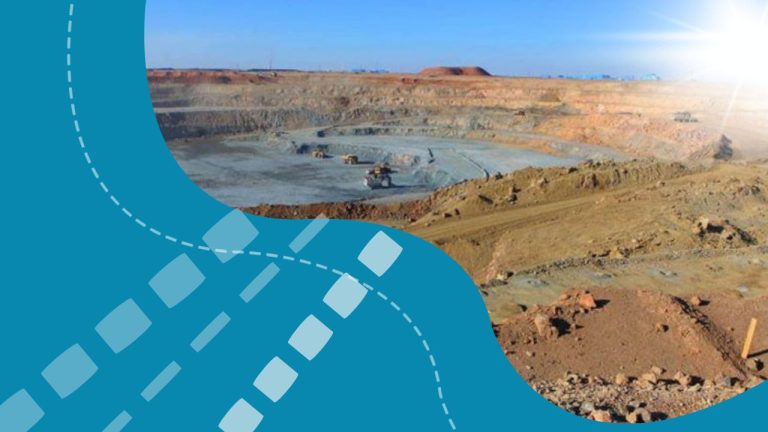
    Ukraine’s Verkhovna Rada Committee on Economic Development has established a working group to address key operational challenges facing mining companies, with the situation at the Poltava Mining and Processing Plant — part of the Ferrexpo group — becoming the first issue under review.

    According to Member of Parliament Oleksiy Movchan, the group held its initial meeting online with participation from representatives of the Ministry of Economy, the National Bank of Ukraine, the Ministry of Justice, the State Tax Service, industry associations, and management of the Poltava and Yeristovo mining and processing plants.

    Several major issues affecting the Poltava operation were discussed, including electricity shortages and high power costs, blocked VAT refunds, and outstanding foreign currency payments owed by the parent company.

    One of the most pressing challenges is the non-refund of value-added tax due to sanctions imposed on the company’s ultimate beneficiary, businessman Kostyantyn Zhevago.

    Dmytro Mospan, manager of legal support for financial activities at Poltava Mining and Processing Plant, said more than UAH 3 billion in VAT refunds remains blocked for the company.

    According to Mospan, the lack of access to these funds has forced the company to reduce the working week, cut social programmes, lower maintenance spending and scale back mining operations.

    The State Tax Service said the situation is governed strictly by the Tax Code of Ukraine. Under Article 200.4, VAT refunds cannot be issued to taxpayers whose ownership structure includes individuals under sanctions.

    Even in cases where courts have ruled in favour of the company, payments remain blocked. Funds are currently held by the State Treasury pending enforcement of court decisions but cannot be transferred due to provisions under Article 200.12 of the tax code.

    One court ruling alone has frozen approximately UAH 230 million related to the plant.

    The working group plans to further examine the company’s ownership structure at future meetings following additional reports from tax authorities.

    Energy supply is another major challenge for the enterprise. Company representatives said limited availability of electricity and high power prices are making operations increasingly unprofitable. However, officials noted that electricity costs are a broader issue affecting Ukraine’s entire mining and metallurgical sector.

    The matter is expected to be discussed further with the Ministry of Energy during upcoming sessions of the working group.

    Movchan also said Ferrexpo AG owes the Poltava operation more than $500 million in unpaid foreign currency proceeds.

    “This debt has been confirmed by international arbitration decisions and the figures have been verified by representatives of the National Bank,” he said.

    The issue will also be examined in subsequent meetings.

    Earlier this month, Ferrexpo announced it had restarted pellet production at the Poltava Mining and Processing Plant after suspending operations in January 2026. The restart was made possible by improvements in electricity supply and lower energy costs.

    According to GMK Center, Ukraine’s iron ore exports fell by 8% in 2025 compared with the previous year, totaling 30.99 million tonnes. In January–February 2026 exports declined even further, dropping 40.9% year-on-year to 3.31 million tonnes, the lowest level recorded since 2023.

  • Pensana Scraps £250m Rare Earth Refinery in Hull, Shifts Operations to the US

    Pensana Scraps £250m Rare Earth Refinery in Hull, Shifts Operations to the US

    Britain’s ambitions to become a critical minerals powerhouse have suffered a major setback after Pensana Plc abandoned its £250 million rare earth refinery project near Hull, opting instead to relocate operations to the United States, Sky News reported.

    The proposed refinery at Saltend Chemicals Park was intended to process rare earth elements for use in electric vehicle motors and wind turbine magnets, creating 126 jobs and serving as the centerpiece of the UK’s 2022 Critical Minerals Strategy. The project had been promised millions in government funding — funding that was never disbursed as construction failed to begin.

    Pensana’s chairman, Paul Atherley, said the move was driven by the Trump administration’s decision to guarantee purchases of rare earths from the US Mountain Pass mine at fixed prices — a level of state support he said Europe and the UK have failed to match.

    “That’s repriced the market — and Washington is looking to do more of these deals, moving at an absolute rate of knots,” Atherley said. “Europe and the UK have been talking about critical minerals for ages. But when the Americans do it, they go big and hard, and make it happen. We don’t; we mostly just talk about it.”

    The decision comes amid heightened geopolitical tensions and growing global competition for rare earth supply chains, as China — which produces about 90% of the world’s refined rare earth metals — tightens export restrictions. The announcement follows Beijing’s latest export curbs, which prompted President Donald Trump to threaten 100% tariffs on Chinese goods.

    The Hull refinery was once touted as a flagship project for the UK’s green industrial transition. During the project’s 2022 groundbreaking, then–Business Secretary Kwasi Kwarteng described it as “the only facility of its kind in Europe,” promising it would “secure Britain’s supply resilience.”

    However, Atherley said rare earth processing remains too complex, energy-intensive, and costly to be commercially viable in the UK, citing record-high industrial energy prices as a key obstacle.

    Pensana continues to pursue lithium refining plans in Teesside through its related venture Tees Valley Lithium, which Atherley described as more feasible given current economics.

    The move deals another blow to Britain’s chemicals and materials sector, already struggling with high energy costs and recent shutdowns, including the closure of Vivergo, a biofuels refinery located in the same industrial park.

    A Department for Business and Trade spokesperson called the decision “disappointing” but acknowledged it was a commercial matter for Pensana.

    “We will publish a new Critical Minerals Strategy soon to help secure our supply chains for the long term, and we’re reducing industrial electricity costs as part of our modern Industrial Strategy,” the department said.