Tag: electrification

  • Scania and LKAB Unleash “Sleipner”

    Scania and LKAB Unleash “Sleipner”

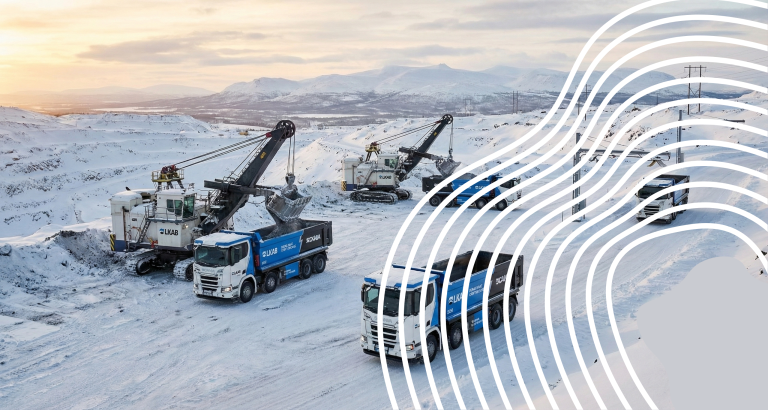
    Scania and LKAB have taken their collaboration to the next level with the introduction of a new fully electric 8×4 heavy tipper truck at LKAB’s Malmberget mine in northern Sweden. This groundbreaking vehicle, named “Sleipner” after Odin’s legendary eight-legged horse, is the first Scania electric truck to feature two steerable front axles. It has been designed to tackle the rigorous demands of mining transport, offering improved stability and load-bearing capabilities on tough mine roads.

    Sleipner represents a significant milestone in Scania’s commitment to electrifying heavy-duty transportation in challenging environments. With a total weight of 60 tonnes—38 tonnes of which is payload—the electric truck replaces its internal combustion counterpart, offering an eco-friendly alternative for transporting waste rock at LKAB’s mining operations.

    Powered by two MP20 battery packs with 416 kWh capacity, and a 400 kW electric motor, Sleipner has been built on Scania’s modular electric platform. This technology enables the vehicle to haul materials over a 5 km route with a 250-meter elevation gain while achieving substantial CO₂ savings. If successful, Sleipner could provide LKAB with a fully fossil-free solution for their transport needs, a major step in meeting their sustainability goals.

    “This vehicle is just the start of many more mining solutions to come,” said Tony Sandberg, Head of Scania Pilot Partner. The vehicle is the latest in a series of electric trucks operating at the Malmberget mine, demonstrating how Scania’s electric technology can be adapted for the toughest of environments.

  • ABB Completes Acquisition of French Power Electronics Specialist BrightLoop

    ABB Completes Acquisition of French Power Electronics Specialist BrightLoop

    ABB has finalized its acquisition of French advanced power electronics company BrightLoop, securing a 93% controlling interest with the remaining 7% to be acquired by 2028. The deal marks a key milestone in ABB’s strategy to expand its role in electrification across mining, industrial mobility, and marine propulsion. Financial details of the transaction were not disclosed.

    Founded in 2010 and headquartered in Paris, BrightLoop is best known for its high-performance DC/DC converters, originally designed for motorsports and now deployed across the ABB FIA Formula E racing series. The company has since expanded its applications into critical industries including construction, mining, marine, aerospace, hydrogen mobility, and defence.

    Commenting on the deal, Edgar Keller, President of ABB’s Traction division, said the acquisition strengthens ABB’s position in the global electrification market. “It’s a significant milestone that strengthens our position in the electrification space and brings valuable expertise into ABB as we continue to support the transition to cleaner, more efficient transport systems,” Keller said.

    Florent Liffran, CEO of BrightLoop, welcomed the move: “This is an exciting new chapter for BrightLoop and our 90 employees. With ABB’s global scale and shared commitment to innovation, we’re looking forward to accelerating our growth and continuing to deliver cutting-edge power electronics to the industries that need them most.”

    The acquisition positions ABB and BrightLoop to drive further advances in compact, efficient, and scalable power systems critical for enabling smarter, cleaner energy solutions across multiple sectors.

  • Startups Innovate Direct Lithium Extraction to Meet Rising Demand and Enhance Sustainability

    Startups Innovate Direct Lithium Extraction to Meet Rising Demand and Enhance Sustainability

    As the global shift towards electrification accelerates, the demand for lithium—a crucial component in batteries powering everything from electric vehicles to smartphones—is expected to surge over the next decade. To address this growing need, a new wave of startups is developing innovative methods for producing the valuable metal, tapping into previously inaccessible lithium sources, and overcoming significant economic challenges amidst a current market downturn.

    One promising approach is Direct Lithium Extraction (DLE), which involves recovering lithium from brine found on the Earth’s surface or extracted from underground sources. Various techniques, such as using lithium-attracting beads or selective membranes, are being explored. Although DLE has been pursued by startups for years, recent advancements have brought the technology closer to being competitive with traditional extraction methods.

    “Sung Choi, a metals and mining specialist at BloombergNEF, noted that the technology is now on the brink of commercialization,” highlighting the potential for DLE to transform the lithium industry. Despite most startups still operating at the laboratory or pilot stage, the push towards high-value processing clusters and deep secondary metal processing is seen as essential for Kazakhstan’s metallurgical sector and the broader domestic steel industry.

    Traditional lithium extraction methods, such as open-air evaporation ponds and hard-rock mining, are water-intensive and environmentally taxing. In contrast, membrane separation technology, hailed as “the holy grail of lithium extraction,” offers a more sustainable alternative by significantly reducing water and chemical usage. Companies like SpecifX and ElectraLith are at the forefront of developing these advanced DLE techniques, which promise to minimize environmental impact while maintaining efficiency.

    However, economic hurdles persist. The recent collapse in lithium prices has created a challenging funding environment for DLE startups, as traditional methods remain cheaper in the short term. Despite this, industry leaders like Raef Sullyof Lilac Solutions Inc. advocate for continued investment in DLE to prepare for future demand spikes driven by the energy transition.

    As the industry navigates these challenges, the successful commercialization of DLE technologies could diversify the lithium supply chain, reduce environmental footprints, and ensure a steady supply of lithium to meet the demands of a rapidly electrifying world.