Tag: EIT RawMaterials

  • EIT RawMaterials Proposes Strategic Model for European Critical Raw Materials Centre

    EIT RawMaterials Proposes Strategic Model for European Critical Raw Materials Centre

    The European Commission’s recent decision to establish a European Critical Raw Materials (CRM) Centre marks a significant step towards enhancing Europe’s raw materials policy framework and transforming it into industrial capability. EIT RawMaterials has expressed strong support for this initiative and is poised to take a leading operational role in its implementation, working under the strategic authority of the European Commission and Member States.

    In a newly published position paper, EIT RawMaterials outlines its vision for the CRM Centre, detailing how it can assist in translating Europe’s raw materials strategy into tangible industrial outcomes. The paper proposes a practical operating and delivery model for the CRM Centre, positioning EIT RawMaterials as a strategic partner and market-facing operational arm.

    Europe has already laid much of the necessary policy groundwork, with initiatives such as the Raw Materials Mechanism, CRMA Strategic Projects, RESourceEU, and the G7 Critical Minerals Action Plan amplifying the urgency for coordinated implementation. EIT RawMaterials emphasises that the CRM Centre should not merely add another layer of policy or data but should instead connect strategic intelligence with markets, projects, and finance. This connection is essential for executing European priorities into concrete industrial actions.

    The proposed model is structured around four interconnected pillars: strategic intelligence, market formation, strategic value-chain delivery, and stage-gated finance and de-risking. Strategic intelligence will focus on combining market, project, technology, and geopolitical insights to identify vulnerabilities and set action priorities. Market formation aims to qualify supply and demand, aggregate buyer requirements, and develop independent price references to encourage investment. Strategic value-chain delivery seeks to address the ‘missing middle’ in Europe’s processing and refining capabilities, while stage-gated finance will align project stages with appropriate funding mechanisms.

    Additionally, strategic stockpiling and preparedness are highlighted as crucial components that would enhance Europe’s resilience against disruptions and foster more robust supply chains in the long term. EIT RawMaterials already possesses a solid foundation for delivery, with its Metal & Mineral Platform M2i integrating over 2.5 million verified data points for informed decision-making. The investment pipeline managed by EIT RawMaterials exceeds €25 billion, and the organisation has successfully deployed more than €700 million across over 800 projects and startups, mobilising an additional €8.3 billion in investment.

    With these existing capabilities, Europe is not starting from scratch in building a new delivery ecosystem. EIT RawMaterials is prepared to facilitate a swift transition from strategy to implementation for the CRM Centre, should it receive the mandate from the European Commission and Member States.


  • Europe Must Treat Smelting as a National Security Asset and Move 60 Strategic Projects From Paper to Production, Industry Leaders Warn

    Europe Must Treat Smelting as a National Security Asset and Move 60 Strategic Projects From Paper to Production, Industry Leaders Warn

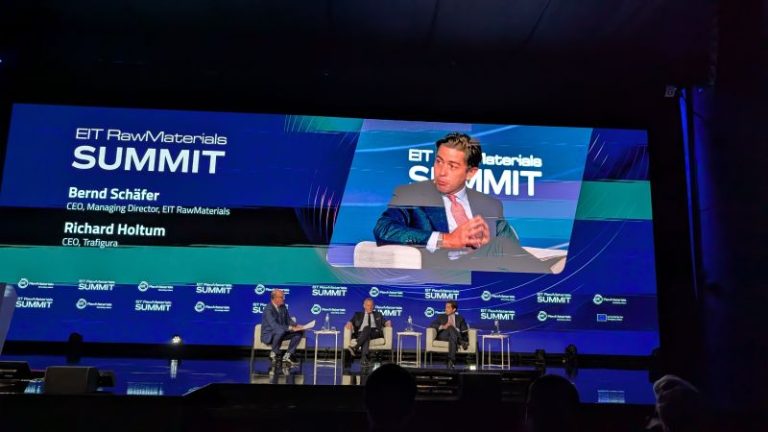
    Europe has built the regulatory architecture for critical minerals security — now it must actually build the infrastructure. That was the central message from a RawMaterials Summit session featuring EIT RawMaterials CEO Bernd Schäfer and Trafigura CEO Richard Holtum, who argued that the continent’s critical minerals strategy is approaching a decisive moment in which continued policy discussion without project delivery will itself become a strategic failure.

    The sharpest reframing offered at the session concerned smelting. Industry leaders argued that midstream processing capacity — smelting, refining, separation — should now be regarded as a pillar of national security comparable to defence capability, not as a commercial infrastructure question to be resolved by market forces. Relying on foreign powers for processing is no longer sustainable, the discussion concluded, and maintaining existing European capacity on what was described as “life support” is insufficient without a funded, long-term plan covering both capital and operating expenditure.

    The discussion pushed back against a tendency to evaluate critical minerals investment through the lens of short-term cost. The true metric, participants argued, is the cost of inaction — the economic and strategic price of failing to build domestic value chains. The American model of socialising capital expenditure to secure strategic advantages was cited as a template Europe needs to study and selectively adopt, prioritising long-term necessity over short-term price volatility.

    On execution, the session drew a clear line between the regulatory phase — now largely complete through instruments such as the Critical Raw Materials Act and various industrial accelerators — and the delivery phase that must define the coming year. A pipeline of more than 60 strategic projects has been identified and designated. The priority is now to move those projects beyond memoranda of understanding and into operational reality. The CRMA’s single-point-of-contact mechanism for strategic projects was identified as a genuine competitive advantage, with continued regulatory harmonisation needed to create the stable and predictable investment environment that long-term capital deployment requires.

    On international partnerships, the conversation reflected an evolution in European strategy beyond simple resource extraction agreements. The current emphasis is on creating local value in partner countries through infrastructure support, energy access, professional training and job creation — an approach framed as essential not only for ethical reasons but for the practical goal of building supply relationships durable enough to underpin multi-decade industrial planning.

  • Greenland Resources Secures €500,000 EU-Backed Funding to Advance Magnesium Extraction at Malmbjerg Project

    Greenland Resources Secures €500,000 EU-Backed Funding to Advance Magnesium Extraction at Malmbjerg Project

    Greenland Resources Inc. has entered into a Financial Sustainability Agreement with EIT RawMaterials GmbH, securing €500,000 in EU-backed funding to advance innovative magnesium extraction at its Malmbjerg molybdenum project in Greenland. The funding, provided through Horizon Europe, will support testing of magnesium recovery from saline process water—an initiative aligned with the EU’s Critical Raw Materials Act, as magnesium remains one of Europe’s most import-reliant minerals.

    The company also plans a non-brokered private placement of up to 112,122 common shares at $1.65 each, raising approximately $185,000. The offering, pending Cboe approval, is expected to close around November 20, 2025. Greenland Resources has applied for additional Horizon Europe–supported programs, aiming to cover a substantial portion of the project’s equity capex.

    Under the agreement, EIT RawMaterials will invest through Greenland Resources’ subsidiary in Greenland, with securities convertible into company shares via put and call options exercisable within six months. At least €375,000 of the funding will be advanced immediately, with the remainder contingent upon final project reporting and approval.

    The Initial Conversion, tied to the offering’s expected closing date, would see EIT RawMaterials receive up to 493,939 shares at $1.65, depending on the final amount of Initial Funds disbursed. Any later conversion of Remaining Funds would be priced at the 20-day volume-weighted average, subject to a minimum of $1.65 per share.

    EIT RawMaterials CEO Bernd Schäfer emphasized Europe’s pressing need to secure magnesium supplies, noting that China currently produces nearly all of the EU’s consumption. He said the investment supports innovative, low-carbon production pathways vital for European industry and defence sectors.

    Greenland Resources Executive Chairman Ruben Shiffman said the funding sets an important precedent for future EU strategic investments, demonstrating that public European financing can be deployed through the company’s Greenland subsidiary and converted into its Canadian-listed parent entity.

    The Malmbjerg project, which received a 30-year exploitation licence in June 2025, contains both molybdenum and magnesium. The project’s design focuses on low environmental impact, with high-grade molybdenum expected to supply up to 25% of the EU’s annual consumption and fully meet its defence needs during the first decade of production. Magnesium recovery from saline water is being incorporated into updated feasibility economics.

    With China dominating global production of both molybdenum and magnesium, the EU views long-term supply diversification as essential. The Malmbjerg project, supported by the European Raw Materials Alliance, is positioned as a key strategic source for Europe’s green, industrial, and defence sectors.

  • EIT RawMaterials Invests in Greenland Resources to Boost Europe’s Magnesium Supply and Reduce Dependence on China

    EIT RawMaterials Invests in Greenland Resources to Boost Europe’s Magnesium Supply and Reduce Dependence on China

    EIT RawMaterials GmbH has announced a €0.5 million equity investment in Greenland Resources A/S, a wholly owned subsidiary of Greenland Resources Inc. and developer of the Malmbjerg molybdenum project in central-east Greenland. The initiative aims to accelerate the recovery of magnesium—currently being evaluated as a potential by-product—from both process water and primary ore, strengthening Europe’s resource security amid growing concerns over supply concentration.

    China currently supplies around 95%–97% of Europe’s magnesium imports, posing a major vulnerability for industrial sectors reliant on the metal. Magnesium is a critical alloying element in aluminum production and plays an essential role in lightweight mobility, defence applications, and modern manufacturing.

    Supported by the EU-backed European Institute of Innovation and Technology (EIT), EIT RawMaterials has collaborated with Greenland Resources from the outset to develop sustainable European molybdenum production. The new financing, provided under the Horizon Europe framework, will enable testing and scaling of low-emission technologies to extract magnesium from saline process water generated during molybdenum operations. Additional investment from existing Greenland Resources shareholders will focus on recovering magnesium directly from primary ore.

    Bernd Schäfer, CEO and Managing Director of EIT RawMaterials, emphasized the strategic importance of the effort. “Magnesium is mission-critical for Europe’s competitiveness — from lightweight mobility to defence — and yet the EU depends on China for nearly all its supply,” he said. He noted that the initiative addresses risks to key industries such as aluminum manufacturing, where magnesium is indispensable, and aligns with EU efforts to expand access to critical raw materials while reducing carbon intensity.

    The investment supports the objectives of the EU’s Critical Raw Materials Act (CRMA), which targets diversification and increased security of critical material supplies by 2030. Magnesium is officially classified as both a critical and strategic raw material, making projects that expand domestic or allied production a clear priority for the EU.

    By advancing technologies to recover magnesium from both process water and ore, the project aims to add new, lower-carbon supply streams to Europe’s raw materials portfolio. It complements the EU’s broader CRMA Strategic Projects and fits within EIT RawMaterials’ mission to mobilize investment and innovation across the raw materials value chain.

    Greenland Resources secured a 30-year exploitation licence for molybdenum and magnesium in June 2025, creating a robust permitting framework for the development pathway that this investment supports.

  • EU Urged to Create €10 Billion Fund for Critical Raw Materials

    EU Urged to Create €10 Billion Fund for Critical Raw Materials

    The European Union must establish funds exceeding €10 billion ($11.4 billion) to drive investment in the exploration, mining, and recycling of critical raw materials, according to Bernd Schaefer, CEO of EIT RawMaterials, an EU-funded agency for key minerals.

    The EU has set ambitious 2030 targets for 34 critical minerals, including lithium and copper, which are vital for its green transition. These goals aim for 10% of annual demand to be met through domestic mining, 25% through recycling, and 40% through local processing. Furthermore, no single third country should supply more than 65% of any given mineral—a threshold the EU currently surpasses with China for many materials.

    To reach these targets, Schaefer emphasized the necessity of dedicating part of the bloc’s next seven-year budget from 2028 towards mining and recycling initiatives. “It should probably start with at least a billion or 2 billion euros and have the potential to grow considerably,” Schaefer told Reuters.

    Additionally, Schaefer called for the creation of a €10 billion exploration fund to identify minerals within the EU, which, when combined with private investments, could reach around €100 billion. He stressed the importance of evaluating future consumption and supply for each mineral while converting alliances with international partners into tangible volumes amid rising geopolitical tensions.

    “The Americans are very much hands-on in getting things down the road,” Schaefer said, urging Europe to take decisive action.

    Schaefer also pointed out that Europe’s increased defense spending, a factor not considered when setting its raw material targets, would further heighten demand for minerals such as vanadium, titanium, molybdenum, and chromium. He noted that while the required volumes are not massive, the urgency and sensitivity surrounding their sourcing have intensified, surpassing even that for energy and mobility raw materials.

  • Transforming Raw Materials into Strategic Strength: EIT Raw Materials Advocates for Bold Action in FP10

    Transforming Raw Materials into Strategic Strength: EIT Raw Materials Advocates for Bold Action in FP10

    Berlin, Germany – EIT RawMaterials, a leading knowledge and innovation community, has issued a compelling call for Europe to transform its raw materials sector into a cornerstone of strategic strength. The organisation has outlined key recommendations for the upcoming Framework Programme 10 (FP10), urging the European Union to invest €4 billion to secure its raw materials future.

    The Challenge: Dependency on Imports

    Europe’s heavy reliance on imported critical and strategic raw materials (CRMs and SRMs) poses significant risks to its green and digital transformation goals. With nearly 100% dependence on external sources for key materials like lithium, magnesium, and rare earth elements, the EU is vulnerable to global supply chain disruptions.

    The Solution: Innovation and Resilience

    EIT RawMaterials proposes a multifaceted strategy to reduce dependency and build resilience:

    • Domestic Production: Increase mining to supply 10% of Europe’s CRM needs.
    • Advanced Processing: Expand processing capacity to 40%.
    • Circular Economy: Reclaim 25% of CRMs through recycling.
    • Global Diversification: Limit reliance on single-country sources to 65%.

    Strategic Investments

    To meet these ambitious targets, the organisation recommends focusing on:

    1. Disruptive Technologies: Develop cutting-edge solutions like Direct Lithium Extraction and advanced recycling.
    2. Circular Economy: Scale up industrial symbiosis and recycling initiatives to retain valuable materials.
    3. Public-Private Partnerships: Allocate €1 billion to foster collaboration between industry and academia.
    4. Workforce Development: Train 1.2 million workers by 2030 to address the sector’s growing demands.

    A Sustainable Future

    EIT RawMaterials emphasizes the transformative potential of the raw materials sector, predicting a €2 trillion economic impact and the creation of 32 million jobs by 2030. Their initiatives also align with the EU’s Critical Raw Materials Act, which sets ambitious targets for mining, processing, and recycling by the end of the decade.

    Leading Innovation

    Since its inception, EIT RawMaterials has mobilized €600 million in funding and unlocked €3.6 billion for research and innovation. Its initiatives have fostered a thriving ecosystem of over 300 partners and 750 alliance members, driving sustainable solutions and workforce development across Europe.

    “The time to act is now,” said a spokesperson from EIT RawMaterials. “With bold investments and strategic collaborations, Europe can secure its industrial competitiveness, lead the global green transition, and build a resilient future.”

  • EIT RawMaterials Invests €0.5 Million in Novana’s Vanadium Recovery Project

    EIT RawMaterials Invests €0.5 Million in Novana’s Vanadium Recovery Project

    Berlin, 15 October 2024: EIT RawMaterials has announced a €0.5 million seed investment in Novana, a Finland-based subsidiary of Neometals, to advance the Vanadium Recovery Project (VRP1) in Pori, Finland. Novana utilizes innovative circular technology to produce high-purity vanadium pentoxide (V2O5) from steelmaking slag, while also consuming CO2, thus reducing environmental impact compared to traditional methods.

    This initial funding aims to spur the project’s growth by securing additional financing. EIT RawMaterials is assisting Novana in raising €400 million in equity and debt to fully develop the project.

    Strategic Importance of Vanadium for Europe

    Europe heavily relies on imports for vanadium, a critical raw material essential for high-strength steel alloys and emerging technologies like Vanadium Flow Batteries (VFBs). With this seed investment, VRP1 is set to become Europe’s first domestic producer of Vanadium Pentoxide (V2O5), expected to produce 9,000 tonnes annually, covering over 40% of Europe’s current demand. The project will also cut up to 1.5 million tonnes of CO2 over the next decade, aiding Europe’s green transition.

    Catalyzing Further Growth

    Beyond the €0.5 million seed investment, EIT RawMaterials is helping Novana secure the remaining €400 million needed for the project’s completion. This will be achieved through a mix of debt and equity financing, managed by SEB and Aventum. The European Investment Bank (EIB) has conditionally approved debt financing, recognizing the project’s strategic importance for Europe’s resource independence.

    EIT RawMaterials’ investment grants them a 1.1% stake in Novana, with an option to invest an additional €10 million in equity later, contingent on project milestones. With all key permits, a take-or-pay offtake agreement, and advanced slag supply discussions in place, the project is well-positioned to attract significant financial commitments from both private and public sectors.

    Championing Circular Economy Innovation

    This investment underscores EIT RawMaterials’ dedication to fostering growth and innovation in Europe’s raw materials sector. Bernd Schäfer, CEO of EIT RawMaterials, stated: “This €0.5 million seed investment is intended to support Novana in laying the groundwork for further project growth. Novana exemplifies how innovative technologies can unlock critical materials from waste, reduce Europe’s import dependency, and contribute to a circular and sustainable economy.”

    Novana’s Vision as Europe’s First Domestic Vanadium Producer

    Johanna Lamminen, CEO of Novana, expressed: “We are thrilled to have partnered with EIT RawMaterials to advance our circular economy vanadium recovery project. We look forward to securing the necessary funding and commencing construction, with strong support from the Finnish State and the EU, to become Europe’s first domestic producer of zero-carbon high-purity vanadium, essential for high-strength steel, aerospace titanium alloys, and stationary energy storage batteries.”

  • EU Urged to Establish Independent Pricing for Critical Minerals

    EU Urged to Establish Independent Pricing for Critical Minerals

    The head of an EU-funded group has called for a European system to set prices for critical minerals essential for the energy transition, independent of China’s influence. Bernd Schaefer, CEO of EIT RawMaterials, emphasized the need for a pricing mechanism that reflects the supply and demand within Europe, rather than being susceptible to China’s market decisions.

    Western start-ups are struggling with oversupply and weak prices of materials like lithium, cobalt, and rare earths, which are impacting their cash flows and ability to compete with China. “Europe should have a critical materials platform that has a price-building mechanism that reflects the supply and demand situation in Europe,” Schaefer told Reuters at the World Materials Forum in Paris.

    Schaefer also advocated for the creation of an exploration fund to enhance the mining of critical minerals in Europe, suggesting a substantial investment, “This should not be just a couple of million (euros), it should be a billion, it must be a big number.”

    EIT RawMaterials, an alliance of over 300 companies and academics, is instrumental in executing the EU plan to secure raw materials necessary to achieve net zero greenhouse gas emissions by 2050. The EU Critical Raw Materials Act, effective since May, sets ambitious targets for the mining, recycling, and processing of minerals like lithium and copper by 2030.

    Schaefer warned that political uncertainty could hinder progress towards these targets, citing recent elections in France, the European Parliament, and instability in Germany. “This discussion is in limbo. We are in a period of transition within the Commission and within Europe,” he noted. “We might be losing time, but we cannot afford to lose time.”

    As a neutral, non-political entity, EIT RawMaterials could play a pivotal role in driving the necessary changes, Schaefer added.

  • EIT RawMaterials’ vision for sustainable resource management in Europe’s green evolution

    EIT RawMaterials’ vision for sustainable resource management in Europe’s green evolution

    EIT RawMaterials is actively engaged in collaborating with policymakers and industry stakeholders to drive innovation, shape policies, and develop a roadmap for Europe’s critical materials sector to achieve sustainability goals. As Europe works towards its 2050 climate neutrality objective, ensuring access to critical raw materials becomes crucial for powering key green technologies such as solar panels, wind turbines, and electric vehicles.

    Europe’s heavy reliance on a limited number of countries, including China, for these essential materials poses risks due to dependency on vulnerable and opaque supply chains. EIT RawMaterials, recognized as a leading innovation community in the global raw materials sector, is committed to supporting Europe’s transition to a sustainable economy by ensuring a steady supply of raw materials, promoting circular economy principles, and fostering innovation, education, and entrepreneurship.

    As the manager of the European Raw Materials Alliance (ERMA), which consists of over 750 European and international partners, EIT RawMaterials is focused on enhancing the sustainable competitiveness of the European raw materials sector across the value chain. ERMA plays a vital role in securing financing to bolster Europe’s competitiveness in the global supply chain.

    Through collaborative efforts with industry partners, ERMA has launched two Action Plans targeting specific market fields. The Rare Earth Magnets and Motors Action Plan, initiated in 2021, has already generated 14 de-risked and bankable projects, expected to meet approximately 20% of Europe’s permanent magnets requirements by 2030. Another recent initiative, “The European Call for Action on Energy Storage and Conversion,” launched in May 2023, aims to bolster Europe’s position in the energy storage and conversion sector.

    This action plan acknowledges the growing significance of energy storage and conversion in light of increasing adoption of green technologies and emphasizes the need for significant quantities of raw materials. It outlines investment requirements to ensure a stable supply chain and focuses on key areas such as materials for solar energy, battery materials, fuel cells, electrolysers, and alternative energy storage and conversion methods.

    The roadmap presents comprehensive strategies covering the entire mineral value chain, from exploration to processing, identifying investment opportunities exceeding €15 billion. This strategic approach could enhance the EU’s self-sufficiency in critical materials by 2030.

    Aligned with EU policy initiatives, the roadmap proposes measures to enhance the competitiveness of the European raw materials sector, including standardization, fit-for-purpose mining standards, and a balanced approach to trade measures.

    A notable aspect of the roadmap is its emphasis on expanding mining operations within Europe while upholding stringent environmental, social, and governance (ESG) standards. It suggests establishing a European Raw Materials Fund to support projects across all phases, funded through EU and member state policies.

    Innovation is pivotal in transforming the mining industry, and EIT RawMaterials actively supports this through collaborations with industry leaders. The organization backs projects focused on safety improvements, technological advancements, and sustainable solutions, such as recycling initiatives for Li-ion batteries and advancements in battery technology for electric vehicles.

    With the approval of the Critical Raw Materials Act, Europe aims to recycle at least 25% of its annual raw materials consumption domestically. EIT RawMaterials contributes to this goal through projects like ReLieVe and Charamba, focusing on closed-loop industrial processes and efficient waste stream management.

    Addressing challenges related to specific critical raw materials like Vanadium and Gallium, EIT RawMaterials supports projects for their recovery as by-products and innovations to enhance battery technology.

    Overall, EIT RawMaterials plays a pivotal role in driving sustainable practices, innovation, and resilience in Europe’s critical materials sector, contributing to the region’s transition towards a greener and more sustainable future.