Tag: education

  • UK-Kazakhstan Strategic Partnership: A New Era of Economic Cooperation

    UK-Kazakhstan Strategic Partnership: A New Era of Economic Cooperation

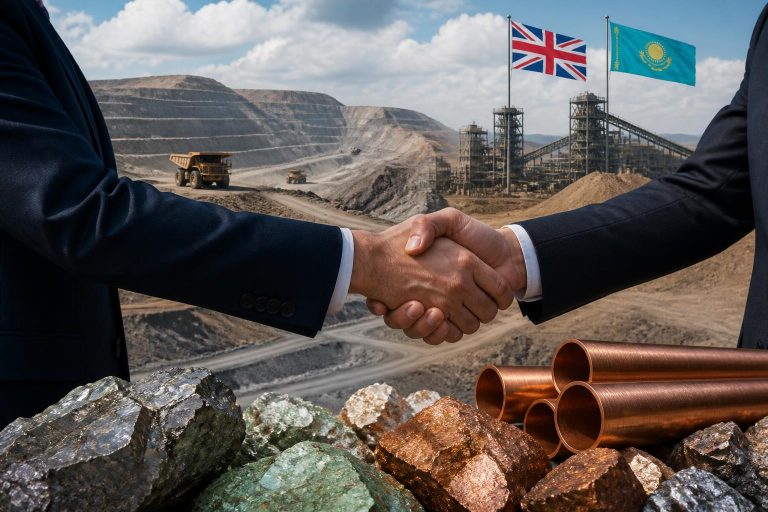
    The recent entry into force of the Strategic Partnership and Cooperation Agreement (SPCA) between the United Kingdom and Kazakhstan marks a significant evolution in their bilateral relationship. This agreement, which was formalised in July 2026, is not merely a diplomatic formality but rather a strategic framework designed to enhance collaboration across various sectors, including critical minerals, energy, education, and technology. British Ambassador to Kazakhstan, Sally Axworthy, emphasised that the SPCA is a ‘signal of intent’ that positions the UK as a proactive partner ready to engage in meaningful investments and initiatives in Kazakhstan.

    Kazakhstan’s rich mineral resources and its growing role in Eurasian connectivity make it a focal point in the global race for critical minerals. The SPCA aims to transition the dialogue from mere resource extraction to value creation, highlighting the importance of processing and technological advancement. Recent projects, such as a $107 million agreement for rhenium recycling, illustrate this shift towards industrial cooperation, where both countries can leverage their strengths to create higher-value products rather than simply exporting raw materials.

    Moreover, the partnership extends beyond economic dimensions, with education playing a crucial role in fostering long-term ties. The Bolashak Scholarship programme has facilitated the education of thousands of Kazakh students in the UK, and British universities are increasingly establishing campuses in Kazakhstan. This educational exchange not only builds human capital but also aligns with the broader economic strategy of enhancing skills and technology transfer. As both nations look to solidify their partnership, the SPCA could serve as a pivotal foundation for a more mature and resilient economic relationship, contingent on the successful implementation of collaborative projects and initiatives.


  • Uzbekistan and KAIST Explore Collaborative Opportunities in Metallurgy and Education

    Uzbekistan and KAIST Explore Collaborative Opportunities in Metallurgy and Education

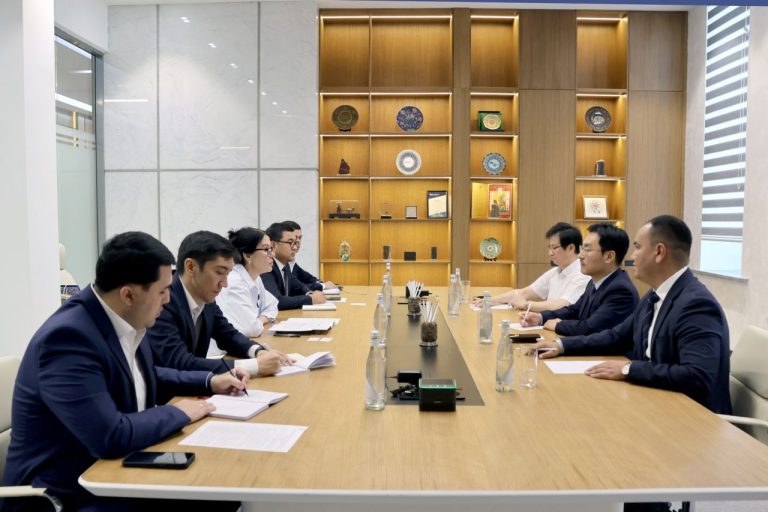
    On 31 July 2026, F. Khamidova, the First Deputy Minister of Mining Industry and Geology of Uzbekistan, met with a delegation from the Korea Advanced Institute of Science and Technology (KAIST), led by Professor Shin Byungha, the Head of the Department of Materials Science and Engineering. The meeting focused on the potential for expanding scientific, technological, and academic cooperation between Uzbekistan and South Korea, particularly in the metallurgical sector.

    The discussions highlighted the importance of implementing joint projects aimed at enhancing mineral processing technologies and fostering collaborative research initiatives. Both parties recognised the need for innovation in the mining and metallurgy sectors, which are crucial for Uzbekistan’s economic development. The meeting also underscored the significance of academic exchange programmes and the training of highly qualified specialists, which are essential for building a skilled workforce capable of advancing the industry.

    As a result of the meeting, Uzbekistan and KAIST agreed to continue developing joint initiatives and prepare proposals to further strengthen their bilateral cooperation in science, education, and technology. This partnership is expected to contribute significantly to the advancement of Uzbekistan’s mining industry and enhance the capabilities of its educational institutions.


  • Uzbekistan and KAIST Explore Collaborative Opportunities in Metallurgy and Education

    Uzbekistan and KAIST Explore Collaborative Opportunities in Metallurgy and Education

    On 31 July 2026, F. Khamidova, the First Deputy Minister of Mining Industry and Geology of Uzbekistan, met with a delegation from the Korea Advanced Institute of Science and Technology (KAIST), led by Professor Shin Byungha, the Head of the Department of Materials Science and Engineering. The meeting focused on enhancing scientific, technological, and academic cooperation between Uzbekistan and South Korea, particularly in the metallurgical sector.

    The discussions highlighted the potential for joint projects aimed at introducing advanced mineral processing technologies and promoting collaborative research initiatives. Both parties recognised the importance of integrating cutting-edge technology into Uzbekistan’s mining and metallurgy sectors to boost efficiency and sustainability. The meeting also underscored the significance of educational collaboration, with plans for academic exchange programmes and the training of highly qualified specialists to strengthen the workforce in both countries.

    As a result of the meeting, Uzbekistan and KAIST agreed to continue developing joint initiatives and to prepare proposals that would further enhance bilateral cooperation in science, education, and technology. This partnership is expected to foster innovation and drive growth in the mining and metallurgy sectors, positioning both nations as leaders in the field.


  • UK-Kazakhstan Strategic Partnership: A New Era of Economic Cooperation

    UK-Kazakhstan Strategic Partnership: A New Era of Economic Cooperation

    The recent entry into force of the Strategic Partnership and Cooperation Agreement (SPCA) between the United Kingdom and Kazakhstan marks a significant milestone in the bilateral relationship, with implications that extend beyond mere diplomacy. British Ambassador to Kazakhstan, Sally Axworthy, emphasised that the SPCA is not just a ceremonial agreement but a ‘signal of intent’ that opens avenues for collaboration across various sectors, including critical minerals, energy, education, and technology. This agreement is poised to reshape how the two nations work together, fostering a more integrated economic partnership.

    As global competition for critical minerals intensifies, Kazakhstan’s mineral wealth positions it as a key player in the evolving landscape of resource management and supply chain resilience. The SPCA formalises a shift in focus from traditional sectors to a broader range of industries, reflecting the changing priorities of both countries. Notably, the agreement facilitates discussions around value creation and processing of resources, moving beyond mere extraction to encompass technological advancements and higher-value production. A prime example of this shift is the recent $107 million agreement between the UK’s Maritime House and Kazakhstan’s Zhezkazganredmet, aimed at expanding cooperation in rhenium recycling, a material crucial for aerospace manufacturing.

    Education plays a pivotal role in this evolving partnership, with the UK emerging as a leading partner in higher education for Kazakhstan. The Bolashak Scholarship programme has fostered strong ties, with many Kazakh professionals educated in the UK. The establishment of British university campuses in Kazakhstan signifies a commitment to long-term investment in human capital, aligning educational initiatives with industrial cooperation. As both nations navigate this new phase of their partnership, the SPCA serves as a foundational framework for future collaboration, with the potential to enhance economic ties and foster sustainable growth.


  • UK deepens engagement with Kazakhstan through green growth, critical minerals and people-to-people ties

    UK deepens engagement with Kazakhstan through green growth, critical minerals and people-to-people ties

    The United Kingdom is recalibrating its engagement with Kazakhstan, placing growing emphasis on green technology, critical minerals, education and cultural cooperation, according to UK Ambassador to Kazakhstan Sally Axworthy.

    In an interview with The Astana Times, Axworthy said London sees Kazakhstan as a key long-term partner as global supply chains shift and demand for sustainable growth increases. Rather than pressure or politics, the UK approach is built around practical cooperation, business links and human connections.

    She noted that the UK Embassy’s role extends well beyond traditional diplomacy, focusing on connecting Kazakh businesses with British expertise. This cooperation is already visible in Kazakhstan’s urban landscape, with major architectural landmarks designed by British firms. These include Khan Shatyr in Astana by Foster and Partners, the newly opened Almaty Museum of Arts by Chapman Taylor, and the Tselinny Center of Contemporary Culture by British architect Asif Khan.

    Beyond flagship projects, Axworthy stressed that small and medium-sized enterprises are a growing priority. Through the Green and Inclusive Growth Programme, the UK is supporting startups with financing and advisory services, particularly in green, digital and AI-driven sectors. She confirmed that a new venture capital fund is being set up to invest in startups, with a special focus on green technologies and women-led businesses.

    Digital innovation has also become a key area of cooperation. During the Digital Bridge forum, the UK Embassy supported an event where startups from across Central Asia pitched to investors, reflecting Kazakhstan’s ambitions in artificial intelligence and technology-led growth.

    On energy and climate policy, Axworthy said the UK’s own decarbonisation experience underpins its partnership offer. She noted that the UK now generates about half of its electricity from green sources and has cut emissions by nearly 50% since 1990 while expanding its economy by 80%. This, she said, aligns naturally with Kazakhstan’s net-zero target for 2060.

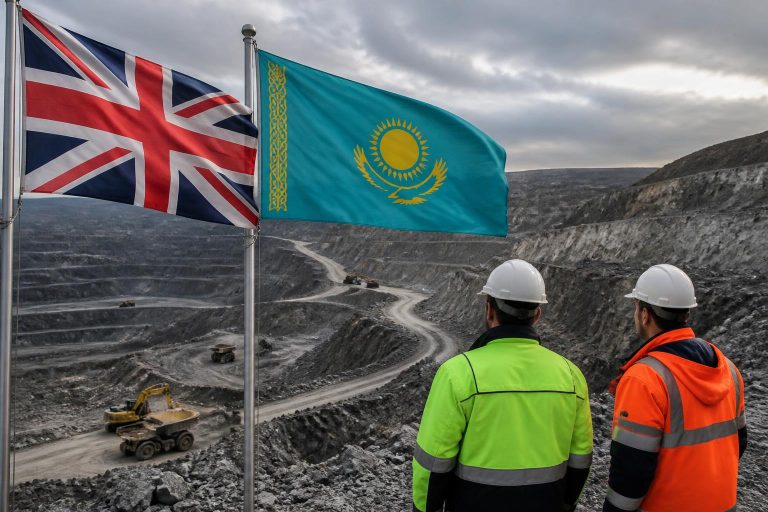
    Critical minerals are central to this cooperation. Axworthy outlined the UK’s updated Critical Minerals Strategy, which focuses on domestic production, financial infrastructure and resilient supply chains. While the UK is developing resources such as lithium and tin in Cornwall, she highlighted London’s role as a global financial hub and the importance of partnerships with resource-rich countries like Kazakhstan.

    She cited joint projects already under way, including rhenium recycling through a partnership between Maritime House and Zhezkazgan Redmet, with output expected to supply up to a quarter of global rhenium demand for uses such as aircraft turbines produced by Rolls-Royce. A vanadium project by Ferro-Alloy Resources could eventually meet up to 10% of global demand.

    Education and standards underpin these economic ties. Axworthy pointed to the opening of a branch campus of Cardiff University in Astana, offering courses in geological exploration, as well as cooperation on transparency standards through the Extractive Industries Transparency Initiative.

    Addressing geopolitics, Axworthy described Kazakhstan’s multivector foreign policy as logical given its geography and said the UK does not expect exclusive alignment. She recalled remarks by former UK foreign secretary David Cameron that partnership with Britain is about mutual security and prosperity, not choosing sides.

    Education and culture remain among the strongest pillars of bilateral relations. Nearly half of Kazakhstan’s Bolashak scholars have studied in the UK, and British universities such as De Montfort University, Coventry University and Cardiff now operate campuses in Kazakhstan. Axworthy also highlighted the role of the British Council and growing cultural links, from Kazakh language courses at Oxford University to increased interest from British creative industries.

    She added that Kazakhstan’s tourism and cultural potential is still under-represented in the UK, noting strong interest among British travellers and pointing to Almaty as a city with particular appeal.

  • Uzbekistan Explores Cooperation with Utah in Mining and Geological Sectors

    Uzbekistan Explores Cooperation with Utah in Mining and Geological Sectors

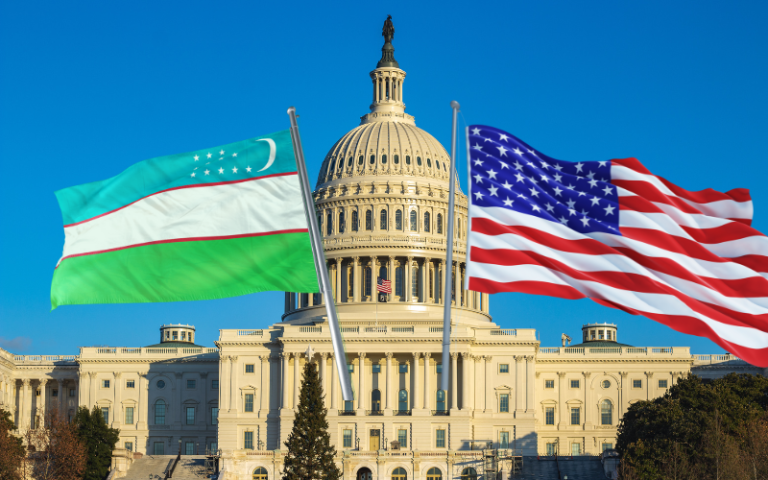
    On May 16, 2025, First Deputy Minister of Mining Industry and Geology, O. Nasritdinhojaev, along with representatives from the Ministry, met with delegation from the U.S. state of Utah.

    During the meeting, the parties discussed the ongoing reforms in Uzbekistan’s mining sector, the investment opportunities being created, and explored prospects for cooperation in investments, advanced technologies, and scientific research, considering Utah’s economic potential and its advanced expertise in the mining and geological fields.

    Additionally, both sides exchanged views on improving the qualifications of lecturers and students of the University of Geological Sciences under the Ministry of Mining Industry and Geology. Discussions also included the possibility of opening branches of Utah-based universities specializing in geology and mining—such as the University of Utah and Utah State University—in Uzbekistan.

  • Kazakhstan Canada Business Council Strengthens Ties at PDAC 2024 Convention

    Kazakhstan Canada Business Council Strengthens Ties at PDAC 2024 Convention

    The 6th plenary session of the Kazakhstan Canada Business Council (KCBC) unfolded within the framework of the annual international Prospectors & Developers Association of Canada (PDAC) 2024 Convention. Co-chaired by Mr. Meirzhan Yussupov and Mr. Tim Gitzel, representing Kazatomprom and Cameco Corporation respectively, the session fostered collaboration on key sectors.

    Preceding the plenary, three working groups convened in January and February, engaging over 250 participants in discussions on mining and metallurgy, agriculture, and education. Government and business representatives explored current challenges, cooperative solutions, priority areas, and potential projects to boost mutual trade and investment.

    With over 150 delegates from Canadian and Kazakhstani business circles, the plenary session covered diverse topics, including energy security, carbon neutrality, environmental sustainability, corporate governance, trade, investment attraction, and education. Led by Honourable Kanat Sharlapayev and Honourable Ahmed Hussen, the Kazakhstani and Canadian delegations emphasized bilateral cooperation.

    In the first panel, co-chairs Gitzel and Yussupov delved into uranium industry development, energy security, and environmental sustainability. Yussupov highlighted Kazatomprom’s global energy security contribution, while Gitzel underscored Cameco’s 35-year leadership and commitment to ESG issues. The discussion explored strategies for achieving net-zero emissions, reflecting on the future of both companies and the KCBC.

    Working group reports by Yerlan Galiyev, Margaret Skok, and Alibek Sagidulla addressed mining, education, and agriculture respectively. Representatives from JSC “NC “KazakhInvest,” Export Development Canada, and the government of Alberta contributed to the event.

    A dedicated session focused on the education sector, where Vice Minister Darkhan Akhmed-Zaki outlined Kazakhstan’s plans to establish an academic hub for higher education. The event concluded with a Networking Reception.

    The KCBC, a vital platform for Kazakhstan-Canada business relations, expressed gratitude to the Canada-Eurasia Chamber of Commerce (CECC) for organizing the event, supported by the Canadian and Kazakhstani Embassies and companies like Lotz & Company, Teck Resources, SIMSA, and Techgarden.kz.

  • Zangezur Copper-Molybdenum Combine and Kajaran community signed a memorandum of cooperation

    Zangezur Copper-Molybdenum Combine and Kajaran community signed a memorandum of cooperation

    On July 13, 2023, the Zangezur Copper-Molybdenum Combine and Kajaran community signed a memorandum of cooperation.

    Roman Khudoliy, President of the GeoProMining Group of Companies, CEO of ZCMC, and Manvel Paramazyan, head of the Kajaran community, stressed that there have always been close cooperative ties between the parties, and the memorandum will raise these relations to a new, institutional level.

    The memorandum provides for the development of strategic areas of cooperation in the fields of economy, culture, education and sports, social security, healthcare, as well as in urban planning.

    After the signing ceremony of the memorandum, ZCMC General Director Roman Khudoliy said: “Cooperation between our company and the Kajaran community can be considered an exemplary in terms of cooperation between the community and the company. We have reached such a level that we consider supporting social development projects not as a duty or as corporate social responsibility, but as an investment in the development of our company, because our success is ensured by our employees, and these are mainly residents of the Kajaran community. Today we are taking this cooperation to a strategic new level.”

    Mayor Manvel Paramazyan also welcomed the signing of the memorandum and stressed the ongoing close relationships between the enterprise and the community. “The role and significance of the Zangezur Copper Molybdenum Combine is undeniable in the history of the creation of the city of Kajaran and in the development of the community, from the day the city was founded to the present day, for more than seven decades. When we say Qajaran, we mean combine, and vice versa, when we say combine, we mean Qajaran. But this memorandum opened a new page in the recent history of Kajaran, reevaluating those decades and the great contribution and dedication of the leaders of the company from the beginning of history and all the heroes of this giant enterprise.”

    Zangezur Copper-Molybdenum Combine CJSC signed memorandums in the field of social development also with the Syunik region and the Kapan community recently.