Tag: digitalization

  • Uzbekistan’s mining sector marks a year of major discoveries, expansions and digital upgrades

    Uzbekistan’s mining sector marks a year of major discoveries, expansions and digital upgrades

    The past year brought several landmark developments for Uzbekistan’s extractive industry, ranging from new discoveries to large-scale industrial expansion and digital transformation.

    In September, President Shavkat Mirziyoyev announced the discovery of a giant gas deposit on the Ustyurt Plateau. For the first time in the country’s history, exploration drilling in the area reached depths of 6.5 km. While technical details of the find have not yet been disclosed, exploration work in the region is being carried out by Uzbekneftegaz in partnership with Azerbaijan’s SOCAR.

    Industrial expansion was led by Almalyk Mining and Metallurgical Complex, one of the country’s largest resource producers. In October, the company launched the first processing line of its new MOF-3 concentrator. Once all lines are commissioned by 2026, the facility is expected to process up to 60 million tonnes of ore annually, producing 894,000 tonnes of copper concentrate and 1,500 tonnes of molybdenum concentrate. AMMC says MOF-3 will become the largest copper production facility in Central Asia.

    The company also commissioned its own emulsion explosives plant with a capacity of 90,000 tonnes per year, supporting expanded drilling and blasting operations at the Yoshlik I deposit. In addition, AMMC became the first producer in Uzbekistan to introduce an automated fleet management system at the Kalmakyr and Yoshlik I open pits.

    Another key milestone came in April, when Navoi Mining and Metallurgical Company put into operation a new mine shaft at the Zarmitan gold deposit. The “Skipovoy” shaft, 6.5 meters in diameter and 1 km deep, will increase ore transport to Hydrometallurgical Plant No. 4 by 1.4 million tonnes per year.

    At the policy level, the government also announced plans to implement 76 projects focused on rare and rare earth metals, with total investments estimated at $2.6 billion.

  • Senate Approves Amendments to Subsoil Code Strengthening Digitalization and Investment Incentives

    Senate Approves Amendments to Subsoil Code Strengthening Digitalization and Investment Incentives

    The Senate has approved amendments to the Code on Subsoil and Subsoil Use in two readings during a plenary session, endorsing a package of reforms aimed at modernizing regulation of the mining sector and boosting investment attractiveness.

    Presenting the document, Senator Sagyndyk Lukpanov said the amendments formally establish a unified subsoil use platform as the core digital infrastructure of the industry. The platform will operate with an open database of geological information and cover nearly all business processes and public services related to the exploration and extraction of solid and common minerals. The law also закрепляет статус национальной геологической службы and grants strategic investors priority rights to explore and mine solid minerals.

    The legislation provides for integration of the unified platform with the state fuel and energy management system, which collects, stores, and analyzes data on hydrocarbon resources. In addition, the national geological service is designated as the sole operator responsible for managing geological information. As a state body subordinate to the geology committee, it will not be subject to privatization and will ensure a centralized, standardized approach to studying the national subsoil fund, eliminating data duplication and fragmentation.

    A number of amendments introduce electronic auctions as a mechanism for granting subsoil use rights. These auctions will be used to allocate free subsoil plots as well as areas where subsoil use rights have previously been terminated. The reforms also raise the required share of domestic content in works and services from 50% to 70% for exploration and mining operations, including uranium projects.

    Additional provisions regulate the granting of subsoil use rights for facilities involving technogenic mineral formations located within populated areas. One of the licensing conditions for such activities is the mandatory removal of extracted technogenic mineral materials beyond settlement boundaries, followed by their processing.

    The amendments also expand investment incentives for subsoil users implementing projects to process solid minerals. These preferences, already reflected in the new Tax Code, include exemptions from corporate income tax and land tax for 10 years, property tax for 8 years, and VAT on imported equipment for 5 years. At the same time, the minimum investment threshold for such processing projects is increased tenfold, from 7 million to 70 million monthly calculation indices.

  • Kazakhstan Tightens Mining Code to Combat Illegal Extraction and Strengthen Investor Accountability

    Kazakhstan Tightens Mining Code to Combat Illegal Extraction and Strengthen Investor Accountability

    Kazakhstan is introducing stricter rules on subsoil use as part of an updated version of its Mining and Subsoil Code, aiming to increase accountability for financial obligations and curb illegal mineral extraction. The new draft, presented to the Mazhilis by Deputy Minister of Industry and Construction Iran Sharkhan, proposes several key reforms, LS reports.

    Under the revised Code, auction winners will be required to pay signing bonuses before receiving their mining licenses. Failure to do so will result in a five-year ban on both the company and its beneficiaries, preventing them from applying for new subsoil rights or acquiring such rights from third parties. According to Sharkhan, this measure is intended to eliminate abuse and make investor participation more transparent.

    The amendments also introduce tough penalties for covert mineral extraction disguised as pilot industrial mining. Any such violations will now result in the immediate revocation of exploration licenses. To improve oversight, the government plans to impose strict operational thresholds — for instance, removing or relocating more than 1,000 cubic meters of soil or rock will only be permitted if clearly justified by project needs.

    Additionally, the separation of industrial-innovation projects from subsoil operations will be prohibited to prevent the misuse of exploration licenses for commercial mining activities.

    Sharkhan noted that in 2025–2026, authorities plan to inspect 440 sites for signs of illegal extraction. To date, 300 areas have already been reviewed, revealing seven cases where unauthorized mining was detected.

    Another key aspect of the reform is the transition to electronic documentation. Applications for mining licenses will now be submitted via a unified digital platform that includes an interactive map of exploration sites available for development — part of a broader effort to streamline administration and boost transparency in Kazakhstan’s extractive sector.

  • Armenia Reaffirms Commitment to Mining Strategy Despite Challenges

    Armenia Reaffirms Commitment to Mining Strategy Despite Challenges

    Armenia’s mining development strategy is moving forward despite certain challenges, with the government determined to ensure its full implementation, Deputy Minister of Territorial Administration and Infrastructure Asatur Vardanyan said at the Mining Armenia Forum 2025 on October 3.

    Vardanyan highlighted that the strategy is supported by a strong platform involving both private sector representatives and scientific institutions. Key elements include the launch of a comprehensive digitalization process — not merely procedural but based on in-depth analysis and fieldwork to guide policymaking. By 2027, full digitalization of the permitting system is expected, with improvements aimed at increasing transparency and reducing approval times.

    The deputy minister also announced plans to establish a national geological service. Armenia is working closely with the EU and the United States, building on agreements signed in August 2025, to create a new platform that will strengthen governance and enable the development of a unified mining policy.

    He stressed the importance of companies adopting international mineral reporting standards to enhance investor confidence and predictability. The ultimate goal, he said, is to create a mining industry that operates more efficiently and on a stronger economic footing, drawing on Armenia’s accumulated expertise and international practices.

    Vardanyan underlined the need for more extensive and higher-quality geological exploration to secure future reserves, particularly of critical minerals. With rising global demand and metal prices, Armenia has been receiving growing interest from international organizations and foreign investors. The new geological service will also commission state-funded regional exploration to open new deposits.

  • Kazakhstan Detects $1.9 Million in Subsoil Use Violations Through Digital Monitoring

    Kazakhstan Detects $1.9 Million in Subsoil Use Violations Through Digital Monitoring

    Since January 2025, Kazakhstan has operated a Unified Subsoil Use Platform, through which 2,443 operators have submitted electronic reports. The new digital monitoring tool has enabled regulators to uncover violations of subsoil use legislation.

    As a result, companies received notifications of breaches across 196 contracts and licenses, with total penalties amounting to 910 million tenge (approx. $1.9 million). In addition, 37 contracts were terminated — 30 for geological exploration, five for extraction, and two for combined activities. Authorities also revoked 61 licenses from non-compliant operators.

    The Ministry of Internal Affairs and the National Security Committee have halted illegal mining operations in four regions of the country. In the third quarter of this year, the agencies plan to issue about 350 notifications and conduct 65 on-site inspections.

    By the end of the year, a draft law on digitalization and auctions, along with amendments to allocate 50% of subscription bonuses to state geological exploration, will be submitted to the Parliament of Kazakhstan, Kazinform reports.

  • Uzbekistan Recognised as a Country with Low Digitalization and Digital Skills

    Uzbekistan Recognised as a Country with Low Digitalization and Digital Skills

    The Asian Development Bank (ADB), in its report “Harnessing Digital Transformation for Good,” has identified Uzbekistan as a country with low levels of digitalization and digital skills. Despite developing countries in the Asia-Pacific region showing rapid digital development, the benefits are distributed unevenly. In Uzbekistan, for instance, 13% more urban residents have internet access compared to rural areas, and the speed of mobile internet in cities is 38% higher.

    ADB emphasizes the need to accelerate digital transformation in low-digitalization countries like Cambodia, Bangladesh, Mongolia, Pakistan, and Uzbekistan. To achieve this, investments in digital infrastructure, skill development, and digital literacy are recommended. Economically efficient solutions such as shared use of radio spectrum, infrastructure, cloud solutions, and new technologies like low-Earth orbit satellites and fixed 5G access are also proposed.

    According to UNESCAP data, Uzbekistan ranked 9th among 11 countries in the region in terms of digital skills as of 2023. Only 15% of the population possesses basic skills (such as typing and copying files), while 7−8% have standard skills (software use and application installation). There is no data available for advanced skills. In comparison, Kazakhstan has 30% of its population with basic skills, 25% with standard skills, and 8% with advanced skills.

    ADB also highlights that the low level of digitalization is accompanied by digital inequality. In urban areas, the average mobile internet speed is around 50 Mbps, while in rural areas, it is approximately 35 Mbps. Fixed internet is faster than mobile, with speeds reaching 70 Mbps in cities and 50 Mbps in rural areas.

    ADB experts stress the importance of investing in digital skills development at all levels to ensure equal access to digital opportunities and prepare the population for future job requirements.

  • Kazakhstan Invests in Skills: The Future of Science and Workforce in the Mining Industry

    Kazakhstan Invests in Skills: The Future of Science and Workforce in the Mining Industry

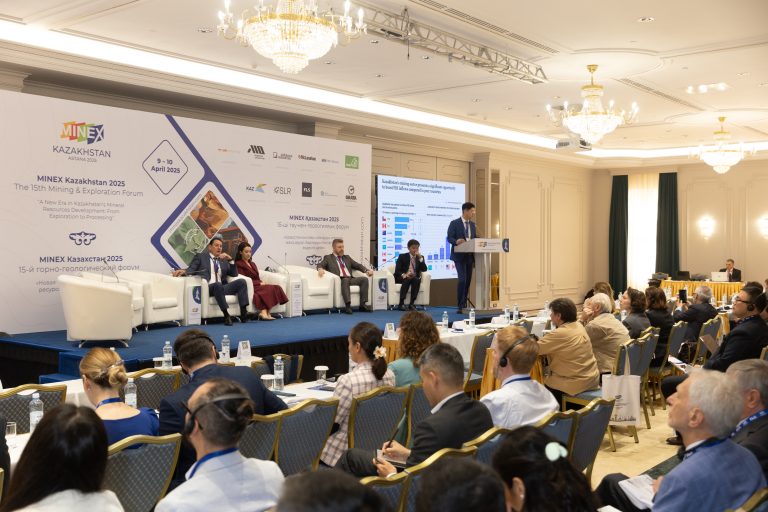
    At the MINEX Kazakhstan Mining and Geological Forum, a session was held on the future of scientific research and workforce development in the country’s mining sector. The event was moderated by Bakyt Manasbayeva, Deputy Executive Director of the Association of Mining and Metallurgical Enterprises (AMME).

    Kazakhstan’s Minister of Science and Higher Education, Sayasat Nurbek, outlined key directions in scientific and technological policy. He emphasized the shift toward an open science model focused on university-based research and greater involvement of private companies. The National Academy of Sciences has now been granted the status of the highest scientific authority, and the Science Fund is being transformed from a grant-giving body into a fund of funds capable of launching joint venture and investment initiatives. Regional science will also gain momentum through newly established science and technology councils under regional administrations.

    In terms of workforce development, Minister Nurbek announced the entry of top international universities such as the University of Exeter and the Colorado School of Mines into Kazakhstan. A new technical university is being opened in Zhezkazgan on the basis of the Kazakhmys geological cluster, and another is planned in Astana with a focus on mining and metallurgy.

    He also highlighted the launch of the Atlas of New Professions six years ago, which maps out future job trends in nine priority economic sectors. The mining and metallurgical industry’s atlas was one of the first to be developed, with regional versions already implemented in nine areas of the country.

    Bakyt Manasbayeva noted that up to 45% of employees at some enterprises are under 35, and this share continues to grow. Young professionals see the industry as offering stability, career growth, and social support. She stressed the need to update the Atlas in response to growing digitalization, automation, environmental concerns, and geopolitical shifts that are changing required skillsets.

    The updated Atlas now includes roles such as mining digitalization specialist, ESG data analyst, rare metals expert, cybersecurity engineer for industrial systems, and digital twin specialist. In the coming months, in-depth interviews with industry experts and employers will be conducted to refine competence matrices and career pathways, culminating in a new version of the Atlas tailored to education, business, and youth.

    The session also featured insights from scientific and industry leaders on commercializing technologies, training a new generation of mining professionals, and the future of geological exploration.

  • Kazakhstan Launches New Era of Resource Development at 15th MINEX Forum

    Kazakhstan Launches New Era of Resource Development at 15th MINEX Forum

    Date: April 9, 2025

    The 15th MINEX Kazakhstan Mining and Geological Forum is underway today in Astana under the theme: “A New Era of Kazakhstan’s Mineral Resource Development: From Exploration to Processing.”

    The event brings together around 100 speakers, 450 delegates, and 40 exhibitors from across Central Asia, Europe, North America, Africa, the Middle East, Australia, China, India, Malaysia, and Singapore.

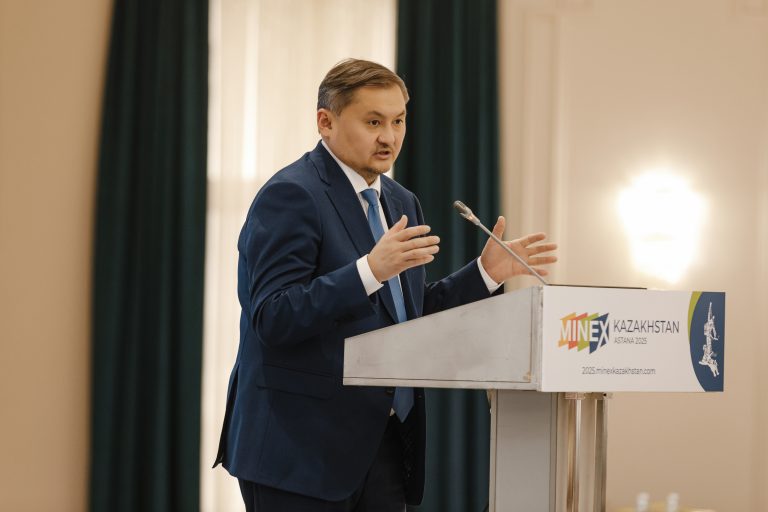
    In her keynote address, Zhannat Dubirova, Vice Minister of Industry and Construction, highlighted recent digitalization milestones achieved in the country’s resource sectors:

    “Since the beginning of this year, we have launched the Unified Subsoil Use Platform, which now provides 22 digitized public services. So far, it has processed 506 applications. Investors can now apply directly through the portal to participate in auctions. In January, this led to $40 million in investments across 21 sites.”

    She also announced that manual oversight of more than 3,000 licenses and contracts related to solid mineral resources had been fully digitized.

    Almas Kushumov, Director of the Subsoil Use Department at the ministry, presented the results of state-led geological surveys:

    “There is growing business interest in resource development. Over the last two years, 117 subsoil plots and deposits were auctioned electronically, generating more than 29 billion tenge in subscription bonuses. In June 2025, we plan to auction 50 gold, silver, coal, and rare metal deposits.”

    The forum is also addressing pressing issues such as Kazakhstan’s role in global critical mineral supply chains, investment climate improvements, uranium sector development, and nuclear energy expansion.

    The event will conclude with a session on talent development and national capacity building, followed by a gala awards ceremony honoring achievements in the mining sector, hosted by the Mining Chamber of Kazakhstan.

    Kazakhstan’s mineral sector is undergoing a significant transformation, driven by government initiatives aimed at boosting economic growth, industrial diversification, and expanding geological exploration.

  • President Tokayev Reviews Industrial Progress and Sets New Goals for Kazakhstan’s Development

    President Tokayev Reviews Industrial Progress and Sets New Goals for Kazakhstan’s Development

    President Kassym-Jomart Tokayev met with Minister of Industry and Construction Yersain Nagaspayev on April 2, 2025, to discuss the ministry’s achievements in 2024 and outline key priorities for the coming period.

    Minister Nagaspayev reported significant growth in industrial investments and exports of processed goods last year, with plans to further boost production volumes in 2025. He also highlighted progress in geology and digitalization, including the launch of a Unified Subsoil Use Platform, digitized urban planning projects, and plans to introduce a single utility bill system even in rural areas. Additionally, the ministry is developing an AI-powered geological database to enhance resource exploration.

    Following the report, President Tokayev assigned several urgent tasks. These include increasing high-value industrial output, creating a national registry of domestic manufacturers, and improving investor engagement. The President also stressed the importance of meeting housing construction targets, expanding water supply coverage, and further digitizing construction and utility services.

    Furthermore, the ministry must ensure the timely commissioning of industrial facilities and implement subsoil use reforms efficiently. Tokayev emphasized strict oversight in supporting local manufacturers to strengthen Kazakhstan’s economic resilience.

  • Kazakhstan Discusses Digitalization of Subsoil Use at Round Table Meeting

    Kazakhstan Discusses Digitalization of Subsoil Use at Round Table Meeting

    A round table was held in Astana at Maqsut Narikbayev University under the chairmanship of the Minister of Industry and Construction of Kazakhstan, Kanat Sharlapaev. The event brought together representatives of subsoil user companies to discuss key issues in the fields of geology and subsoil use.

    The Minister emphasized that one of the ministry’s priorities is to enhance geological exploration across Kazakhstan to replenish the country’s mineral resource base. He also reviewed the past year’s results and outlined plans for the current period.

    Deputy Minister Zhannat Dubirova presented projects aimed at digitalizing the sector, including the Unified Subsoil Use Platform (minerals.e-qazyna.kz). According to her, since its launch, the platform has processed 506 applications and provides users with open access to all geological data, including 60,000 reports.

    The platform’s interactive map enables subsoil users to analyze infrastructure, geological, and geophysical data for specific areas, as well as submit auction applications. Additionally, by April, an electronic system for monitoring compliance with license and contract obligations is set to be introduced.

    Round table participants also discussed the digitalization of primary geological reports and the need to integrate the platform into company operations.