Tag: Development Bank of Kazakhstan

  • Development Bank of Kazakhstan Transfers Aktogay Project Financing to Halyk Bank Under New Investment Model

    Development Bank of Kazakhstan Transfers Aktogay Project Financing to Halyk Bank Under New Investment Model

    The Development Bank of Kazakhstan (DBK), a subsidiary of Baiterek Holding, has completed a landmark refinancing transaction for the Aktogay mining and processing complex, demonstrating a new model for attracting private capital into large-scale industrial projects.

    KAZ Minerals Aktogay LLP operates one of Central Asia’s крупнейших open-pit copper mines in the Abai Region. The complex includes two sulphide concentrators with a combined capacity of 50 million tonnes of ore per year, along with a cathode copper plant processing oxidised ore. The facility employs advanced mining and beneficiation technologies, including automated process control systems.

    DBK first financed the Aktogay project in 2016 during the high-risk construction and commissioning phase. With the Bank’s support, a second concentrator was built, doubling sulphide ore processing capacity from 25 million to 50 million tonnes annually and creating more than 2,100 permanent jobs. The initial financing facility has since been fully repaid, and the first phase of the project has reached its planned payback.

    In a significant next step, Halyk Bank refinanced the company’s outstanding debt to DBK, assuming responsibility for servicing the now operational and financially stable project. The transaction reflects a structured approach in which DBK assumes early-stage project risks, while commercial banks step in once operational performance and cash flows become predictable.

    According to Marat Yelibayev, Chairman of DBK’s Management Board, the refinancing frees up state development funds for new capital-intensive industrial projects, reinforcing an investment cycle in which DBK supports projects from inception to stability before transferring them to private lenders.

  • Turkey’s Miryildiz Mining to Launch Gold and Copper Production in Kazakhstan by 2026

    Turkey’s Miryildiz Mining to Launch Gold and Copper Production in Kazakhstan by 2026

    Turkish mining company Miryildiz Mining plans to begin gold and copper production in Kazakhstan by late 2026, the company’s CEO Emrah Erdem announced at the Kazakhstan Global Investment Roundtable (KGIR).

    “We are engaged in gold and copper mining. Our plants in Turkey have been operating for nearly ten years. I hope that by the end of 2026, we will start gold production in Kazakhstan,” Erdem said.

    According to him, Miryildiz Mining is currently working in cooperation with the Development Bank of Kazakhstan (DBK), a subsidiary of the Baiterek Holding.

    The company operates in five countries, extracting gold, copper, chromium, and other metals, with Turkey remaining its primary market. It produces around 1 million tonnes of copper ore annually.

    “We have now set targets for copper mining in Kazakhstan,” Erdem said, adding that the company sees strong potential for copper extraction in East Kazakhstan, particularly in the Abai and Pavlodar regions.

    He also highlighted promising opportunities in the gold and rare earth metals sectors, noting Kazakhstan’s untapped mineral wealth.

    $482 Million Mining and Processing Project

    Earlier this year, Miryildiz Mining presented a $482 million project to construct a mining and processing complex (MPC) in the Zhanan-Boko-Zaisan gold ore zone to Abai Region Governor Berik Uali. The facility is expected to employ around 2,000 workers.

    The company has already completed geological exploration and purchased some of the necessary extraction and ore-processing equipment.

    Global Footprint

    Miryildiz Mining holds over 100 exploration and production licenses worldwide and is active in Central African Republic (CAR)Sierra Leone, and The Gambia, where it is also building a gold mining operation.

    In Kazakhstan, its subsidiary MIRYILDIZ KZ Ltd plans to conduct metal exploration at the Takyr site in the Zhetysu and Abai regions between 2025 and 2030.

    Market Context

    The company’s expansion comes amid record-high commodity prices — copper surpassed $11,000 per tonne, and gold exceeded $4,000 per ounce in 2025 — boosting investment in mining and geological exploration across the sector.

  • Eurasian Resources Group Launches Major Wind Farm in Kazakhstan

    Eurasian Resources Group Launches Major Wind Farm in Kazakhstan

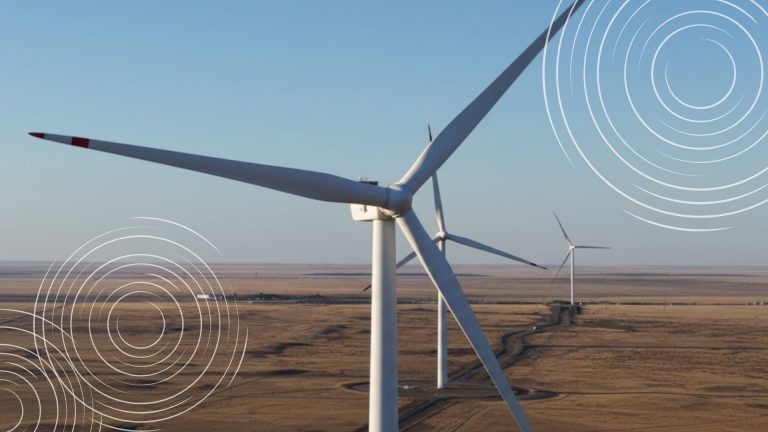
    Eurasian Resources Group (ERG), a global metals and mining company headquartered in Luxembourg, has opened the Khromtau wind farm in Kazakhstan with a capacity of 150 megawatts of green energy. The project is one of the largest renewable energy facilities in Kazakhstan and Central Asia and required an investment of more than US$142 million. The wind farm is located in the Aktobe Region and includes 24 turbines. The facility will generate more than 500 million kilowatt hours of green energy annually. All in all, the facility will help reduce up to 440,000 tonnes of carbon dioxide emissions and save more than 300,000 tonnes of coal each year. The project has been implemented by ERG Capital Projects, a Group subsidiary, with financial support from the Development Bank of Kazakhstan.

    During the opening ceremony of this critical green energy project, Shukhrat Ibragimov, CEO and Chairman of the Board of Directors of ERG, said: “With its Khromtau wind power project, the Group makes a major contribution towards achieving Kazakhstan’s national goal of increasing the share of renewable energy sources. ERG is committed to ESG principles, and the new Khromtau wind power farm is a logical and very ambitious next step while implementing this. ERG’s first wind power project has already become a symbol of our transition to green energy.”

    The ESG Agenda is part of the company’s Strategy. The Group’s medium-term goal is to reduce the carbon footprint of its core products (aluminium, ferroalloys and iron ore pellets) by 30%. To achieve this, ERG is implementing projects with cumulative investments totalling US$300 million. In addition to wind power, these projects include switching the Kacharsky heating centre to gas in the Iron Ore Division, reducing steam consumption and improving the alumina production process in the Aluminium Division, and building a ferroalloy gas recycling power facility at the Aktobe Ferroalloys Plant to convert secondary energy resources into electricity.

  • The unprofitable “Bast” requested a loan from the Development Bank of Kazakhstan

    The unprofitable “Bast” requested a loan from the Development Bank of Kazakhstan

    The company “Bast,” engaged in the development of the Maxut deposit in the Abay region, has approached the Development Bank of Kazakhstan for debt financing for its project, as reported by inbusiness.kz. This loan was requested for the “expansion of the ore processing plant for the production of copper and nickel concentrates.” Currently, an “indicative analysis” of the project is being conducted, as indicated in the “projects under consideration” section on the BRK website.

    The primary shareholder of “Bast” is the businessman Timur Turlov, who owns 74.18% of the company’s shares, with an additional 8.14% belonging to the affiliated Freedom Finance Global Plc, as stated on the Kazakhstan Stock Exchange website. As of the end of the previous year, Turlov controlled 75.4% of “Bast” shares, while the share held by Freedom Finance Global Plc was minimal, with just 1 share, according to annual reports. Additionally, at the end of 2022, the liquidation commission of Bank Astana retained a noticeable stake in the company, amounting to 5.26%. It’s possible that this share has been reduced at the beginning of this year, as information about it is no longer published in stock summaries.

    The initial public offering of “Bast” shares on the Kazakhstan Stock Exchange took place in 2014, as stated on the company’s website. In 2018, an ore processing plant was put into operation at the Maxut deposit for the production of copper and nickel concentrate. Despite this, “Bast” remained unprofitable over the last two years. According to the financial report for the past year, during that period, the company’s losses exceeded 494 million tenge, despite revenue of 6.3 billion tenge. However, this is half the losses recorded in 2021, which were 1.2 billion tenge.

    Over the past five years, the company attracted small loans from Turlov and other individuals, mainly of a short-term nature. Interestingly, “Bast” also received $2 million as an advance payment from the trader Trafigura for the delivery of copper concentrate, to be repaid by the end of July this year. It’s worth noting that the company had no revenue from the sale of nickel concentrate with a discount last year.

    In 2021, the company was involved in a legal dispute with TO “Service Company “Semey” regarding the recognition, acceptance of work performed, and the recovery of a debt in favor of TO “Service Company “Semey” in the amount of 66,573 thousand tenge. The company had its bank account in AO DB “Sberbank Kazakhstan” frozen in the amount of $156,780 USD (equivalent in tenge as of December 31, 2021 – 67,677 thousand tenge) as part of the execution of a decision by the specialized interdistrict economic court of Almaty. The company filed an appellate complaint for a review of the first-instance decision. In June 2022, the court ruled to uphold the decision of the specialized interdistrict economic court of Almaty and dismissed the company’s appeal. As of December 31, 2022, the company’s obligation has been fully settled through repayment. There were no frozen funds on the company’s account as of December 31, 2022, as noted in the 2022 annual report.

    In total, there were reserves of 112 thousand tons of copper and 79 thousand tons of nickel at Maxut, with the potential for an increase, as mentioned in the financial report. The subsoil use contract for “Bast” was extended last December until May 2042. From 2028, the company will begin using a new metal extraction technology that will reduce operational costs by 25%, as stated in the financial documentation.

    It’s worth noting that the expansion of “Bast” is not the only project involving Timur Turlov that has recently come to the attention of BRK. According to the “projects under consideration” section, the public company AKASHI Data Center PLC has applied for bank financing for the project “Construction of a Tier IV data center with 4,000 racks,” which is currently at the “business proposal” stage.

    Additionally, TO “Production Company “Cement Plant Semey” expressed its desire to attract borrowed funds from BRK for pre-export financing in the amount of 1.2 billion tenge. This application, with Timur Turlov listed as one of the beneficiaries, is currently in the “bank expertise” stage.

  • How does the environmental agenda affect Kazakhstan’s industry?

    How does the environmental agenda affect Kazakhstan’s industry?

    The adoption of ESG principles, encompassing environmental, social, and corporate governance aspects, is gaining momentum worldwide, and Kazakhstan is no exception. According to inbusiness.kz, major manufacturing companies in the country are actively modernizing their facilities, implementing measures to reduce emissions, and promoting waste recycling practices.

    By incorporating ESG principles into their operations, companies can not only improve their environmental impact but also enhance their social and managerial aspects, ultimately leading to improved financial and economic performance. Natalya Lim, a partner at PwC, emphasizes the urgent need for a global and unified approach to address critical issues such as climate change, poverty, inequality, and water scarcity.

    Lim believes that the corporate sector plays a decisive role in overcoming these challenges, and organizations in Kazakhstan are demonstrating their readiness to take responsibility and drive positive changes. In the industrial sector, companies like “KazMunaiGaz” are leading the way by adopting their own “Low Carbon Development Program for 2022-2031.” The objective of this program is to reduce greenhouse gas emissions by 15% by 2031 compared to the baseline year of 2019.

    Moreover, “KazMunaiGaz” is actively collaborating with partners to develop renewable energy projects with a total capacity of at least 1 gigawatt, along with an energy storage system of 300/600 megawatts. These efforts reflect the commitment of Kazakhstani companies to sustainable development and their contribution to mitigating environmental challenges while driving economic growth.
    Another industrial giant, Eurasian Resources Group, is actively working on reducing emissions at its facilities and minimizing their environmental impact. For instance, on August 10th, they showcased a unique ore processing plant for handling the tailings of the Donskoy Mining and Processing Plant to the Prime Minister of Kazakhstan, Alihan Smailov. This plant was built by the multinational company “Kazchrome” (a subsidiary of ERG) in the city of Khromtau, Aktobe region.

    Why is this project important? The Donskoy Mining and Processing Plant was founded in 1938 in Khromtau and is the world’s second-largest deposit of confirmed chromium reserves. The ore extracted here is used for the production of ferroalloys in metallurgy, the manufacturing of refractories, and in the chemical industry for producing chromium compounds.

    Every year, in the process of crushing and grinding chromium ore at the plant, around 900,000 tons of tailings waste are generated. Currently, there are already 14.5 million tons of accumulated tailings containing up to 35% chromium oxide. “Kazchrome” decided to address this issue by constructing the ERG Green ore processing plant.

    This plant will enable the extraction of chromium oxide from the tailings through gravity-based enrichment, and the resulting commercial concentrate can be used in metallurgy for further processing.

    The new facility will allow for the processing of approximately 1.7 million tons of tailings annually, both the existing waste and the continuously generated new waste. Consequently, this will not only improve the environmental conditions in the Aktobe region but also enhance the economic efficiency of the plant itself.

    “The most important thing is that after processing, the tailings must be properly reclaimed in accordance with all environmental standards to minimize the impact on the environment and public health,” commented Alihan Smailov during his visit to the factory.

    In parallel with this, by the end of 2024, as part of the program for processing accumulated tailings, three more initiatives are planned to be implemented. As a result, ERG will ensure the production of 200,000 tons of ferrochrome, leading to an additional revenue of approximately 10 billion tenge in tax receipts annually for the state.

    “Following the company’s mission and ESG principles, management must ensure high environmental standards. Therefore, the group has developed an Environmental Strategy as part of our comprehensive ‘Green Metallurgy’ program. Within the environmental strategy until 2030, we plan to invest 228 billion tenge,” noted Shuhrat Ibragimov, Chairman of the Supervisory Board and member of the Board of Directors of ERG, during the project presentation.

    Investors are involved in the process
    Initiatives like these require substantial investments, and modernizing existing facilities or building new ones is difficult without the assistance of investors.

    For example, the total investment in the ERG Green plant project amounted to 96 billion tenge. Part of the funding was provided by the Development Bank of Kazakhstan, which, according to the project list, has actively begun working in the ESG direction.

    “We consider supporting projects that adhere to the principles of sustainable development to be important. This project aligns with the Environmental Code’s principles of sustainable development – the preservation of natural resources for current and future generations, as well as the principle of integration – the balance between environmental tasks and economic development,” commented Marat Yelibaev, Deputy Chairman of the Board of BRK.

    Like other development institutions, the Development Bank of Kazakhstan is focusing on projects that incorporate ESG principles into their operations. For instance, earlier this year, the bank issued its first “green” bonds, and the proceeds from the bond issuance were directed towards a project by the KEGOC company for modernizing the power grids in Western Kazakhstan.

    In the summer, a credit agreement was signed with the “Almaty Power Plants” to convert TEC-2 in Almaty to natural gas. This project will be financed jointly with the European Bank for Reconstruction and Development and the Asian Development Bank.

    From the example of BRK and other financial institutions, a clear trend is emerging: ESG initiatives of businesses are of interest to investors. This signals that in the near future, many more environmental projects will be implemented by industrial and infrastructure companies.