Tag: #CriticalRawMaterials

  • Kazakhstan Investment Day in Frankfurt

    Kazakhstan Investment Day in Frankfurt

    Analysis of the Germany-Kazakhstan Strategic Partnership

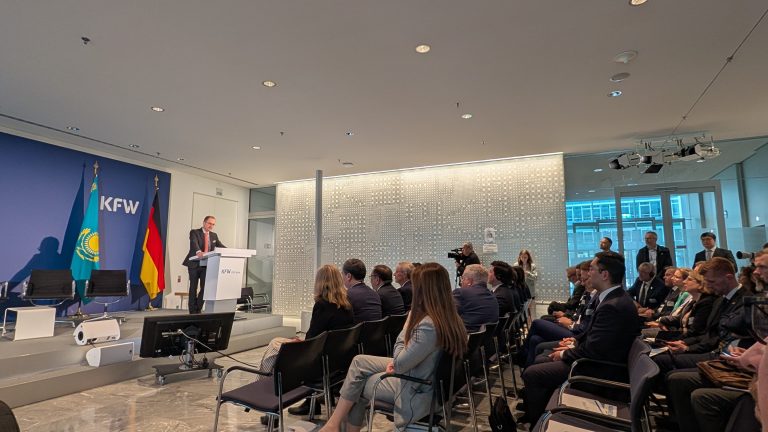
    The Kazakhstan Investment Day, held on 24 February 2026, at the KfW Bankengruppe headquarters in Frankfurt, highlighted a pivotal shift in Eurasian trade dynamics. The event centered on the deepening energy and mining alliance between Germany and Kazakhstan, a relationship that has gained strategic urgency as Kazakhstan effectively replaces Russian oil volumes and leverages deep-rooted cultural ties to strengthen bilateral cooperation.

    Financial and Strategic Framework

    The scale of this partnership is substantial, with bilateral trade recently seeing a 10% increase to reach €4 billion. Kazakhstan is currently positioned to supply 21 of the 34 critical raw materials (CRMs) identified on the EU’s strategic list.

    To facilitate this, several financial and logistical mechanisms have been established:

    • The Development Bank of Kazakhstan (DBK): A $1 billion financing program (2025–2030) has been launched, specifically dedicated to the extraction and processing of rare and critical materials.

    • Foreign Direct Investment (FDI): Kazakhstan aims to attract $400 billion in FDI by 2029, supported by Germany’s raw materials fund and backing from institutions like KfW IPEX and DEG.

    • The Middle Corridor: The Trans-Caspian International Transport Route is being developed as a highly efficient logistical artery connecting Central Asia to Europe, bypassing sanctioned territories.

    Operational Success vs. Bureaucratic Hurdles

    There is a notable contrast between engineering achievements and administrative delays. Industry leaders from Thyssen Schachtbau and Qazaq Kalium have demonstrated successful deep-shaft mining projects, proving that German technology is effectively unlocking Kazakh resources. Furthermore, the German development agency GIZ is pivoting its strategy by forming a dedicated in-country team focused exclusively on CRM partnerships.

    However, several impediments remain:

    • The “Bearocracy”: Despite the strategic need, Kazakh businesses face extreme delays and bureaucratic hurdles regarding German visa regimes, a point acknowledged by German officials.

    • Sanction Compliance: German leadership maintains a hard line, stating there will be zero support for any trade or logistics involving Russia or sanctioned companies.

    • Implementation Lag: While the financial architecture is in place, the actual development of new mining projects remains slowed by EU-wide bureaucratic processes.


    A Shifting Global Context

    The global competition for resources is accelerating. Coinciding with these discussions in Frankfurt, China introduced a supply ban of critical minerals to 40 major Japanese industrial firms over “remilitarisation” concerns. This geopolitical shift forces Japan to seek immediate alternative suppliers, placing Kazakhstan and the broader Central Asian region directly in their sights. The consensus is clear: while the foundations for a Euro-Kazakh partnership are solid, the slow pace of European administration may cause the EU to lose ground in an increasingly aggressive global race for resources.

  • EU Weathers ‘Severe Market Disruption’ as China’s Antimony Controls Spark 170% Price Surge, Commission Finds

    EU Weathers ‘Severe Market Disruption’ as China’s Antimony Controls Spark 170% Price Surge, Commission Finds

    The European Union is well-positioned to weather, and potentially even benefit from, China’s new export controls on the critical raw material antimony, despite the measures causing a massive shock to global markets. A new policy brief from the European Commission’s Joint Research Centre (JRC) reveals that the EU’s strategic diversification of its supply chain has largely insulated it from the direct impact of the controls, which sent prices soaring by more than 170%.

    The report, “China’s Antimony Export Controls: Risks and Opportunities for the EU,” analyzes the fallout from China’s decision, effective September 15, 2024, to require dual-use export licenses for antimony and its products. The material is vital for defense applications—including armour-piercing rounds and night-vision equipment—as well as flame retardants, electronics, and batteries.

    The announcement immediately roiled the market, with the price of antimony metal surging from approximately 38,000 per tonne in September. The report describes this dramatic price jump as a reflection of “severe market disruptions, supply chain concerns, and potential shortages.”

    However, the JRC analysis concludes that the EU’s exposure is limited, thanks to years of proactive efforts to reduce its dependency on China.

    Key findings from the report include:

    • Diversified Supply Chains: While the EU is 100% reliant on imports for antimony ore, its primary supplier is Turkey (77%), not China. For antimony metal, the EU has dramatically shifted its sourcing, with Tajikistan now providing 52% of its imports. China’s share of the EU’s metal imports has fallen from 40% in 2020 to just 18% in 2023.

    • The US is More Exposed: The report highlights that the United States is far more vulnerable to the new regulations. China supplies 44% of US imports of antimony oxides—a refined product used in flame retardants and catalysts—compared to just 5% of EU imports.

    • An Opportunity for EU Exporters: The EU is a net exporter of high-value antimony oxides, producing 28,000 tonnes annually. The report suggests that if Chinese supply to the US and other markets is disrupted, EU producers could step in to fill the gap. “If European producers can secure stable antimony metal supplies, the EU may have an opportunity to expand exports,” the brief states.

    The report concludes that the EU’s strategic foresight in diversifying its critical mineral sources has turned a potential supply chain crisis into a manageable situation with a potential upside. While the dramatic price increase will affect all global users, the EU’s direct reliance on China is minimal, placing it in a resilient position compared to other major economies.

  • Cornish Lithium Secures Game-Changing Tech for UK Battery Future

    Cornish Lithium Secures Game-Changing Tech for UK Battery Future

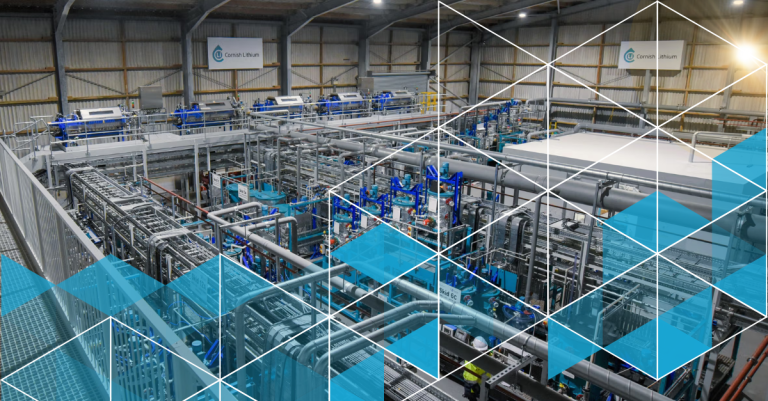
    Cornish Lithium has turbocharged its journey to full-cycle domestic lithium production by acquiring breakthrough processing technology and patents from Australian innovator Lepidico. This strategic move empowers Cornish Lithium to mine, process, and refine battery-grade lithium hydroxide entirely within its Trelavour Downs site in Cornwall—marking a milestone in the UK’s ambition to build an independent, sustainable lithium supply chain.

    The technology, proven through licensed pilot trials since 2021, enables a streamlined “pit to battery-grade product” pathway. By operating at atmospheric pressure and moderate temperatures, the process slashes carbon emissions, setting a new environmental standard for the industry. Cornish Lithium now holds exclusive rights to the intellectual property and plans to license the process globally under its own brand.

    This acquisition also reinforces the UK government’s designation of the Trelavour Hard Rock Project as a Nationally Significant Infrastructure Project, bringing the country closer to producing over 50,000 tonnes of lithium carbonate equivalent (LCE) domestically by 2030. With its low-emission demonstration plant already online and further expansion plans, Cornish Lithium is positioning itself—and Cornwall—at the heart of the UK’s green energy transition.

    “This is a huge step forward for the whole country, allowing us to secure the UK’s future lithium supply,” said Jamie Airnes, CEO of Cornish Lithium.