Tag: Critical Raw Materials Act (CRMA)

  • EU Selects 47 Projects to Bolster Raw Materials Security

    EU Selects 47 Projects to Bolster Raw Materials Security

    The European Commission has, for the first time, selected a list of 47 Strategic Projects aimed at enhancing domestic capacities for strategic raw materials. These initiatives are expected to fortify Europe’s raw materials value chain and diversify its supply sources. The Strategic Projects represent a key milestone in the implementation of the Critical Raw Materials Act (CRMA), which seeks to ensure that the EU achieves extraction, processing, and recycling targets of 10%, 40%, and 25%, respectively, by 2030. By meeting these benchmarks, the projects will play a pivotal role in supporting Europe’s green and digital transitions, alongside strengthening the defence and aerospace sectors.

    Key Details of the Strategic Projects

    The selected 47 Strategic Projects span across 13 EU Member States, including Belgium, France, Italy, Germany, Spain, Estonia, Czechia, Greece, Sweden, Finland, Portugal, Poland and Romania. Covering various stages of the raw material value chain, the projects include:

    • 25 focusing on extraction,
    • 24 on processing,
    • 10 on recycling, and
    • 2 on substitution.

    These initiatives encompass 14 out of the 17 strategic raw materials identified in the CRMA. Notable resources include lithium (22 projects), nickel (12 projects), cobalt (10 projects), manganese (7 projects), and graphite (11 projects), which are vital for the EU battery value chain. Moreover, magnesium and tungsten projects will reinforce the resilience of the EU’s defence sector.

    Benefits and Criteria

    To qualify, projects needed to demonstrate contributions to securing EU’s raw materials, compliance with environmental, social, and governance (ESG) standards, technical feasibility, and cross-border benefits. With an anticipated investment of €22.5 billion, these projects will benefit from coordinated support regarding funding, streamlined permitting procedures, and connections with off-takers. Extraction permits will be processed within a maximum of 27 months, while other projects will follow a 15-month timeline, significantly shortening current durations of 5 to 10 years.

    Background on the CRMA

    The Critical Raw Materials Act became effective on 23 May 2024, with the European Commission subsequently inviting proposals for recognition of Strategic Projects. Following assessments and consultations involving Member States and the European Parliament, the final list of projects was announced. The Commission is also evaluating applications from non-EU countries and plans to issue a new call for proposals by the end of summer.

    This represents a landmark achievement towards securing Europe’s supply of strategic raw materials and boosting sovereignty in industrial sectors.

  • Europe Sleepwalking into Critical Raw Materials Crisis, Warns Expert

    Europe Sleepwalking into Critical Raw Materials Crisis, Warns Expert

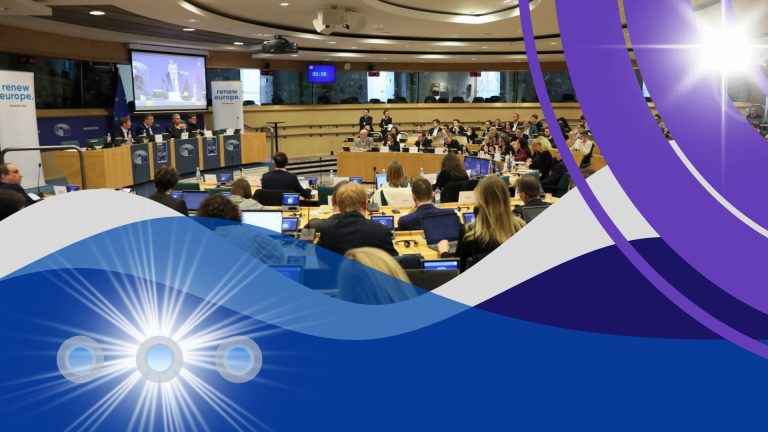
    29 January 20205, Brussels, Belgium — Peter Tom Jones, Director of the KU Leuven Institute for Sustainable Metals and Minerals (SIM2), issued a stark warning to European policymakers yesterday, declaring that failure to secure a self-sufficient critical raw materials (CRM) supply chain would leave Europe at the mercy of China. His remarks came during a high-stakes panel discussion in the European Parliament titled “Supporting the European Automotive Sector to Meet EU Green Transition Goals in Global Competition”, part of a broader event on supporting the EU automotive sector’s green transition.

    Europe’s “Abdication of Responsibility”

    Jones criticised Europe’s historic neglect of upstream mining and refining activities, accusing the bloc of outsourcing CRM production to the Global South while focusing solely on high-value downstream manufacturing. “This has been a significant abdication of our social and environmental responsibilities,” he said, arguing that reliance on external suppliers has left Europe exposed in an era of escalating geopolitical tensions.

    The panel, moderated by MEP Yvan Verougstraete and featuring industry leaders like Julia Poliscanova (Transport & Environment) and Sigrid de Vries (ACEA), highlighted the urgency of addressing supply chain vulnerabilities as the EU races to meet 2030 climate goals.

    China’s Vertical Dominance vs. Europe’s “Siloed Thinking”

    Jones underscored China’s dominance in building a vertically integrated “mine-to-EV” value chain, contrasting it with Europe’s fragmented approach. “While China plans strategically for the long term, Europe remains siloed and reactive,” he said, pointing to the recent shift by European automakers from nickel-manganese-cobalt (NMC) to lithium-iron-phosphate (LFP) batteries. This pivot, he warned, has destabilized Europe’s nascent mining and refining sectors, which lack the infrastructure to support LFP production at scale.

    Compounding these challenges are China’s anticipated export restrictions on magnet and LFP battery technologies—a move Jones called “existential” for Europe’s green transition.

    Call to Action: 15 Mining, Refining, and Recycling Projects by 2030

    Jones urged rapid implementation of the EU’s Critical Raw Materials Act (CRMA), demanding immediate support for at least 15 strategic mining projects, 15 refining facilities, and 15 battery/magnet recycling plants. “With just five years until 2030, we cannot afford delays,” he stressed, warning that opposition from “ideologically driven anti-mining activists” threatens Europe’s energy transition.

    His proposal aligns with calls from industry groups like Eurometaux and Euromines, which have long advocated for streamlined permitting and funding for CRM projects.

    The Path Forward: “Evidence-Based Environmentalism”

    Jones concluded with a plea for pragmatism, advocating “evidence-based environmentalism” that balances ecological concerns with strategic needs. “We must engage companies, governments, and the public to develop an ESG-proof model for responsible metal production in Europe,” he said.

    The event, organised by the Renew Europe faction, signals growing political momentum to secure Europe’s raw materials future. Yet with China’s shadow looming large, the bloc faces a race against time to transform rhetoric into action.

    Key Stakeholders React

    • Judith Kirton-Darling (industriAll Europe): Emphasised the need for “just transition” policies to protect workers in traditional industries.
    • Julia Poliscanova: Warned against repeating fossil fuel-era mistakes by prioritising extraction over circular economy solutions.
    • PROMETIA & Horizon Europe consortia: Highlighted ongoing projects like LITHOS and EXCEED to innovate in sustainable mining and recycling.

    Peter Tom Jones’s full remarks and policy recommendations are available on his LinkedIn profile.

  • The role of critical raw materials in economic and environmental sustainability

    The role of critical raw materials in economic and environmental sustainability

    In today’s global economy, the significance of battery raw materials, rare earth elements and other critical raw materials cannot be overstated. They serve as the backbone of essential technologies driving electromobility, renewable energy generation and storage, energy-efficient consumer and industrial products, as well as aerospace and defence applications.

    As geopolitical tensions escalate worldwide, access to these critical raw materials emerges as a pivotal factor influencing the economic and environmental sustainability of entire nations. European Commission President Ursula von der Leyen underscored this reality in her 2022 State of the Union address, declaring that “lithium and rare earths will soon be more important than oil and gas.”

    While China and Japan have long prioritized sustainability in their raw materials supply chains, the European Union has lagged behind. Recognizing the urgent need to bridge this gap, the EU has introduced the Critical Raw Materials Act to fortify domestic supply chains while advancing economic and environmental sustainability within the region.

    The CRMA aims to enhance reliable and sustainable access to critical raw materials by setting clear targets for domestic mining, processing, and recycling to achieve by 2030. Additionally, the act aims to mitigate the EU’s dependence on individual non-member states or nations to avoid overreliance on single sources.

    Among the 34 critical raw materials identified by the EU, 16 are categorized as strategic raw materials. Notably, rare earth elements and lithium stand out as crucial components driving Europe’s transition to electromobility and renewable energy. These materials are also integral to sustaining the competitiveness of domestic manufacturers reliant on sustainable supplies.

    While the EU possesses sufficient mineral resources to meet the targets outlined in the CRMA for rare earth elements and lithium, political and social resistance, combined with complacency among some end-users, have hindered necessary investment and development efforts.

    Although the role of lithium in electrification and the energy transition is widely recognized, the intricate significance of rare earth elements remains less understood. This presents a potential blind spot that EU policymakers and industry stakeholders must address to ensure the success of sustainable raw materials strategies.

  • Navigating Global Geopolitics: Germany and the EU’s Quest for Raw Materials

    Navigating Global Geopolitics: Germany and the EU’s Quest for Raw Materials

    As the demand for energy transition, electromobility, and digitalization surges globally, Germany finds itself at the forefront, recognizing the critical importance of a steady supply of minerals and metals. Essential for sectors like automotive, mechanical engineering, and chemicals, raw materials form the backbone of Germany’s industrial prowess. The complexities of metal supply chains, coupled with the escalating global appetite for these resources, heighten the significance of securing a stable supply.

    Germany’s current reliance on imported raw materials is pronounced, with only a fraction sourced domestically. The German Mineral Resources Agency highlights that in 2022, the country imported metals worth €121.7 billion, reflecting the challenges of achieving self-sufficiency. The geopolitical dimension adds another layer, with China emerging as a central hub in global metal supply chains. China’s role as a major supplier, especially in providing rare earths to the European Union, underscores the vulnerabilities created by high dependencies.

    In response, the European Commission has proposed the Critical Raw Materials Act (CRMA) in March 2023 to address these challenges. The CRMA seeks to boost domestic mining, expand recycling capacities, and diversify imports of critical raw materials. The European Union aims to establish new partnerships and reduce dependency on individual countries to ensure a resilient supply chain.

    Globally, the competition for raw materials is escalating. The United States, through initiatives like the Inflation Reduction Act and the Minerals Security Partnership, actively secures its raw material supply chains. China, on the other hand, extends its influence through industrialization projects in Africa and the solar industry.

    In this race, even Saudi Arabia, with its “Vision 2030,” is investing significantly in mineral resource development. Resource-rich countries in the Global South see the geopolitical competition as an opportunity to move beyond being mere suppliers and establish stages of industrial production within their borders.

    The EU responds by forging strategic raw materials partnerships with various countries, recognizing the need for a coordinated approach among member states. However, the global race necessitates careful navigation of international cooperation complexities.

    While financial resources are crucial, strategic foreign policy decisions take center stage. The EU must engage in meaningful dialogues with potential raw material partners, considering economic and industrial policy interests. The competition for raw materials extends beyond monetary transactions, requiring a nuanced and proactive foreign policy approach to secure Europe’s access to essential resources.

  • Sustainable raw materials for green technologies

    Sustainable raw materials for green technologies

    Euromines President invited European Institutions and Automotive sector to jointly assess the realities of supply of raw materials to European manufacturers. His two statements summarize the past decade approach to raw materials in the EU: “For years Europe was far too complacent in outsourcing pollution – and receiving raw materials for our consumption in return” – and yet “Nowhere else mining is happening at such a high level of environmental protection as in Europe”.

    From the rare earth crisis in the beginning of the 2000s, to the magnesium, gallium and germanium graphite crunch today – the intervals demonstrating European vulnerabilities are becoming shorter. The resulting dependency creates pressure on political leadership in the EU. European Institutions seem to have acknowledged this threat to competitiveness of the European industry. After all, the same materials are critical to achieving Green Deal made in Europe with or values, industry and society. Only by including all these aspects the green transformation can be a successful role model to copy for other countries.

    In 1957, European leaders had the incredible foresight to make war economically impossible and eventually unthinkable. At the heart of it: integrating the production of raw materials across borders of countries, obliging them to work together. Across various economic crises, Europe calibrated a systemic prosperity and comfort by trading, finding allies and ensuring access to energy and non-energy commodities.

    Today EU faces yet another challenge: climate change and the required energy, consumption and production transition, shift the rules of the game to a new level of fierce competition. War has returned to Europe, and it is not a given that allies and rivals alike step in for what Europe decided to outsource. Such increasing exposure is a serious to our prosperity and innovation power to find answers to the gargantuan task of tackling climate change.

    ESG and geopolitical imperatives while maintaining prosperity will depend on a commodity transition: metals and minerals will fuel the planet. The demand increase for metals needed for goods such as e-vehicles and the infrastructure to make this work will be enormous – we cannot even fathom it. This requires bold steps in how we treat and use raw materials: not just specific in form of applications or technologies but systemic across value chains. After all, the sustainability impact of driving an e-vehicle depends on the sustainability performance of the raw materials it is made of.

    European mining emerges as a strategic linchpin for autonomy in green, digital, and defence sectors. It can provide the raw materials needed to make a wind turbine run and a battery to store this electricity, but also serve as a benchmark for ESG standards for imported materials.

    Europe is not alone.

    The EU’s Green Deal is not the only sustainability transition policy – the race for raw materials will intensify even more, scrambling to get access to the most promising deposits. Control over extraction rights and refining capacity will be the defining geopolitical challenge for the decades to come. Europe needs to reckon with this on three accounts:

    Utilize Europe’s Resources: Europe must tap into its promising deposits for critical and strategic materials, utilizing the knowledge and expertise of EU mining companies with minimal environmental impact.

    Build Sustainable Partnerships: Outsourcing to areas with lower regulatory requirements is not an option. Europe must engage in partnerships with allies willing to uphold high standards in environmental, social, and governance issues.

    Circular Economy Integration: Beyond recycling, integrating mining into the Circular Economy concept can minimize primary raw material extraction for other sectors.
    Redefining Raw Material Approaches.

    Raw materials should no longer be considered merely a procurement issue. Confirming this disparity in approaches is the fact that for many sectors, supply of raw materials is sixth or seventh tier on their demand list. Yet, without securing the premium for the ESG criteria in sourcing them, the rift between downstream manufacturing and upstream mining companies will continue to render supply chains fragile, prone to disruptions and impede sustainability and human rights standards.

    Extraction, refining, and manufacturing need to compete on more than “just-in-time” and cheapest prices. This behaviour change is a catalyst to do more in a sustainable way and be honest in how we source and procure raw materials to fulfil our own sustainability ambitions.

    Sustainability is not an externality.

    Internalizing high production standards in upstream and security of supply externalities in downstream industries must go hand in hand to recognize costs and benefits of a sustainable raw materials extraction. Mining as the base of many Green Deal objectives – if done right – decarbonizes entire value chains. LKAB’s pellets are 7 times less CO2-intensive than sinter production and key for decarbonized steel production. Boliden’s Aitik and Kevitsa mines are prime examples of mine electrification -providing low-carbon copper and zinc that are needed for electrification through increased deployment of fossil free electricity.

    The EU raw materials mining industry has all the elements ready – from deposits, environmentally friendly extraction processes to a world-class R&D ambition to further reduce the impact of mining and providing critical and strategic raw materials. To make this happen Europe must act now! The Critical Raw Materials Act is a paradigm shift politically recognizing the benefits of our own backyard. The momentum initiated with the CRM Act must not be slowed down. There is a lot to do if we are serious about our role in the global green transition – starting with the production of our daily-life consumption.


  • EU already late for its 2030 raw materials targets, French experts warn

    EU already late for its 2030 raw materials targets, French experts warn

    To achieve its energy and climate goals, the European Union will need to electrify on a massive scale, which in turn, will require more raw materials for the manufacture of electricity-generating and storage equipment such as batteries, wind turbines and solar panels.

    To this end, the European Commission presented its proposal in mid-March for a Critical Raw Materials Act (CRMA), with a view to advancing the EU’s energy and ecological transition.

    Under it, EU countries must ensure that 10% of the extraction, 40% of the refining and 15% of the recycling of several dozen raw materials takes place on home turf by 2030.

    On top of that, the Commission proposes the EU should no longer be more than 65% dependent on a single non-EU country for a single raw material – a difficult task given to what extent the EU currently depends on imported minerals, notably from China, which accounts for up to 90% of the value chain for certain materials.

    Those targets have been at the centre of the debate ever since, with some lawmakers in the European Parliament opposed to their introduction and some EU countries like France and Germany prefering targets for individual minerals.

    “It would be absurd to set the same targets for cobalt, 80% of whose reserves are located in a single African country, as for lithium, for example, which can be mined in Europe,” explained French Industry Minister Roland Lescure.

    Unexplored subsoils

    The French mining industry also supports the idea of introducing sector-specific targets for individual raw materials, saying Europe “lacks sufficient production capacity and time to implement them” for certain metals listed in the CRMA, explained Christophe Poinssot, deputy director general of the French geological and mining research bureau.

    But beyond the difficulties of supplying certain minerals domestically, Poinssot also pointed to data gaps due to an unexplored geological potential in Europe.

    In France, “knowledge of subsoil resources is extremely patchy and covers only part of the country,” Poinssot said at a conference organised by the right-wing Les Républicains party in early July.

    “The inventory carried out 40 years ago was for a long time limited to the first 100 metres underground,” he explained.

    Resources in Europe’s subsoil could even be exported, the researcher also said.

    Norway, for example, recently discovered a phosphate deposit that could supply a considerable proportion of the EU’s needs. At the beginning of January, Sweden also announced the discovery a major deposit of rare earth oxides.

    Under these conditions, “we need to reinvest in learning more about our subsoil and reopening mines. To do this, we need to relaunch an inventory of the mineral resources present in all 27 EU member states,” Poinssot argues.

    Critical Raw Materials: EU countries push for more ambitious targets

    In a fresh agreement on the Critical Raw Materials Act (CRMA), EU countries want to further increase targets for domestic processing of strategic raw materials, despite public commitments that processing should be done in resource-rich partner countries.

    New mines take time

    However, new mining projects take many years to come to fruition, said Poinssot, who pointed to the average 17 years it takes to bring a mine from exploration into production, globally.

    “We need to start working now on developing mining projects,” he said. Otherwise, “a certain number of trajectories and scenarios desired by the EU will be constrained by our extraction capacities,” he warned.

    The French Atomic Energy Commission, a key player in French industrial and technological research, also shares this observation, saying EU objectives are “not very credible” because of the intrinsic delays in opening new mines.

    Between now and 2030, “most of the extraction capacity that will be available in the EU […] depends on projects that are already under development,” explains the French body in its opinion on the draft CRMA.

    To address this, the French research energy body suggests that the Commission “define progressively increasing targets for the share of extraction in the EU over different time horizons”.

    In short, without opening a mine now, the EU is already behind its targets.

    “The Commission is a little too optimistic about the speed with which we will be able to deploy industrial solutions to achieve these targets,” Bertrand Boucher, the CEA’s representative to the European Commission, told EURACTIV France.

    Speeding up

    Despite these caveats, the EU has every interest in speeding up mining projects since the transformation and recycling parts of the value chain will remain “permanently insufficient to meet demand,” CEA added.

    Even if all available resources were to be extracted, “more will be needed” because of the very high demand, Bouchet explained.

    For instance, “there won’t be enough resources worldwide” to meet the electric mobility targets adopted by all countries globally, Poinssot explained, adding that “it’s not a question of resources but of timing”.

    Jean-Dominique Senard, Chairman of French carmaker Renault, painted the situation in doomsday terms, saying that “the war of the future will be the war of metals”.

    This means that CRMA targets need to match those of the Net-Zero Industry Act (NZIA), as advocated by the European Association of Research and Technology Organisations (EARTO), of which CEA is a member.