Tag: Critical Metals Corp

  • European Lithium and Critical Metals Corp: A Market-Driven Merger with Variable Exchange Rate

    European Lithium and Critical Metals Corp: A Market-Driven Merger with Variable Exchange Rate

    The merger between European Lithium and Nasdaq-listed Critical Metals Corp has taken a complex turn with the introduction of a variable exchange ratio linked to the price of CRML shares. This new structure, which replaces the original fixed exchange ratio, allows for a dynamic calculation that can either enhance or diminish the value for shareholders depending on the fluctuating stock price of CRML. Investors are now faced with a situation where the exchange ratio can range from 0.025 to 0.045 CRML shares for each European Lithium share, contingent on CRML’s stock price falling within a specified band of USD 8 to USD 16.

    As of the latest trading session, European Lithium shares experienced a decline of 1.86 percent, while Critical Metals Corp saw a slight increase of 2.11 percent. This divergence highlights the differing market perceptions of the revised merger terms. The situation is further complicated by a recent downgrade from Freedom Broker, which lowered its price target for CRML from USD 17 to USD 8, raising concerns about the viability of the merger for European Lithium shareholders.

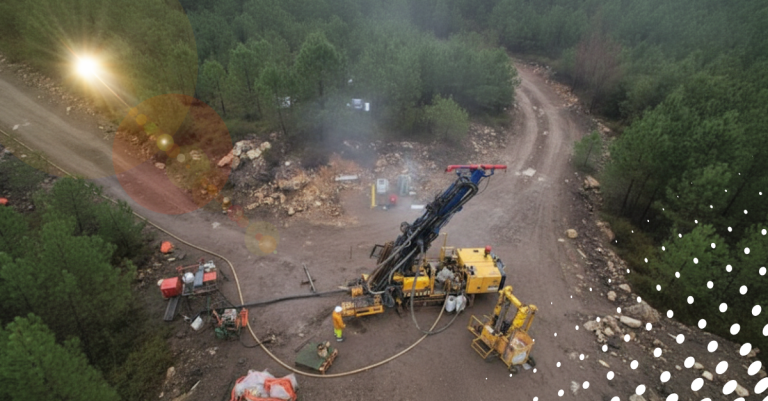
    European Lithium’s primary asset, the Wolfsberg lithium project in Austria, has yet to generate revenue, and the company has never issued dividends. The focus has shifted towards the 92.5 percent stake in the Tanbreez project in Greenland, where a significant drilling program is currently underway. This transition means that any changes to the exchange ratio will directly affect how much exposure Austrian shareholders have to the Greenland project.

    Despite the recent fluctuations, European Lithium’s stock has shown a remarkable recovery, up 109 percent since the start of the year. However, the volatility remains high, with annualized volatility reaching 100 percent, indicating ongoing uncertainty in the market. The broader environment for critical minerals projects in Europe is also challenging, with increasing local opposition to new mining initiatives, as seen in the Jadar lithium project in Serbia.

    The merger process is still ongoing, with court and security holder approvals pending. The Scheme Booklet, which will provide an independent expert’s assessment of the transaction, is expected to be released in early September. This document could significantly influence the market’s perception of the merger’s value. The completion target for the merger remains set for October 2026, contingent upon receiving the necessary approvals. Until then, the floating exchange rate mechanism will closely tie European Lithium’s valuation to the performance of CRML shares on the Nasdaq, making the outcome of this merger highly dependent on the stock’s daily fluctuations.


  • Critical Metals Launches Strategic Review to Sell or Spin Off Non-Core Assets and Focus Capital on Greenland’s Tanbreez Rare Earth Project

    Critical Metals Launches Strategic Review to Sell or Spin Off Non-Core Assets and Focus Capital on Greenland’s Tanbreez Rare Earth Project

    Critical Metals Corp has launched a strategic review of its portfolio with the intention of selling, spinning off or partnering non-core assets, directing capital and resources toward its flagship Tanbreez rare earth project in southern Greenland — one of the largest undeveloped heavy rare earth deposits outside China.

    The company has hired Clear Street as financial adviser and White & Case LLP as legal adviser to evaluate options including asset sales, joint ventures, strategic partnerships, alliances and business separations. Critical Metals cautioned there is no assurance the process will result in a transaction.

    Chairman Tony Sage said the review is designed to position Critical Metals as “a premier pure-play Western source of heavy rare earths and other critical minerals essential to defence, energy, and advanced technology supply chains.”

    Critical Metals became the sole owner of Tanbreez in April following an $835 million deal to absorb European Lithium. The project at Killavaat Alannguat in southern Greenland carries a preliminary economic assessment valuing it at approximately $3 billion based on a 4.7 billion-tonne resource across two deposits. The company has secured offtake agreements covering approximately 75% of future production and has lined up up to $120 million in financing from the US Export-Import Bank. First ore production is targeted for the fourth quarter of 2028 or the first quarter of 2029.

  • Critical Metals Corp Begins Investing in Ukraine’s Velta Titanium Assets as $250 Million Programme Advances

    Critical Metals Corp Begins Investing in Ukraine’s Velta Titanium Assets as $250 Million Programme Advances

    Critical Metals Corp executive director Tony Sage has visited the production assets of Ukrainian titanium holding Velta, confirming that the US-listed company has begun directing investment into the assets as it absorbs European Lithium in a deal valued at $835 million.

    The visit signals that the corporate restructuring — which originally envisaged Velta Holding being acquired by European Lithium before the transaction structure shifted to Critical Metals absorbing European Lithium instead — has not disrupted the strategic partnership or the agreed development plans for a critical raw materials cluster in Ukraine. According to Velta, the strategic content of the partnership and the development roadmap remain unchanged.

    First-stage financing has already been directed toward the rapid modernisation of the Birzulyvskyi mining and processing complex. The partnership is now moving to the next phase, involving capital re-equipment of the complex and preparation for the development of the Likarivskyi deposit, which will serve as the raw material base for the planned CRM cluster. The two sides are currently preparing the next stage of a four-year, $250 million investment programme.

    The longer-term objective is to build a vertically integrated production chain running from critical material extraction through to the manufacture of high-value-added end products for global industrial markets — positioning Ukraine as a contributor to Western critical minerals supply chains outside China.

  • Romania Claims EU Leadership in Critical Raw Materials as US Partnerships Advance

    Romania Claims EU Leadership in Critical Raw Materials as US Partnerships Advance

    Romania holds 16 of the 32 critical raw materials designated at EU level and ranks first in the bloc in terms of subsoil resources for rare earths and strategic minerals, Energy Minister Bogdan Ivan has said.

    Speaking to local media, Ivan stated that Romania possesses half of the critical elements Europe considers essential, with some found only in Romania and at most one other EU member state. The minister argued that this positions the country as a key pillar of Europe’s resource security strategy.

    Romania is already working with what Ivan described as an “extremely important” American company in efforts to reduce dependence on Chinese critical minerals. According to local reports, this partner is likely Critical Metals Corp, which has links to investor Frank Timiș.

    Ivan acknowledged, however, that Romania currently lacks an integrated processing and refining chain for these materials. Developing such infrastructure would, he said, create the first fully integrated rare earth processing chain in the western hemisphere, potentially supplying strategic industries including aerospace and advanced technology manufacturers such as SpaceX.

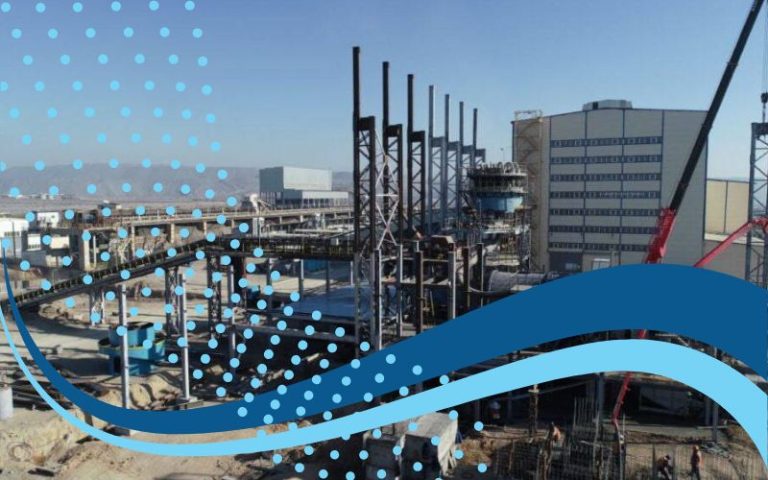
    Discussions are also reportedly under way regarding cooperation between Critical Metals Corp and Nuclearelectrica (BVB: SNN). The proposal involves transforming the uranium processing facility at Feldioara into a plant capable of refining rare earth elements sourced from Greenland.

    In parallel, Ivan highlighted three Romanian projects included under the EU’s Critical Raw Materials Act, with a combined value of around EUR 615 million. According to European Commission data, these projects are being developed by Euro Sun Mining (copper), Salrom (graphite), and Verde Magnesium (magnesium). One of the projects, Euro Sun Mining’s copper development, currently lacks a valid environmental permit.

    The minister’s remarks come as the European Union intensifies efforts to diversify supply chains and reduce reliance on external suppliers amid geopolitical tensions and rising demand from the energy transition and defense sectors.

  • Critical Metals Corp and Romania’s FPCU Form 50:50 JV to Build EU Rare Earth Processing Hub Linked to Tanbreez

    Critical Metals Corp and Romania’s FPCU Form 50:50 JV to Build EU Rare Earth Processing Hub Linked to Tanbreez

    Critical Metals Corp. (Nasdaq: CRML) has executed a term sheet to establish a 50:50 joint venture with Romania’s state-owned Fabrica de Prelucrare a Concentratelor de Uraniu (FPCU), marking a major step toward creating a fully integrated, Western-aligned rare earth supply chain spanning mine to processing.

    Under the agreement, the JV will secure long-term offtake rights to 50% of Tanbreez’s rare earth concentrate production and advance plans to develop a state-of-the-art rare earth processing facility in Romania. The project is designed to supply European industries and defence sectors while reducing reliance on China, which currently controls more than 80% of global rare earth processing capacity.

    The JV structure is notable in that CRML will not issue debt or equity to fund the facility. The company will retain its 50% stake on a carried-interest basis, with no capital expenditure obligations related to construction. The plant is expected to produce a range of high-value outputs, including aerospace- and military-grade rare earth magnets.

    With this agreement, CRML will have 75% of Tanbreez’s future production committed under long-term offtake agreements with allied partners, following earlier deals allocating 10% to UCORE and 15% to ReAlloys. Once mining at Tanbreez is commissioned, CRML will supply half of the project’s concentrate to the Romanian JV for the full life of mine on competitive market terms.

    The partners will now work to finalise the technical and commercial framework for the JV, overseen by a dedicated development committee responsible for plant design, development strategy and commercialisation of processed products. Both CRML and the Romanian government plan to apply for funding under the EU’s recently announced €3.5-billion critical raw materials support package.

    CRML also confirmed it is updating its feasibility study to reflect a redesigned processing flowsheet at Tanbreez. The company is targeting an increase in concentrate grade from 2.2–2.5% to above 3% TREO, which is expected to improve mine-to-metal economics and downstream product quality. An updated feasibility study and revised timelines are expected by Q1 2026.

  • Critical Metals Corp Strikes 50:50 JV with Romania’s FPCU to Build EU Rare Earth Processing Hub

    Critical Metals Corp Strikes 50:50 JV with Romania’s FPCU to Build EU Rare Earth Processing Hub

    European Lithium’s US-listed subsidiary, Critical Metals Corp (CRML), has signed a term sheet to form a 50:50 joint venture with Fabrica de Prelucrare a Concentratelor de Uraniu (FPCU), Romania’s state-owned strategic processor of mineral concentrates. The agreement marks one of Europe’s most significant moves yet to establish a Western-aligned rare earths processing base as the EU and NATO seek to reduce reliance on China.

    Under the deal, the JV will secure 50% of the offtake from Greenland’s Tanbreez rare earth project, lifting the total volume under long-term agreements with Western partners to 75%. The partners plan to design, finance and construct a rare earth refinery in Romania to convert Tanbreez concentrate into high-purity metals, salts and military-grade magnet products.

    CRML chair and CEO Tony Sage described the agreement as a “monumental game-changer”, arguing that the partnership positions Europe to claw back strategic independence in rare earths. The facility, he said, will underpin sectors ranging from defence to advanced manufacturing, supplying feedstock sourced entirely from Western-aligned jurisdictions. CRML will retain a 50% stake in the JV on a carried basis and will not contribute capital to construction.

    FPCU CEO Cosmin Ghiță called the initiative a core pillar of Romania’s emerging industrial strategy, aligning with its ten-year plan to modernise strategic materials production. The plant will be located at the Feldioara complex, a site with a long history of refining and hydrometallurgical operations.

    The term sheet also outlines CRML’s intention to upgrade Tanbreez concentrate grades by revising its processing flowsheet, potentially lifting TREO content above 3%. The enhancements will be incorporated into an updated feasibility study to be completed by the end of Q1 2026.

    The announcement comes as the European Commission rolls out up to €3.5 billion in financing to strengthen critical raw materials supply chains under its new Economic Security Strategy. CRML and the Romanian government plan to apply jointly for support under the funding package.

    The JV is expected to serve as a cornerstone of Europe’s rare earth supply chain, processing up to half of Tanbreez’s resource for downstream European industries. Once Tanbreez enters production, CRML will supply the Romanian plant for the life of the mine under competitive, market-based terms.

    Critical Metals Corp currently controls two key assets: the Tanbreez rare earth megadeposit in southern Greenland and the Wolfsberg lithium project in Austria, the first fully permitted lithium mine in Europe. Both are positioned to feed Western supply chains for electrification, defence, and high-tech industries.

  • Trump Administration Weighs $50 Million Equity Stake in Greenland Rare Earths Developer Critical Metals

    Trump Administration Weighs $50 Million Equity Stake in Greenland Rare Earths Developer Critical Metals

    The Trump administration is in talks to acquire an equity stake in Critical Metals Corp, giving Washington a direct interest in Greenland’s Tanbreez rare earth project — one of the world’s largest undeveloped deposits, four people familiar with the matter told Reuters.

    If completed, the deal would mark a significant political and strategic move for the United States, deepening its role in Greenland’s mineral sector — the same Arctic territory former President Donald Trump once proposed purchasing outright.

    Critical Metals, a New York–based company, acquired the Tanbreez project in 2024 for $5 million in cash and $211 million in stock, after the Biden administration successfully pushed for the sale to a Western buyer rather than a Chinese firm.

    The company has since applied for a $50 million grant under the Defense Production Act, a Cold War-era program that supports domestic production of materials essential for national security. According to three sources, the administration has begun discussions about converting that grant into an equity stake worth roughly 8%, although negotiations remain preliminary.

    A senior Trump administration official told Reuters that “hundreds of companies” had approached Washington seeking investment, and that “there is absolutely nothing close with this company at this time.”

    Critical Metals did not respond to requests for comment. Greenland, while self-governing, remains part of Denmark, whose embassy in Washington also declined to comment.

    The Tanbreez deposit, located in southern Greenland, is considered a cornerstone for Western efforts to diversify rare earth supply chains away from China, which currently dominates more than 80% of global production and processing. The project also hosts valuable gallium and tantalum, both of which are under Chinese export restrictions.

    Bringing the mine to commercial operation is expected to cost $290 million, with production forecast at 85,000 tonnes of rare earth concentrate per year by 2026. The U.S. Export-Import Bank (EXIM) is separately considering a $120 million loan to support mine development, according to sources.

    The potential U.S. investment follows other government-backed moves in the sector, including stakes in Lithium Americas and MP Materials, underscoring Washington’s strategy to secure critical minerals for electric vehicles, defense systems, and renewable technologies.

    Even before Trump’s renewed engagement with Greenland, the U.S. had maintained a longstanding presence on the island — including one of its largest Air Force bases — and successive administrations have sought to increase economic and strategic cooperation.

    Analysts note that the harsh Arctic environment and Greenland’s slow regulatory processes remain challenges to large-scale mining. However, the project could play a central role in the West’s efforts to counter China’s dominance in the rare earth supply chain.

  • Critical Metals Corp. Acquires Controlling Interest in World’s Largest Rare Earth Deposit

    Critical Metals Corp. Acquires Controlling Interest in World’s Largest Rare Earth Deposit

    Critical Metals Corp. (Nasdaq: CRML) has announced an agreement to acquire a controlling interest in the Tanbreez project in Greenland, home to the largest rare earth deposit in the world. The Tanbreez deposit hosts 28.2 million tonnes of total rare earth oxides (TREO) within 4.7 billion tonnes of material, according to internal company estimates. Notably, the asset contains over 27% heavy rare earth elements (HREE), and Critical Metals is working to convert these internal estimates to U.S. SEC standards.

    Once operational, the mine is expected to supply rare earth elements to Europe and North America. The Tanbreez areaboasts year-round direct shipping access through deep-water fjords leading to the North Atlantic Ocean, providing key transportation outlets. The outcropping orebody, known as Kakortokite, spans 8 km by 5 km and is approximately 400 metres thick.

    Critical Metals acquired the project from Rimbal Pty. Ltd., controlled by geologist Gregory Barnes. CEO Tony Sagedescribed Tanbreez as a “game-changing rare earth mine for the West,” positioning Critical Metals Corp. as a leading supplier of critical minerals with a diversified portfolio spanning multiple geographies.

    In addition to the Tanbreez acquisition, Critical Metals owns Europe’s first fully permitted lithium mine, the Wolfsberg lithium project in Austria, which debuted on the Nasdaq in March. Upon completing construction at Wolfsberg by 2026, the company has committed to supplying BMW by 2027. Critical Metals has also secured a deal with Obeikan Investment Group to build a lithium hydroxide plant in Saudi Arabia.

    Shares of Critical Metals rose 4.6% by 12:00 p.m. EDT, with the company’s market capitalization reaching $877 million.

  • BMW Transfers $15 Million to Critical Metals Corp. for Lithium Offtake

    BMW Transfers $15 Million to Critical Metals Corp. for Lithium Offtake

    Critical Metals Corp. (Nasdaq: CRML), a leading mining development company focused on critical metals and minerals for the green energy transition, announced today that Bayerische Motoren Werkte Aktiengesellschaft (BMW) has transferred US$15 million to ECM Lithium AT GmbH (ECM), a wholly-owned subsidiary of Critical Metals Corp. This payment is related to the offtake of battery grade lithium hydroxide (LiOH) from the Wolfsberg Lithium Project in Austria, which will be offset against lithium hydroxide delivered to BMW.

    “We are pleased to move our partnership with BMW forward and look forward to supporting the production of their electric vehicles in Europe in the years to come, contributing to a more sustainable and domestic battery supply chain,” said Tony Sage, CEO and Executive Chairman of Critical Metals Corp. “This pre-payment further strengthens our balance sheet and will allow us to further advance our development strategy.”

    About Critical Metals Corp. Critical Metals Corp (Nasdaq: CRML) is a leading mining development company focused on critical metals and minerals, producing strategic products essential to electrification and next-generation technologies for Europe and its partners. Its initial flagship asset is the Wolfsberg Lithium Project located in Carinthia, 270 km south of Vienna, Austria. The Wolfsberg Lithium Project is the first fully permitted mine in Europe and is strategically located with access to established road and rail infrastructure. It is expected to become the next major producer of key lithium products to support the European market. Wolfsberg is well-positioned with offtake and downstream partners to become a unique and valuable building block in an expanding geostrategic critical metals portfolio. The Company has a long-term offtake with a leading global automaker based in Europe and is expected to benefit from European Lithium’s JV with Obeikan Group. Additionally, Critical Metals Corp owns a 20% interest in prospective Austrian mineral projects previously held by European Lithium Ltd (ASX: EUR).

  • Newly created Critical Metals on track to construct EU’s first battery-grade lithium mine

    Newly created Critical Metals on track to construct EU’s first battery-grade lithium mine

    The debut of Critical Metals Corp (Nasdaq: CRML) on the Nasdaq, resulting from the merger between European Lithium (ASX: EUR) and Sizzle Acquisition Corp, experienced significant volatility. While Sizzle stock surged by 120% in after-hours trading on Tuesday, Critical Metals’ debut on Wednesday saw a 38% decline. However, by midday on Friday, CRML had rebounded, showing a gain of over 10%.

    Despite the initial turbulence, Critical Metals retains a significant stake in the Wolfsberg lithium project in Carinthia, Austria, valued at $1.2 billion. This project is poised to become the EU’s sole battery-grade lithium mine by 2027, according to Tony Sage, the executive chairman of Critical Metals.

    Sage remains optimistic despite the fluctuating share prices and current lows in lithium prices. The company has secured supply agreements with BMW and has partnered with Obeikan Investment Group to construct a lithium hydroxide plant in Saudi Arabia, a venture expected to be finalized by the end of March.

    Looking ahead, Sage is considering rare earths and uranium projects, both brownfield and greenfield, within the EU. European Lithium already holds a 7.5% stake in the Tanbreez rare earth project in Greenland, one of the largest rare earth projects globally.

    Critical Metals aims to supply BMW by 2027, following the completion of construction at Wolfsberg. Sage anticipates a favorable market environment at that time, as demand for lithium is expected to increase, potentially driving prices up.

    The construction of the hydroxide plant may prove to be more cost-effective than initially projected, with improved operational expenditure (OPEX) numbers compared to the original feasibility study for Wolfsberg conducted in 2023.

    Wolfsberg enjoys perpetual permits as long as work continues, positioning it as a key player in the EU’s lithium production landscape. This is particularly significant given the EU’s initiative to reduce dependence on China for critical raw materials.

    While some lithium projects in Europe have faced setbacks, such as Rio Tinto’s Jadar lithium project in Serbia, Critical Metals remains optimistic about its prospects, buoyed by the support of the Austrian government and the stability of its permits.

    In summary, despite initial market volatility and challenges faced by other projects, Critical Metals Corp is poised to play a pivotal role in Europe’s lithium supply chain, driven by the growing demand for lithium-ion batteries in the electric vehicle sector and the EU’s strategic objectives.