Tag: Cove Capital

  • White & Case Advises on $1.6 Billion-Backed Tungsten JV Between Cove Kaz and Tau-Ken Samruk

    White & Case Advises on $1.6 Billion-Backed Tungsten JV Between Cove Kaz and Tau-Ken Samruk

    Global law firm White & Case LLP has advised Cove Kaz Capital Group, a portfolio company of Cove Capital LLC, on the signing of definitive agreements with Tau-Ken Samruk National Mining Company to advance the Northern Katpar and Upper Kairakty tungsten projects in Kazakhstan.

    The transaction includes a share purchase agreement and shareholders’ agreement establishing a joint venture structure in which Cove Kaz will hold a 70 percent stake and Tau-Ken Samruk will retain 30 percent ownership in Severniy Katpar LLP.

    The two projects are described as the largest undeveloped tungsten resource globally, with a planned combined annual production target of 12,000 metric tons, equivalent to approximately 15 percent of current global output.

    Following execution of the agreements, Cove Kaz will proceed with a definitive feasibility study and downstream refining plans. The development is expected to create around 2,000 jobs and enhance Kazakhstan’s position in the global critical minerals supply chain.

    The project has received backing from both the US and Kazakh governments. Letters of interest have been issued for up to $1.6 billion in potential financing from the Export-Import Bank of the United States and the US International Development Finance Corporation.

    The White & Case advisory team was led by partners Carolyn Lamm in Washington, DC and Maxim Telemtayev in Astana, alongside partners Martin Menski, John Vetterli, Keith Hallam and Morgan Hollins.

  • Tau-Ken Samruk and Cove Capital Sign Agreements on Northern Katpar and Verkhneye Kairakty Tungsten Projects

    Tau-Ken Samruk and Cove Capital Sign Agreements on Northern Katpar and Verkhneye Kairakty Tungsten Projects

    Kazakhstan’s state mining company Tau-Ken Samruk has signed a series of agreements with US-based Cove Capital for the joint development of the Northern Katpar and Verkhneye Kairakty deposits, according to a press release from Samruk-Kazyna.

    The projects are expected to form the raw-material base for establishing deep tungsten processing in Kazakhstan. As part of the Northern Katpar project, the partners plan to produce ammonium paratungstate, a key intermediate product used in high-tech and industrial applications.

    To implement the projects, Cove Capital will secure no less than $1.1 billion in financing. Of this amount, $900 million is expected to be provided by the Export-Import Bank of the United States. In addition to financing, the American side will provide technological support for mining, processing, and beneficiation operations. The US will also facilitate exports to global markets, including arranging offtake contracts with US authorities.

    The two deposits contain an estimated 410,000 tonnes of tungsten. According to the mine development plan presented this week by Northern Katpar, sales of tungsten trioxide, molybdenum, copper, and bismuth are projected to generate more than 1 trillion tenge (approximately $2 billion) in revenue between 2030 and 2048.

    The parties initially agreed on joint development of the deposits in November last year. According to Reuters, Cove Capital will hold a 70 percent stake in the joint venture, while Tau-Ken Samruk will retain 30 percent.

  • Uzbekistan Eyes Kazakh Tungsten as Global Powers Compete for Strategic Metal

    Uzbekistan Eyes Kazakh Tungsten as Global Powers Compete for Strategic Metal

    Uzbekistan is plotting a tighter grip on critical minerals by seeking to purchase tungsten concentrate from Kazakhstan, as Uzbekistan’s government-led Uzbek Metal Processing Plant (TMK) prepares to ramp up production. Metin Alemder, TMK’s technical adviser, told inbusiness.kz at the China Mining summit in Tianjin that TMK is in talks with Kazakh colleagues to secure tungsten concentrate, signaling a strategic push to source raw materials locally for its expanding operations.

    Kazakhstan has been developing tungsten at the Boguty mine in the Almaty region near the Charyn Canyon. The project is led by Zhetyсу Wolfram LLC, in which Chinese-backed Jiaxin International Resources Investment Limited is a major shareholder. Boguty is regarded as one of the world’s larger tungsten deposits, with a mining licence valid through 2040. Early projections estimated an annual processing capacity of 3.3 million tonnes of ore to produce about 10,000 tonnes of 65% tungsten oxide concentrate, primarily destined for China. The site also contains molybdenum, bismuth, and beryllium, with plans to raise tungsten extraction to nearly 5 million tonnes of ore by 2027.

    Other Kazakh tungsten prospects include Aksoran at the SCO-Akmola border, as well as Northern Katpar and Verkhnee Kairakty in Karaganda. Notably, the last two are set to be developed via a joint venture in which Cove Capital (70%) partners with state mining firm Tau-Ken Samruk (30%) in a project budget of about $1.1 billion, with production expected to start in roughly 3.5 years. Cove Capital also has interests in Uzbekistan.

    Alemder notes that China already controls more than 80% of global tungsten production and leads fundamental research in this strategic metal, which Czech-like knowledge in Uzbekistan could help leverage. Tungsten is not a rare earth metal, but it remains a critical material due to its unique properties and supply concentration.

    TMK currently relies largely on local tungsten concentrates, with Uzbekistan able to produce tungsten using both hydrometallurgical and pyrometallurgical methods. The company’s plant in Chirchik is expanding capabilities, and a new hydrometallurgical workshop in Samarkand is slated to begin in 2027, targeting 5,000 tonnes of tungsten oxide annually. By 2030, production is expected to reach 15,000 tonnes per year, requiring growing external ore supplies. In the interim, the plant utilises residual tailings from an older deposit.

    In addition to tungsten, TMK is expanding molybdenum production from tailings from the Almalyk Mining and Metallurgical Complex and is developing tellurium and osmium. A sulfuric acid plant with a capacity of 500,000 tonnes annually is under construction, feeding consumables for the chemical sector, fertiliser production, and uranium mining via in-situ leaching, using sulfur supplied by Uzbekneftegaz and local gas-processing facilities.

  • Tau-Ken Samruk and U.S. Cove Capital to Jointly Develop Major Tungsten Deposits in Kazakhstan

    Tau-Ken Samruk and U.S. Cove Capital to Jointly Develop Major Tungsten Deposits in Kazakhstan

    Kazakhstan’s state mining holding Tau-Ken Samruk and U.S.-based Cove Capital have signed an agreement to jointly develop the Northern Katpar and Upper Kairakty tungsten deposits in the Karaganda region. The document was signed on the sidelines of the C5+1 Summit in Washington, D.C.

    According to Reuters, the joint venture will be 70% controlled by Cove Capital, with total investments estimated at $1.1 billion, including up to $900 million in financing from the U.S. Export-Import Bank (Exim Bank)kursiv.media reported.

    Specialists are already conducting preparatory work for the feasibility study (FS) for the Northern Katpar project. The investment initiative foresees the use of existing primary processing capacities in Kazakhstan to produce ammonium paratungstate (APT) — a key intermediate product for high-demand materials such as tungsten powders and wear-resistant components used in tools, machinery, and defense applications.

    The Northern Katpar and Upper Kairakty deposits are considered among the largest tungsten reserves in the world, with combined resources of up to 410,000 tonnes of tungsten, according to the JORC classification.

    Tau-Ken Samruk acquired LLP Northern Katpar and the deposit itself in 2015 for 7.7 billion tenge, while the Upper Kairakty exploration license was obtained in 2016.

    Founded in 2015Cove Capital invests in renewable energy and mining projects. In Kazakhstan, the U.S. company is already engaged in rare and rare-earth metal exploration at the Gremyachinsky site in East Kazakhstan and Akbulak in the Kostanay region.

  • Kazakhstan and US Forge Strategic Alliance in Rare Earth Exploration

    Kazakhstan and US Forge Strategic Alliance in Rare Earth Exploration

    Kazakhstan’s state mining company, Tau-Ken Samruk, and US-based Cove Capital are set to begin geological exploration at the Akbulak site in the Kostanai Region, targeting the discovery of rare earth elements in a significant international venture.

    “This initiative reflects our commitment to modernising industry and infrastructure while building a research base capable of supporting high-technology sectors,” said a spokesperson for the Samruk Kazyna Sovereign Wealth Fund.

    The exploration forms part of a wider strategic partnership between the firms, focusing on advancing high-potential industries. In line with this, Kazakhstan aims to overhaul its production capabilities, introduce advanced processing technologies, and further strengthen its scientific foundation.

    According to the Ministry of Industry and Construction, rare and rare-earth metals contribute 2.4% of the nation’s metallurgy output. Since 2018, the government has allocated 67 billion tenge (£114 million) to support the industry. Large-scale geological surveys are ongoing, with 25 sites across 100,000 square kilometres and 38 promising mineral deposits identified in 2024 alone.

    Currently, Kazakhstan produces a wide array of strategic metals including beryllium, tantalum, niobium, scandium, titanium, rhenium, and osmium, with by-products such as bismuth, antimony, selenium, and tellurium. Technologies for extracting gallium and indium are also in place. Future economic opportunities are seen particularly in the production and recycling of battery materials, heat-resistant alloys, semiconductor materials, and permanent magnets.

  • Uzbekistan’s Critical Raw Materials Sector Gains Momentum Amid U.S. Engagement

    Uzbekistan’s Critical Raw Materials Sector Gains Momentum Amid U.S. Engagement

    In a significant stride towards fostering U.S.-Uzbekistan relations, the recent Congressional Breakfast titled “Uzbekistan – Trade, Investment & U.S. Relations” brought together key stakeholders to discuss the evolving economic landscape of Central Asia. The event highlighted Uzbekistan’s ongoing reforms under President Shavkat Mirziyoyev, with a particular focus on the mining and critical minerals sector—a cornerstone for sustainable development and secure supply chains.

    One of the pivotal moments of the gathering was the announcement by Congressman Trent Kelly regarding the introduction of H.R. 2329, a bill aimed at extending Permanent Normal Trade Relations (PNTR) to Uzbekistan. This legislative move, now referred to the House Committee on Ways and Means, underscores the growing importance of Uzbekistan as a strategic partner in the global supply chain for critical raw materials.

    Congresswoman Carol Miller’s recent visit to Central Asia, where she engaged with Presidents Mirziyoyev and Tokayev, further emphasized the region’s potential as a unified partner for the United States. Her presence at the event symbolized the collaborative spirit needed to address challenges in securing critical resources and ensuring regional stability.

    Bridge Capital Partners, in collaboration with Cove Capital LLC, has been at the forefront of these efforts, leveraging American expertise to unlock Central Asia’s potential. Since 2023, Cove Capital has deepened its engagement in the region, advancing initiatives in critical sectors such as minerals, infrastructure, and sustainable development. These partnerships are not only fostering economic growth but also building trusted, long-term relationships across Uzbekistan and Kazakhstan.

    As Uzbekistan continues to open its economy, the mining and critical minerals sector stands out as a beacon of opportunity. The reforms and investments in this area are not just reshaping the nation’s economic trajectory but also positioning it as a key player in the global push for sustainable and secure raw material supply chains.

  • Rare and Critical Metals: Kazakhstan’s Global Opportunity

    Rare and Critical Metals: Kazakhstan’s Global Opportunity

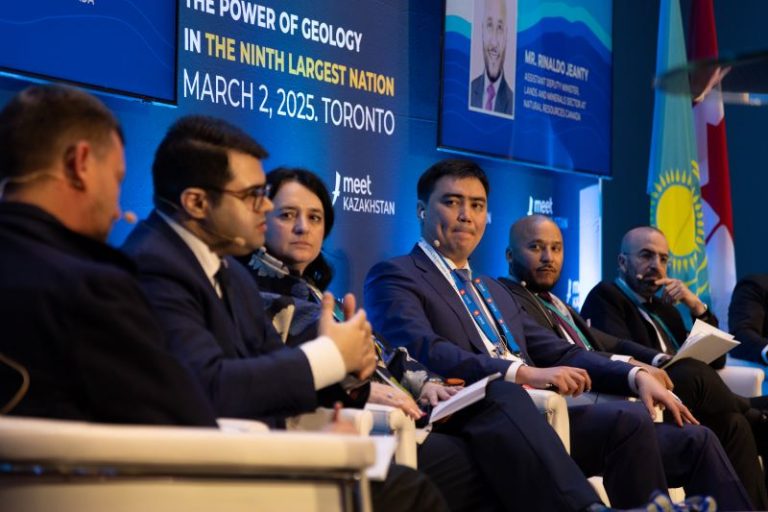
    At the PDAC 2025 Convention in Toronto, Kazakhstan took centre stage with its session “Rare and Critical Metals – Global Perspectives and Local Opportunities,” showcasing its ambition to become a pivotal player in the global critical minerals supply chain. The session ” brought together high-level representatives from Kazakhstan, Canada, the European Union, and private industry to discuss the strategic importance of rare earth elements and critical minerals in today’s technology-driven economy.

    The New Oil: Kazakhstan’s Mineral Wealth

    “Kazakhstan has one of the world’s largest reserves of rare and critical metals,” explained Mr. Renat Bekturov, Governor of the Astana International Financial Centre, during his opening remarks. “According to the World Bank, the country possesses over 5,000 unexplored deposits of rare metals with an estimated total value exceeding $46 trillion US.”

    This staggering figure underscores why President Kassym-Jomart Tokayev has characterized rare metals as “the new oil” and a key driver of Kazakhstan’s technological future. With the global market for these resources expected to grow 8% annually through 2035, Kazakhstan sees an opportunity to position itself as a trusted alternative supplier, reducing global reliance on concentrated markets.

    Kazakhstan’s Strategic Approach

    Vice Minister of Industry and Construction, Mr. Iran Sharhan, outlined Kazakhstan’s vision for rare and critical metals. “We are planning to establish a closed circuit or closed chain starting from exploration, surveying, extraction, and processing of rare metals and critical materials,” he explained through an interpreter.

    The government has identified 20 critical minerals requiring additional geological survey and is actively seeking international partnerships to bring advanced technologies and expertise to the country. “We require extensive financing and investments to ensure deep processing of these critical materials and rare metals,” Iran noted.

    Kazakhstan’s comprehensive plan for 2024-2028 focuses on four key pillars:

    1. Expanding the resource base through large-scale geological exploration and mapping
    2. Advanced processing and value-added manufacturing by modernizing facilities to reduce raw material exports
    3. Strengthening international collaboration through partnerships with leading technology providers
    4. Building a transparent and competitive market with clear regulatory frameworks to attract international investors

    International Collaboration: Key to Success

    The panel highlighted how international collaboration is crucial for developing critical mineral resources. Rinaldo Jeanty, Associate Assistant Deputy Minister at Natural Resources Canada, shared that Canada’s Critical Mineral Strategy, launched in 2022 with $4 billion in backing, prioritizes international partnerships.

    “We have a common understanding when it comes to strong ESG standards, so I think there’s opportunities for us to work together,” Jeanty said, referencing potential collaboration with Kazakhstan. He noted that Canada’s Geological Survey, with its 176-year history, offers expertise that could benefit Kazakhstan’s exploration efforts.

    The European perspective, presented by Madalina Ivanica, Deputy Head of Unit at DG GROW, European Commission, emphasised the EU’s need to diversify its critical mineral supplies. “We are strongly dependent on single suppliers in Europe, so we wanted to look further and see where supplies can come from,” she explained.

    The EU’s partnership with Kazakhstan, established in 2022, focuses on five pillars:

    • Identifying joint projects
    • Cooperating in research and innovation
    • Supporting infrastructure development
    • Developing skills and capacity building
    • Improving ESG standards

    Technology Development Challenges

    Conrad Blake, Managing Director of Minerals at HATCH, addressed the challenges of technology development in the mining sector. “Mining projects are really complex, high-capital projects,” he explained. “Mining houses or project owners are often reluctant to add additional risk by being early adopters of new technologies.”

    However, Blake argued that the current momentum around diversifying supply chains presents an opportunity. “It gives us the unique opportunity to not just slightly improve existing technology but to stand back and say ‘clean slate,’” he suggested.

    Mr. Blake emphasised that successful technology development requires trusted partnerships and doesn’t necessarily have to take decades. “We developed a unicorn for a tier-one player fairly recently,” he shared. “We did it from desktop study to commissioning in 18 months. It doesn’t have to be a multi-decade approach.”

    First-Hand Success in Kazakhstan

    Providing real-world perspective, Pini Althaus, Founding Partner at Cove Capital, shared his company’s successful experience as the first US company to develop critical minerals assets in Kazakhstan.

    “We’ve been very pleasantly surprised by the welcoming we’ve received,” Althaus said. His firm entered Kazakhstan in early 2023, coinciding with a US-Kazakhstan framework agreement to collaborate on critical minerals development.

    “We were able to secure our first licenses during the 2023 drilling season,” he explained. “We successfully drilled 7,000 meters during the course of last year and also did some drill site preparation for the 2025 season.”

    Althaus highlighted President Tokayev’s mining reforms as instrumental in enabling their success and encouraged other Western companies to enter the market. “There are so many undeveloped resources in Kazakhstan,” he noted, adding that his company is committed to helping Kazakhstan develop a vertically integrated supply chain rather than simply exporting concentrates.

    Moving Beyond Mining: Midstream and Downstream Potential

    Vasileios Tsianos, VP Corporate Development at Neo Performance Materials, emphasized Kazakhstan’s potential to move beyond mining into midstream and downstream processing. “Kazakhstan comes in because it is endowed with great geological deposits, but more than that, it has a long history of metallurgical skills,” he explained.

    Mr. Tsianos highlighted Kazakhstan’s unique capability to handle materials that often occur alongside rare earths, such as thorium and uranium. “Outside of China and Russia, there aren’t many jurisdictions that can both mine that but know how to process it and store it responsibly and do it competitively,” he noted. “Kazakhstan can do all three.”

    The Path Forward

    The session painted a clear picture of Kazakhstan’s strategic positioning in the critical minerals space. With its vast geological resources, improving regulatory environment, and openness to international partnerships, the country is poised to become a significant player in global supply chains.

    As technological demands for these materials continue to accelerate—driven by clean energy transitions, digitalization, and electric mobility—Kazakhstan’s development of its rare earth and critical mineral resources represents not just an economic opportunity for the country but a strategic advantage for global industries seeking supply chain diversification and security.

    The collaborative tone set by all panelists suggests that Kazakhstan’s ambitions in this sector will be realized not in isolation but through meaningful partnerships that combine geological wealth with technological expertise and market access—a winning formula in the increasingly critical world of rare and strategic metals.

    Join the Conversation at MINEX Kazakhstan 2025

    To continue these important discussions and explore investment opportunities in Kazakhstan’s mining sector, you’re invited to attend the 15th MINEX Kazakhstan Mining and Exploration Forum in Astana on 9-10 April 2025.

    This premier industry event will bring together government officials, mining companies, investors, and technology providers to discuss the latest developments in Kazakhstan’s mineral resources sector, with special focus on rare and critical minerals opportunities.

    For more information and registration details, visit www.minexkazakhstan.com.


  • Reducing Dependence on China: The Push for Domestic Critical Minerals Production

    Reducing Dependence on China: The Push for Domestic Critical Minerals Production

    In a recent Fox Business segment, Cove Capital Chairman and CEO Pini Althaus emphasized the growing urgency to reduce reliance on China for critical minerals—a dependence he described as “just not tenable anymore.” As geopolitical tensions escalate and supply chain vulnerabilities come into sharper focus, Althaus highlighted the importance of securing domestic sources of rare earth elements and other essential materials vital to modern industries, including technology, defense, and renewable energy.

    The discussion centered around two key developments: Ukraine’s mineral deal and Cove Capital’s joint venture in the Akbulak rare earth project. These initiatives underscore a broader global effort to diversify supply chains and reclaim control over resources that are indispensable to economic and national security.

    The Strategic Importance of Critical Minerals

    Critical minerals, such as neodymium, lithium, cobalt, and dysprosium, play an indispensable role in manufacturing everything from smartphones and electric vehicles to advanced military equipment like guided missiles and radar systems. However, China currently dominates the global market for these materials, controlling approximately 60% of mining operations and nearly 90% of processing capacity worldwide.

    This heavy reliance on China has raised alarms among U.S. policymakers and business leaders, particularly amid escalating trade disputes and concerns about Beijing’s influence over strategic industries. Althaus warned that depending on a single country for such crucial inputs poses significant risks, especially during times of geopolitical instability or conflict.

    “The world is waking up to the fact that we cannot continue outsourcing our critical mineral needs to China,” Althaus said during the interview. “It’s not just about economics—it’s about sovereignty and ensuring that we have access to the resources necessary to sustain our technological and industrial leadership.”

    Ukraine’s Mineral Deal: A Step Toward Diversification

    One promising development discussed in the segment was Ukraine’s recent agreement to explore and develop its vast mineral reserves. The Eastern European nation is believed to hold substantial deposits of titanium, uranium, and other critical minerals, which could help alleviate Europe’s—and by extension, the West’s—dependence on Chinese imports.

    Althaus praised the deal as a “game-changer” for regional supply chains, noting that it represents a proactive step toward building alternative sources of critical minerals outside of China’s orbit. By investing in Ukraine’s mining sector, Western nations can simultaneously support Kyiv’s economic recovery while advancing their own strategic interests.

    “This isn’t just about helping Ukraine rebuild—it’s about creating a more resilient and diversified global supply chain,” Althaus explained. “Every ton of critical minerals produced in Ukraine is one less ton we need to source from China.”

    Cove Capital’s Joint Venture in Akbulak

    Another focal point of the conversation was Cove Capital’s involvement in the Akbulak rare earth project, located in Kazakhstan. Through a joint venture with local partners, the company aims to extract and process rare earth elements from one of Central Asia’s most promising deposits. If successful, the project could provide a significant boost to non-Chinese supplies of these vital materials.

    Althaus described the Akbulak initiative as part of a larger mission to establish a reliable, ethical, and geopolitically stable source of critical minerals. He stressed the importance of adhering to high environmental and labor standards throughout the extraction process, contrasting this approach with some of the questionable practices associated with Chinese mining operations.

    “We’re not just focused on producing these minerals—we’re committed to doing so responsibly,” Althaus stated. “That means minimizing environmental impact, respecting workers’ rights, and fostering long-term partnerships with host countries.”

    Why Domestic Production Matters

    The push for greater self-sufficiency in critical minerals comes at a pivotal moment for the United States and its allies. With the Biden administration prioritizing clean energy technologies and Congress passing legislation like the Inflation Reduction Act—which includes incentives for domestic battery production—the demand for critical minerals is expected to surge in the coming years.

    However, without secure access to these resources, America’s transition to a green economy could face significant hurdles. Althaus pointed out that relying on foreign suppliers, particularly those tied to adversarial regimes, undermines efforts to achieve true energy independence.

    “If we want to lead the charge in renewable energy and advanced manufacturing, we need to take ownership of our supply chains,” he argued. “That starts with investing in domestic projects and forging alliances with trusted partners who share our values.”

  • Central Asia: Addressing the US Dependency on China’s Rare Earths

    Central Asia: Addressing the US Dependency on China’s Rare Earths

    The US’s reliance on China for critical minerals, notably rare earths, is a growing concern for national security and economic stability. As President Trump enters his second term, a renewed emphasis on diversifying the supply chain for these vital resources is expected.

    Pini Althaus, CEO of Cove Capital LLC and former presidential advisor, believes the Trump administration recognises the urgency of this issue.

    Quotes from the article paint a clear picture:

    • Althaus: *“In my meetings with President Trump and his administration during his first term, I observed a strong sense of awareness and urgency to resolve these issues.” *
    • Althaus: “Addressing this dependence will certainly be a top priority” during the second term.

    The focus is shifting towards building partnerships with countries like Kazakhstan, Tajikistan, and Uzbekistan, which boast significant reserves of critical minerals. Althaus highlights Kazakhstan’s ongoing pro-foreign investment reforms as a positive development.

    Interestingly, American investors are already showing increased interest in these Central Asian nations, signifying a proactive approach to securing alternative supply chains. Althaus argues that projects in Central Asia could help the US produce critical minerals on a larger scale, minimizing dependence on China and overcoming domestic industrial constraints.

    Ryan Castilloux from Adamas Intelligence offers additional insights in the article, providing a deeper understanding of the current state of the rare earths market and potential solutions for diversification.  This article suggests a proactive agenda for the Trump administration, prioritizing US self-sufficiency in critical minerals. The involvement of American investors and partnerships with key countries in Central Asia indicate a concrete strategy for reducing reliance on China.

  • Kaz Critical Minerals Completes Successful Drilling Program in East Kazakhstan

    Kaz Critical Minerals Completes Successful Drilling Program in East Kazakhstan

    Kaz Critical Minerals LLC (KCM), a subsidiary of Kaz Resources LLC and portfolio company of Cove Capital LLC, has completed its drilling program on the Alday concession in East Kazakhstan, a key milestone in its efforts to develop critical minerals in the region. The program included 15 holes spanning 4,700 meters and sets the stage for further exploration across additional concessions.
    CEO Pini Althaus expressed optimism, noting that preliminary results from the Alday site are “very promising”. KCM plans to expand its drilling activities across three other concessions, fast-tracking exploration for the remainder of the 2024 field season. The company is also benefiting from timely approvals from the Kazakhstan Government, keeping their exploration schedule on track.
    KCM, with the backing of Cove Capital, remains committed to sustainable exploration, collaborating with local communities for mutual benefit. Cove Capital has also formed a strategic alliance with Kazakhstan’s Sovereign Wealth Fund and Tau-Ken Samruk to advance rare earth metal exploration, particularly through joint ventures like the Akbulak rare earth project.