Tag: copper industry

  • Sale of Kazakhmys Corporation Finalised, New Owner to Take Over in December

    Sale of Kazakhmys Corporation Finalised, New Owner to Take Over in December

    Negotiations over the sale of Kazakhstan’s Kazakhmys Corporation have been completed, with the company expected to change ownership in December. According to National Business Kazakhstan, the agreement on the transfer of ownership is planned to be signed before the end of the year and has already received regulatory approval.

    The new owner of Kazakhmys will be Nurlan Artykbayev, founder of construction group Qazaq Stroy, whose personal wealth is estimated at about 228 million dollars. Qazaq Stroy’s press service told NBK that the preliminary value of the transaction, based on both independent and joint audits, stands at 3.85 billion dollars.

    Following the ownership change, Kazakhmys’ strategic priorities are expected to remain intact. Qazaq Stroy said the arrival of a new shareholder will strengthen the company’s long-term strategy, focusing on improving operational efficiency, expanding the resource base, and implementing a large-scale investment program. The Kazakhmys group currently includes 37 companies and major production facilities, many of which are operating at around 50% capacity and require modernization.

    For the period from 2026 to 2045, planned investments exceed 3 trillion tenge, or more than 5.5 billion dollars. These funds are earmarked for upgrading processing plants, introducing hydrometallurgical technologies, developing underground mining projects, and expanding power generation capacity. The company’s target is to increase copper production to about 500000 tons per year by 2032.

    Nurlan Artykbayev, aged 50, has also controlled Qazaq Kalium Ltd. since 2023, a company developing the Satimola potash deposit. In 2024, one of his companies acquired a 9% stake in Kazakhtelecom from Jusan Bank.

    Kazakhmys’ main shareholder has been oligarch Vladimir Kim, who owns 70% of the corporation and is also the principal owner of KAZ Minerals Group and RBK Bank. The remaining 30% of Kazakhmys Holding Ltd is controlled by his business partner Eduard Ogay. Media outlets have indicated they will continue to monitor developments surrounding the transaction in case its terms change.

  • Kazakhstan and China Sign Agreement for Major Copper Smelting Plant

    Kazakhstan and China Sign Agreement for Major Copper Smelting Plant

    Prime Minister of the Republic of Kazakhstan, Olzhas Bektenov, and Chairman of the Board of Directors of China Nonferrous Metal Mining Co. Ltd., Xi Zhengping, discussed cooperation in the copper industry, according to Kazinform news agency, citing the press service of the Cabinet.

    The meeting culminated in the signing of an agreement, in the presence of Prime Minister Bektenov, to construct a copper smelting plant with an annual capacity of 300,000 tons of copper. The agreement involves KAZ Minerals Smelting as the client, China Nonferrous Metal Industry’s Foreign Engineering and Construction Co., Ltd. (NFC) as the provider of design and equipment procurement services, and NFC Kazakhstan as the contractor for construction and commissioning.

    The plant will be built near the village of Aktogay in the Abay region. It will use copper concentrate from the Bozshakol and Aktogay mining and processing plants, operated by Vostoktsvetmet. Upon completion, the project will create a cluster combining one of the world’s largest copper mines with modern copper smelting facilities. The project, with an estimated cost of $1.5 billion, is expected to create over 1,000 new jobs and be operational by the end of 2028.

    This high-tech enterprise will be the largest in the republic, producing high value-added products. The technologies used in the copper smelting process will meet global environmental standards. The plant will satisfy domestic market needs for processing copper-containing raw materials and producing cathode copper, which is extensively used in electric power, mechanical engineering, and other industrial sectors. Additionally, the new plant plans to produce refined gold, silver, and sulfuric acid.

    “The Head of State has set a task for sustainable economic growth. The construction of a new copper smelting plant is a major industrial project that will increase the processing of copper raw materials mined in the country and make a significant contribution to our economy. The copper industry is one of the priority sectors of our industry, and its dynamic development is very important to us,” emphasized Olzhas Bektenov.

    China Nonferrous Metal Industry’s Foreign Engineering and Construction Company Ltd (“Non Ferrous China”) is a state-controlled company listed on the Shenzhen Stock Exchange. It participates in international project contracts and the development of non-ferrous metal resources. NFC was the first Chinese company to invest in mining assets for the extraction and processing of non-ferrous metals outside China and also owns mining projects within the country. It operates in over 20 countries worldwide and has been the leading contractor on KAZ Minerals projects – Bozshakol, Aktogay, and Bozymchak.

  • Five charged with 11 million euro metal theft from Aurubis

    Five charged with 11 million euro metal theft from Aurubis

    Prosecutors did not name the company, but an Aurubis spokesperson confirmed separately to Reuters that it is the producer involved.

    Aurubis, Europe’s largest copper producer, has cut its earnings forecast for its current financial year and suffered a fall in its share price following major suspected metals theft.

    A statement from the Hamburg state prosecutors office said five people had been charged in connection with the theft of about 5,000 kilograms of materials containing precious metals from the company between February 2020 and January 2021. A further person has been charged with assisting them.

    Precious metals including silver are contained in copper ores and scrap which are refined for sale as byproducts by Aurubis.

    The stolen material was allegedly sold to as-yet unidentified parties but part of it was sent for analysis and further used by an unidentified company in Turkey, prosecutors said.

    The five people, aged between 33 and 50 years, used encrypted mobile phones to communicate with each other. Their trial is scheduled to start in December, prosecutors said.

  • Fierce community opposition to copper, lithium projects threatens energy transition

    Fierce community opposition to copper, lithium projects threatens energy transition

    While nothing new, resource nationalism has ignited high-profile disputes in recent weeks, with First Quantum’s struggles in Panama and lithium miners’ in Portugal the two most radical examples.

    Panama’s ratification of a deal with the Canadian miner allowing it to operate its flagship Cobre Panama copper mine for the next 20 years, triggered violent protests that brought Panama’s capital city almost to a halt. It also scared away investors, forced authorities into a chaotic retreat, wiped out about $6.5 billion of value for shareholders of the company, and led to a nationwide ban on new mines.

    Throughout the controversy, and as the market waits to see if the Supreme Court will kill the agreement, the mine has continued to operate.

    Portuguese anti-mining groups are asking the government to halt and reassess all lithium projects, following allegations of corruption that led Prime Minister Antonio Costa to resign on Tuesday.

    Costa handed in his notice just hours after prosecutors detained his chief of staff in a probe into alleged corruption in his administration’s handling of lithium mine concessions near Portugal’s northern border with Spain. The investigation is also looking into permits granted for a green hydrogen plant and data centre in the town of Sines, about 100km south of Lisbon.

    Portuguese Environment agency APA earlier this year gave environmental approvals for local company Lusorecursos to extract battery-grade lithium and for Savannah Resources to develop four open-pit mines. Both projects are in northern Portugal.

    Savanna, which has hired investment bank Barclays and financial consultancy Barrenjoey to find partners for its Barroso lithium project, said it was cooperating with the authorities. It noted, however, that neither the company nor anyone one of its staff is a target of the investigation.

    Lusorecursos, which plans to start construction in the northern Montalegre in early 2025 and kick off lithium production in late 2027, did not reply to a request for comment.

    The challenges faced by miners in Panama and Portugal, two relatively investor-friendly nations, provide a cautionary tale for foreign investors on the vulnerability of mining projects to public hostility and resource nationalism.

    The developments come only five months after Chile announced a new public-private model for its lithium industry, which will see the state having a majority interest in all new contracts.

    They also cast doubt on plans to invest billions of dollars in the decades to extract copper, lithium and other critical minerals needed for the world to transition away from fossil fuels.

  • QX Resources expanding its Vuostok nickel-copper project in Sweden

    QX Resources expanding its Vuostok nickel-copper project in Sweden

    QX Resources-backed Bayrock Resources has expanded the mineral lease area around its promising Vuostok nickel-copper project in Northern Sweden.
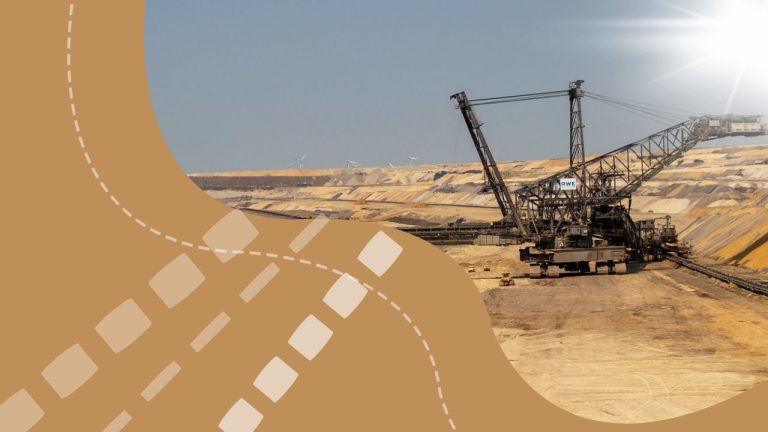
    In July, the Steve Promnitz-led lithium explorer QX Resources’ acquired 39% of the unlisted Aussie company Bayrock Resources, which has a portfolio of nickel-copper-cobalt projects in Sweden.

    Bayrock’s Vuostok project is located roughly 60km northwest of Lainejaur, offering a potential joint development opportunity as a ‘district play’.

    The newly added Nr 102 lease expands the total mineral lease by 33% at Vuostok, which QXR says could be within potential trucking distance to Lainejaur given the well-established all-weather road network and supporting infrastructure in the district.

    “This would benefit any future stand-alone nickel-copper-cobalt operations or provide additional ore feed for a possible Lainejaur development,” the company says.

    “Trucking of ore material for processing is a regular feature of operations in this part of northern Sweden.”

    Further updates anticipated

    In another exciting development, significant nickel-copper assay results have been identified from boulders located within the new Vuostok lease and from drill results near surface at Vuostok.

    The company says these results underpin Bayrock’s decision to significantly expand the prospect.

    “This is turning into a genuine potential district scale operation given the proximity of Bayrock’s Lainejaur and Vuostok Projects in a mining friendly region of Sweden,” QXR managing director Steve Promnitz says.

    “Further updates are anticipated as Bayrock continues exploration across another highly prospective asset, the Notträsk Project, one of Bayrock’s six 100% owned nickel copper projects.”

    Highly encouraging widths of nickel-copper mineralisation

    The recently released assays by Bayrock highlight significant widths of nickel-copper mineralisation from eight holes at the Storbodsund Prospect within Vuostok.

    The results include:

    6.2m at 1.2% Ni, 2.2% Cu, 0.04% Co from 11m down hole (VUO23011);
    6.9m at 1.2% Ni, 0.3% Cu, 0.05% Co from 5.1m down hole, including 0.4m at 3.9% Ni, 0.3% Cu, 0.11% Co from 6.85m down hole (VUO23013);
    0.7m at 3.2% Ni, 1.0% Cu, 0.08% Co from 10.3m down hole (VUO23004); and
    0.9m at 1.2% Ni, 0.1% Cu, 0.08% Co from 6m down hole (VUO23005).

    QXR says the results indicate near surface massive nickel-copper sulphides between 0.3-6m thick, less than 18m from surface and beneath a thin cover of glacial sediments.

  • Huge theft rocks Europe’s largest copper producer

    Huge theft rocks Europe’s largest copper producer

    “During a scheduled review of metal inventories, Aurubis has identified considerable discrepancies in target inventory,” the German company said Thursday in a statement. Aurubis claimed that “criminal activity” was behind the shortfall.

    Aurubis produces about 1.1 million tonnes (1.2 million tons) of copper “cathodes,” or square sheets, per year at plants in Europe and the United States. The company accounts for around 30% of Europe’s production of such copper and 3% to 5% of global output, a spokesperson told CNN.

    Copper is widely used in construction, including in electrical wires and water pipes. It is also a vital metal for energy transition as it is used in wind turbines, solar panels and electric cars.

    The financial hit from the theft at Aurubis “might be in the low, three-digit-million-euro range,” the company said, warning that as a result it will not achieve the profit it has forecast for this fiscal year.

    Shares of Aurubis plunged Friday, trading 12% lower by mid-afternoon in Europe.

    The company has involved the State Office of Criminal Investigation in Hamburg, Germany, where Aurubis is based, the copper producer said. A spokesperson for the public prosecutor’s office in Hamburg told CNN on Friday that it had not yet received any information from local police or the criminal investigation office about the reported theft.

    Aurubis has also opened investigations by internal and external experts to understand what happened and how its security could be improved.

    This is not the first time the company has disclosed suspected theft. In June, Aurubis said it had identified “past criminal activities.” The public prosecutor’s office and police are investigating an “organized theft ring” targeting “intermediate products” that contain precious metals and which are the result of the company’s production processes.