Tag: Coal

  • China Eyes Coal Waste as New Source of Critical Minerals

    China Eyes Coal Waste as New Source of Critical Minerals

    China is exploring the recovery of critical minerals from coal waste, with researchers highlighting fly ash and coal gangue as potential sources of strategic metals including germanium, gallium, lithium and aluminum.

    According to a new report, China’s extensive coal mining and power generation infrastructure could be leveraged to recover valuable metals from by-products that have traditionally been treated as industrial waste.

    “The coal refuse contains a variety of metal elements and could become an important source of critical metal supply,” said Dai Shifeng, a member of the Chinese Academy of Sciences and professor at the China University of Mining and Technology-Beijing.

    Coal gangue refers to the rock separated from coal during mining, while fly ash is the fine mineral residue left after coal combustion. Although typically disposed of or used in construction materials such as cement, both materials can contain economically valuable concentrations of critical minerals and rare earth elements.

    Researchers argue that China’s integrated coal industry provides a strong foundation for resource recovery. Existing coal washing, chemical processing and power generation facilities could potentially be adapted to extract strategic metals from waste streams, reducing the need for additional mining.

    The approach could support China’s growing demand for critical minerals used in semiconductors, batteries, electric vehicles, renewable energy technologies and defence applications, while also improving resource efficiency and reducing industrial waste.

    However, the report notes that commercial recovery remains technically challenging. Metal concentrations vary significantly depending on the geological characteristics of individual coal deposits, and fly ash from different coal sources is often blended during power generation, resulting in inconsistent feedstock quality that can affect the economic viability of extraction.

    Researchers nevertheless believe rising demand for critical minerals will continue to improve the prospects for recovering metals from coal waste, building on China’s existing experience in extracting germanium from coal-related resources.

  • Mongolia Fails to Select Investor for Borteeg Coal Project

    Mongolia Fails to Select Investor for Borteeg Coal Project

    Mongolia has failed to identify a suitable investor for the development of the Borteeg section of the Tavantolgoi coal deposit group after none of the bids submitted in an international tender met government requirements.

    The Mongolian government has now decided that the project will be managed by state-owned coal producer Erdenes Tavantolgoi. According to Minister of Economy and Development Jadamyn Enkhbayar, coal production and exports at the site will proceed with the participation of domestic companies, local media outlet Montsame reported.

    The open tender, announced in February, invited both Mongolian and foreign companies to invest in the development of the Borteeg deposit and participate in exploiting its reserves.

    Under the tender conditions, the winning bidder was expected to finance and construct all required infrastructure for coal extraction, processing, sales and transportation. A key condition imposed by the government required Mongolia to receive at least 51% of total sales revenue throughout the life of the project.

    According to the Ministry of Economy and Development, seven companies from Mongolia and abroad submitted proposals. A working group evaluated the bids based on financial and economic returns, experience in implementing similar projects and the existence of a comprehensive development plan.

    However, none of the proposals scored highly enough to proceed to the negotiation stage, ministry officials stated.

    The Borteeg section is estimated to contain 424.2 million tonnes of coal reserves. Annual production capacity could reach up to 15 million tonnes.

  • Kyrgyzstan Boosts Mineral Output in Early 2025 Amid Sector Consolidation

    Kyrgyzstan Boosts Mineral Output in Early 2025 Amid Sector Consolidation

    Kyrgyzstan recorded significant growth in gold, silver, coal, and natural gas production during the first half of 2025, according to data from the Kyrgyz Geological Service. Despite the increase, the number of active companies in the sector fell, reflecting a wave of license revocations and industry consolidation.

    Compared to the same period in 2024, the country produced an additional 700 kg of gold and 1.1 million cubic meters of natural gas. Silver production surged from 198 kg to 3.8 tons, while coal output rose from 3.1 million to 4.4 million tons.

    The state resource balance for January–June 2025 was as follows:

    • Regular gold: 5.8 tons

    • Placer gold: 57 kg (up from 28.3 kg)

    • Silver: 3.8 tons (up from 198 kg)

    • Coal: 4.4 million tons (up from 3.1 million tons)

    The sector also delivered stronger fiscal results, with tax and non-tax revenues climbing from 17.9 billion KGS ($205.2 million) in 2024 to 27.8 billion KGS ($318.5 million) in 2025. Industrial production reached 30.7 billion KGS ($352 million), an increase of nearly 3 billion KGS ($34.4 million).

    At the same time, licensing activity slowed. Authorities revoked 199 production licenses in the first half of 2025, citing inactivity, while only 15 new licenses were issued, compared with 26 during the same period last year. Expired permits were reallocated to other operators.

    Officials welcomed the rise in output as a positive contribution to GDP and a sign of improved efficiency. However, the report warned of risks to construction resources such as marble, sand, and gravel, which are being rapidly depleted due to high demand from the building sector.

    Experts caution that while the surge in mining strengthens revenues and energy security, long-term sustainability will require careful planning to prevent overexploitation of finite resources.

  • Kazakhstan Unveils 38 Major New Mineral Deposits

    Kazakhstan Unveils 38 Major New Mineral Deposits

    Kazakhstan has announced the discovery of 38 new deposits of copper, nickel, coal, gold, and rare earth metals in the first quarter of 2025, according to an official government statement.

    The discoveries were made following extensive geological studies, including aerial photograph analysis, route surveys, drilling, geochemical testing, radiation and water sampling, and desk research.

    The newly identified deposits are estimated to contain:

    • 2.6 million tonnes of rare earth metals
    • 1.1 billion tonnes of brown coal
    • 3.7 million tonnes of copper and nickel
    • 19 tonnes of gold

    The total area of geological and geophysical exploration in Kazakhstan is expected to expand to 2.2 million square kilometres by 2026, up from just 2,000 square kilometres in 2024. This initiative follows a directive from President Kassym-Jomart Tokayev, who has instructed the cabinet to prioritise mineral exploration.

    To support this effort, the government has allocated $44.4 million for geological exploration between 2024 and 2026, with $14.8 million designated for 2025.

    Between 2018 and 2024, mining companies invested approximately $827.3 million in Kazakhstan’s mineral sector. In 2025 alone, exploration investments are expected to reach $206.8 million. A streamlined licensing process—requiring only reporting rather than predefined work volumes—has made the market more accessible to investors.

    Earlier this month, Eurasian Resources Group announced the discovery of a new copper deposit with projected reserves of 250,000 tonnes.

  • Uzbek Geological Exploration Advances Across Multiple Sites with Coal, Polymetallic, and Non-Metallic Discoveries

    Uzbek Geological Exploration Advances Across Multiple Sites with Coal, Polymetallic, and Non-Metallic Discoveries

    Uzbek Geological Exploration JSC has reported significant progress across multiple exploration sites, highlighting ongoing developments in the country’s resource sector. At the Uriqli site, part of the Surkhandarya field expedition under the Gissar central geological exploration expedition, coal seams numbered 1 through 6 have been successfully identified as a result of recent mining works.

    Simultaneously, polymetallic ore bodies are under evaluation at the northern section of the Khandiza ore field, while detailed exploration continues at the Vodny Say section. Exploration activities have concluded at the Severny area, where a comprehensive geological report is now being finalized for submission to the State Reserves Committee (GKZ) in 2025.

    In parallel, the field evaluation of non-metallic mineral resources is ongoing at several locations. These include celestine at Chigatai, dolomite at Loilik, gypsum at Shurobsoy, and basalt at Badava. The corresponding exploration reports are also expected to be submitted for review to the State Commission on Mineral Reserves (SCP) within the year.

  • Kazakhstan Launches New Era of Resource Development at 15th MINEX Forum

    Kazakhstan Launches New Era of Resource Development at 15th MINEX Forum

    Date: April 9, 2025

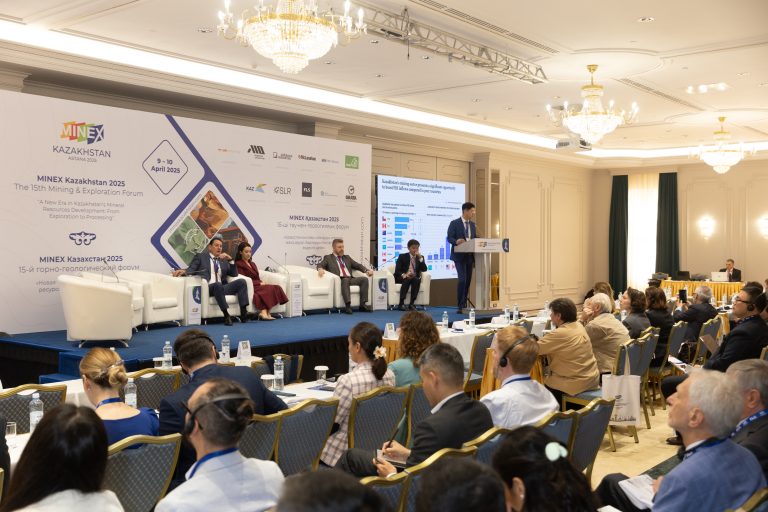
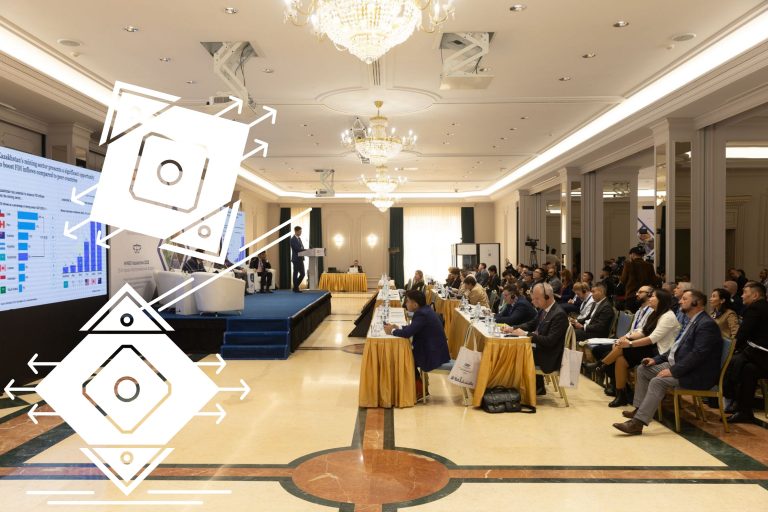
    The 15th MINEX Kazakhstan Mining and Geological Forum is underway today in Astana under the theme: “A New Era of Kazakhstan’s Mineral Resource Development: From Exploration to Processing.”

    The event brings together around 100 speakers, 450 delegates, and 40 exhibitors from across Central Asia, Europe, North America, Africa, the Middle East, Australia, China, India, Malaysia, and Singapore.

    In her keynote address, Zhannat Dubirova, Vice Minister of Industry and Construction, highlighted recent digitalization milestones achieved in the country’s resource sectors:

    “Since the beginning of this year, we have launched the Unified Subsoil Use Platform, which now provides 22 digitized public services. So far, it has processed 506 applications. Investors can now apply directly through the portal to participate in auctions. In January, this led to $40 million in investments across 21 sites.”

    She also announced that manual oversight of more than 3,000 licenses and contracts related to solid mineral resources had been fully digitized.

    Almas Kushumov, Director of the Subsoil Use Department at the ministry, presented the results of state-led geological surveys:

    “There is growing business interest in resource development. Over the last two years, 117 subsoil plots and deposits were auctioned electronically, generating more than 29 billion tenge in subscription bonuses. In June 2025, we plan to auction 50 gold, silver, coal, and rare metal deposits.”

    The forum is also addressing pressing issues such as Kazakhstan’s role in global critical mineral supply chains, investment climate improvements, uranium sector development, and nuclear energy expansion.

    The event will conclude with a session on talent development and national capacity building, followed by a gala awards ceremony honoring achievements in the mining sector, hosted by the Mining Chamber of Kazakhstan.

    Kazakhstan’s mineral sector is undergoing a significant transformation, driven by government initiatives aimed at boosting economic growth, industrial diversification, and expanding geological exploration.

  • Kazakhstan to Auction 50 Gold, Copper, Coal, and Rare Metal Deposits in June

    Kazakhstan to Auction 50 Gold, Copper, Coal, and Rare Metal Deposits in June

    Kazakhstan will auction 50 deposits of gold, copper, coal, and rare metals in June via its Unified Subsoil Use Platform, representatives from the Ministry of Industry and Construction announced at the 15th MINEX mining and geological forum.

    These deposits, which already have confirmed mineral reserves, will be offered for extraction under licenses valid for up to 25 years. Participating companies must develop a mining plan and specify the development timeline for each site.

    According to the ministry, companies from the United States, the European Union, and China have already applied to participate in the auction.

    Almas Kushumov, Director of the Subsoil Use Department at the Ministry of Industry and Construction of Kazakhstan:
    “These are deposits with proven reserves. We will auction them for extraction — gold, coal, rare and polymetallic deposits. Soon we will publish detailed information on the Unified Subsoil Use Platform. All interested parties will be able to submit documents online and take part in the auction.”

    Experts say that such auctions play a key role in attracting foreign investment to Kazakhstan’s resource sector — especially since some mineral-rich areas have yet to be announced due to incomplete documentation.

    Kushumov noted that in 2024 alone, 23 new deposits of solid minerals were officially added to the national register for the first time.

    “In terms of gold alone, state reserves increased by 20 tonnes. Every year, based on geological exploration results, new reserves are confirmed, added to the state balance, and then made available for extraction.”

  • Kazakhstan’s Nuclear Energy Future: Insights from Expert Panel Discussion

    Kazakhstan’s Nuclear Energy Future: Insights from Expert Panel Discussion

    Kazakhstan, known for its abundant uranium reserves, stands at a pivotal moment as it considers expanding its role in the global nuclear energy sector beyond mere resource supply.  In a significant move that could reshape Central Asia’s energy landscape, Kazakhstan is advancing plans to develop nuclear power capabilities, with potential implications for both domestic energy security and global nuclear fuel markets. A recent British-Kazakh Society webinar brought together international experts to examine the opportunities and challenges ahead.

    The webinar featured a panel of distinguished experts, moderated by Nicholas Pomeroy, General Director of AngloKazakh. The panel included Ben Godwin, Managing Partner at PRISM Strategic Intelligence; Aldiyar Toktarov, Chairman of the Atomic Industry Development Association; Mehmet Ogutcu, Chairman of the London Energy Club and Biplab Rakshi, Managing Director of Atomic Acquisitions.

    Nuclear Power in Kazakhstan: Ambitious Plans Meet Complex Realities

    In a significant move that could reshape Central Asia’s energy landscape, Kazakhstan is advancing plans to develop nuclear power capabilities, with potential implications for both domestic energy security and global nuclear fuel markets.  The country faces an existing electricity deficit and increasingly relies on electricity imports. With about 70% of current electricity generation coming from coal, Kazakhstan must balance its ambitious 2060 net-zero target against growing energy demands. The government’s plan to decommission all coal power plants by 2050 adds urgency to developing alternative baseload power sources.

    Following a national referendum that approved nuclear power development, Kazakhstan has announced plans for not just one, but potentially three nuclear power plants: one in the initial phase, with additional facilities proposed for West Kazakhstan (Aktau) and East Kazakhstan. This ambitious scope has raised both excitement and concerns among industry observers.

    The Consortium Question

    A key focus of Kazakhstan’s nuclear strategy is the formation of an international consortium to construct and operate the plants. While the exact composition remains unannounced, President Tokayev has pointed to Turkey’s Akkuyu nuclear project as a potential model. However, experts at the webinar highlighted both opportunities and risks in this approach.

    The Turkish model, which relies heavily on Russian state nuclear corporation Rosatom for financing and technology, has faced challenges including sanctions-related complications affecting international equipment supplies. This has led to cost overruns and delays, prompting suggestions that Kazakhstan might benefit from a more diversified partnership approach.

    Sanctions and International Partners

    The role of Russian participation emerges as a particularly complex issue. While Rosatom itself isn’t under direct sanctions, experts noted that 70 of its subsidiaries and key personnel are designated under various international sanctions regimes. This creates potential complications for international financing and technology transfer.

    Ben Godwin, partner at PRISM Strategic Intelligence, emphasised that while Russian involvement might seem inevitable given regional ties, Kazakhstan will need to carefully structure any such participation to avoid compromising other international partnerships and financing options.

    Local Content and Industrial Development

    A recurring theme in the discussion was Kazakhstan’s opportunity to develop domestic nuclear industry capabilities. Aldiyar Toktarov, chairman of the Atomic Industry Development Association, highlighted how multiple nuclear projects could create economies of scale that justify investments in local supply chains and workforce development.

    Kazakhstan’s position as the world’s largest uranium producer provides unique leverage. Experts suggested the country could use this advantage to negotiate better terms with technology vendors and potentially develop higher-value nuclear fuel cycle capabilities domestically.

    Regulatory and Financial Challenges

    The development of an appropriate regulatory framework emerges as a critical near-term priority. Currently, Kazakhstan lacks an independent nuclear regulator, though experts noted this could be developed following IAEA guidelines. The financial aspects also present challenges, with nuclear projects notorious for cost overruns. Recent examples cited include the UK’s Hinkley Point C project, whose budget has escalated from £16 billion to potentially £40-50 billion.

    Kazakhstan’s current fiscal situation adds another layer of complexity. With the country already dedicating over 20% of its budget to debt service, financing multiple large infrastructure projects simultaneously will require careful planning and potentially innovative funding approaches.

    Looking Ahead

    The path forward for Kazakhstan’s nuclear ambitions will require balancing multiple priorities. These include:

    – Developing clear criteria for consortium partners that address both technical and geopolitical considerations
    – Building robust regulatory frameworks aligned with international standards
    – Creating sustainable financing structures that don’t overburden state resources
    – Maximising local content and industrial development opportunities
    – Ensuring environmental and safety standards meet international best practices

    While the timeline for announcing the initial consortium structure appears to be measured in months rather than years, experts emphasized the importance of “hurrying slowly” to ensure proper foundation-laying for what will be a multi-decade program.

    The success of Kazakhstan’s nuclear power program could have implications beyond its borders, potentially offering a model for other developing nations seeking to balance energy security, economic development, and climate goals. However, the complexity of the challenges ahead suggests that careful planning and international cooperation will be essential for turning these ambitious plans into reality.

    The British-Kazakh Society plans to host further webinars to delve deeper into these critical areas, ensuring continued dialogue and progress. For more information on upcoming events, visit the BKS website.

  • Kremlin-backed Coalition Sees Coal Fortunes Blooming in Besieged Donbas Territories

    Kremlin-backed Coalition Sees Coal Fortunes Blooming in Besieged Donbas Territories

    According to reports by investigative news outlet Important Stories, a company linked to the family of former Ukrainian President Viktor Yanukovych has amassed a significant fortune by selling coal from Russian-occupied Ukrainian territories to Turkey.

    Energoresurs, a firm registered in Rostov-on-Don, Russia, has exported nearly 450,000 tonnes of coal between 2023 and 2024, sourced from occupied regions of Donbas and transported to Turkey via a combination of rail and sea routes. The investigation points to a direct connection between Energoresurs and Oleksandr Yanukovych, the president’s son, through his involvement in coal holdings and mining enterprises.

    Journalists discovered that the company received a substantial loan from Cypriot firm SL Holdings Limited, allegedly controlled by associates of Oleksandr Yanukovych. Furthermore, the coal is sold to an offshore company Energy Union, based in the British Virgin Islands, highlighting the complexity of transactions involved in these coal exports.

    Energoresurs stands accused of selling coal at significantly lower prices – averaging $60 per ton in 2024 – thereby minimising export duties, before reselling it at a higher price on international markets. Prior to Russia’s full-scale invasion of Ukraine in 2022, the company primarily exported coal to European nations including Bulgaria, Estonia, the Czech Republic, and Romania. Today, nearly all shipments are directed to Turkey.

    It is reported that between 2021 and 2023, Energoresurs generated approximately £260,000 (around $350,000 USD) in revenue at a “modest transfer price,” although the exact extent of this revenue is uncertain.

  • From Black Gold to Black Diamonds: Upper Silesia’s Coal Legacy

    From Black Gold to Black Diamonds: Upper Silesia’s Coal Legacy

    Situated in Southern Poland, Upper Silesia is steeped in hundreds of years of mining tradition. The region’s old workers’ neighbourhoods, through their architecture and use of local motifs, serve as a reminder to locals and visitors alike of a time when men worked arm in arm with machines, and when Upper Silesia functioned as the industrial heartland of Europe.

    More than 300 years ago, people travelled from across the country and beyond to access the so-called “black gold” found in Upper Silesia. Beneath this rugged exterior, however, lies a rich cultural history with roots stretching back centuries. The region boasts its own dialect, which was banned for many years in Poland but survives to this day. It also has a tangible material dimension in coal, which is being repurposed in modern times.

    As folklore revival gains popularity in Poland, coal has become a commodity of a different quality. Mined in Upper Silesia since the 17th century, coal played a crucial role not only in the Polish economy but also for the entire European continent. Today, it is being transformed into jewellery as a symbolic tribute to the land from which it came.

    In Katowice, the capital of Upper Silesia, several workshops are turning coal into a new type of precious commodity: delicate, hand-crafted jewellery. One such brand is I Coal You, owned and operated by Katarzyna Depa, who has deep ties to the region. Depa explains that coal jewellery symbolises mining hardships and carries significant sentimental value. Her clients include not only visitors seeking unique souvenirs but also locals who view the crafts as a way to represent their culture.

    While the trend of making jewellery from coal is relatively modern, it has deeper roots in Upper Silesian tradition. The first coal beads appeared in the region in the 19th century, made by miners as gifts for their wives and girlfriends. These simple decorative forms were quick but thoughtful presents.

    Coal jewellery has become a symbol of the region’s ties to its mining heritage. It represents the work ethic and respect associated with the industry that sustained Upper Silesia for generations. As Depa notes, “This respect for this raw material, which Upper Silesia fed itself and all of Poland with, is what it’s all about.”

    The transformation of coal into jewellery also serves as a reminder of the physical and cultural landscape shaped by the mining industry. Each piece of coal jewellery is unique, reflecting the distinctiveness of the material itself. This artform brings respect to work that is often undervalued and allows people to appreciate the region’s industrial heritage.

    In recent years, Upper Silesia has seen a resurgence of local pride and cultural expression. The once-banned Silesian dialect now appears on tote bags and shop signs. Statues of local folkloric figures adorn streets, and artists depict the mining landscape in their work. Even as coal extraction has diminished, the material remains a permanent feature of the Silesian identity.

    As Depa poignantly states, “Polish highlanders wear coral beads from Italy, there are pieces of turquoise from Turkish wars in the Wawel treasury, and amber comes from the sea. But we have coal here and now, we can dig it up. And that’s probably the most beautiful thing about it. Besides, coal is simply beautiful as a stone.”

    This transformation of coal into jewellery symbolises Upper Silesia’s ability to honour its past while embracing new forms of cultural expression and economic activity. It represents a unique way of preserving the region’s heritage and identity in a changing world.