Tag: Coal Power Plant

  • China’s East Hope Group Eyes 1 GW Coal Plant and Aluminium Complex in Kazakhstan’s Kostanay Region

    China’s East Hope Group Eyes 1 GW Coal Plant and Aluminium Complex in Kazakhstan’s Kostanay Region

    Kazakhstan’s Energy Minister Yerlan Akkenzhenov has met with senior leadership of China’s East Hope Group to discuss a series of major investment projects in Kostanay Region, including a proposed one-gigawatt coal-fired power plant intended to supply electricity to a new aluminium complex.

    The meeting between Akkenzhenov and East Hope Group Chief Strategy Investment Officer Chen Lei covered the Chinese conglomerate’s plans to develop industrial and energy capacity in the region. Beyond the coal plant and aluminium complex, East Hope Group signalled interest in expanding into renewable energy and broader coal industry projects in Kazakhstan.

    Akkenzhenov pledged the Ministry of Energy’s full support for initiatives that strengthen Kazakhstan’s industrial and energy capabilities, emphasising the importance of foreign investment, advanced technology adoption, localisation of production and the creation of high-value-added employment.

    East Hope Group is one of China’s largest private industrial conglomerates, with extensive interests in aluminium smelting, silicon manufacturing and chemical industries, making it a strategically relevant partner for Kazakhstan’s ambitions to develop domestic aluminium processing capacity alongside its existing raw material base.

  • Poland’s Turów Coal Mine: Symbol of Defiance Against EU Interventionism

    Poland’s Turów Coal Mine: Symbol of Defiance Against EU Interventionism

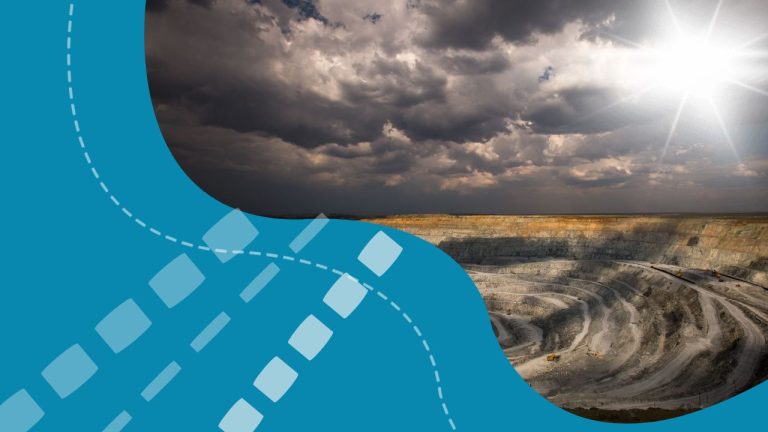
    Poland’s Turów mine has become a source of political pride for the country’s right-wing government, despite being viewed by its EU neighbors as evidence of Warsaw’s refusal to abandon polluting coal. The mine, located in the south-west of the country between Germany and the Czech Republic, is an open pit mine that fuels an adjacent power plant, producing about 7% of Poland’s electricity. However, Turów has become a symbol of the ruling Law and Justice party’s (PiS) defiance against EU interventionism.

    The mine’s importance to Warsaw is evident as Poland has been paying the EU to keep it open. When the Czech Republic sued Poland in the EU Court of Justice, Warsaw defied the court’s order to stop mining and refused to pay the resulting daily fine. The European Commission responded by deducting the fine from EU funds earmarked for Poland. As a result, Warsaw paid compensation to the Czech Republic for environmental damage, and the region around Turów was excluded from EU subsidies for transitioning away from fossil fuel production.

    The legal battle over the mine has extended from Luxembourg to national courts in Warsaw. Environmentalists have raised concerns about pollution and the depletion of underground water in the surrounding countryside. However, miners at Turów and the local municipality of Bogatynia, which receives a third of its budget from taxes paid by the power plant’s operator, support the mine and its preservation of jobs.

    While Poland has made strides in renewable energy production, including a record quarter of electricity production coming from renewables in May, the country still heavily relies on coal, which accounts for 65% of its electricity generation. Some opponents see the defense of coal as a step backward, while others view the mine as a national treasure that should be defended out of love for Poland.

    The battle over Turów is not just about the mine itself but is part of broader tensions between Poland and the EU, as well as between Poland and Germany. The mine has become entangled with disputes over sovereignty, money, and the rule of law. Warsaw has accused Germany of strengthening Russian President Vladimir Putin by embracing him as an economic partner until his invasion of Ukraine. The fight over Turów has become another point of contention between the two countries.

    As Poland prepares for a tight general election, Turów remains a significant symbol for the ruling party and a key issue for the electorate. The future of the mine and Poland’s energy transition will continue to be debated, balancing the need for jobs, national sovereignty, and environmental concerns.