Tag: coal mining

  • Tremor at Polish Coal Mine Claims One Life, Injures Eleven

    Tremor at Polish Coal Mine Claims One Life, Injures Eleven

    A devastating underground tremor struck a coal mine operated by Polish mining group PGG in Radlin, southern Poland, early Monday morning, leading to the death of one miner and injuries to 11 others. The incident occurred at 2:06 AM GMT, roughly 800 meters underground.

    PGG Acting CEO Bartosz Kepa revealed that 29 workers were present in the affected zone during the tremor. Rescue efforts evacuated the area, and those injured were promptly transported to local hospitals. Among the hospitalized, four remain in serious condition, according to Lukasz Pach, head of emergency medical services in Katowice.

    Authorities are currently working to secure the damaged sections of the mine, with an assessment of material damage still underway. PGG’s Deputy Chief Executive for Production, Marek Skuza, stated that securing operations are critical to ensuring the safety of remaining workers and the integrity of the mine.

    This incident has raised renewed concerns about the safety of coal mining in Poland, a country heavily reliant on coal for energy and employment. Further investigations will aim to determine the exact cause of the tremor and evaluate safety measures in place to prevent such tragedies in the future.

  • The Dark Price of Coal: Environmental Impact at Kara-Keche

    The Dark Price of Coal: Environmental Impact at Kara-Keche

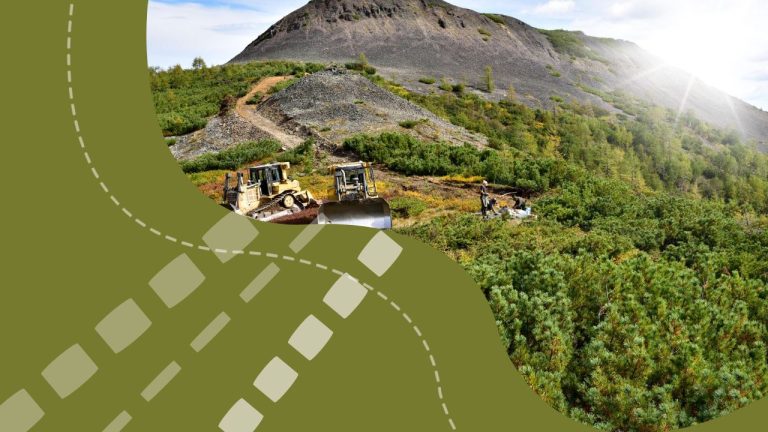
    Kyrgyzstan’s Kara-Keche coalfield, located in the Naryn region, has become a critical energy resource but at a devastating environmental cost. Once home to clear glacial streams, lush pastures, and thriving pine forests, the area now battles blackened waters, waste-clogged gorges, and shrinking green spaces. Villagers from Baizak and Bash-Kuugandy report that pastures have drastically deteriorated, water sources have become blocked or contaminated, and coal waste is being improperly disposed of in critical areas. Despite raising these issues with authorities for years, local residents have seen little to no action.

    Environmental studies reveal troubling results. A 2022 analysis found toxic substances in the water, and landslides triggered by mining operations have compounded the destruction, burying roads, streams, and infrastructure. In recent years, illegal dumping and neglect of environmental protocols have exacerbated the situation. Villagers allege that the Kara-Keche branch of the state enterprise Kyrgyzkomur, alongside private companies like Sharbon and Akzhol, fail to comply with safety and restoration requirements outlined in Kyrgyzstan’s environmental laws.

    Conflicts between economic development and ecological preservation are starkly visible here. While Kara-Keche contributes significantly to Kyrgyzstan’s coal production—over one million tons annually—the unchecked mining has displaced local communities and threatened their livelihoods. Complaints to the Environmental and Technical Supervision Service have been met with limited responses due to a government decree banning business audits, further weakening oversight.

    The area also grapples with political and social tensions. A history of conflicts includes landslides, armed confrontations, and allegations of corruption. In one instance, a massive landslide in 2020 caused severe disruption, isolating roads and power lines, while other incidents have highlighted the lack of adherence to safety measures. Despite promises of reforms and fines for mining companies, the damage continues unabated.

    As Kara-Keche’s coal reserves—estimated at 400 million tons—are extracted, the toll on the environment and local populations raises urgent questions about sustainability. The residents demand stricter enforcement of regulations and restoration of the damaged ecosystem to ensure the preservation of Kyrgyzstan’s natural resources for future generations.

  • Methane Ignition Injures 16 in Polish Coal Mine

    Methane Ignition Injures 16 in Polish Coal Mine

    A methane ignition in the Knurow-Szczyglowice coal mine in southern Poland left 16 miners injured on Wednesday, with 14 transported to local hospitals for treatment. The incident occurred at a depth of more than 850 meters, where 44 miners were present during the gas ignition. Emergency medical teams responded swiftly, providing assistance at the scene, while one miner, still underground, was awaiting helicopter transport to a hospital.

    Aleksander Chowaniec, deputy head of the State Mining Authority, confirmed that the affected miners had sustained burns. The operator of the mine, JSW, reported the accident, while its shares fell by 2.3% shortly after the news broke.

    The Knurow-Szczyglowice mine, known for its extensive underground operations, has faced challenges related to methane management, which is a common hazard in deep mining. Investigations are underway to determine the cause of the gas ignition, and rescue efforts for the remaining miner are ongoing. The incident has reignited discussions about safety protocols and the risks miners face in such hazardous environments.

  • Greenpeace Protests in Poland: “Coal Is Finished, Stop Deceiving!”

    Greenpeace Protests in Poland: “Coal Is Finished, Stop Deceiving!”

    On Wednesday, December 4, Greenpeace activists staged a bold protest at the Ministry of Industry in Katowice, unfurling a large banner reading, “Coal is finished, stop deceiving!” The protest, coinciding with Barbórka, a traditional miners’ celebration, calls on Prime Minister Donald Tusk’s government to adopt a more realistic timeline for mine closures and prioritize a fair transition for the mining sector.

    Greenpeace demands the government redirect billions of zlotys in subsidies for mining companies toward renewable energy investments, job re-skilling programs, and energy-efficient housing projects. The NGO highlights that coal-fired power stations are set to shut down by 2035, based on updated analyses, and calls for urgent action to prepare miners for new opportunities.

    “Poland’s energy policy is based on the lie that coal has a future,” stated Marek Józefiak, Greenpeace Poland’s spokesman. He criticized the government for propping up unprofitable mines with PLN 18 billion (EUR 4.5 billion) in state aid this year and PLN 137 billion (EUR 34 billion) over the coming decades, as outlined in the 2021 social agreement on mining.

    The Polish Industrial Development Agency reported a PLN 9.2 billion (EUR 2.1 billion) loss in the coal mining sector in the first three quarters of 2024. Meanwhile, the share of hard coal in power generation is rapidly declining, with exports becoming unfeasible due to high prices. A Greenpeace report, The Last Decade of Coal, predicts that most coal-fired plants in Poland will close before 2030, with the last closures by 2035.

    Greenpeace’s Anna Meres, a climate campaign coordinator, warned that failing to invest in renewables like onshore wind could result in Poland relying on expensive, imported natural gas, jeopardizing the country’s energy security. She emphasized the need for a strategy that provides clean electricity and creates new employment opportunities for miners, citing potential job growth of 50,000 to 100,000 roles in renewables by 2030.

  • GreenX Wins £252 Million in Arbitration Case Against Poland, Share Price Soars

    GreenX Wins £252 Million in Arbitration Case Against Poland, Share Price Soars

    The share price of coal developer GreenX surged by nearly 40% on Tuesday following the company’s announcement of a significant victory in its arbitration case against Poland. GreenX, which is listed on both the London Stock Exchange (LSE) and the Australian Securities Exchange (ASX), has been awarded £252 million (A$490 million) in compensation and interest.

    The company, formerly known as Prairie Mining, had claimed that Poland violated its obligations under international treaties by obstructing the development of the Jan Karski and Dębieńsko coal mines. This, GreenX argued, deprived the company of the entire value of its investments in the country. The arbitration tribunal ruled in favor of GreenX regarding the Jan Karski project, awarding compensation for the breach. However, the tribunal did not uphold GreenX’s claim related to the Dębieńsko mine.

    As a result of the ruling, GreenX’s stock surged in London, closing at £48.45 per share, reflecting a nearly 40% increase. The announcement came after the markets had closed in Sydney.


  • Development of Urmezan-3 Coal Deposit Underway in Batken Region

    Development of Urmezan-3 Coal Deposit Underway in Batken Region

    The development of the Urmezan-3 coal deposit has officially commenced in the Batken district of the Batken region, as reported by the press service of the state enterprise Kyrgyzkomur. This initiative carries a project cost of $3 million. The state-owned company is focusing on coal mining to ensure that the local population has access to affordable coal. Currently, 26 individuals are employed at the site, which spans an area of 5 hectares.

  • Karazhira Reports Significant Profit Decline in 2023 Despite Increased Revenues

    Karazhira Reports Significant Profit Decline in 2023 Despite Increased Revenues

    The coal mining company Karazhira, co-owned by Eduard Ogay (ranked 13th by Kazakhstan’s Forbes with a capital of $800 million) and Vladimir Dzhumanbayev (ranked 25th with $365 million), reported a net profit of 3.1 billion tenge in 2023, down from 9.3 billion tenge in 2022. According to the audited financial statements, Karazhira’s total assetsincreased to 67.8 billion tenge by the end of 2023, up from 64.1 billion tenge the previous year, and its capital rose to 18 billion tenge from 14.6 billion tenge in 2022. The balance sheet value of a single share climbed to 16,243 tenge from 13,888 tenge at the end of 2022.

    Revenue from product sales amounted to 58.4 billion tenge in 2023, compared to 57 billion tenge in 2022. However, the cost of sales increased to 42.3 billion tenge from 35.1 billion tenge in 2022, resulting in a net profit decrease to 3.1 billion tenge for 2023, down from 9.3 billion tenge in 2022. Karazhira earned 58.4 billion tenge from coal sales in 2023 (compared to 57 billion tenge in 2022 and 48.3 billion tenge in 2021), with the majority sold within Kazakhstan (45.1 billion tenge). The company also supplied coal to Russia, Kyrgyzstan, Switzerland, Moldova, and Uzbekistan.

    The auditor noted the company’s dependence on a few key buyers, which accounted for 66% of group revenue in 2023, up from 64% in 2022, highlighting potential risks if these buyers are lost. The credit risk for loans issued to Kyrgyzstan was evaluated at 100%, leading to a reserve being established. Additionally, expenses for the write-off of burnt coal increased to 790.1 million tenge in 2023 from 528.4 million tenge in 2022.

    Key executive compensation dropped to 73.4 million tenge in 2023 from 119.1 million tenge in 2022, and the company reduced its workforce to 845 from 918 in 2022. Karazhira’s assets, including buildings and equipment valued at 5.5 billion tenge, are used as collateral for group loans. The company also extended the repayment of a $20 million loan until December 2024. The main shareholders as of April 1 are Vladislav Ogay, Elina Ogay, Eduard Ogay, Vladimir Dzhumanbayev, and Yerlan Nigmatulin. Karazhira paid 9.9 billion tenge in dividends in 2022 but none in 2023.

    In October 2021, Karazhira issued 20 million bonds at 1,000 tenge each with an annual interest rate of 14%, paying out 2.8 billion tenge in interest in both 2023 and 2022. As of the end of 2023, the company held loans from Altyn Bank and Bank CenterCredit, with various interest rates and maturities in 2024, totaling several billion tenge.

  • Record Numbers of Retrainees in Project Supporting Nitra Region’s Transition from Coal Mining

    Record Numbers of Retrainees in Project Supporting Nitra Region’s Transition from Coal Mining

    The national project connected to the Trenčín self-governing region, aimed at assisting the people of the Nitra region affected by the planned termination of coal mining, has achieved remarkable success with a record number of individuals participating in retraining programs. This initiative has provided a lifeline to employees of the Nováky power plant, who are now actively seeking new employment opportunities.
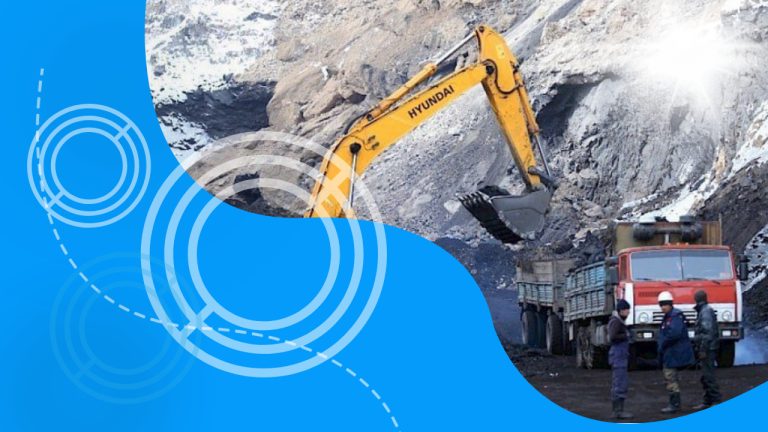
    Towards the end of last year, the miners of Horní Nitra extracted the final tonne of brown coal in Slovakia. Simultaneously, the Nováky power plant ceased all coal-based electricity and heat production. This abrupt shift resulted in the loss of hundreds of jobs. However, many affected individuals seized the opportunity to explore new career paths through retraining programs.

    The increasing enrollment in the Employability Support in the Horní Nitra Region project can be attributed to the efforts of experienced tutors operating from the newly established premises of the Business Academy in Prievidza. Previously stationed at their field office in Nováky, the tutors now have access to additional office and conference spaces. These facilities can accommodate up to four competence balance groups simultaneously, along with smaller groups and individual meetings.

    Jaroslav Baška, the president of the Trenčín self-governing region, expressed satisfaction with the project’s progress, stating, “We currently have 722 participants in the project, including 45 employees from the Nováky power plant. We aim to further increase the number of participants based on the Horná Nitra Prievidza mining company’s request for an additional 180 spots. The project, valued at 12 million euros, will continue until the end of this year.” Baška emphasized that the region secures funding for the project from the Just Transformation Fund.

  • Two mineral deposits will be developed in the Karaganda region in Kazakhstan

    Two mineral deposits will be developed in the Karaganda region in Kazakhstan

    In Kazakhstan, two mineral deposits will be developed. In the Karaganda region, two projects are being implemented where 300 jobs will be created.

    The first project is the development of a coal mining quarry at the Saryozen deposit, with an estimated cost of 889 million tenge and a capacity of 83 million tons. It is expected to provide 180 jobs.

    The second project involves the extraction of manganese ores at the Oypat deposit, with a launch cost of 1.5 billion tenge. The plant’s capacity will reach 450,000 tons of ore per year, which is expected to be achieved next year. The project is expected to create 120 jobs.

  • Landmark Court Decision Reverberates Through Poland’s Energy Landscape

    Landmark Court Decision Reverberates Through Poland’s Energy Landscape

    In a groundbreaking decision with far-reaching implications for Poland’s energy sector, the Voivodeship Administrative Court (WSA) in Warsaw has overturned an environmental ruling concerning the Turów lignite coal mine, operated by PGE GiEK. While the ruling doesn’t immediately halt mine operations, it underscores the delicate balance between energy demands and environmental preservation, prompting state-owned power company PGE GiEK to contemplate future strategies.

    Background and Court Ruling: The court’s ruling follows a lawsuit challenging the environmental impacts of the Turów mine, situated near the Polish-Czech border. Criticizing the lack of consideration for a bilateral agreement with the Czech Republic addressing cross-border mining effects, the WSA’s decision resonates beyond legal realms. Despite the verdict, Turów’s operations, vital for Poland’s electricity supply, remain unaffected. PGE GiEK vows compliance with environmental standards and continues investing in mitigating measures.

    Environmental Measures and Investments: PGE GiEK’s substantial investments target minimizing Turów mine’s environmental footprint. Initiatives include constructing an underground anti-filtration screen to safeguard Czech water resources and implementing various ecological and noise-reduction endeavors. These efforts underscore Poland’s struggle to balance energy demands with environmental obligations, shaping the nation’s energy transition trajectory.

    Implications for Future Energy Policy: Although subject to further legal proceedings, the court ruling prompts reflection on Poland’s coal mining future and its broader energy policy. Amidst efforts to diversify energy sources and reduce coal dependency, the Turów case epitomizes the challenges of transitioning towards sustainable energy while ensuring energy security. Beyond Turów, the discourse resonates with Poland’s energy direction and environmental legacy considerations.