Tag: coal industry

  • Poland Weighs New Mining Pact to Balance Coal Profitability and Energy Transition

    Poland Weighs New Mining Pact to Balance Coal Profitability and Energy Transition

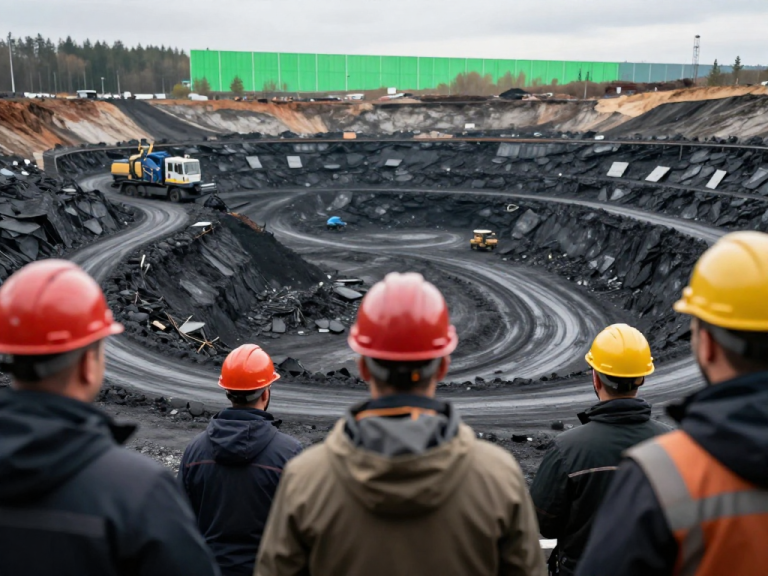
    Poland’s government is preparing new policy measures for the coal mining sector as it seeks to balance economic viability with the country’s ongoing energy transition, according to Deputy Minister of State Assets Grzegorz Wrona.

    In an interview with PAP Biznes, Wrona said the Ministry of State Assets and the Ministry of Energy are working on a draft “social agreement” aimed at defining a broader pact between society and the mining industry, rather than a traditional agreement between employers and trade unions.

    The initiative is intended to ensure that coal mining operations remain profitable and sustainable while continuing to support Poland’s electricity generation and industrial development. Wrona emphasised that coal still plays a key role in the country’s energy mix, even as Poland faces growing pressure to meet European climate and regulatory requirements.

    Government officials are examining options that could improve the profitability of the sector, including initiatives focused on coal processing and value-added uses of the resource. According to Wrona, such approaches could allow the industry to remain economically viable without driving up electricity prices.

    The deputy minister acknowledged the complexity of managing the transition, noting that Poland must simultaneously address decarbonisation goals and maintain energy security.

    Industry representatives have also raised concerns about current support mechanisms. Bogdanka CEO Zbigniew Stopa recently stated that some domestically produced thermal coal is being sold below extraction cost due to subsidy programmes, placing companies that do not receive state support at a competitive disadvantage.

    Wrona echoed criticism of the subsidy system, arguing that policies should prioritise mining operations that are economically viable, safe and capable of meeting market demand. He highlighted Bogdanka, along with certain mines in Lesser Poland and Silesia, as examples of operations with strong long-term potential.

    Under Poland’s existing legislation governing hard coal mining, certain companies receive state subsidies to reduce production capacity as part of restructuring efforts. These include major mining groups PGG and PKW, as well as Weglokoks Kraj, whose last mine ceased production at the end of 2025.

    The government’s ongoing policy discussions aim to identify a sustainable framework for the sector while addressing concerns about economic competitiveness, employment and regional development in mining areas.

  • Uzbekistan to Launch Uranium Extraction at Four New Deposits

    Uzbekistan to Launch Uranium Extraction at Four New Deposits

    President Shavkat Mirziyoyev has reviewed the latest developments and future plans for Uzbekistan’s coal and uranium industries during a recent presentation, according to the presidential press service.

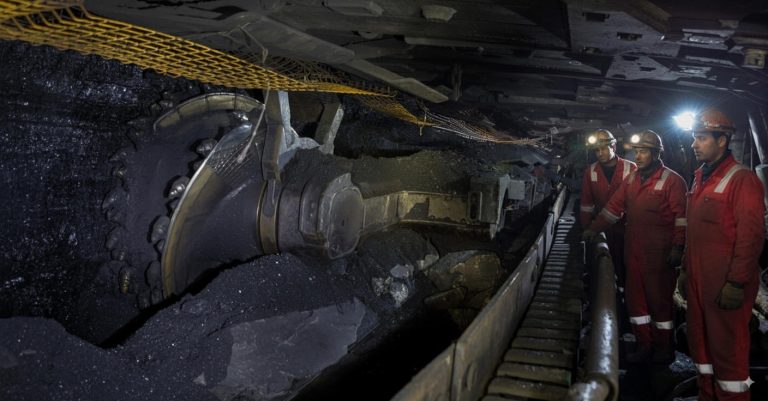
    Discussions centred on increasing coal output, strengthening competition within the sector, and improving the use of existing reserves. It was noted that during the 2025–2026 autumn-winter season, the country plans to extract 10 million tonnes of coal — 1.3 million tonnes more than last season. Production so far has reached 9 million tonnes, up by 590,000 tonnes year-on-year, with next season’s goal set at 11 million tonnes.

    Efforts will focus on faster development of deposits in the Tashkent and southern regions, expanding selective extraction, and engaging additional excavators and outsourced equipment. By supporting private entrepreneurs, authorities expect to produce an extra 2.5 million tonnes of coal in 2026.

    Particular attention was given to the “Nishbosh” coal deposit in Angren, where a nearly $500 million investment project is set to begin production this year. With reserves of about 233 million tonnes, the site is expected to yield 1 million tonnes of coal in its first year and reach an annual output of 10 million tonnes. The project will also create around 880 permanent jobs.

    Separately, state company Uzkimyosanoat unveiled a $5 billion initiative to establish a new polymer production facility based on the chemical processing of coal. The plant will be capable of converting 8–9 million tonnes of coal into 1.18 million tonnes of polymer products annually.

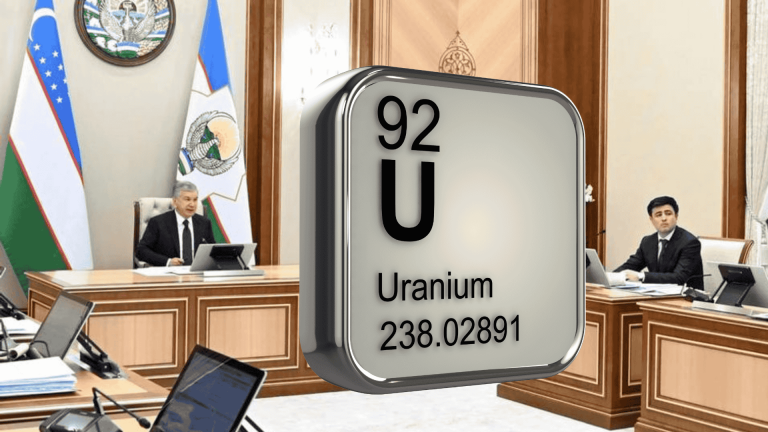
    In 2025, Uzbekistan produced 7,000 tonnes of uranium while confirmed reserves rose to 139,000 tonnes. This year, the government plans to start mining operations at four new deposits — ArnasayWestern KizilkukSouthern Jongeldi, and Eastern Agron. To accommodate rising output, additional uranium processing capacity will be developed, including stable supplies of sulphuric acid and technical sulphur.

  • Poland’s Parliament Approves Bill Facilitating Coal Mine Closures and Compensation for Miners

    Poland’s Parliament Approves Bill Facilitating Coal Mine Closures and Compensation for Miners

    Poland’s parliament has approved a landmark government bill aimed at easing the country’s transition away from coal. The new legislation facilitates the closure of coal mines, introduces financial support for displaced miners, and promotes the redevelopment of former mining areas. The measure, which gained strong backing from Prime Minister Donald Tusk’s ruling coalition, is designed to support the country’s shift to cleaner energy sources while mitigating the impact on coal-mining communities.

    The bill, which will allow mining companies to close operations with state-backed financial support, is part of Poland’s broader energy transition plan. Under the legislation, coal mines can transfer their assets to local authorities or state entities for redevelopment projects, creating new opportunities for investment, revitalization, and infrastructure construction in former mining regions. In addition to mine closures, the bill provides protective benefits for workers, including severance payments of up to 170,000 zloty (€40,000) for those losing their jobs.

    The government aims to phase out thermal coal mining entirely by 2049, with an initial target of closing five mines within the next decade. The bill received broad support from MPs within the ruling coalition, with 241 votes in favor and just six against. However, the far-right opposition parties abstained from voting, with some critics arguing that the bill does not adequately provide alternatives to coal for affected communities.

    Poland remains Europe’s most coal-dependent nation, with coal accounting for 57% of its power generation in 2024. The transition away from coal has raised concerns, particularly in the Silesian-Dąbrowa region, home to many of the country’s coal mines. Despite this, the government has emphasised that the bill will help ensure a “just transition” for miners and stimulate new investment in coal regions.

    The legislation now heads to Poland’s Senate for approval before reaching President Karol Nawrocki’s desk for signing into law. While Nawrocki has previously voiced strong support for the coal industry, it remains to be seen whether he will sign the bill or veto it.

  • Pasechnik Appeals to Putin for Funds Amid Mining Crisis in Occupied Luhansk

    Pasechnik Appeals to Putin for Funds Amid Mining Crisis in Occupied Luhansk

    Leonid Pasechnik, the Kremlin-appointed leader of the self-proclaimed Luhansk People’s Republic (LPR), has asked Russian President Vladimir Putin to help secure salary payments for miners in the occupied Luhansk region. According to Ukraine’s Center for Countering Disinformation (CCD), Pasechnik’s appeal reflects the severe deterioration of the mining sector, where most mines have been handed over to Russian companies.

    These operators had pledged investment but later declared the mines unprofitable, opting instead to mothball or liquidate production. The CCD reports that the situation has left many miners without pay, creating a desperate social and economic crisis in the region.

    The challenges are compounded by Russia’s own coal sector, which is suffering under international sanctions and the loss of export markets. Mines across Russia are shutting down, wages are going unpaid, and layoffs are spreading — leaving little incentive for companies to inject resources into the occupied Donbas territories.

    The mining crisis unfolds as Moscow grapples with broader financial troubles. The Russian government projects a $68 billion budget deficit by the end of 2025, nearly double previous forecasts, driven by falling oil and gas revenues and soaring wartime expenditures.

  • Kazakhstan Urged to Develop Coal Chemistry Amid Surge in Rare Earth Interest

    Kazakhstan Urged to Develop Coal Chemistry Amid Surge in Rare Earth Interest

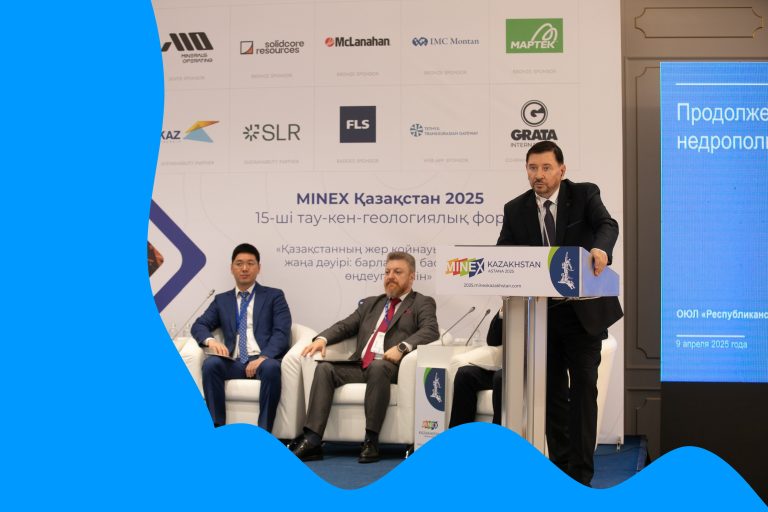
    As global demand for rare earth elements grows, Kazakhstan must not overlook the development of coal chemistry, said Nikolai Radostovets, Executive Director of the Republican Association of Mining and Metallurgical Enterprises (AGMP), at the MINEX Kazakhstan forum.

    “Technologies around the world are constantly evolving. First it was aluminum, then copper and steel. Now rare earths are in high demand. But we also want to see investment interest in the coal industry. Many have recently told Kazakhstan to phase out coal combustion — and we understand this,” Radostovets said.

    Despite global energy transition initiatives and the rise of renewables, coal remains a vital energy source, he emphasized. “You see how the situation is changing. Coal is still a very important product. We need concrete proposals and actions from the government to develop coal chemistry. We’re looking at stimulating cluster-based initiatives, and our industry is actively working on forming clusters with local manufacturers.”

    Discussions are also underway regarding the development of copper and aluminum clusters. “I believe the president and prime minister, by supporting our sector’s cluster initiatives, will create opportunities for processing and developing new products,” he added.

    Global coal giant China Energy is currently selecting a suitable deposit in Kazakhstan to develop coal chemistry. In January, Prime Minister Olzhas Bektenov confirmed the company’s $4 billion interest in coal chemical investment projects in the country.

    Kazakhstan ranks among the world’s top 10 countries in coal reserves, with an estimated 33.6 billion tons. At current consumption rates, that supply could last 300 years. Currently, coal generates about 70% of Kazakhstan’s electricity.

    Vice Minister of Energy Sungat Yesimkhanov previously announced that up to 5 GW of coal-based energy capacity is expected to be introduced by 2035. This includes several power blocks at Ekibastuz GRES-1 and GRES-2, as well as new thermal plants in Kokshetau, Semey, and Ust-Kamenogorsk. While the government forecasts coal’s share in electricity generation to decline to 34% by 2035, major infrastructure projects remain coal-dependent.

  • Once-Promising Samsonivska-Zakhidna Mine Now in Critical Condition

    Once-Promising Samsonivska-Zakhidna Mine Now in Critical Condition

    The Samsonivska-Zakhidna mine, once hailed as the “mine of the future,” is now in a dire state, according to Artem Lysohor, chairman of the Luhansk Regional Military Administration.

    Located near Otamanivka, the mine was handed over to a Russian investor for a symbolic price following the occupation in 2014. Despite initial promises of large-scale development, increased coal production, and new machinery, none of these commitments have materialized.

    “Last year, there was talk of restarting operations, but it seems they have changed their minds,” Lysohor stated.

    Before the Russian occupation, Samsonivska-Zakhidna was one of Luhansk’s key coal producers, contributing significantly to the region’s economy. Now, its future remains uncertain.

  • Kazakhstan’s Coal Industry Advocates to Remain Under Industrial Ministry

    Kazakhstan’s Coal Industry Advocates to Remain Under Industrial Ministry

    Kazakhstan’s coal industry should remain under the Ministry of Industry and Construction rather than being transferred to the Ministry of Energy, according to the Association of Mining and Metallurgical Enterprises (AMME). The proposal was voiced by AMME representative Tulegen Mukhanov during a ministry meeting.

    Mukhanov emphasized that the Ministry of Industry plays a crucial role in developing the sector, addressing export challenges, railway logistics, and ensuring the timely supply of coal for communal and residential needs during the heating season.

    Additionally, the ministry has worked with mining enterprises, research institutions, and potential investors to develop a national coal chemistry industry program. As part of this initiative, a scientific and technical center for coal chemistry is planned at the Institute of Coal Chemistry and Technology.

    Upon learning of the government’s intention to transfer oversight of the coal sector to the Ministry of Energy, AMME conducted a survey among mining companies. The respondents unanimously opposed the move and expressed their willingness to appeal directly to the Prime Minister and the President.

    Although Kazakhstan’s coal industry was previously under the Ministry of Energy, it was later separated—a structure that coal companies now wish to maintain. They argue that the Energy Ministry already oversees multiple sectors, while the current arrangement under the Ministry of Industry is more effective.

  • Poland’s Top Coal Producer Bogdanka Faces $305 Million Write-Off Amid Renewable Energy Surge

    Poland’s Top Coal Producer Bogdanka Faces $305 Million Write-Off Amid Renewable Energy Surge

    Poland’s leading coal producer, Lubelski Wegiel Bogdanka SA, has announced a substantial $305 million write-offfrom the value of its assets, as the rise of wind and solar energy accelerates the decline of coal in the market. Bogdanka, which is controlled by state-run utility Enea SA, cited “dynamic changes” in the domestic coal market and the increasing capacity of renewable energy sources as the primary reasons for this financial adjustment.

    The company’s profits had nearly tripled last year, reaching a record 687 million zloty, largely due to high coal prices. However, analysts predict a significant reduction in profits for 2024, even before accounting for the recent write-off.

    While Poland’s new government has been promoting clean energy, it has yet to release a formal energy policy with specific targets for the coming decade. Nonetheless, coal’s share in Poland’s electricity mix has already dropped to 66%last year, down from over 70% the previous year, as investments in photovoltaic and wind farms increase. The pressure on coal is expected to intensify as offshore wind turbines and gas-fired units become operational, and Poland looks towards establishing its first nuclear power plant in the next decade to align with the European Union’s climate neutrality goals.

    Bogdanka plans to revise its strategy in response to these new market conditions by the end of 2024. The company’s shares have dropped 27% this year, reducing its market valuation to 846 million zloty, while the WIG20 Index rose by 1.4% during the same period.

  • Kazakh Coal Producer “Bogatyr Komir” Maintains Supply Agreement with Russian Company Despite U.S. Sanctions

    Kazakh Coal Producer “Bogatyr Komir” Maintains Supply Agreement with Russian Company Despite U.S. Sanctions

    Despite U.S. sanctions, the agreements between the Kazakh coal producer “Bogatyr Komir” and the Russian coal and energy company SUEK remain intact for regular fuel deliveries, as reported by inbusiness.kz.

    “TOO Bogatyr Komir” is a joint venture between AO Samruk-Energo and Rusal. Concerns had arisen over potential secondary sanctions against the coal mining company due to the inclusion of the Russian buyer, Siberian Coal Energy Company (SUEK), in the U.S. sanctions list.

    Annually, up to 10 million tons of “Bogatyr” fuel were shipped to the affiliated Reftinskaya GRES linked to SUEK.

    According to the “Bogatyr Komir” report, the Kazakh coal producer is operating at full capacity, fulfilling all obligations regarding extraction and export. Between January and April 2024, they extracted and shipped 15,255 thousand tons of coal, with 2,584 thousand tons shipped to Russia. These figures slightly decreased compared to last year, which saw 15,488 thousand tons extracted and 3,343 thousand tons shipped to Russia.

  • Polish Government Delays Spin-Off Plan for State-Owned Coal Power Plants

    Polish Government Delays Spin-Off Plan for State-Owned Coal Power Plants

    Poland’s new government has decided to postpone the implementation of the plan to separate state-owned utilities’ coal-fired power plants and merge them into a new state-run entity, without proposing an alternative strategy. Industry Minister Marzena Czarnecka indicated the government’s interest in acquiring coal assets from state-controlled power utilities, which led to a surge in their share prices. Czarnecka emphasized the need for any acquisition to align with coal supplies from Polish mines during an interview with TVP Info television. State-controlled utilities, facing declining profitability, have been pushing for a swift spin-off of their coal-fired power plants, particularly after Czarnecka’s previous statement suggesting mines should be linked to utilities. Following this announcement, shares of Poland’s major utility companies, PGE and Tauron, experienced notable increases in trading. Fitch Ratings previously warned of potential credit downgrades for Polish utilities unless the government presents an alternative to the previous administration’s plan for spinning off coal assets.