Tag: Cinovec Lithium Project

  • Czech Cinovec Lithium Project Nears Critical EIA Verdict as European Metals Holdings Targets Mid-2026 Milestone

    Czech Cinovec Lithium Project Nears Critical EIA Verdict as European Metals Holdings Targets Mid-2026 Milestone

    European Metals Holdings is approaching a defining moment for the Cinovec lithium project in the Czech Republic, with a pivotal environmental ruling expected by the end of June that will determine whether the development — increasingly regarded as central to Europe’s battery supply chain ambitions — can unlock its EU funding and advance toward construction.

    The Czech Ministry of Environment is anticipated to deliver its verdict on the project’s Environmental Impact Assessment by 30 June 2026, a decision that carries significant financial consequences. A positive outcome is a mandatory prerequisite for European Metals Holdings to access grants allocated from the EU Just Transition Fund, making the ruling one of the most consequential regulatory moments in the project’s history. The formal review procedure is currently underway and will be followed by a public consultation phase before a final decision is issued.

    Ahead of that deadline, the company’s Annual General Meeting on 19 May 2026 will provide shareholders with an opportunity to hear updates on project progress, vote on the reappointment of board directors and receive further detail on planned lithium carbonate production targets. The project’s feasibility study envisages output of battery-grade lithium material sufficient to meet a substantial share of Europe’s projected demand by 2030, positioning Cinovec as a key node in the regional electric vehicle supply chain.

    The project has already secured meaningful regulatory momentum in recent months. In February 2026, official approval was granted for the regional rezoning of the project area, legally designating zones for mining operations, processing facilities and utility infrastructure corridors — a significant permitting milestone that builds on the formal submission of the comprehensive EIA documentation in December 2025.

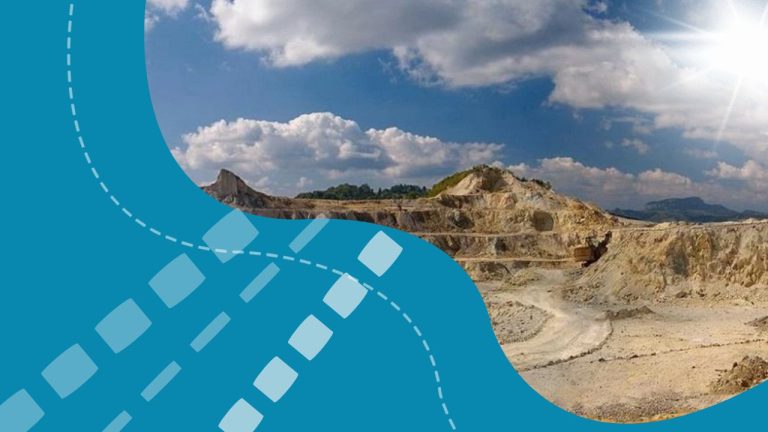
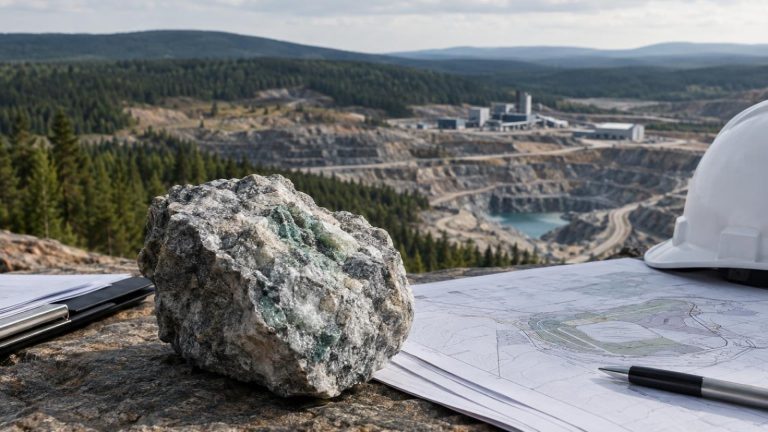
    Cinovec’s strategic significance has been formally acknowledged by both the European Union and the Czech government, with the project classified as a priority resource in the context of the continent’s energy transition. Located in the Erzgebirge mountain region on the Czech-German border, it is considered one of the largest hard-rock lithium deposits in Europe and has drawn growing attention as the bloc seeks to reduce dependence on imported battery raw materials, particularly from China.

  • North East and Cumbria river metal pollution tackled by £9m scheme

    North East and Cumbria river metal pollution tackled by £9m scheme

    In the Ore Mountains, a vast reserve of lithium is found. If the Czech Republic authorities proceed with its extraction, known as the “white gold,” it has the potential to boost the economy of both the country and the Usti nad Labem region. However, not everyone shares the same enthusiasm for these plans. The village of Cinovec, located near the German-Czech border, possesses a small yet valuable treasure. Situated approximately 100 km northwest of Prague, this village holds around three to five percent of the world’s lithium reserves, making it the largest lithium deposit in Europe.

    Lithium mining has become a strategic investment area in the Czech Republic, gaining immense significance in recent years, particularly in the field of battery production. The transition to alternative energy sources and the advancement of electromobility heavily rely on lithium-based energy storage. Furthermore, the soaring prices of lithium make its extraction economically viable for the Czech Republic. According to an analysis conducted by the Czech Chamber of Commerce, the country has exhausted its previous sources of economic growth, which indicates potential stagnation in the upcoming years. However, Prime Minister Petr Fiala remains hopeful that lithium mining could breathe new life into the Czech economy. In his vision for the country’s development over the next thirty years, Fiala outlined six strategic investment areas, with lithium mining and processing receiving the most attention.

    Fiala emphasized the pivotal role of lithium as a crucial raw material for electromobility, especially in battery cells. He stressed the government’s commitment to initiating extraction as soon as possible, ideally by 2026.

    The region possesses sufficient raw materials to produce one million lithium batteries annually. Cinovec is situated in a mining region with a long history of extracting various ores since the 13th century, including tungsten and tin in the 1940s. In the 2010s, geological surveys revealed significant lithium reserves in the area, extending across the German-Czech border into Zinnwald, albeit to a lesser extent. Prague has already entered into an agreement with the federal state of Saxony to explore potential cooperation in lithium mining. On the Czech side, the state-owned company Czech Energy Works (CEZ) will spearhead these efforts. Over a 25-year period of lithium extraction, it is estimated that a thousand miners will find employment in the region. Additionally, the construction of a gigafactory dedicated to electric vehicle battery production will generate new job opportunities and revenue. CEZ anticipates that mining this scarce resource could commence within four years.

    The authorities in the Usti nad Labem region support the development of the lithium deposit, provided that it adheres to stringent environmental standards. Jan Schiller, head of the region’s administration and a member of the opposition party “Action of Dissatisfied Citizens” (ANO), views lithium mining as an opportunity. However, he underscores the importance of establishing favorable conditions before commencing mining operations. The region still bears the consequences of coal mining, and any negative impact on living conditions must be adequately compensated.

    The prospect of new opportunities or further resource extraction?
    The Usti nad Labem region receives funding from the JTF, an EU fund dedicated to mitigating the consequences of ending coal mining and facilitating economic restructuring in affected regions. It is expected that a portion of the fund’s resources will be allocated to further develop the lithium project.

    Nonetheless, some experts caution against simply replacing coal mining with lithium extraction after the end of brown coal mining in the region. They recommend utilizing the funds from Brussels to invest in education and overall economic restructuring. Similar sentiments are echoed among the local population. Michal Koletzko, a professor at the Jan Evangelista Purkyne University in Usti nad Labem, staunchly opposes lithium mining in the region. Koletzko believes that lithium is not the right path and suggests focusing on fundamental changes to secure a new future for the region. He advocates for investing in areas that have the potential to not only provide an economic backbone but also transform the social composition and educational level of the population.

    Concerns about negative environmental impact
    Opinions among the residents of the Cinovec area are divided. On September 7, 2023, a discussion was held in the nearby town of Dubi between local residents and representatives of CEZ, and the venue was filled to capacity. Czech Radio reports that the primary concerns among villagers revolve around threats to the water supply and deterioration of air quality due to the transportation of extracted raw materials. Like any non-renewable resource, lithium mining does have environmental consequences. In South America, where approximately 70% of the world’s lithium reserves are concentrated in the “lithium triangle” spanning Bolivia, Chile, and Argentina, the extraction of lithium-containing brine has caused a significant decline in groundwater levels in certain regions. Careless actions by mining companies have also resulted in instances of air, water, and soil pollution. In Cinovec, lithium will be extracted from solid rock formations. While this method is water-intensive and consumes more energy compared to brine extraction

  • European Metals welcomes investment from EBRD

    European Metals welcomes investment from EBRD

    European Metals Holdings Ltd (AIM:EMH, ASX:EMH, OTCQX:EMHLF) chairman Keith Coughlan tells Proactive the company is to receive a €6 million investment from the European Bank for Reconstruction and Development (EBRD) to help fund the Cinovec Lithium Project in the Czech Republic.

    Coughlan said it was a strong endorsement of Cinovec’s value and commitment to the highest environmental and social standards.

    As part of its due diligence, EBRD engaged an independent, international mining consultancy to conduct a technical review of the Cinovec project. EBRD also performed a review of the project with respect to compliance with EBRD’s Environmental and Social Policy.

    “The EBRD investment aims to fund the project’s predevelopment work and opens a pathway to potentially securing project financing,” Coughlan said.

    “The successful completion of the technical due diligence process is a testament to the quality of the Cinovec team.”

    Cinovec is being developed by Geomet, a 51/49% joint venture between state-owned CEZ and EMH.