Tag: Central Asia Mining

  • Central Asia Advances Geological Reforms to Boost Investment and Resource Development

    Central Asia Advances Geological Reforms to Boost Investment and Resource Development

    Central Asian countries are intensifying efforts to modernise their geology and subsoil use sectors, positioning natural resources as a key driver of economic growth, technological development, and regional cooperation.

    In Kazakhstan, large-scale reforms are being implemented under the direction of President , aimed at improving investment conditions, increasing transparency, and accelerating digital transformation across the sector. Authorities have introduced a Unified Subsoil Use Portal, enabling streamlined access to licensing and geological data, while also aligning reporting standards with international frameworks.

    The country continues to expand its geological exploration coverage, which has now reached over 2 million square kilometres. Funding for geological research has increased significantly and is expected to total around 500 million dollars over the next three years. Kazakhstan’s mineral base remains substantial, with approximately 10 thousand deposits and large reserves of gold, hydrocarbons, coal, and iron, alongside growing attention to rare earth elements.

    Minister of Industry and Construction  noted that the sector is undergoing a structural shift as global demand evolves and resources become more difficult to access. In response, the government is prioritising advanced exploration technologies, including remote sensing, geophysical surveys, and geochemical analysis, as well as deeper institutional reforms to strengthen governance and efficiency.

    Digitalisation is also emerging as a central pillar. A unified platform now supports a full digital cycle from application to licence issuance, integrating electronic auctions and online payment systems. These measures are designed to improve transparency and create a more attractive environment for investors.

    Beyond Kazakhstan, similar reforms are underway across the region. In Uzbekistan, Deputy Minister  highlighted a shift toward investor-led exploration models, supported by legislative updates, tax incentives, and simplified licensing procedures. The country is also prioritising the development of critical minerals, including lithium, tungsten, and rare earth elements, with major investment programmes planned through 2028.

    Tajikistan is likewise advancing its geological strategy, focusing on expanding exploration, increasing resource efficiency, and attracting foreign investment. According to Ilkhomjon Oymuhammadzoda, the country has identified over 70 elements and is preparing hundreds of deposits for industrial development, while promoting joint ventures and domestic processing capabilities.

    Across Central Asia, governments are increasingly viewing geology not only as a source of raw materials but as a foundation for broader economic and technological transformation. Emphasis is shifting toward sustainable resource management, deeper exploration, and regional coordination, including shared geological data, joint studies of cross-border structures, and the development of integrated digital platforms.

    This coordinated approach reflects a wider recognition that future competitiveness in the global minerals market will depend on both resource availability and the ability to manage those resources efficiently, sustainably, and collaboratively.

  • Kazakhstan at PDAC 2026: The Next Major Frontier for Mineral Discoveries?

    Kazakhstan at PDAC 2026: The Next Major Frontier for Mineral Discoveries?

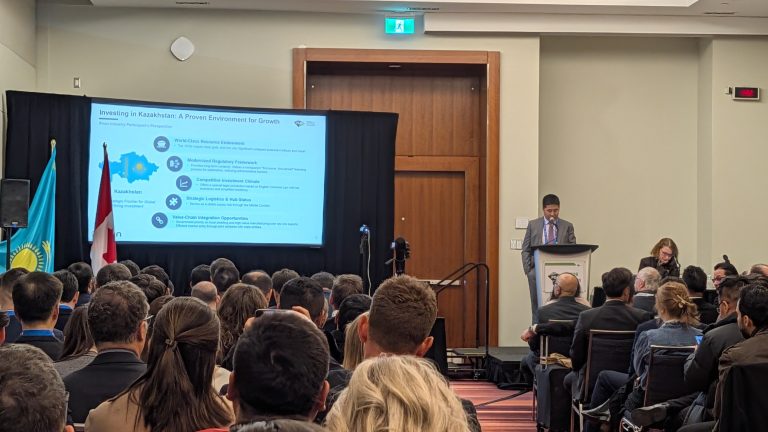
    This year marked a significant milestone as the Kazakhstan Chamber of Mines took the lead as the official organiser of Kazakhstan Day — and what a resounding success the debut turned out to be!

    Despite a packed PDAC schedule, the session drew an impressive crowd of over 130 industry leaders, investors, and exploration experts. The atmosphere in the room confirmed one thing: the global mining community is paying very close attention to Central Asia.

    MINEX Forum was proud to support the event as the Official Media Partner, capturing the insights that are shaping the next wave of exploration in the region.

    Key Highlights from the Plenary Session: The tone was set by Ruslan Baimishev, President of the Kazakhstan Chamber of Mines:

    “Kazakhstan is entering a new era of exploration — driven by robust reforms, international partnerships, and the soaring global demand for copper and critical metals.”

    We also heard high-level perspectives from H.E. Dauletbek Kussainov, Ambassador of Kazakhstan to Canada, and Iran Sharkhan, Vice-Minister of Industry and Construction.

    Expert Insights & Project Showcases: The technical session, “Unlocking New Discovery Potential in Kazakhstan,” featured a stellar line-up including Tim Barry (Arras Minerals), Charlie Liu (Zijin Mining), Simon Cooper (Pallas Resources), and world-renowned experts Anna Fonseca and Professor Jeffrey Hedenquist.

    The afternoon shifted to tangible opportunities, with project presentations from AMG Ltd, Kogadyr Gold, Taskora, and Muzbel. As Tim Barry aptly put it: “Kazakhstan offers unique opportunities for Canadian juniors to enter new jurisdictions — and the future looks bright.”

    Kazakhstan is no longer just a “prospective” jurisdiction; it is rapidly becoming the territory where the next big copper success stories are being written.

    Special thanks to the Kazakhstan Day partners:

    • General Sponsors: Aurora Minerals Group, NAC Kazatomprom, Pallas Resources.

    • Sponsors: Arras Minerals, TauGold Copper.

    Missed the session?  📺 Watch the session recordings and download expert presentations at:

  • First Meeting of the Eurasian Critical Minerals Organisation (ECMO)

    First Meeting of the Eurasian Critical Minerals Organisation (ECMO)

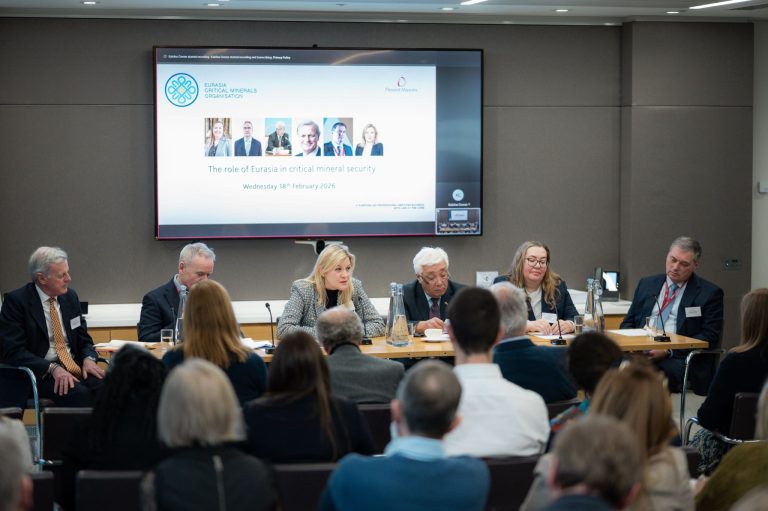
    The panel discussion marked the first public engagement of the Eurasian Critical Minerals Organisation and focused on the growing strategic importance of Eurasia in global critical mineral supply chains. Particular attention was given to Kazakhstan, Uzbekistan, Mongolia, Kyrgyzstan and Tajikistan, set against a backdrop of geopolitical change, supply-chain vulnerability and rising global demand for responsibly sourced critical raw materials.

    Speakers highlighted the diversity of investment environments across the region. Mongolia was cited as a leading example of transparency, due to its publicly accessible national geological database, which provides information on licences, ownership, geological data and environmental conditions. This level of openness was seen as a strong advantage for investors. Other countries in the region were described as having extensive geological data inherited from the Soviet period, much of which has yet to be fully digitised or made widely accessible.
    The panel agreed that improving geological data transparency across the region would significantly strengthen investor confidence and support new exploration.

    Kazakhstan was recognised as the most established mining jurisdiction in the region, with a long history of production and a diverse mineral base. Uzbekistan was described as an increasingly important emerging player, combining significant mineral potential with ongoing economic and regulatory reforms aimed at attracting international investment.

    Kyrgyzstan and Tajikistan were discussed as highly prospective but more constrained environments, where progress on governance, infrastructure and regulatory consistency will be important to unlocking long-term, sustainable investment.

    Mongolia was noted for its openness to mining investment, alongside the need to balance development with environmental and social considerations.

    The discussion also addressed the region’s strategic geography. Positioned between Russia and China, Eurasian countries are increasingly integrated into regional transport and infrastructure corridors, including those associated with China’s Belt and Road Initiative. While such investment was recognised as important, speakers stressed the shared objective among regional governments of diversifying their international partnerships.

    A broad and balanced investor base was described as being firmly in the national interest, strengthening resilience and reducing over-reliance on any single partner.

    Panellists also highlighted the growing link between critical minerals, industrial strategy and security. Recent geopolitical developments, including the war in Ukraine, have sharpened European focus on supply-chain resilience and strategic autonomy. Minerals found across Central Asia and Mongolia were described as essential inputs for clean energy technologies, advanced manufacturing and defence-related applications.

    From a geological perspective, the panel emphasised that large parts of the region remain underexplored, despite extensive historic discoveries. Many critical minerals occur as by-products of major commodities or within historic mine tailings. Advances in extraction and processing technologies, alongside the digitisation of legacy data and the use of modern analytical tools, were identified as key opportunities to unlock this potential.

    The political context was discussed through the lens of expanding C5+1 engagement formats between Central Asia and major global partners, including the EU, the UK, the US and others. These frameworks reflect growing recognition of Central Asia as a coherent region and a constructive partner in global economic and resource security discussions. However, speakers agreed that the priority now is to translate dialogue into practical outcomes and investable projects.

    The role of ECMO


    The panel concluded that ECMO has an important role to play as a practical, delivery-focused platform. Rather than duplicating existing diplomatic initiatives, ECMO aims to support implementation by bringing together governments, state-owned enterprises, investors, technology providers and financial institutions. By promoting transparency, best practice and ESG-aligned development, ECMO can help reduce investment risk, support responsible project development and unlock international capital. In doing so, ECMO seeks to help Kazakhstan, Uzbekistan, Mongolia, Kyrgyzstan and Tajikistan turn their significant mineral endowments into resilient, diversified and sustainable supply chains .

  • Central Asia Mining: Shifting Investment Landscape

    Central Asia Mining: Shifting Investment Landscape

    Central Asia’s mining sector—long a linchpin of the region’s resource-based economy—is at a transformative juncture. A study published on 19 February 2025 by the Eurasian Development Bank (EDB) examining mutual direct investments (MDI) across the Eurasian region from 2016 to the first half of 2024 reveals an evolving investment landscape. Traditionally dominated by investments in extractive industries, the region is now witnessing a broad diversification into sectors such as manufacturing, power, and greenfield projects. Alongside these trends, emerging regulatory frameworks—most notably new Chinese legislation concerning post-mining reconciliation and ESG (Environmental, Social, and Governance) requirements—are poised to significantly influence future investment dynamics.

    Historical Pillar: The Dominance of Extractive Industries

    For decades, mining and the broader extractive industries have formed the backbone of economic development in Central Asia. Rich deposits of minerals and metals have attracted substantial international investment, particularly from China, whose longstanding focus on extractive projects translated into investments of $36.2 billion. This capital influx has been instrumental in developing the region’s infrastructure and export capabilities, cementing mining’s role as a critical driver of economic progress.

    A Shifting Investment Landscape

    While the total MDI stock in the Eurasian region reached $90.4 billion by mid-2024, the extractive sector’s share of investment has begun to contract. Once accounting for 65.4% of the investment portfolio in 2020, its share has decreased to 55% of a $50 billion stock. This trend is less a sign of waning interest in mining and more indicative of a broader reallocation of capital as investors seek opportunities in the new and adjacent sectors.

    Diversification: From Mines to Manufacturing and Power

    The diversification of investments in Central Asia is underscored by significant growth in the manufacturing and energy sectors. Chinese investments, traditionally concentrated in extractive industries, are increasingly flowing into power and manufacturing. For example, investment in the power sector surged to $4.1 billion—a 2.1-fold increase in just a year and a half—primarily in Uzbekistan, while the manufacturing sector attracted $11.8 billion. This capital reallocation suggests that investors are now betting on a more diversified economic future that balances resource extraction with value-added industries.

    Regional Dynamics and the Role of New Partners

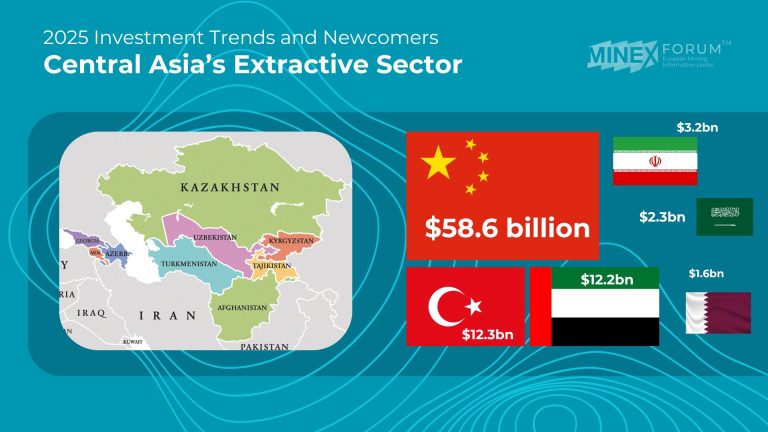
    Central Asia’s investment ecosystem is undergoing a fundamental reshaping, influenced not only by traditional players like China but also by new entrants from Türkiye, the Gulf states, and Iran. China remains the largest investor with an MDI stock of $58.6 billion, yet its strategy is evolving from a heavy reliance on extractive projects to a broader portfolio that includes energy, processing and manufacturing. Emerging investments from Saudi Arabia, UAE, Qatar, and Türkiye further illustrate the region’s expanding appeal. This diversification not only mirrors geopolitical shifts but also signals a recalibration of global investors’ risk and reward strategies in an increasingly competitive market.

    Emerging Regulatory Frameworks: China’s Revised Mineral Resources Law

    Adding a new dimension to the evolving investment landscape, recent Chinese legislative reforms are reshaping how mining investments will be planned and executed. According to a report by ICLG law firm, China has revised its Mineral Resources Law (effective from 1 July 2025) to include robust post-mining reconciliation requirements. These new provisions mandate that mining companies develop comprehensive ecological restoration plans once extraction activities cease. Such measures are designed to enforce ESG principles across the industry, ensuring that environmental sustainability and community welfare are prioritised alongside economic gains.

    While the law represents a significant step towards more sustainable mining practices, critics have noted that it lacks clear standards and robust community engagement provisions. The ambiguity surrounding enforcement may challenge the law’s effectiveness in practice. Nevertheless, as Chinese companies are pivotal players in Central Asia’s mining sector, these regulatory changes are expected to have far-reaching implications. By requiring adherence to ESG standards and post-mining reconciliation, the revised law not only elevates environmental and social accountability but also enhances the long-term viability of Chinese investments in the region.

    For Chinese investors, the new legal framework serves as both a challenge and an opportunity. On one hand, increased compliance costs and uncertainty in implementation could complicate investment decisions. On the other, the mandate for sustainable practices is likely to build greater investor confidence among international stakeholders who are increasingly attuned to environmental and social governance criteria. In effect, these reforms could catalyse further Chinese investments in Central Asia by promoting responsible mining practices that align with global trends toward sustainability.

    Greenfield Projects and the Future of Mining in Central Asia

    The momentum of greenfield projects further underscores the region’s dynamic evolution. With investments in new business and infrastructure soaring to $57 billion—almost double the levels of 2016—the emphasis is on modern, sustainable projects that integrate advanced technologies and greener practices. Even as capital shifts towards manufacturing and energy, the mining sector is adapting by incorporating sustainable practices and innovative technologies. This approach not only mitigates the historical environmental impact of mining but also positions the sector as a leader in sustainable resource management.

    Navigating the Future: Challenges and Opportunities

    Central Asia’s mining sector now stands at a crossroads. While traditional extractive investments continue to underpin the region’s economic strength, the emerging trends towards diversification and sustainability present both challenges and opportunities. Investors are increasingly weighing the volatility inherent in commodity markets against the more stable returns offered by sectors such as energy and manufacturing. Moreover, the integration of ESG principles—fuelled by legislative changes like China’s revised Mineral Resources Law among others—introduces a new layer of complexity, urging mining companies to innovate and adapt.

    Technological advancements, ranging from automation to environmentally friendly extraction techniques, hold the promise of revitalising the mining sector. These innovations, in tandem with the new regulatory environment, could help balance economic imperatives with ecological and community well-being. The successful navigation of these changes will be critical in ensuring that Central Asia’s natural resouces wealth continue to drive sustainable and long-term growth.


    Don’t miss the opportunity to explore Kazakhstan’s vast mineral wealth and connect with decision-makers shaping the future of mining in Central Asia at MINEX Kazakhstan Forum.

    MINEX Kazakhstan 2025 will feature:

    • 100+ expert speakers
    • 450+ delegates from 30+ countries
    • 50+ exhibitors showcasing cutting-edge technologies
    • Networking opportunities with key industry stakeholders

    Register here to secure your place at the Forum.

    We look forward to welcoming you in Astana!