Tag: Boliden

  • Boliden Beats Earnings Forecasts Despite Garpenberg Seismic Damage as Zinc Mine Faces Extended Capacity Constraints Through 2027

    Boliden Beats Earnings Forecasts Despite Garpenberg Seismic Damage as Zinc Mine Faces Extended Capacity Constraints Through 2027

    Swedish mining group Boliden has reported first-quarter adjusted earnings well above analyst expectations despite a production halt and significant damage at its Garpenberg zinc mine caused by abnormal seismic activity in March — though the incident has left a lasting mark on the mine’s output capacity that will extend into 2027.

    The company’s quarterly operating profit, excluding a revaluation of process inventory, rose to 4.4 billion Swedish crowns ($475.7 million) from 2.6 billion crowns in the same period last year, beating an analyst consensus of 4.06 billion crowns. The strong result was supported in part by record high gold prices, which at times exceeded $5,000 per ounce during the January to March period, boosting by-product precious metals revenue from Boliden’s mining and smelting operations.

    Garpenberg, one of Boliden’s largest and most strategically important mines and a key source of zinc and silver concentrates, suffered a production halt following the seismic event. The company confirmed that production will resume in the second quarter but at a low pace, with milled volume guidance for the mine reduced to 1.5 million tonnes and zinc grade revised down to 2.7%. Silver grade guidance was nudged up to 100 grams per tonne from 95 grams per tonne. Looking further ahead, 2027 milled volume is now estimated at 2.3 million tonnes — below previous capacity levels.

    Despite the setback, Boliden said its plan to invest in a new hoist at Garpenberg remains in place, with an ambition to reach production of 4.5 million tonnes by 2032, though the company cautioned that this guidance remains preliminary given significant uncertainties. Overall investment plans for 2026 were reiterated without change.

  • Boliden Reviews Kevitsa Mine Operations After Finland Quadruples Mining Tax

    Boliden Reviews Kevitsa Mine Operations After Finland Quadruples Mining Tax

    Swedish mining group Boliden has launched change negotiations at its Kevitsa open-pit mine in northern Finland, a process that could affect up to 285 employees as the company reassesses operations following a significant increase in the country’s mining tax.

    Boliden said the review was triggered by the Finnish government’s decision earlier this year to quadruple the tax applied to metal ores. The levy is calculated based on the taxable value of metals, which is linked to international market prices.

    The Kevitsa mine, located north of Sodankylä in the Lapland region, is one of Europe’s largest nickel and copper operations. Boliden warned that the higher tax burden could undermine the competitiveness of large-scale mining projects in Finland.

    Tom Söderman, general manager of Boliden Kevitsa, said the company believes European mining of critical metals such as nickel and copper should be supported by stable and competitive long-term business conditions.

    According to the company, the tax increase has already forced it to suspend plans for a €1 billion investment programme intended to extend the life of the Kevitsa mine beyond 2034. The company also noted that contractors and service providers linked to the operation could be negatively affected if operational adjustments are implemented.

    The review comes despite Boliden reporting strong financial performance. The company posted profits of 9.4 billion Swedish kronor (approximately €879 million) in 2025, representing a net profit margin of around 10 percent.

    Industry observers say the development highlights growing tensions in Europe between efforts to strengthen domestic supply of critical minerals and policy decisions that may increase costs for mining companies.

  • Boliden CEO Says EU Is a Decade Late on Rare Earths as Brussels Fast-Tracks €3 Billion Plan

    Boliden CEO Says EU Is a Decade Late on Rare Earths as Brussels Fast-Tracks €3 Billion Plan

    The head of Swedish mining group Boliden has warned that the European Union should have acted ten years ago to secure its access to rare earths, calling the bloc’s new €3-billion initiative a welcome but insufficient step given China’s dominance of the sector.

    The remarks follow the European Commission’s announcement that it will fast-track funding into 25 key mineral projects, part of a broader push to reduce dependence on Beijing, which processes more than 90% of the world’s rare earths. China has tightened export restrictions this year, further underscoring Europe’s vulnerability.

    Speaking to Reuters, Boliden CEO Mikael Staffas said Europe’s lack of self-sufficiency in critical raw materials has become a structural weakness and warned that progress will remain slow without sustained, decisive action.

    “The Critical Raw Materials Act was a small step,” he said. “The EU will need many more small steps if they want greater independence.” Staffas described the Commission’s latest effort as a sign of political intent, but stressed that “a lot more needs to be done.”

    Europe’s largest copper producer, Aurubis, echoed a similar sentiment this week, saying the CRMA has so far delivered little visible impact despite expectations of long-term benefits.

    Boliden Sees Little Benefit in New Rare Earths Push
    Although Boliden produces minerals on the EU’s priority list — including copper and nickel — none of its current projects fall within the rare-earth-heavy focus of the new initiative.

    “Everyone is talking about rare earths being super critical, and we do not have any projects there,” Staffas said. He added that even the full €3-billion package would amount to only two years of Boliden’s standard investment levels. The company forecast SEK 15 billion ($1.6 billion) in capital spending for 2026.

    Boliden’s Somincor mine extension in Portugal remains listed under the original CRMA strategic project roster, but none of its developments qualify under the new rare earths programme.

    Staffas’s comments underline a core challenge for the EU: while the bloc aims to diversify supply chains quickly, rare earth extraction and processing remain highly concentrated in China, and Europe’s existing mining pipeline is only partially aligned with the areas Brussels is prioritising.

  • World’s Deepest Marathon Takes Runners More Than a Kilometer Underground in Sweden

    World’s Deepest Marathon Takes Runners More Than a Kilometer Underground in Sweden

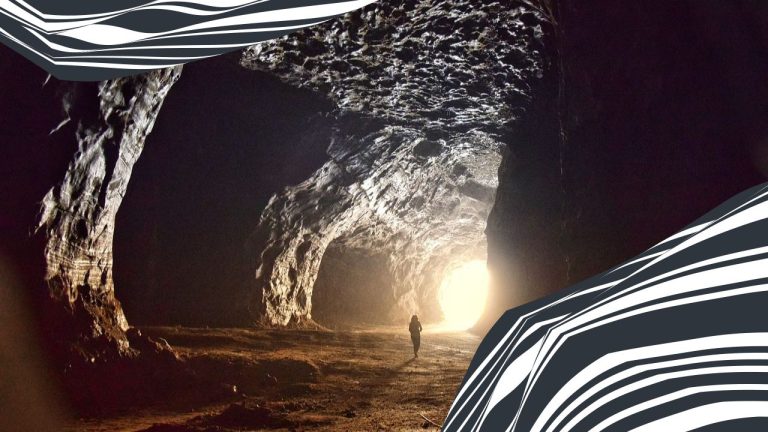
    In the pitch-black tunnels of Boliden’s Garpenberg zinc mine, over a kilometer below the surface of northern Sweden, 55 runners from 18 countries gathered to compete in one of the most extreme races ever attempted — the World’s Deepest Marathon.

    The course, carved through the humid, diesel-scented rock 180 kilometers northwest of Stockholm, spanned a 2-kilometer stretch of tunnel that participants ran back and forth 11 times to complete the full 42 kilometers. Among them were mining executives, Boliden employees, ultra-marathoners, and first-time racers.

    “You’d run to the end and then turn around — 11 times,” said Henrietta Newman, a consultant with the World Gold Council who took part in the event. “Other than our headlamps, it was complete darkness.”

    The marathon, organized by BecomingX, the International Council on Mining and Metals, and Boliden, is expected to enter the Guinness World Records as both the deepest marathon and the deepest underground marathon distance ever completed, pending verification. The event also had a charitable mission — raising over $1 million for the BecomingX Foundation, which supports education in Africa, and for dog welfare projects run by the Wild at Heart Foundation.

    Runners descended by elevator to 1,120 meters below sea level before being driven by truck into the tunnels. Despite being inside an active mine, organizers ensured safety: helmets were mandatory, though participants wore running shoes after the course was smoothed for the event. “I was worried about the hard hat,” Newman admitted, “but it was actually super light.”

    Conditions underground were challenging. The air was thick and humid, around 24°C, but also contained 30% more oxygen than at the surface — a small advantage against fatigue. “Coming down the incline, you’d get these occasional puffs of air, and it felt amazing,” Newman said.

    Though well-supported with hydration stations and logistics teams, the unique environment tested endurance. Even the top finisher completed the course about 50 minutes slower than his personal record.

    For many, however, the sense of camaraderie outweighed the discomfort. Newman described a heartwarming moment when a group of South African runners doubled back to accompany a first-time marathoner on her final lap. “It was just such a nice moment,” she said. “There were people from all walks of life, and everyone helped each other finish.”

  • Boliden Warns of Investment Impact from Finnish Mining Tax Proposal

    Boliden Warns of Investment Impact from Finnish Mining Tax Proposal

    Boliden, the Swedish mining giant, has issued a stark warning to the Finnish government over its proposed tax reforms, which it claims will have far-reaching consequences for the EU’s critical metal supplies. The company, which owns the Kevitsa copper and nickel mine in Finland, estimates that the proposed tax hike will result in a 20-30 million euro annual increase in costs, the bulk of which is due to a quadrupling of the recently introduced Finnish mining tax.

    In a strongly worded submission to the Finnish government, Boliden argues that the proposed tax reforms are “inadequately prepared” and lack proper impact assessments, which could lead to “serious consequences” for the investment climate in Finland. The company also notes that the current proposals should be withdrawn in their entirety.

    The proposed tax hike has sparked concerns among EU policymakers, as both copper and nickel, as well as cobalt and PGMs (platinum group metals), are designated as strategic and/or critical metals by the EU. The Kevitsa mine is one of the largest producers of these metals in the EU, and any disruption to its operations could have significant implications for the bloc’s raw material supplies.

    “We understand the need for a balanced tax system, but this proposal is unacceptable,” said a Boliden spokesperson. “The increased tax burden will not only harm our business but also threaten the EU’s critical metal supplies. We urge the Finnish government to reconsider its proposal and engage in a more inclusive and evidence-based decision-making process.”

    The Finnish government is expected to make a final decision on the tax reforms in the coming weeks.

  • Boliden CEO Confirms Dividend Resumption Following Strong Cash Flow and Mine Acquisitions

    Boliden CEO Confirms Dividend Resumption Following Strong Cash Flow and Mine Acquisitions

    Swedish mining giant Boliden will resume shareholder dividends after pausing payouts in 2024 due to its recent acquisitions, CEO Mikael Staffas confirmed in an interview on Friday. The company remains committed to its dividend policy of distributing one-third of its net profit to shareholders.

    The copper and zinc producer had halted dividends earlier this year following its purchase of the Somincor and Zinkgruvan mines from Lundin Mining. Despite the temporary suspension, Staffas emphasized that the company’s financial position remains robust.

    “Even though we had a good cash flow in this quarter, the balance sheet is much stronger than I think most people thought it would be after the acquisition,” Staffas said. He did not rule out the possibility of special dividends if Boliden ends up holding excess capital.

    In Q2, Boliden posted a free cash flow (excluding acquisitions) of 2,035 million Swedish crowns ($210.19 million), with both RBC and JP Morgan noting that the figure surpassed expectations—largely due to a significant release of working capital.

    While Staffas refrained from commenting on the size of future dividend payments, the strong quarterly performance indicates the company is on stable financial ground, positioning it well for renewed shareholder returns.

  • World’s Deepest Marathon to Take Place 1,120 Metres Underground in Swedish Zinc Mine

    World’s Deepest Marathon to Take Place 1,120 Metres Underground in Swedish Zinc Mine

    This October, 60 runners from across the globe will descend to a depth of 1,120 metres below the Earth’s surface to compete in what’s being hailed as the world’s deepest marathon. Hosted inside Boliden’s Garpenberg zinc mine in Sweden — one of the deepest in Europe — the event promises to push the boundaries of physical and mental endurance, while raising over £1 million ($1.34 million) for charity.

    Organized by Boliden, BecomingX, and the International Council on Mining and Metals (ICMM), the marathon is set not only to challenge human limits but also to highlight the evolution of mining into a safer, more technologically advanced industry.

    The Garpenberg mine, reaching a depth of 1,302 metres — more than four times the height of the Eiffel Tower — will serve as the unusual and extreme racecourse. Participants will run in complete silence and darkness, equipped with helmets and guided by 3D route mapping systems.

    “This will be a true test,” said Bear Grylls, co-founder of BecomingX. “Running a marathon is tough, but doing it 1,120 metres below sea level will push participants to their limits.”

    ICMM CEO Rohitesh Dhawan emphasized that modern mines like Garpenberg represent a stark contrast to the dangerous tunnels of the past, making such an event not only possible but safe. Boliden CEO Mikael Staffas called the event “historic,” noting the mine’s advanced safety and sustainability practices.

    With two world records in sight and an ambitious fundraising goal, the World’s Deepest Marathon is shaping up to be a landmark event blending human grit with technological progress.

  • Boliden Inaugurates Expanded Odda Zinc Smelter, Boosting Production and Sustainability

    Boliden Inaugurates Expanded Odda Zinc Smelter, Boosting Production and Sustainability

    A century after zinc production began in Odda, Norway, European metals company Boliden has officially inaugurated the expanded Odda zinc smelter, marking a significant milestone for the facility. The expansion increases the plant’s annual zinc production capacity from 200,000 tonnes to 350,000 tonnes, solidifying its position as Europe’s second-largest and the world’s most productive zinc smelter. Notably, the facility can now produce 1,000 tonnes of cast zinc per full-time employee annually.

    The project involved extensive infrastructure upgrades, including the installation of a new roasting furnace, a sulfuric acid plant, and a modernized cellhouse. Additionally, the leaching and cleaning plant and the foundry were expanded and updated to enhance production efficiency.

    Boliden President and CEO Mikael Staffas described the expansion as a historic achievement, emphasizing its role in producing the world’s most climate-efficient zinc. “This zinc will primarily be used for rust protection in various European applications, contributing to a responsible climate transition. It’s also a flagship for Norwegian industry, ensuring pride for another 100 years,” he stated.

    Zinc, the fourth most widely used metal globally, is critical for protecting steel structures from corrosion. It is heavily utilized in the construction, automotive, and energy sectors, particularly in wind turbines exposed to harsh environments. Additionally, zinc plays a vital role in agriculture, addressing zinc-deficient soils to boost global food production.

  • Boliden Extends Kevitsa Mine Life to Ten Years with Resource Boost

    Boliden Extends Kevitsa Mine Life to Ten Years with Resource Boost

    January 10, 2025 – Boliden has announced updated estimates for mineral resources and reserves at the Kevitsa mine in Sodankylä, northern Finland. Following detailed mineralisation studies, the new estimates show an increase in tonnage for both categories compared to the previous year.

    Assuming a production pace aligned with the environmental permit of ten million tonnes (mt) per year, this increase has extended the mine life to ten years.

    Key Highlights:

    • The average grade for mineral reserves is projected to rise to 0.22% for nickel while remaining at 0.31% for copper.
    • Nickel and copper grade guidance for 2025 is estimated at 0.17% and 0.23%, respectively.
    • A comprehensive re-estimation of mineral resources in 2024 has led to a new mine plan and updated mineral reserves.
    • The decision on a potential stage five project has been delayed by several years.
    • In total, 25mt have been added to the mineral reserve.
    • During 2024, 9.85mt were milled, resulting in a net increase of 15mt (19%) in mineral reserves.

    Despite the conversion back to mineral reserves, mineral resources have increased by 15mt (9%), attributed to the 2024 re-estimation and new assumptions regarding costs, prices, and terms.

    Boliden Mines president Stefan Romedahl said: “We are happy to announce that we have been able to improve the overall mine plan for Kevitsa. As a result, we not only increase the mineral reserves and secure a prolongation of the mine life, we have also been able to optimise the production in a way that pushes the decision point for a possible Stage 5 project up to a couple of years forward.”

    Romedahl stressed the importance of decisive action by European policymakers to safeguard the internal nickel value chain from unfair and unsustainable competition.

    With the updated estimates and extended mine life, Boliden continues to solidify its position as a leading player in the mining industry, ensuring a sustainable future for the Kevitsa mine.

  • Boliden Acquires Lundin Mining Assets for $1.3 Billion in Strategic Expansion

    Boliden Acquires Lundin Mining Assets for $1.3 Billion in Strategic Expansion

    Swedish mining giant Boliden is set to acquire the Neves-Corvo mine in Portugal and the Zinkgruvan mine in Sweden from Lundin Mining in a deal valued at $1.3 billion upfront, with potential contingent payments of up to $150 million.

    This acquisition is expected to nearly double Boliden’s zinc concentrate output and increase its copper concentrate production by 43%, significantly bolstering its resource portfolio. The move aligns with Boliden’s strategic goal to enhance its smelting capacity and secure a stable supply of mined ores amidst intensifying global competition.

    According to Boliden CEO Mikael Staffas, the deal represents both “industrial logic and strategic fit,” with the acquired mines projected to contribute between $300 million and $350 million annually in earnings over the next five years. Boliden plans to finance the upfront payment through a bridge loan, half of which will be refinanced via a share issue and the remainder through medium- and long-term debt instruments.

    For Lundin Mining, the sale reflects a pivot in focus toward South America. Earlier this year, the company announced a joint venture with BHP to acquire Filo Corp, which owns the Filo del Sol project in Chile. This deposit boasts estimated resources of 2.2 billion pounds of copper, 2.86 million ounces of gold, and 133.33 million ounces of silver. The joint venture also acquired the Josemaría copper-gold-silver project in Argentina.

    The Neves-Corvo mine, located in Portugal’s Iberian Pyrite Belt, produced 108,812 tonnes of zinc, 33,823 tonnes of copper, 6,500 tonnes of lead, and 1.9 million ounces of silver in 2023. Meanwhile, the Zinkgruvan mine in Sweden yielded 76,349 tonnes of zinc, 4,434 tonnes of copper, 26,284 tonnes of lead, and 2.3 million ounces of silver last year.

    The transaction, which is subject to regulatory approvals, is expected to be finalized by mid-2025.