Tag: Belt and Road

  • Pipelines and Rare Elements: How Central Asia Became America’s New Geo-economic Frontier

    Pipelines and Rare Elements: How Central Asia Became America’s New Geo-economic Frontier

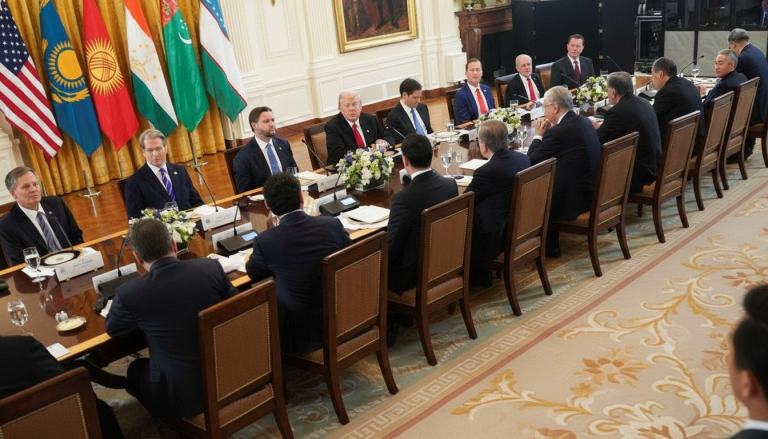
    The C5+1 summit held in Washington on November 6, 2025, marks a new chapter in U.S.–Central Asia relations, shifting the focus from energy pipelines to strategic mineral resources. Rare earth elements are now central to Washington’s strategy against China, which dominates mining and processing globally.

    Recent agreements—highlighted by substantial investments in Kazakhstan’s tungsten mines and commitments to Uzbekistan—illustrate a strategy that blends economic aims with national security, defense modernization, and leadership in green technologies. By partnering with Kazakhstan, Uzbekistan, and Turkmenistan, the U.S. seeks to counter China’s and Russia’s longstanding influence, establishing a “new resource-centered” framework for engagement. Rare earths are becoming tools of strategic power, supplanting traditional energy diplomacy and strengthening supply chains for renewable energy.

    This shift extends beyond resource access; mining investments are shaping political, economic, and diplomatic orientations across Central Asia, challenging China’s Belt and Road Initiative through economic means. The U.S. approach converts energy diplomacy into “mining diplomacy,” turning Central Asia into a global geo-economic crossroads.

    America’s renewed focus reflects a broader repositioning—building “strategic balancing” structures rather than pursuing mere economic or military dominance. The C5+1 format has become the central mechanism for promoting a model of regional integration that excludes Russia and China, offering a “third way” rooted in soft power, sustainable development, and technological partnerships.

    Strengthening transport routes like the Trans-Caspian corridor aims to liberate Central Asia from Russia’s logistical grip and curtail China’s influence over the Middle Corridor. Moscow and Beijing view these moves as containment strategies, intensifying geopolitical competition while granting Central Asian states greater autonomy through multilateral diplomacy.

    Ultimately, America’s strategy is about establishing a new Eurasian power architecture. Its success will depend on delivering sustainable investments and on Central Asian states maintaining independent balancing acts amid great-power competition.

  • Zijin’s Shadow: Villagers in Serbia and Tajikistan Bear Brunt of Chinese Mining Expansion

    Zijin’s Shadow: Villagers in Serbia and Tajikistan Bear Brunt of Chinese Mining Expansion

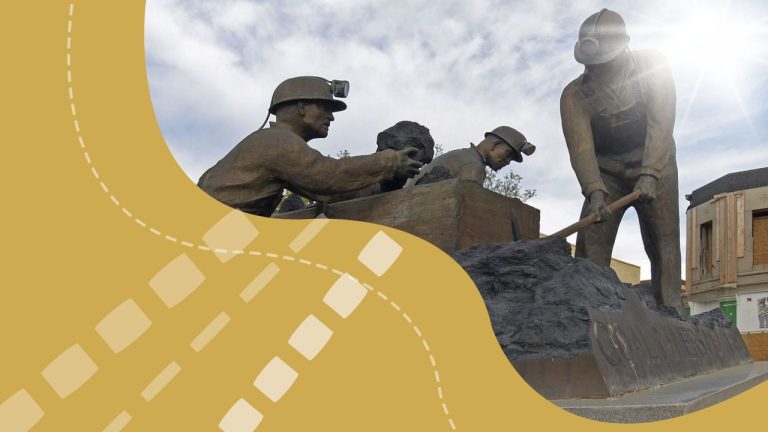
    In the hills of eastern Serbia and the valleys of western Tajikistan, villagers say they’re paying the price for China’s global mining ambitions. The Chinese-owned Zijin Mining Group, operating major copper and gold projects in both countries, stands accused of polluting the air, poisoning rivers, and displacing communities—while receiving strong political backing under the umbrella of Beijing’s Belt and Road Initiative (BRI).

    In Bor, Serbia, residents near Zijin’s Cukaru Peki copper mine complain of worsening air quality, arsenic, and fine particulate matter still lingering in the atmosphere despite the company’s reported $259 million investment in environmental improvements.

    “You used to see the smoke,” says Violeta, a Bor resident. “Now you don’t—but it still stinks.”

    In Krivelj, just outside Bor, Milos Bozic says the dust has made farming impossible. Professor Snezana Serbula of the Bor Technical Faculty confirms that PM particles and arsenic persist in the air. Meanwhile, residents like Dragoslav Stanculovic in nearby Ostrelj refuse to sell their properties. “What am I supposed to do—sell my dignity?” he asks.

    Despite environmental alarms, the Serbian government has doubled down on its support for Zijin, with Chinese companies now Serbia’s top exporters, surpassing $1 billion in trade by 2024.

    In Tajikistan, the story echoes Serbia’s. In Khumgaron and Shing, villagers say Zijin’s Zarafshon gold mine, where the company owns a 70% stake, has brought choking air and poisoned water. “Thick smoke covers the village in the morning,” says Abutolib Mukhtorov.

    Local residents in both countries report broken promises of relocation, inadequate compensation, and police intimidation of those who speak out. In Tajikistan, women who protested in Panjakent were detained. Firuza Kahorova recalls collapsing during the protest and being mocked by authorities: “They said, ‘Don’t give her water—give her dirt.’”

    Zijin claims 98% of Serbian land was acquired voluntarily and insists its projects meet environmental laws, branding Cukaru Peki as Serbia’s first “green mine.” In Tajikistan, Zijin has been fined, but continues operating with 20-year plans and strong support from the government, which highlights tax revenues and economic benefits.

    But for many residents, those benefits are illusory. “Peaches don’t grow. Cucumber flowers fall off. The river’s poisoned,” says Asadulo Rahmonov in Tajikistan. “It’s not progress. It’s survival.”