Tag: base metals

  • Pallas Confirms Shallow Supergene Copper Discovery at Satpayev Project in Kazakhstan

    Pallas Confirms Shallow Supergene Copper Discovery at Satpayev Project in Kazakhstan

    Pallas Resources has confirmed a shallow, flat-lying supergene copper discovery following laboratory assay results from its maiden drill program at the 100%-owned Satpayev Sediment-Hosted Copper Project in central Kazakhstan.

    In 2025, the company completed 4,800 metres of KGK (aircore-equivalent) drilling across the Satpayev licence area, targeting shallow copper mineralisation beneath thin cover along the interpreted continuation of the Dzhezkazgan mineralised contact. Drilling intersected supergene copper oxides and native copper from depths starting at approximately 6 metres, with assays returning broad, near-surface mineralised intervals consistent with a supergene enrichment zone.

    Notable intercepts from the program include 29.5 m at 3.04% Cu, 31 m at 2.78% Cu, and 30.5 m at 2.73% Cu, highlighting the strength and continuity of mineralisation. The discovery has so far been outlined over an initial area of approximately 400 metres by 150 metres and remains open to the northwest, where powerline infrastructure limited further drilling.

    Drilling depth was also locally restricted by refusal using the selected drilling method, preventing penetration into the underlying bedrock in some areas and leaving any potential primary sulphide copper system untested at this stage. To address this, Pallas is conducting detailed mineralogical and geochemical studies to refine its geological model and develop vectors toward a possible primary copper source beneath the weathered horizon.

    The company is planning a 2026 exploration program that will include additional shallow drilling to expand the supergene footprint, as well as deeper reverse circulation and/or diamond drilling aimed at testing the underlying primary sulphide copper system at depth.

  • Central Asia Metals Delivers Strong Financial Performance and Targets Sustainable Growth

    Central Asia Metals Delivers Strong Financial Performance and Targets Sustainable Growth

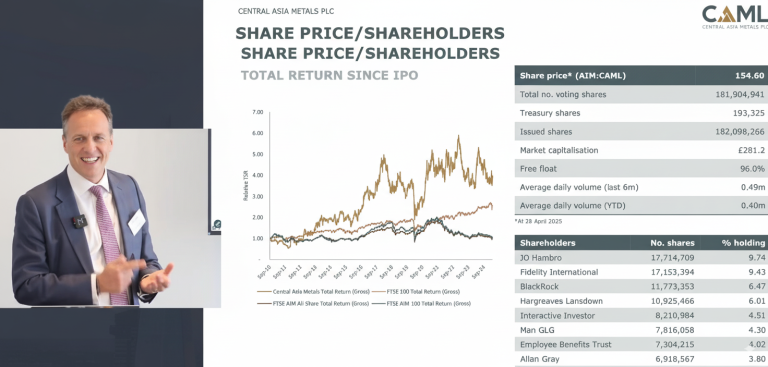
    Central Asia Metals PLC, during its recent ShareSoc Seminar investor presentation, outlined a solid financial and operational performance for 2024, underpinned by exceptional profitability from its primary mining assets in Kazakhstan (Kunrad) and North Macedonia (Sasa). The company reported EBITDA margins of 47%, notably higher than industry averages, with Kunrad achieving margins as high as 73% owing to its unique low-cost copper recovery process. CAML closed the year with $67.6 million in cash and generated nearly $66 million of free cash flow, positioning itself firmly as a low-debt, cash-strong operator.

    Shareholders have benefited from a consistent dividend policy, with payouts between 30% and 50% of free cash flow, although the latest 18p annual dividend actually represented a payout of 63% of cash flow, reflecting the board’s commitment to return surplus capital to investors. Since its 2010 IPO, CAML’s dividend returns have exceeded funds raised, exemplifying its prudent capital management.

    Operationally, the Kunrad copper operation stands out for its innovative in-situ leaching method, extracting copper from historic waste dumps without traditional mining, resulting in first-quartile cost performance and a reliable output profile. Sasa, in North Macedonia, remains a stable but higher-cost asset due to conventional underground mining, recent capital investment in new mining methods and infrastructure, and inflationary pressures closer to Europe.

    CAML’s growth strategy pivots on selective expansion of its asset base. In 2024, the management evaluated 37 potential acquisitions, focusing on base metal properties in familiar jurisdictions such as Kazakhstan, the wider European time zone, and parts of Africa. The criteria for new investment emphasise accretive deals that bolster shareholder earnings and leverage CAML’s strong borrowing ability. The company also maintains minority stakes in exploration ventures such as the Arthra project in Scotland and the Camel X JV in Kazakhstan, aiming for scalable, affordable copper projects to support future production.

    Sustainability and community engagement remain core to CAML’s ethos, with significant investments in solar energy reducing greenhouse gas emissions and philanthropic initiatives supporting local health, education, and disaster relief. Both Kunrad and Sasa have active programmes to minimise environmental footprint, including innovative tailings management and local entrepreneurship support.

    Looking ahead to 2025 and beyond, CAML expects continued steady production, further asset optimisation, and sustained shareholder returns, maintaining its reputation as a defensive stock with a strong balance sheet. The company continues to operate debt-free, with ongoing efforts to extend mine life and pursue disciplined expansion in base metals.

  • Leviathan Gold Acquires Foca Metals Corp. to Expand Silver and Base Metal Exploration in Bosnia

    Leviathan Gold Acquires Foca Metals Corp. to Expand Silver and Base Metal Exploration in Bosnia

    Leviathan Gold Ltd. (LVX – TSXV, 0GP – Germany) has acquired Foca Metals Corp. (formerly LS Lithium Corp.) through a share exchange agreement dated November 22, 2024. This acquisition secures Leviathan a 100% indirect interest in the Foča Project, a promising exploration site located in Republika Srpska, Bosnia and Herzegovina.

    The Foča Project spans 100.7 square kilometers across three active exploration licenses in a region geologically similar to Adriatic Metals’ Vareš Project. Vareš has reported significant Indicated and Inferred Mineral Resources, highlighting the area’s rich mineral potential within the Central Dinaride metallogenic zone of the Western Tethyan Belt.

    Leviathan’s exploration targets at Foča include:

    • Vrela Prospect: Historical drilling from the 1960s indicated an average thickness of 15 meters of mineralization grading 13.25% Pb+Zn. Recent soil and rock chip sampling confirmed high-grade mineralization extending over 2 kilometers northeast of historic drill sites.
    • Barice Prospect: Recent exploration identified massive sulphide mineralization with rock chip assays of up to 4.48% Cu, 110 g/t Ag, 30.2% Pb, and 6.45% Zn. A coherent Pb, Zn, and Cu soil anomaly was also mapped over a 500-meter strike.

    Leviathan plans to deploy trenching and Induced Polarization geophysical surveys at both prospects to define high-grade and bulk-tonnage drilling targets.

    CEO Luke Norman expressed enthusiasm about the acquisition, highlighting Bosnia’s favorable regulatory environment and the largely underexplored nature of the Central Dinaride Zone. “Despite Adriatic Metals’ success at Vareš and the historic Trepča complex in Kosovo, much of the region remains untouched by modern exploration, creating a significant discovery opportunity,” Norman said.

    Leviathan’s Balkan operating experience, combined with recent legal changes in Republika Srpska, offers a unique first-mover advantage in this promising region. With ongoing government and local support, Leviathan is well-positioned to advance the Foča Project and explore its potential for significant silver and base metal discoveries.

  • Growing value through discovery in the Balkans

    Growing value through discovery in the Balkans

    Terra Balcanica, a junior Canadian explorer of critical metals, eyes untapped opportunities at Europe’s doorstep.
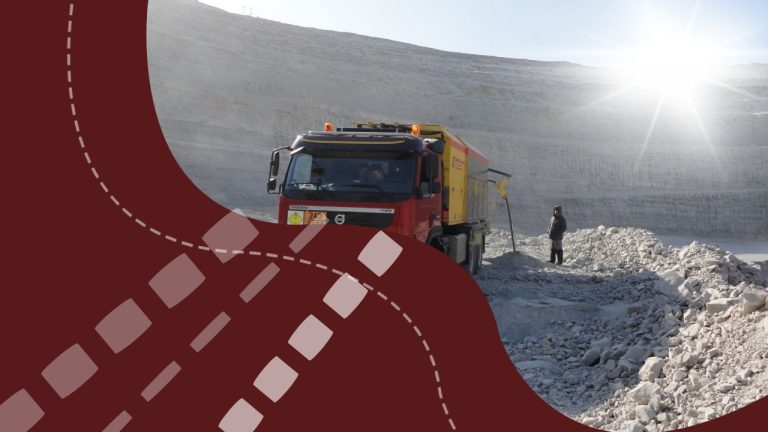
    What do you get when you combine a millennia of mining history, two resource extraction-friendly European jurisdictions with clear paths to permitting mineral exploration concessions, a knowledgeable workforce, and a continent starved for critical metallic resources?

    Add to that a world class metallogenic expertise and a plethora of innovative geochemical and geophysical techniques that helped define grassroot drill targets in less than a year, all of which proved to be mineralised. Welcome to Terra Balcanica Resources Corp. and its ~350km² polymetallic portfolio of the Western Balkan Peninsula.

    Terra Balcanica is a junior Canadian explorer of precious and base metal resources in Europe’s front yard, where it has been advancing five exploration licenses in Bosnia and Serbia. Listed on both the Canadian Securities Exchange, and the Frankfurt Stock Exchange, the company has made strides since acquiring its flagship land package in eastern Bosnia in 2020.

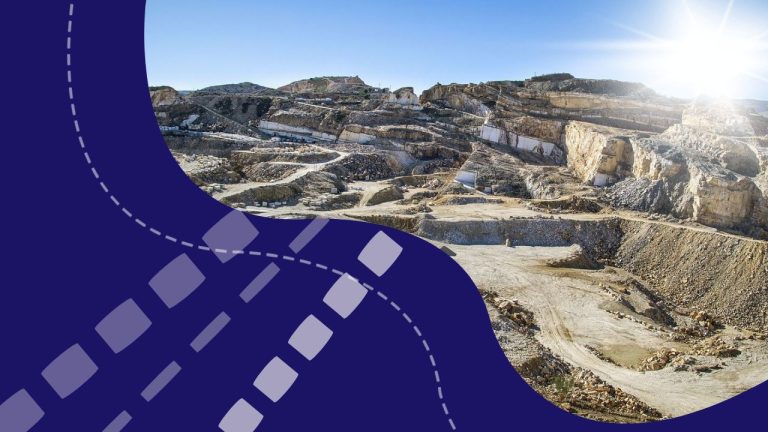
    Called the Viogor-Zanik Project, the 215km² aggregate of licences surrounds the operation Sase mine (Mineco Ltd.) with an annual production of 350,000 tonnes of Pb-Zn-Ag+/- Sb concentrate, and is centred upon a mining district mined as far back as the Roman times when it was known as Argentaria.

    A multidisciplinary approach to target definition

    In slightly over three years, Terra’s technical and field teams have mapped, sampled, surveyed, and drilled two out of three highly prospective target zones within the only Oligo-Miocene manifestation of the highly prolific Western Tethyan orogen in Bosnia and Herzegovina.

    The belt, whose mapped southeastern extension reaches Afghanistan via the Balkans, Turkey, and Iran, features world class porphyry copper and epithermal gold-silver deposits (Sarcheshmeh, Sari Guni, Kişladag, Skouries, Olympias, Trepca), and terminates right at Terra Balcanica’s feet as the metalliferous Srebrenica Magmatic Complex.

    Here, a meticulously systematic approach of layering dozens of data sets obtained by months of lithological and structural mapping, combined by those gained from airborne geophysics, satellite multispectral terrain surveys, and thousands of rock and soil chemical assays revealed two genetically distinct, yet equally attractive targets worth drill testing.

    And drill, Terra did. Both the Cumavici and Brezani targets were tested to the tune of over 2,000m of diamond drilling, respectively, with attractive metal grades intercepted close to surface but the story does not stop with Bosnia.

    In neighbouring Serbia and another mining heavyweight of Europe (e.g. Timok District), Terra Balcanica operates two exploration concessions in the historic Rashka district, once home to many a medieval Saxon miner employed by the Serbian kings of the epoch.

    Here, the Ceovishte and Kaludra licences comprise a 130km² land portfolio rich in Zn-Pb-Ag-Au-Cu showings. Particularly interesting is the former, where Terra’s geologists have collected high-grade precious metal samples on-surface that overlay historical workings featuring highly enriched vein-hosted mineralisation. None of the Serbian targets have been drill tested to date, and remain Terra’s immediate focus for the 2024 Phase III campaign.

    As only the second (foreign) mineral explorer in Bosnia, Terra Balcanica is poised to capitalise on regional early-mover opportunities, while remaining a nimble, agile, and cost-effective explorer of choice in SE Europe.

    For many at Terra, discovering mineable resources needed by the world of tomorrow is not just a self-evident mission but an homage to the proud, century-long history of mining in Europe.

    The art of discovery

    Ours is a disciplined and creative team of mining professionals that has demonstrated an ability to make discoveries in places overlooked or abandoned by others, and to leverage these forgotten or neglected gems as incubators of the mining continuum, and value creators for our shareholders.

    Whether it is systematically rehashing volumes of archived data sets, modelling newly acquired geophysical data, or rapidly ground-truthing the rugged vast expanse of the Western Balkan Peninsula aimed at targeting the ‘sweet spots’ – discovery is in our geological DNA. Our leadership group and technical team are fully vested and singularly committed to this goal.

    The Čumavići target

    Within the Viogor-Zanik Project of eastern Bosnia and Herzegovina lies the Čumavići target. This shallow, high-grade, polymetallic target area extends for over seven kilometres NW/SE through the project. Tens of mineralised showings which returned assay grades up to 128 g/t silver and 20% zinc are visible alongside historic mining works. Silver-zinc-manganese-antimony all show anomalism in soil geochemistry, coupled with linear magnetic low responses (indicative of possible host structures).

    Terra has completed diamond drilling at two locations and discovered polymetallic veins and breccias returning assay grades up to 11m at 505 g/t silver equivalent (gold-silver-lead-antimony-zinc recalculated to the value of silver) in 2022 drillhole CMVDD004.

    Individual drill core samples have returned values as high as 1,420 g/t silver over 1.7m and 31% combined lead and zinc over 90cm. Terra has only scratched the surface of the Čumavići story and is excited to continue drilling in 2024. As more mineralisation is discovered within the Čumavići corridor it is worth noting the proximity of Terras discovery to the operating Sase Mine, actively depleting their ore reserves.

    The Brežani target

    Just 11km to the southeast, within the Viogor-Zanik Project. lies the Brežani target. A greenfield discovery in 2021, Brežani presents a kilometre-scale mineralised hydrothermal system first identified as a large magnetic anomaly, coupled with over 700m strike length of elevated gold in soil. Drilling at the target has revealed not only that the gold on surface extends down to 88m (results from drillhole BREDD002) but is also host to strong epithermal mineralisation at depth.

    The gold in drill core was consistent at 0.5 g/t, reaching up to 1.5 g/t for six metres. Brežani represents the only gold mineralised skarn (a calc-silicate rock) in Bosnia and Herzegovina and is set to grow with further drilling.

    Recently discovered and extensive epithermal mineralisation encountered downhole shallows to the east-northeast, where a similar element assemblage of silver-arsenic-antimony is present within rock and soil samples from a topographic low, coupled with a magnetic low. This offers shallower drill targets for this prospective polymetallic mineralisation.

    Prospective work at Ceovishte

    Terra Balcanica also operates in neighbouring Serbia, where it holds 80km² of highly prospective land in the historic Raška mining district. The Ceovishte Project represents a previously overlooked high grade gold-copper target with surface rock chip assay results up to 64 g/t gold and 2% copper.

    What is in store for 2024?

    As a regional Balkans explorer, Terra Balcanica has proven capabilities of identifying prospective projects and discovery mineralisation. Being on the doorstep of Europe, and given the demand for critical metals such as lithium, Terra has identified a prospective area and is looking to move into the battery metal exploration space.

    The western Balkan Li-B (lithium-boron) metallogenic zone spans for over 1,500km through Croatia, Bosnia and Herzegovina, Serbia, and Kosovo along its path to Turkey to the east. The Serbian portion of the zone hosts Rio Tinto’s Jadar Project, a sediment hosted lithium-boron deposit discovered in 2004 hosting indicated resources of 85.4Mt at 1.76% Li2O and 16.1% B2O3 with further inferred resources of 58.1Mt at 1.87% Li2O and 12.0% B2O3 as of 31 December 2021.

    Terra Balcanica is excited to commence its lithium exploration journey in 2024 and add value to an already diversified portfolio of assets.

    Sustainable mineral exploration practices

    At Terra Balcanica, we emphasise responsible engagement with local communities, municipal governments, and key stakeholders. The company is committed to proactively implementing Good International Industry Practice (GIIP) and sustainable health, safety, and environmental management.

    We are particularly proud of our workplace safety and environmental protection record that include safety trainings, baseline environmental surveys, and regular community initiatives. The goal is to have our employees return to their families safely while maintaining a minimal environmental footprint.

  • Adriatic Metals proposes $30 million placing to fund exploration

    Adriatic Metals proposes $30 million placing to fund exploration

    Adriatic Metals PLC on Monday announced it intends to conduct a placing to raise $30.0 million to fund an expanded exploration programme at the Rupice and Rupice Northwest deposits in Bosnia & Herzegovina.

    Adriatic Metals is a precious and base metals explorer and developer that owns the Vares silver project in Bosnia & Herzegovina and the Raska zinc deposit in Serbia. Shares in the firm closed down 1.7% at 169.40 pence on Monday in London.

    Monday’s placing price of £1.70 per share – or A$3.30 per CHESS depositary interest, representing such shares – represents a discount of 5.1% to the company’s average price share in the last 10 days on the Australian Securities Exchange.

    The total number of placing securities is expected to represent approximately 5.0% of the company’s existing share capital.

    Adriatic Metals said the proceeds of the placing will fund an expanded and accelerated exploration programme at Rupice and Rupice Northwest, including an additional 40,000 metres of drilling, and associated facilities and equipment. It will also contribute to the general working capital associated with exploration, as well as growth opportunities, general corporate purposes and fees.

    ‘Rupice and Rupice Northwest remain open and there are numerous regional targets such as Droskovac, SP1 and SP2 that have exciting prospects. We believe this exploration programme will deliver impactful results by more aggressively testing priority targets across our emerging high-grade polymetallic district,’ said Chief Executive Paul Cronin.