Tag: Azerbaijan

  • Azerbaijani Companies Expand Gold and Rare Earth Mining Ventures in Uzbekistan

    Azerbaijani Companies Expand Gold and Rare Earth Mining Ventures in Uzbekistan

    Uzbekistan is broadening its international partnerships in the mining sector, with recent agreements signed with Azerbaijani companies focusing on gold and rare earth metals (REMs), hydrocarbon exploration, and the processing of silver-containing ores, as reported by Gazeta.uz, citing the Ministry of Investments of the Republic.

    AzerGold, an Azerbaijani gold mining company, has gained access to the Akba deposit in the Kashkadarya region. According to Uzgeologiya, over 13 tonnes of extractable gold reserves were added to the state balance last year, with the site’s potential estimated at an additional 50 tonnes. Concurrently, AzerGold will conduct geological studies in promising areas of the Navoi region.

    In the Namangan region, a joint venture will be established for processing silver-containing ore, with processing facilities to be built based on the deposit in the Pap region. Sur Gold and Silver Project will be the partner in this initiative.

    Collaboration with NEQSOL Holding in the field of REMs will cover the Navoi, Tashkent, and Jizzakh regions. This partnership is a continuation of a broader agreement signed in June at the Tashkent Investment Forum, which involves the joint extraction of strategic minerals, including titanium.

    Additionally, the Azerbaijani state oil and gas company SOCAR will undertake exploratory works as part of the ‘Ustyurt’ project, which encompasses six blocks: Terengkuduk, Boyterak, Birkori, Kharoy, Kulboy, and Karakalpak, located in Karakalpakstan. This expansion of Azerbaijani companies into Uzbekistan’s mining sector signals a significant step towards enhancing regional cooperation and resource development.

  • Azerbaijani Companies to Explore Gold and Rare Earth Deposits in Uzbekistan

    Azerbaijani Companies to Explore Gold and Rare Earth Deposits in Uzbekistan

    Azerbaijani companies are set to engage in the exploration and development of gold deposits in Uzbekistan, as reported by Gazeta.uz, citing the Uzbek Ministry of Investments, Industry and Trade. The initiative includes geological exploration, processing of silver-containing ores, and the extraction of rare earth metals. Notably, AzerGold is planning to participate in the development of the ‘Akba’ gold deposit located in the Kitab district of the Kashkadarya region. The company will also conduct geological surveys in promising areas of the Nuratin district in the Navoi region.

    In 2025, ‘Uzbekgeologorazvedka’ reported that over 13 tonnes of industrial gold reserves at the ‘Akba’ deposit had been accounted for and placed on the state balance. Further geological exploration in the area could potentially reveal an additional 50 tonnes of gold. This significant find underscores the potential for increased gold production in Uzbekistan, which is becoming an attractive destination for foreign investment in the mining sector.

    Another project involves the extraction of rare earth metals in the Navoi, Tashkent, and Jizzakh regions, with Neqsol Holding acting as the Azerbaijani partner. This collaboration highlights the growing interest in rare earth elements, which are critical for various high-tech applications and are increasingly in demand globally.

    Additionally, in the Namangan region, a partnership with Sur Gold and Silver Project aims to establish a processing plant for silver-containing ores. This project not only signifies the diversification of mining activities in Uzbekistan but also reflects the country’s commitment to enhancing its mining infrastructure and capabilities.

    Overall, these developments indicate a strengthening of economic ties between Azerbaijan and Uzbekistan, particularly in the mining sector, as both countries seek to leverage their natural resources for mutual benefit.


  • Azerbaijan and Uzbekistan Near Completion of Exploration on Ustyurt Plateau, Drilling Set for 2027

    Azerbaijan and Uzbekistan Near Completion of Exploration on Ustyurt Plateau, Drilling Set for 2027

    Azerbaijan and Uzbekistan are advancing towards the practical phase of developing hydrocarbon resources on the Ustyurt Plateau, with drilling operations scheduled to commence in 2027. During a state visit to Tashkent, Azerbaijani President Ilham Aliyev announced that the project is in the final stages of exploration. The oil and gas project is jointly owned by Uzbekistan’s Uzbekneftegaz and Azerbaijan’s SOCAR, each holding a 30% stake, while British company BP controls the remaining 40%.

    The collaboration between Azerbaijan and Uzbekistan began with a cooperation agreement in August 2024, which initiated geological exploration activities. In July 2025, the parties signed a production-sharing agreement that included a 3D seismic survey covering at least 1,000 square kilometres and the drilling of one exploratory well. BP officially joined the project in May 2026, taking on the role of operator.

    The commencement of industrial production on the Ustyurt Plateau is expected to be a lifeline for Uzbekistan, which is experiencing a decline in domestic natural gas production due to depleting reserves. In June 2026, gas production fell to 2.5 billion cubic metres, a 30% decrease compared to the previous year. For the first half of the year, Uzbekistan produced 18.3 billion cubic metres of gas, which is 16% lower than the figures for 2025. In peak years, the country produced around 70 billion cubic metres, but by 2025, annual production had dropped to 42 billion cubic metres.

    This decline in production has intensified Uzbekistan’s reliance on gas imports. In the first six months of 2026, the country spent $972 million on gas and liquefied hydrocarbons imports, 1.4 times more than the previous year. The main suppliers are Russia and Turkmenistan. However, during certain months when domestic demand decreases, Uzbekistan exports surplus gas, primarily to China.


  • Azerbaijan’s Mining Sector: A New Catalyst for Non-Oil Exports

    Azerbaijan’s Mining Sector: A New Catalyst for Non-Oil Exports

    Azerbaijan’s mining sector is increasingly becoming a significant contributor to the country’s non-oil exports, as evidenced by the latest trade data from the first half of 2026. The country reported a remarkable $202.2 million in primary non-oil gold exports, alongside substantial figures for raw copper concentrate at $135.9 million and aluminum products at $58.9 million. However, a crucial detail in the trade report indicates that the gold exports exclude monetary gold, which has led to some misconceptions regarding the relationship between gold imports by the State Oil Fund of the Republic of Azerbaijan (SOFAZ) and the country’s export figures.

    The distinction between monetary and non-monetary gold is vital for understanding Azerbaijan’s economic landscape. Monetary gold, held as a reserve by central banks and sovereign wealth funds, does not impact the current account but rather the financial account of the balance of payments. In contrast, non-monetary gold, which is mined and sold on international markets, is reflected in the trade statistics. The $202.2 million in gold exports is attributed to local mining operations rather than SOFAZ’s reserve strategies.

    Key players in this burgeoning mining sector include Anglo Asian Mining PLC and AzerGold CJSC. Anglo Asian Mining has been active in Azerbaijan since the mid-2000s, expanding its operations in the Gadabay and Gosha fields, while AzerGold focuses on the Chovdar mine and other extraction sites. The increase in copper exports, which surged from $12.3 million in H1 2025 to $135.9 million in H1 2026, underscores the growth of the domestic mining industry, driven by enhanced production capabilities and favourable international prices.

    The implications of these developments extend beyond mere export figures. Traditionally reliant on agricultural exports, Azerbaijan is witnessing a shift as mining gains prominence in its non-oil export strategy. The combined revenue from gold, copper, and aluminum reached $397 million in just six months, signalling a potential transformation in the country’s economic focus.

    Furthermore, the geographic aspect of mining development aligns with Azerbaijan’s broader reconstruction strategy, particularly in areas bordering the liberated territories. As geological surveys and mining activities expand into these regions, the contribution of the mining sector to non-oil exports is expected to grow even further in the coming years, despite fluctuations in global commodity prices.


  • Azerbaijan Aims to Elevate Aluminum Industry Through Strategic Partnerships

    Azerbaijan Aims to Elevate Aluminum Industry Through Strategic Partnerships

    Azerbaijan is positioning its aluminum industry as a cornerstone of its industrial diversification strategy, particularly through recent discussions with China’s Xinjiang Joinworld Co., Ltd. While Azerbaijan already boasts an established aluminum sector, led by Azeraluminium as the only primary aluminum producer in the South Caucasus, the focus of these talks extends beyond mere production increases. The discussions aim to leverage foreign technology, investment, and expertise to enhance the existing industrial capacity, thereby elevating the country’s position in the global industrial value chain.

    Economy Minister Mikayil Jabbarov highlighted that the collaboration with Xinjiang Joinworld is centred on joint projects that incorporate modern technologies and innovative solutions. This approach signifies a shift from merely increasing aluminum output to developing advanced capabilities that can produce higher-value products. The potential for Azerbaijan lies in transforming raw aluminum into products such as sheets, rolled products, and specialized alloys, which can significantly boost industrial value compared to exporting basic aluminum.

    Azerbaijan’s existing foundation for this expansion includes previous modernization efforts aimed at increasing production capacity and developing rolled aluminum products. Past collaborations with German technology partners have also focused on enhancing production and processing capabilities. The ongoing discussions with Chinese firms, including Wanji and Sunstone, indicate a strategic exploration of various segments within the Chinese industrial ecosystem, rather than a singular investment focus.

    The benefits of these partnerships extend beyond foreign capital; technology transfer is crucial. Modern metallurgical production demands sophisticated equipment and process management, and partnerships with experienced international companies can expedite the development of these capabilities domestically. Additionally, Azerbaijan has already established aluminum as a significant non-oil export, with over 40,500 tons exported in 2022, valued at $114 million. The country is now aiming to shift towards higher-value processed products.

    This strategy aligns with Azerbaijan’s broader economic diversification goals, utilising its strengths in energy, infrastructure, and logistics to create new revenue streams. Given that aluminum production is energy-intensive, Azerbaijan’s energy resources offer a competitive edge. The country’s strategic location along the Middle Corridor, which connects China and Europe, further enhances its potential as a manufacturing hub for regional markets, including Türkiye and Central Asia.

    The development of the Western Industrial Park underscores Azerbaijan’s commitment to deeper processing and stronger connections between raw material extraction and manufacturing. However, while discussions with Xinjiang Joinworld are promising, concrete details regarding investment size, production capacity, and timelines are still pending. The true economic impact will only be realised if these discussions culminate in a tangible joint venture and production plan.

    Ultimately, the key question for Azerbaijan is not why it needs China, but how it can synergise its existing industrial base with international technology and investment to produce more sophisticated and valuable aluminum products. This could mark a significant evolution in Azerbaijan’s aluminum narrative, transforming it into a vital player in the global market.


  • Kyrgyzaltyn and AzerGold Forge Cooperation in Precious Metal Mining

    Kyrgyzaltyn and AzerGold Forge Cooperation in Precious Metal Mining

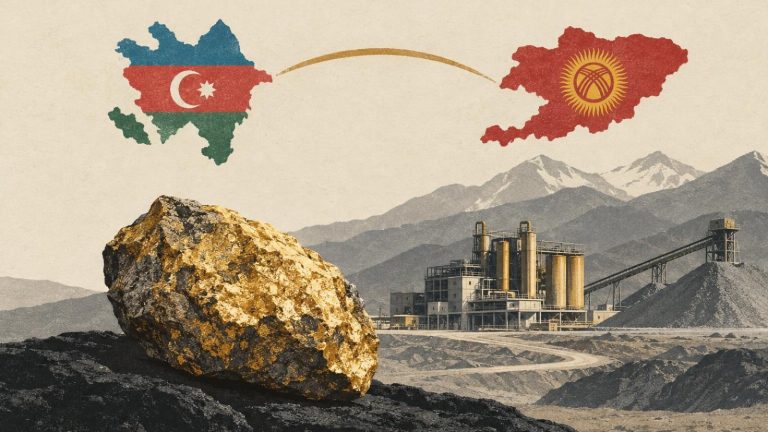
    Kyrgyzaltyn OJSC and AzerGold CJSC have entered into a memorandum of mutual cooperation during a state visit to Kyrgyzstan by Azerbaijan’s President Ilham Aliyev. This agreement is designed to enhance collaboration between the two companies in the precious metal mining and processing sectors. The signing of this memorandum is part of a broader set of bilateral agreements that emerged from discussions between Kyrgyzstan’s President Sadyr Zhaparov and President Aliyev.

    The memorandum signifies a commitment to strengthen ties in the mining industry, which is crucial for both nations given their respective natural resource endowments. By pooling resources and expertise, Kyrgyzaltyn and AzerGold aim to improve efficiencies in gold extraction and processing, potentially increasing output and profitability for both entities.

    In addition to the mining agreement, the two countries have ratified a Treaty on Alliance Relations, which aims to foster cooperation across various sectors including transport, energy, investment, digital services, and finance. This multi-faceted approach indicates a strategic partnership that extends beyond mining, reflecting a comprehensive vision for economic collaboration.

    The agreement also encompasses additional areas of cooperation, such as the supply of oil and petroleum products, financial market development, statistics, cyber security, and freight transport. This holistic strategy is expected to bolster regional ties and enhance economic stability between Kyrgyzstan and Azerbaijan, paving the way for future joint ventures and investments in key sectors.

    As both nations look to leverage their natural resources and enhance their economic frameworks, this partnership could serve as a model for other countries in the region seeking to collaborate on resource management and economic development. The focus on precious metals, in particular, highlights the growing importance of this sector in the global economy, especially as demand for gold and other precious metals continues to rise.


  • Azerbaijan and Uzbekistan Forge Joint Venture for Geological Exploration

    Azerbaijan and Uzbekistan Forge Joint Venture for Geological Exploration

    In a significant move to enhance bilateral cooperation in the mining sector, the Azerbaijan – Uzbekistan Investment Company (AUIC), Azerbaijan’s AzerGold CJSC, and Uzbekgeologorazvedka JSC have signed a term sheet to establish a joint venture dedicated to geological exploration in Uzbekistan. This agreement was formalised during the 15th meeting of the Joint Intergovernmental Commission on Cooperation between Azerbaijan and Uzbekistan, which took place in Tashkent. The meeting was attended by key officials, including Azerbaijan’s Minister of Economy, Mikayil Jabbarov, and Uzbekistan’s Minister of Investment, Industry and Trade, Laziz Kudratov.

    The collaboration aims to leverage AUIC’s investment capabilities, AzerGold’s technical expertise, and the extensive experience of Uzbekgeologorazvedka JSC. By combining these strengths, the joint venture intends to create an effective model for project implementation that spans from geological exploration to attracting strategic investors and facilitating the commercial development of mineral deposits. This initiative is expected to not only boost bilateral investment but also to incorporate modern technologies into geological exploration processes, thereby enhancing the overall investment appeal of Uzbekistan’s mineral resource sector.

    As both countries seek to strengthen their economic ties, this joint venture represents a strategic step towards improving the mining landscape in Uzbekistan. The focus on modern technology and strategic investment is poised to attract further interest in the region’s mineral resources, potentially leading to significant advancements in the sector. The partnership reflects a growing trend in the region towards collaborative efforts in resource development, which could serve as a model for future initiatives between other nations in Central Asia.


  • Anglo Asian Mining Achieves Record First-Half Production as Demirli Copper Mine Ramp-Up Accelerates

    Anglo Asian Mining Achieves Record First-Half Production as Demirli Copper Mine Ramp-Up Accelerates

    Anglo Asian Mining Plc has reported record half-year production results, driven by the accelerated ramp-up of its Demirli copper mine in Azerbaijan. The company’s copper output surged to 5,129 tonnes in the second quarter of 2026, a 38% increase from the 3,711 tonnes produced in the first quarter. Demirli alone contributed 3,250 tonnes of copper during Q2, while the company’s Gedabek operation added 1,879 tonnes. Total first-half copper production reached 8,840 tonnes, a dramatic rise from just 1,188 tonnes in the same period last year. The company also generated a $39.9 million increase in net cash during the quarter, ending June with $69.8 million in cash and reducing debt to $12.2 million. Concentrate sales for the first half totaled 58,577 dry metric tonnes, valued at $125.9 million, with Demirli accounting for $71.4 million of that revenue. Gold production reached 12,329 ounces and silver output hit 92,855 ounces in the half year. Anglo Asian has reaffirmed its full-year guidance of 20,000–25,000 tonnes of copper, 28,000–33,000 ounces of gold, and 170,000–210,000 ounces of silver, with Demirli expected to reach steady-state production during the third quarter. The record performance underscores the successful execution of the company’s growth strategy in Azerbaijan’s mining sector, positioning Anglo Asian for continued strong output in the second half of the year.


  • ACG Metals Weighs Potential Takeover Bid for Anglo Asian Mining

    ACG Metals Weighs Potential Takeover Bid for Anglo Asian Mining

    Copper-focused consolidator ACG Metals has confirmed it is in the early stages of assessing a possible offer for the full issued and to-be-issued share capital of London-listed Anglo Asian Mining. The Azerbaijani-focused producer, which operates gold, copper and silver assets, has not agreed to or endorsed the announcement.

    According to UK takeover rules, ACG now has until 17:00 on December 24 to either announce a firm intention to make an offer or formally withdraw its interest. The company emphasized that discussions remain preliminary, and there is no certainty that an offer will be made.

    Anglo Asian Mining, which operates the Gedabek and Gilar projects among others, has faced operational constraints in recent years but remains one of Azerbaijan’s key mining companies. Any potential bid would mark a significant move for ACG Metals as it continues to expand its portfolio within the copper sector.

  • Anglo Asian Mining Begins Production at Gilar Underground Mine in Azerbaijan

    Anglo Asian Mining Begins Production at Gilar Underground Mine in Azerbaijan

    Anglo Asian Mining PLC (AIM: AAZ) has commenced production at its Gilar underground mine, situated within the Gedabek site in Azerbaijan. The company targets an output of approximately 2,000 tonnes of ore per day, with expectations to ramp up to a monthly production rate of 50,000 to 60,000 tonnes.

    A maiden JORC mineral resource estimate released on December 11, 2023, revealed that the Gilar deposit holds 6.10 million tonnes of mineralisation. The average grades include 0.88% copper—equating to nearly 54,000 tonnes of copper—and 1.30 grams of gold per tonne, totaling over 255,000 ounces of gold.

    Following the announcement, shares of Anglo Asian Mining rose by 7% in London, bringing the company’s market value to £169.9 million ($226.9 million).

    In 2024, Anglo Asian produced 16,760 gold-equivalent ounces, although production faced disruptions due to a partial environmental shutdown. Operations resumed by the end of the year.

    The company plans to evolve into a multi-asset, mid-tier copper and gold producer by 2029, with copper becoming its primary product. As part of its growth strategy, Anglo Asian intends to bring four new mines into production between 2025 and 2029: Gilar, Zafar, Xarxar, and Garadag.