Tag: Astana

  • International Mining Forum Unites 30 Nations in Astana as Kazakhstan Targets Investment and Industrial Upgrade

    International Mining Forum Unites 30 Nations in Astana as Kazakhstan Targets Investment and Industrial Upgrade

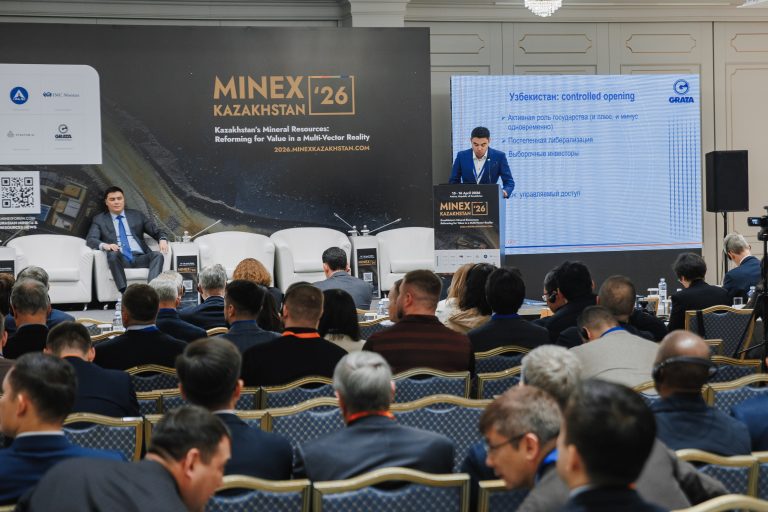
    An international mining forum bringing together representatives from 30 countries has opened in Kazakhstan’s capital Astana, with the Kazakhstani government signalling its ambitions to improve the efficiency of mineral resource development, increase processing capacity and attract greater foreign investment.

    The gathering has placed particular emphasis on the presentation of advanced technologies and the establishment of long-term investment partnerships. Experts attending the forum said that ongoing improvements to the country’s digitalisation agenda and licensing system would strengthen Kazakhstan’s appeal to international investors, marking the beginning of a new phase of industrial growth oriented toward sustainable development.

    Tulegyen Mukanov, adviser to the executive director of the Republican Association of Mining and Metallurgical Enterprises, highlighted the breadth of technology on display. “Look at how many companies are exhibiting at this congress — showcasing their technologies,” he said. “We don’t manufacture mining equipment ourselves. All our machinery comes from abroad — Sweden, Japan, America, China. But I’ve noticed some new companies starting up. In Karaganda, they have begun producing spare parts for heavy mining equipment — a kind of renovation sector is emerging.”

    The forum comes as Kazakhstan continues to position itself as a priority destination for critical minerals investment, backed by recent subsoil use reforms, the launch of a unified licensing portal and a tenfold increase in state geological exploration funding announced earlier this year.

  • Unpacking Kazakhstan’s $25 Billion Mining and Critical Minerals Revolution

    Unpacking Kazakhstan’s $25 Billion Mining and Critical Minerals Revolution

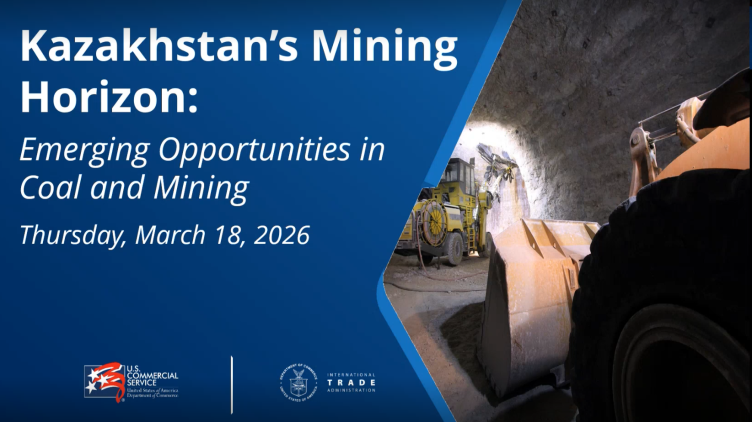
    On 18 March the US Commercial Service hosted a webinar featuring experts from the Kazakh government and industry. The central message was clear: Kazakhstan is no longer presenting itself simply as a resource-rich country. It is actively seeking to become a more significant destination for investment, processing, industrial partnerships and long-term supply chain co-operation.

    If you are tracking the global energy transition and supply chain security, this is a market that demands your attention. Here are my biggest takeaways from the session:

    A market defined by scale, ambition and strategic importance

    Kazakhstan’s resource base remains one of its greatest strengths. Speakers highlighted that mining and metallurgy continue to play a major role in the national economy, while reforms are being introduced to improve transparency, modernise infrastructure and create a more attractive environment for foreign investors.

    Particular attention was given to coal, mining and critical minerals as sectors with major growth potential. Kazakhstan is pursuing a pragmatic approach to energy development, combining its natural resource base with efforts to attract technology, financing and international partners. For U.S. companies, this is increasingly being framed not only as a commercial opportunity, but also as a chance to help build more resilient allied supply chains.

    The Sheer Scale of the Resource Opportunity

    Kazakhstan holds a formidable position on the global energy map, but it’s the untapped potential that is most striking:

    • Massive Reserves: The country sits on 33 billion tonnes of coal reserves, ranking 8th globally—enough to sustain production for over 300 years.
    • Cost Advantages: Kazakh coal prices hover around $25 to $50 per tonne—a fraction of the cost in other global markets. Furthermore, the cost of geological exploration is incredibly low at just $11 per square kilometre, compared to $167 in Australia and $203 in Canada.
    • The Coal Chemistry Boom: Currently, only 3% of Kazakhstan’s coal is processed. Shifting towards deep processing (synthetic fuels, ammonia, urea, methanol) represents a $25 billion untapped market.

    Modernising the Energy Grid

    As power demand surges—driven by industrialisation and the rise of AI—Kazakhstan is heavily focussed on modernising its infrastructure. The Ministry of Energy plans to introduce 26 gigawatts of new power capacity over the next decade. This includes a near-term plan to add 7.6 GW of new coal-fired capacity, requiring an estimated $16 billion in investment by 2030. The government is actively seeking technological partnerships for carbon capture and storage (CCS) and ultra-supercritical boiler technologies to ensure this growth aligns with clean energy standards.

    Critical minerals are becoming central to the conversation

    One of the most interesting aspects of the discussion was the growing focus on critical minerals and rare earth-related opportunities.

    Kazakhstan is developing a more comprehensive strategy for critical raw materials, with plans to define priority minerals, support processing and encourage higher-value production. The direction of travel is clear: the country wants to move further up the value chain and become more than simply an exporter of raw materials.

    This was particularly relevant in light of the tungsten discussion that followed.

    Resources:

    Looking ahead to 14-16 April: MINEX Kazakhstan Forum in Astana

    The next important date in the calendar is 15 April, when Julie M. Stufft , U.S. Ambassador to the Republic of Kazakhstan, will speak at the strategy session on Critical Minerals and Global Strategic Alliances at the 16th MINEX Kazakhstan Forum in Astana.

    Also speaking will be Dominic Heaton Dominic Heaton, CEO of Cove Kaz Capital Group, who will present the Severniy Katpar case study.

    This is especially significant because Severniy Katpar and Verkhnee Kairakty together hold 1.4 million tonnes of tungsten trioxide under JORC standards, representing around 70% of Kazakhstan’s total tungsten reserves. The project involves an estimated $1.1 billion joint venture investment, with potential support from U.S. EXIM and the U.S. International Development Finance Corporation totalling up to $1.6 billion.

    That level of financial and diplomatic backing underlines how strategically important this project could become, not only for Kazakhstan, but also for broader allied efforts to secure critical mineral supply chains.

    Why these matters

    What stood out most from the 18 March webinar was the alignment now emerging between Kazakhstan’s resource ambitions and international demand for secure, diversified supply chains.

    Kazakhstan offers scale, geological potential and a strategic location between major markets. The United States and other partners bring financing, technology and industrial expertise. If those elements come together effectively, the result could be a new phase of co-operation built around mining, processing, infrastructure and critical minerals development.

    For anyone following energy security, industrial policy or strategic resource investment, Kazakhstan is becoming increasingly difficult to ignore.

    The webinar made that case convincingly. The 15 April MINEX Forun sessions should offer an important next step in showing how these opportunities may translate into practical projects and partnerships.

  • Kazakhstan to Open Internationally Accredited Rare-Earth Laboratory

    Kazakhstan to Open Internationally Accredited Rare-Earth Laboratory

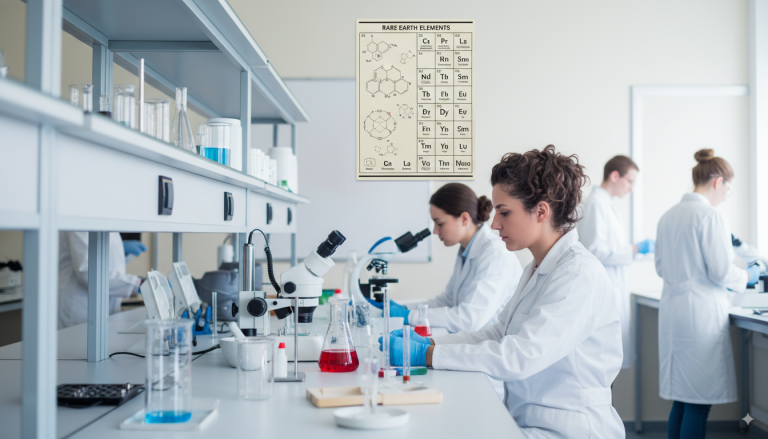
    Kazakhstan is set to establish an internationally accredited geo-analytical laboratory in Astana to support its growing role in global supply chains for rare-earth metals (REEs).

    Minister of Industry and Construction Yersayin Nagaspayev confirmed that agreements have been reached with global laboratory brands RCI Inspection and PARAGON to certify the new geo-analytical center, which is scheduled to open by mid-2026 under the National Geological Service. The laboratory will house core storage and archival repositories, providing transparent and reliable data to researchers and potential investors.

    The initiative follows President Tokayev’s 8 September address to Parliament, in which he stressed the strategic significance of rare-earth elements for Kazakhstan’s long-term economic future. He directed the government to launch at least three high-tech production facilities for rare-earth metals within the next three years, underscoring their growing importance in global technology and trade.

    The government’s plan outlines four strategic priorities for domestic processing: producing battery materials, recycling, manufacturing heat-resistant alloys for jet turbines, and producing semiconductor materials. To achieve these goals, Kazakhstan is actively forging partnerships with the European Union, the United States, Japan, South Korea, and China.

    Planned projects include a gallium plant, the production of high-purity manganese sulfate and graphite for batteries, and the manufacturing of nickel-based superalloys. Additionally, pilot programs for recycling permanent magnets are set to begin next year, in collaboration with European partners, marking a concrete step towards a more sustainable and value-added rare-earth industry.

  • Gold Processing Plant in Astana Plans to Develop Jewelry Sector

    Gold Processing Plant in Astana Plans to Develop Jewelry Sector

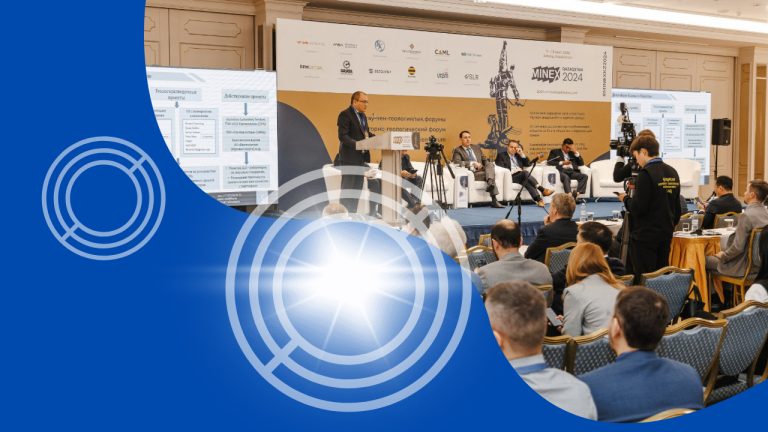
    “Tau-Ken Altyn,” a gold refining plant in Astana and a subsidiary of the national company “Tau-Ken Samruk,” is set to broaden its range of processed raw materials and manufactured products, announced Bakyt Chirchikbayev, chairman of the board of “Tau-Ken Samruk.” The company aims to enhance both the variety of processed materials and the output of finished products, including the processing of catalysts and the expansion of the jewelry sector, as stated during the MINEX-2024 forum.

    Chirchikbayev highlighted that last year, following successful research endeavors, the company initiated the processing of solid industrial waste from the gold refining plant, leading to virtually zero-waste production.

    Kaysar Zhumagaliyev, chairman of the association of legal entities “Jewelers’ League of Kazakhstan,” noted in 2019 that the obligation to pay value-added tax (VAT) when purchasing refined gold from “Tau-Ken Altyn” had prompted jewelers to prefer acquiring gold from pawnshops and informal miners.

    Chirchikbayev also mentioned another intriguing project, a joint venture (laboratory) in Karaganda with the Australian company ALS. The joint venture aims to diversify the company’s activities by providing services to other firms, particularly subsidiaries of “Tau-Ken Samruk”.