Tag: artificial intelligence mining

  • AI Takes the Wheel in Kazakhstan’s Mines as Real-Time Sensor Data Replaces End-of-Shift Guesswork

    AI Takes the Wheel in Kazakhstan’s Mines as Real-Time Sensor Data Replaces End-of-Shift Guesswork

    Artificial intelligence is moving from a supporting tool to an operational management system in Kazakhstan’s mining sector, fundamentally changing how production is monitored, maintained and planned, according to the chairman of the MINEX Forum.

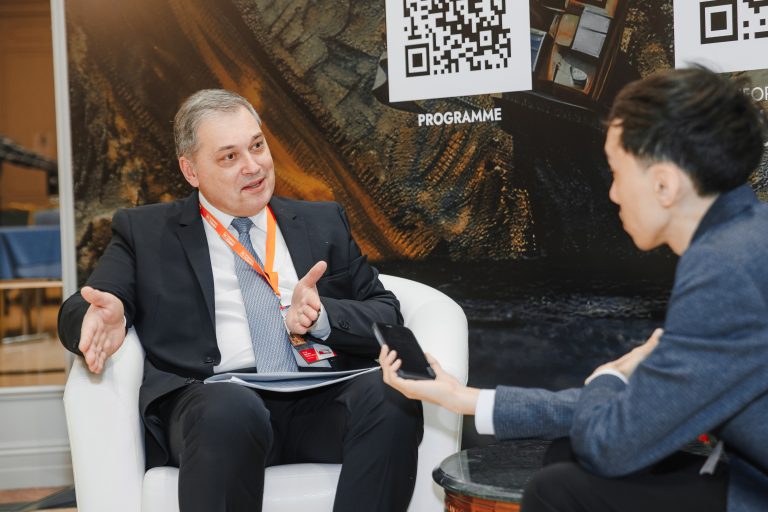
    Speaking to Kazinform, Artur Polyakov, managing director of Advantix and executive chairman of the MINEX Forum, described a shift that is already underway on mine sites across the country. A single haul truck in an open-pit mine may carry between 300 and 1,000 sensors. Until recently, that data was collected manually by an engineer at the end of each shift and processed by hand. Today, the data flows continuously in real time and artificial intelligence processes it without human intervention.

    The practical consequence, Polyakov said, is a fundamental change in how problems are managed — from reaction to prediction. “We are moving to a model where you can understand in advance what will break down and when — whether it is a light bulb, a conveyor belt or an entire piece of equipment. This makes it possible to plan maintenance before a breakdown occurs and significantly reduce costs,” he said.

    The transition to predictive maintenance is enabling mining operations to become more stable and controllable, with decisions driven by a constant stream of live data rather than retrospective reporting. Polyakov noted that the most advanced systems are already beginning to incorporate external variables alongside technical parameters — including market conditions and macroeconomic risk factors — elevating AI from an analytical instrument to a component of strategic production planning.

    The development reflects a broader transformation underway in Kazakhstan’s extractive sector, where the government is simultaneously pushing for deeper mineral processing, expanded geological exploration and a shift toward higher value-added industrial output — all of which depend on operational efficiency gains of the kind AI-driven systems are beginning to deliver.

  • Kazakhstan Bets on AI, Deep Processing and $500 Million in Geology Funding to Spark World-Class Mineral Discoveries

    Kazakhstan Bets on AI, Deep Processing and $500 Million in Geology Funding to Spark World-Class Mineral Discoveries

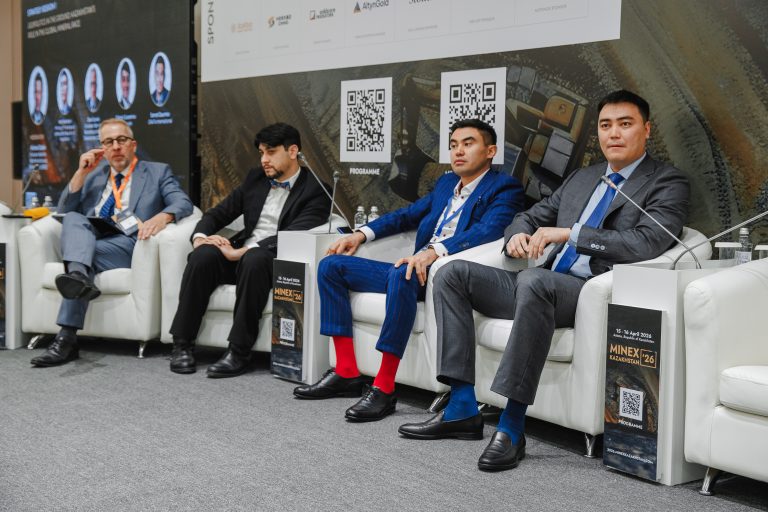
    The era of easy extraction and quick results is over. Finding and developing Kazakhstan’s remaining mineral wealth now demands advanced technology and substantial capital — and how to attract both was the central question at the MINEX international forum in Astana, where delegations from more than 30 countries gathered to assess the country’s geological ambitions and investment potential.

    The Kazakhstani state is committing approximately 240 billion tenge — equivalent to more than 40 billion Russian roubles — to mineral exploration over the next three years, and authorities say they are ready to share that burden with private investors, whose own contributions to exploration have grown 2.5 times over the past five years. The opportunity is significant: beyond already catalogued deposits, the country holds substantial reserves of hydrocarbons, uranium, tungsten, copper, rare earth elements, lithium and graphite.

    Vice Minister of Industry and Construction Iran Sharkhan framed the scale of Kazakhstan’s geological endowment: “Kazakhstan possesses unique geological opportunities. The state register currently lists more than 10,000 deposits — around 1,000 of which are solid mineral deposits.” But having deposits, he made clear, is no longer enough. The country is moving away from selling cheap raw materials toward deep processing, new technologies and expanded export markets.

    MINEX forum executive director Artur Polyakov outlined the twin imperatives: “Kazakhstan must build domestic value chains that transform raw materials into refined products, industrial materials and ultimately high-technology manufacturing. And technology — artificial intelligence, geostatistics, digital exploration tools and modern processing technologies — will play a key role in developing more complex deposits, improving efficiency and reducing environmental impact.”

    Twenty priority areas have been identified for detailed geological mapping and seismic survey work, covering a combined area of 100,000 square kilometres, with a further 30,000 square kilometres to be added each year. The head of Kazakhstan’s National Geological Survey, Yerlan Galiyev, expressed optimism that the intensified programme could yield a discovery of global significance: “We very much hope that a major world-class porphyry copper deposit will be found. The most recent discoveries of this type globally were in Mongolia and the Democratic Republic of Congo. We hope the next one will be in Kazakhstan — and all the work we are doing is directed toward that goal.”

    Artificial intelligence is already playing a practical role in the search. A programme developed at the K. Turysov Institute of Geology and Oil and Gas Affairs has been fed all available geophysical data from known gold deposits and tasked with identifying analogous prospective zones in surrounding areas. “We gave the programme all the geophysical data corresponding to known deposits and asked it to find more prospective zones,” said Professor Gulzada Umirova. “Which it did.”