Tag: AIFC (Astana International Financial Centre)

  • Rare and Critical Metals: Kazakhstan’s Global Opportunity

    Rare and Critical Metals: Kazakhstan’s Global Opportunity

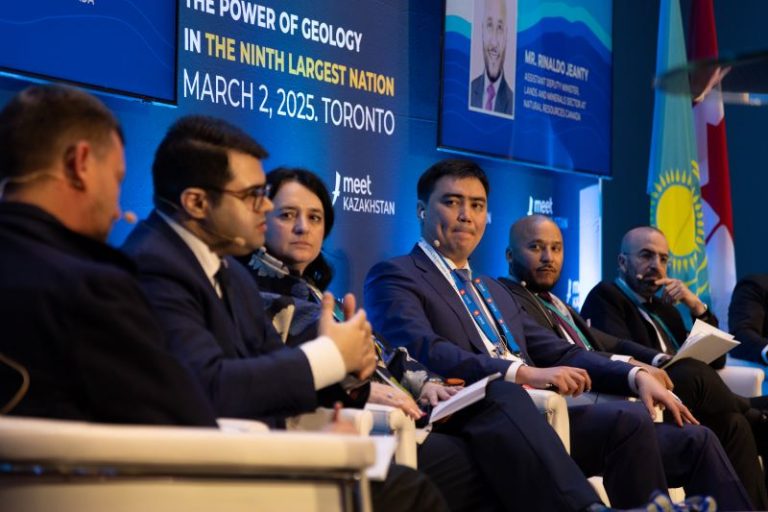
    At the PDAC 2025 Convention in Toronto, Kazakhstan took centre stage with its session “Rare and Critical Metals – Global Perspectives and Local Opportunities,” showcasing its ambition to become a pivotal player in the global critical minerals supply chain. The session ” brought together high-level representatives from Kazakhstan, Canada, the European Union, and private industry to discuss the strategic importance of rare earth elements and critical minerals in today’s technology-driven economy.

    The New Oil: Kazakhstan’s Mineral Wealth

    “Kazakhstan has one of the world’s largest reserves of rare and critical metals,” explained Mr. Renat Bekturov, Governor of the Astana International Financial Centre, during his opening remarks. “According to the World Bank, the country possesses over 5,000 unexplored deposits of rare metals with an estimated total value exceeding $46 trillion US.”

    This staggering figure underscores why President Kassym-Jomart Tokayev has characterized rare metals as “the new oil” and a key driver of Kazakhstan’s technological future. With the global market for these resources expected to grow 8% annually through 2035, Kazakhstan sees an opportunity to position itself as a trusted alternative supplier, reducing global reliance on concentrated markets.

    Kazakhstan’s Strategic Approach

    Vice Minister of Industry and Construction, Mr. Iran Sharhan, outlined Kazakhstan’s vision for rare and critical metals. “We are planning to establish a closed circuit or closed chain starting from exploration, surveying, extraction, and processing of rare metals and critical materials,” he explained through an interpreter.

    The government has identified 20 critical minerals requiring additional geological survey and is actively seeking international partnerships to bring advanced technologies and expertise to the country. “We require extensive financing and investments to ensure deep processing of these critical materials and rare metals,” Iran noted.

    Kazakhstan’s comprehensive plan for 2024-2028 focuses on four key pillars:

    1. Expanding the resource base through large-scale geological exploration and mapping
    2. Advanced processing and value-added manufacturing by modernizing facilities to reduce raw material exports
    3. Strengthening international collaboration through partnerships with leading technology providers
    4. Building a transparent and competitive market with clear regulatory frameworks to attract international investors

    International Collaboration: Key to Success

    The panel highlighted how international collaboration is crucial for developing critical mineral resources. Rinaldo Jeanty, Associate Assistant Deputy Minister at Natural Resources Canada, shared that Canada’s Critical Mineral Strategy, launched in 2022 with $4 billion in backing, prioritizes international partnerships.

    “We have a common understanding when it comes to strong ESG standards, so I think there’s opportunities for us to work together,” Jeanty said, referencing potential collaboration with Kazakhstan. He noted that Canada’s Geological Survey, with its 176-year history, offers expertise that could benefit Kazakhstan’s exploration efforts.

    The European perspective, presented by Madalina Ivanica, Deputy Head of Unit at DG GROW, European Commission, emphasised the EU’s need to diversify its critical mineral supplies. “We are strongly dependent on single suppliers in Europe, so we wanted to look further and see where supplies can come from,” she explained.

    The EU’s partnership with Kazakhstan, established in 2022, focuses on five pillars:

    • Identifying joint projects
    • Cooperating in research and innovation
    • Supporting infrastructure development
    • Developing skills and capacity building
    • Improving ESG standards

    Technology Development Challenges

    Conrad Blake, Managing Director of Minerals at HATCH, addressed the challenges of technology development in the mining sector. “Mining projects are really complex, high-capital projects,” he explained. “Mining houses or project owners are often reluctant to add additional risk by being early adopters of new technologies.”

    However, Blake argued that the current momentum around diversifying supply chains presents an opportunity. “It gives us the unique opportunity to not just slightly improve existing technology but to stand back and say ‘clean slate,’” he suggested.

    Mr. Blake emphasised that successful technology development requires trusted partnerships and doesn’t necessarily have to take decades. “We developed a unicorn for a tier-one player fairly recently,” he shared. “We did it from desktop study to commissioning in 18 months. It doesn’t have to be a multi-decade approach.”

    First-Hand Success in Kazakhstan

    Providing real-world perspective, Pini Althaus, Founding Partner at Cove Capital, shared his company’s successful experience as the first US company to develop critical minerals assets in Kazakhstan.

    “We’ve been very pleasantly surprised by the welcoming we’ve received,” Althaus said. His firm entered Kazakhstan in early 2023, coinciding with a US-Kazakhstan framework agreement to collaborate on critical minerals development.

    “We were able to secure our first licenses during the 2023 drilling season,” he explained. “We successfully drilled 7,000 meters during the course of last year and also did some drill site preparation for the 2025 season.”

    Althaus highlighted President Tokayev’s mining reforms as instrumental in enabling their success and encouraged other Western companies to enter the market. “There are so many undeveloped resources in Kazakhstan,” he noted, adding that his company is committed to helping Kazakhstan develop a vertically integrated supply chain rather than simply exporting concentrates.

    Moving Beyond Mining: Midstream and Downstream Potential

    Vasileios Tsianos, VP Corporate Development at Neo Performance Materials, emphasized Kazakhstan’s potential to move beyond mining into midstream and downstream processing. “Kazakhstan comes in because it is endowed with great geological deposits, but more than that, it has a long history of metallurgical skills,” he explained.

    Mr. Tsianos highlighted Kazakhstan’s unique capability to handle materials that often occur alongside rare earths, such as thorium and uranium. “Outside of China and Russia, there aren’t many jurisdictions that can both mine that but know how to process it and store it responsibly and do it competitively,” he noted. “Kazakhstan can do all three.”

    The Path Forward

    The session painted a clear picture of Kazakhstan’s strategic positioning in the critical minerals space. With its vast geological resources, improving regulatory environment, and openness to international partnerships, the country is poised to become a significant player in global supply chains.

    As technological demands for these materials continue to accelerate—driven by clean energy transitions, digitalization, and electric mobility—Kazakhstan’s development of its rare earth and critical mineral resources represents not just an economic opportunity for the country but a strategic advantage for global industries seeking supply chain diversification and security.

    The collaborative tone set by all panelists suggests that Kazakhstan’s ambitions in this sector will be realized not in isolation but through meaningful partnerships that combine geological wealth with technological expertise and market access—a winning formula in the increasingly critical world of rare and strategic metals.

    Join the Conversation at MINEX Kazakhstan 2025

    To continue these important discussions and explore investment opportunities in Kazakhstan’s mining sector, you’re invited to attend the 15th MINEX Kazakhstan Mining and Exploration Forum in Astana on 9-10 April 2025.

    This premier industry event will bring together government officials, mining companies, investors, and technology providers to discuss the latest developments in Kazakhstan’s mineral resources sector, with special focus on rare and critical minerals opportunities.

    For more information and registration details, visit www.minexkazakhstan.com.


  • Kazakhstan Mining Sector Seeks New Financing Solutions Amidst Global Energy Transition

    Kazakhstan Mining Sector Seeks New Financing Solutions Amidst Global Energy Transition

    Ainur Kapparova, Executive Director Business Relations, AIFC (Astana International Financial Centre) a financial expert with 18 years of experience at international companies such as HSBC, State Street Bank, and McKinsey & Company, shares insights on financing opportunities for Kazakhstan’s mining sector. Having worked in the US, Japan, and the UK, Ms Kapparova now focuses on financing solutions for the mining industry in Kazakhstan.

    A New Phase for Mining Amid Global Energy Transition

    “The Kazakhstan mining sector is entering a new phase of development amid the global energy transition,” states Kapparova. “In this context, access to efficient financing instruments is becoming a key factor.”

    Working with leading global financial players, Kapparova and her colleague Temirlan Mukhanbetzhanov have conducted an in-depth analysis of available financing mechanisms at every stage of a mining project’s lifecycle.

    “We’ve identified solutions for financing early exploration stages, streaming mechanisms that allow capital attraction without diluting shareholder stake or creating debt burden, as well as instruments for junior companies to access IPOs in Kazakhstan and abroad,” explains Kapparova.

    Early-Stage Exploration Financing

    When a project is at its earliest stage—with only a land plot and a few test wells—significant investments are needed to develop the deposit to the level of confirmed reserves and obtain an internationally recognized JORC report or equivalent.

    “This is the riskiest phase, so private investment and government support play crucial roles,” notes Kapparova. “Currently, four private companies in Kazakhstan are planning to launch specialized funds for financing such projects.”

    According to Kapparova, the Astana International Financial Centre (AIFC) offers the most convenient platform for structuring these funds, allowing for flexible LP/GP models adapted for the mining sector. Private junior companies, including foreign players, are also active in the country. Some attract financing from global mining companies, but this requires either preliminary confirmation of reserves or an excellent international reputation.

    Financial Solutions for Companies with Confirmed Reserves

    For companies that have already invested in deposit studies and can obtain a JORC report or equivalent, more financing options become available.

    “One such instrument is an IPO on the Astana International Exchange (AIX), which operates a special listing program for juniors,” Kapparova explains. “Additionally, Kazakhstani companies can access foreign exchanges such as the Toronto Stock Exchange (TSX) through SPACs.”

    Kapparova reveals that discussions with several SPACs trading on the TSX have confirmed interest in quality Kazakhstani projects. The Toronto Stock Exchange and its venture platform (TSX Venture Exchange) are leading global venues for capital raising in the mining industry, providing 36% of global equity capital attracted in the mineral extraction sector from 2019 to 2023.

    Financial Instruments for Pre-Feasibility, Feasibility, and Production Stages

    “At the pre-feasibility, feasibility, and production stages, streaming and royalty instruments become available,” says Kapparova. “These allow financing in exchange for a share of future metal supplies or revenue, without diluting equity or creating debt burden before production begins.”

    While this mechanism is currently used on a limited basis in Kazakhstan, Kapparova believes it could become widespread given its flexibility and adaptability to specific projects. Traditional capital raising methods—equity and debt financing—also remain available, with growing interest from both local and foreign investors.

    Comprehensive Approach to Mining Project Financing

    Kapparova emphasises that financing mining projects requires a comprehensive approach involving government, private, and international investments.

    “We’ve identified effective instruments for each stage—from exploration to extraction and processing,” she concludes. “Kazakhstan’s mining sector has enormous growth potential, and the application of modern financial solutions will help companies minimize risks and achieve sustainable development.”

  • Baksy conducts estimations of reserves in the gold-copper area

    Baksy conducts estimations of reserves in the gold-copper area

    The company Polymetal, in partnership with “Kazgeology,” is currently in the process of calculating the reserves in the gold-copper area of Baksy in the North Kazakhstan Region. The CEO of Polymetal International plc, Vitaly Nesis, provided this information during a press approach at the “Transfer of the Initial Listing to the AIX Exchange and Redomiciliation to the AIFC” ceremony with inbusiness.kz.

    Nesis expressed satisfaction with the partnership with “Kazgeology” and mentioned that discussions regarding future steps will be more meaningful after the reserves are placed on the state balance sheet. Polymetal recently increased its stake in Baksy to 75% and is considering a decision on production at the site for the upcoming year. It’s worth noting that “Kazgeology” is now under the control of the national mining company “Tau-Ken Samruk.”

    During discussions with reporters, Nesis also mentioned the planned sale of Polymetal’s Russian division within the next 6-9 months. The company is exploring opportunities not only in Kazakhstan but also in Central Asian countries.

    The CEO addressed the topic of a potential increase in the tax burden on businesses in Kazakhstan, emphasizing that the recent increase in the mineral extraction tax (MET) was justified given the favorable external conditions. He expressed hope that the final decisions on tax code amendments would consider the capital-intensive nature of the mining industry and maintain its investment attractiveness.

    Furthermore, Polymetal aims to increase the liquidity of its shares on the AIX exchange in Astana over the next two years. The company recently transferred its primary listing from the London Stock Exchange to the AIX exchange, and Nesis emphasized that the domicile in the AIFC is permanent. There are no plans for an additional listing in Abu Dhabi or any other platform at this time.

    The relocation of Polymetal to the AIX exchange is expected to enhance liquidity on the platform and attract global investors. Renat Bekturov, the head of the AIFC, highlighted the positive impact on the Kazakh stock market and the increased participation of renowned investment companies.

    Regarding the proposed merger of the AIFC trading platform with the Kazakhstan Stock Exchange (KASE), Nesis mentioned ongoing discussions on how to combine liquidity between the two entities, considering their respective minority shareholders.

    In conclusion, Polymetal’s collaboration with “Kazgeology” in calculating reserves, its strategic plans for the future, and its involvement in the AIX exchange demonstrate the company’s commitment to growth and development in the mining sector.

    Regarding the potential merger between the AIFC trading platform and the Kazakhstan Stock Exchange (KASE), Nesis commented on the consideration of KASE’s Russian shareholders.

    “Both KASE and Polymetal have minority shareholders. MOEX, the Moscow Exchange, along with local banks and brokers, are shareholders of KASE. On the other hand, the AIFC exchange has notable shareholders such as the Shanghai Stock Exchange, NASDAQ, and the Silk Road Fund. Currently, no decision has been made, and our discussions primarily revolve around how to combine our liquidity, in what form it will take, whether there will be changes in the legal structure, and if so, what those changes will entail. The next step involves negotiations with the existing shareholders to determine their future involvement, whether they will continue as shareholders, or if a new structure will be established. These matters remain open and under discussion,” Bekturov elaborated.

    Furthermore, Bekturov addressed the question of measures planned to enhance the liquidity of Russian issuers like “Rusagro” or Ozon on the AIX.

    “These issuers are relatively new, and their global depositary receipts (GDRs) are listed and traded on our exchange. The challenge lies with the global depository, Euroclear, as they are currently working on segregating the accounts of shareholders due to the situation at hand. Once Euroclear resolves this matter and market-making brokers willing to provide liquidity are identified, the issue will be resolved. We are actively working with the issuers to address this matter,” Bekturov affirmed.