Tag: AI

  • Digital Transformation in Central Asian Geology: Platforms, AI, and Workforce Challenges

    Digital Transformation in Central Asian Geology: Platforms, AI, and Workforce Challenges

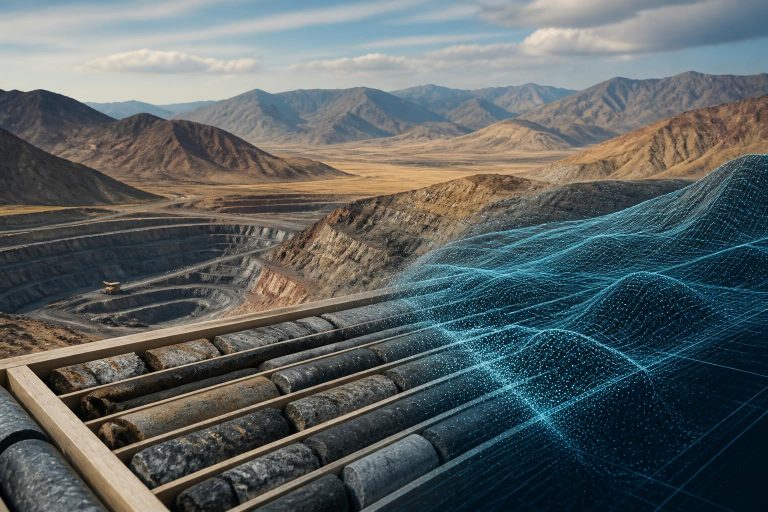
    The mining industry is increasingly recognising the importance of digitalisation, particularly in the field of geology, which is one of the most knowledge-intensive sectors. However, the pace of digital transformation in Central Asia is lagging behind the demands of the business and global investment markets. This article explores how Kazakhstan and Uzbekistan are addressing this issue through strategic programmes aimed at expanding their mineral resource bases.

    In the competitive landscape of critical minerals, the integration of digital technologies is essential for success. From forecasting and assessing mineral reserves to product exportation, the mining industry must embrace digital solutions. Despite the existence of scientific literature and discussions at strategic business forums, the application of AI, big data, and machine learning remains limited to isolated practices. A systematic approach is needed to harness geological information effectively, and both Kazakhstan and Uzbekistan are developing their own transformation scenarios.

    Kazakhstan has made significant strides since the launch of a unified subsoil use platform in 2025. By August 2026, the country completed the digitisation of geological information, processing over 4.8 million archival materials, marking a revolutionary step that could serve as a model for other Central Asian nations. Meanwhile, Uzbekistan announced the creation of a National Geological Data Base, aiming to digitise 36,000 reports and establish a Centre for Technological Transformation, which is expected to double the quality and speed of geological data generation and modelling.

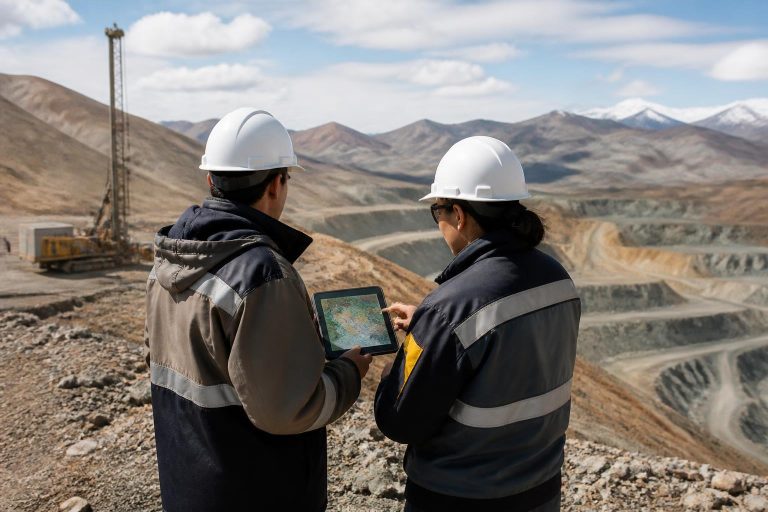
    Experts at the MINEX Kazakhstan 2026 forum highlighted that the digitalisation of geology is a matter of survival rather than prestige for Central Asian countries. Traditional methods are no longer sufficient to ensure growth or replenish mineral resources, especially as older deposits are depleted and ore quality declines. The key challenge is not just the quantity of reserves but the effective management of geological data and decision-making based on that data. Currently, only 21% of geologists in Kazakhstan have access to modern data transmission networks, significantly delaying project timelines.

    A critical barrier to digitalisation is the skills gap, particularly in the intersection of IT, big data, and geology, which are essential for quality predictive analysis. The reliance on foreign software and the lack of local intellectual resources hinder the rapid development of homegrown solutions. The competition for skilled professionals in IT and data science is fierce, with companies vying for talent by offering lucrative salaries.

    Another significant obstacle is the absence of unified standards for geological information, although Kazakhstan has made progress in this area. Without the integration of historical data, its value diminishes, and investors are less inclined to engage. To improve the situation, experts suggest a shift in focus towards innovative priorities within the industry.

    The Ministry of Industry and Infrastructure Development of Kazakhstan has begun practical steps to implement neural network models in geology, collaborating with the National Geological Service and Astana Hub. This initiative is supported by EPAM Kazakhstan and aims to address the skills shortage by training geologists in big data and machine learning techniques.

    The article also discusses various applications of AI in modelling mineral deposits and the use of digital tools in geophysical exploration across Kazakhstan and beyond. Companies are employing advanced methods such as 3D modelling and machine learning to enhance the accuracy of geological assessments and streamline operations. As Kazakhstan embarks on a state programme to study 20 areas for detailed geological surveys, the integration of IT tools will be crucial for achieving its resource potential.

    In conclusion, Central Asia is undergoing a significant transformation in its geological sector, which will ultimately determine the success of the entire mining industry in the region. The future of geology in Central Asia hinges on the successful implementation of digital technologies and the establishment of an open ecosystem for geological information, positioning countries like Kazakhstan and Uzbekistan as high-tech hubs in the Eurasian landscape.


  • Kazakhstan Completes Digitisation of 4.8 Million Geological Materials

    Kazakhstan Completes Digitisation of 4.8 Million Geological Materials

    Kazakhstan’s Committee of Geology has successfully completed the digitisation of priority geological information, converting a total of 4,818,836 units into digital format, which represents 100% of the planned volume. This extensive archive includes 4,304,239 pages of geological reports and 355,000 maps, diagrams, and drawings. The creation of a unified digital data array is expected to significantly enhance the search for geological information while reducing the risk of losing paper archives.

    The next phase of this initiative will involve the implementation of artificial intelligence (AI) technologies to facilitate document recognition, analyse large datasets, and identify interconnections within the geological information. This advancement aims to further streamline the integration of these materials with the Unified Platform for Subsoil Users, thereby simplifying access for investors and subsoil users to crucial geological data. The digitisation effort not only modernises Kazakhstan’s geological information management but also positions the country as a more attractive destination for investment in the mining sector.

    As the mining industry increasingly relies on data-driven decision-making, Kazakhstan’s move to digitise its geological archives is a significant step forward. By making vital geological information more accessible, the country is not only safeguarding its resources but also enhancing its appeal to both domestic and international investors looking to explore and develop its mineral wealth.


  • Eurasian Resources Group expects a neutral-to-bullish outlook for key metals in 2025

    Eurasian Resources Group expects a neutral-to-bullish outlook for key metals in 2025

    Eurasian Resources Group has shared its market expectations for 2025 and beyond, highlighting several key trends across various metals and industries:

    Copper market growth: The global copper market is expected to grow by 4% year-over-year in 2025, with a compound annual growth rate (CAGR) of 2.5% projected between 2024 and 2034.

    Stainless steel and ferrochrome demand: Development of renewable energy sources like wind turbines, along with record sales in home appliances and consumer goods, is expected to drive strong growth in stainless steel demand, reaching 4.8% in 2025. This growth will significantly benefit the ferrochrome industry.

    Aluminum demand: An average 3% year-over-year growth in aluminum demand is anticipated in 2025, primarily driven by the automotive and renewable energy sectors.

    Cobalt market outlook: While currently in surplus, the global electric vehicle (EV) sector is expected to continue growing and may represent over 60% of cobalt demand by 2030. This is projected to lead to market deficits as cobalt demand outpaces supply by the end of the decade.

    AI impact on metals demand: Artificial intelligence is expected to increasingly boost additional metals demand. Bank of America has estimated that demand directly from data centers for copper could be around 200,000 tonnes per year between 2025 and 2028.

    Overall outlook: Eurasian Resources Group expects a neutral-to-bullish outlook for key metals in 2025, subject to various macro trends and factors such as the economic situation in China, potential trade protectionist measures, and US monetary policy.

    The group notes that while the speed and consistency of economic recovery may be uneven, the long-term fundamentals for metals and minerals in ERG’s product portfolio appear promising.

  • UK and Saudi Arabia Strengthen Collaboration in Mining for Critical Minerals

    UK and Saudi Arabia Strengthen Collaboration in Mining for Critical Minerals

    Saudi Arabia and the UK have formalized a partnership to address growing global demand for critical minerals essential for AI, green energy, and advanced technologies. The agreement, signed during the Future Minerals Forum, emphasizes sustainable mining, technology transfer, and joint investments.

    UK Industry Minister Sarah Jones highlighted Britain’s expertise in mining finance and research, positioning it as a key partner. Both nations are exploring projects in Africa and initiatives in the UK, such as Cornwall’s lithium and tin mining. Efforts focus on ethical and sustainable practices to meet mineral demands while addressing environmental and societal concerns.

    This collaboration reflects a proactive UK strategy under Prime Minister Keir Starmer, prioritizing supply chain security and global cooperation to support industries critical to the green transition and technological progress.

  • President Calls for Bold Decisions to Accelerate Kazakhstan’s Development

    President Calls for Bold Decisions to Accelerate Kazakhstan’s Development

    President Kassym-Jomart Tokayev urged government members to take decisive actions for impactful socio-economic progress. He emphasized the importance of tracking the implementation of his directives, particularly through a newly established center to enhance reform efficiency, coordinated by First Deputy Chief of Staff Darhan Satybaldy.

    The President highlighted key strategic priorities, including large-scale infrastructure projects, digitization, artificial intelligence, and nuclear energy. He stressed the urgency of building two or three nuclear power plants to establish Kazakhstan as a leader in advanced nuclear energy and digital technology.

  • Metinvest on the use of AI in green metallurgy

    Metinvest on the use of AI in green metallurgy

    Metinvest, a Ukrainian metallurgical company, has been utilizing artificial intelligence (AI) and analytics to improve its processes and become more environmentally friendly. In 2021, Azovstal Iron & Steel Works, a subsidiary of Metinvest, outperformed its competitors in terms of process efficiency thanks to AI. Ukrainian specialists were also able to perform maintenance twice as fast as their counterparts in neighbouring countries using augmented reality. The company has implemented a computer vision system that has improved the quality of its products. Metinvest’s CEO, Yuriy Ryzhenkov, stated that the company is undergoing a “green” and digital transition and that IT specialists are needed to implement these changes. The company plans to invest $9 billion in its green transformation, which includes modernizing its factories to produce low-carbon steel and building a new rolling plant in Italy. The green transformation of Metinvest’s Ukrainian assets could cost about $9 billion, according to Ryzhenkov. The company is also planning to replace four coal-fired blast furnaces with new equipment to cut carbon emissions, which will require an investment of $20-30 billion in the coming years. Metinvest aims to cut greenhouse gas emissions by 15% by 2030 and by 40% by 2040.

  • University of Leicester-led training centre to fuse AI into metals industry

    University of Leicester-led training centre to fuse AI into metals industry

    A new training centre at the University of Leicester aims to boost the metals industry with the skills in data and artificial intelligence to take on the global competition of the future.

    The new £18 million Centre for Doctoral Training (CDT) in Digital Transformation of Metals Industry (DigitalMetal) has been funded by the Engineering and Physical Sciences Research Council (EPSRC), who announced £7m funding today (12 March), five partner universities (Birmingham, Leicester, Loughborough, Nottingham and Warwick) and industry.

    It’s part of the UK’s biggest-ever investment in engineering and physical sciences doctoral skills, totalling more than £1 billion, announced by Science, Innovation and Technology Secretary Michelle Donelan today. 65 Engineering and Physical Sciences Research Council (EPSRC) Centres for Doctoral Training (CDTs) will support leading research in areas of national importance including the critical technologies AI, quantum technologies, semiconductors, telecoms and engineering biology.

    The DigitalMetal CDT has been designed to meet a national, strategic need for training a new generation of technical leaders able to lead digital transformation of metals industry and its supply chain with the objective of increasing agility, productivity & international competitiveness of the metals industry in the UK.

    It will provide postgraduate training that combines metals and alloy engineering with digital technology and AI skills, to help the UK metals and manufacturing industries to reap the benefits of ‘big data’. The vision is to deliver the future industry leaders who can rapidly take advantage of the latest discoveries in manufacturing processes through digital twinning to enable defect-free, ‘right first-time’ manufacturing at reduced costs.

    The metals industry is a vital component of the UK’s manufacturing economy and makes a significant contribution to key strategic sectors such as construction, aerospace and space, automotive, energy, defence and medical, directly contributing £20bn to UK GDP, and underpins over £190bn manufacturing GDP.

    Professor Hongbiao Dong FREng from the University of Leicester School of Engineering, and Director of the Centre, said: “Without a new cadre of leaders in digital technologies, equipped to transform discoveries and breakthroughs in metals and manufacturing technologies into products, the UK risks entering another cycle of world-leading innovation but losing the benefits arising from exploitation to more capable and better prepared global competitors.

    “For the UK metal industry to lead at a global level, we must raise its competitiveness and create robust and agile manufacturing processes and sustainable supply chains enabled by digital technology. DigitalMetal CDT is timely due to the readiness of smart digital technology and the availability of new scientific advances to help move the industry to Industry 4.0 and sustainability.  Future students trained by DigitalMetal CDT will lead this important industry sector to drive economic growth, job creation and global inward investment in the current challenging post Brexit and Covid-19 economic landscape.”

    Professor Sarah Davies, Pro Vice-Chancellor and Head of the College of Science and Engineering said: “I am delighted that the University of Leicester will be working with the EPSRC, our four partner universities and thirty-five industrial partners to develop and deliver high-quality, exciting research training to our future scientists and engineers. The University of Leicester has a strategic commitment to nurture the next generation of researchers and this Centre for Doctoral Training, led by Professor Hongbiao Dong FREng, will train metals and manufacturing researchers and engineers with the required combination of experimental, analytical, computational, and business and professional skills needed for innovation.”

    Professor Charlotte Deane, Executive Chair of the Engineering and Physical Sciences Research Council, part of UK Research and Innovation, said: “The Centres for Doctoral Training announced today will help to prepare the next generation of researchers, specialists and industry experts across a wide range of sectors and industries.

    “Spanning locations across the UK and a wide range of disciplines, the new centres are a vivid illustration of the UK’s depth of expertise and potential, which will help us to tackle large-scale, complex challenges and benefit society and the economy.

    “The high calibre of both the new centres and applicants is a testament to the abundance of research excellence across the UK, and EPSRC’s role as part of UKRI is to invest in this excellence to advance knowledge and deliver a sustainable, resilient and prosperous nation.”

    Science and Technology Secretary, Michelle Donelan, said: “As innovators across the world break new ground faster than ever, it is vital that government, business and academia invest in ambitious UK talent, giving them the tools to pioneer new discoveries that benefit all our lives while creating new jobs and growing the economy.

    “By targeting critical technologies including artificial intelligence and future telecoms, we are supporting world-class universities across the UK to build the skills base we need to unleash the potential of future tech and maintain our country’s reputation as a hub of cutting-edge research and development.”