Europe is confronting a structural vulnerability in critical minerals supply chains that mirrors — and in some respects exceeds — its former dependence on Russian gas, as China’s dominance of rare earth refining, magnesium production and graphite processing leaves European manufacturers exposed to geopolitical leverage at the most fundamental level of their supply chains.
The scale of dependence is striking. Approximately 97% of magnesium consumed in the EU comes from China, dependence on heavy rare earths is near absolute, and more than 90% of global rare earth refining capacity is concentrated in a single country. The consequences became concrete in April 2025, when Beijing imposed export restrictions on certain rare earth categories amid trade tensions with the United States: permanent magnet exports contracted sharply and several European car manufacturers temporarily suspended production lines.
Europe’s legislative response is the Critical Raw Materials Act, which entered into force in May 2024. The regulation sets four targets for 2030: at least 10% of EU consumption to come from domestic extraction, 40% of processing to occur within the EU, 25% of demand to be covered through recycling, and no single third country to supply more than 65% of any critical material. Strategic project designation under the CRMA unlocks accelerated permitting capped at 27 months — compared with five to ten years in many member states — and priority access to financing from the European Investment Bank, EBRD and EU funds.
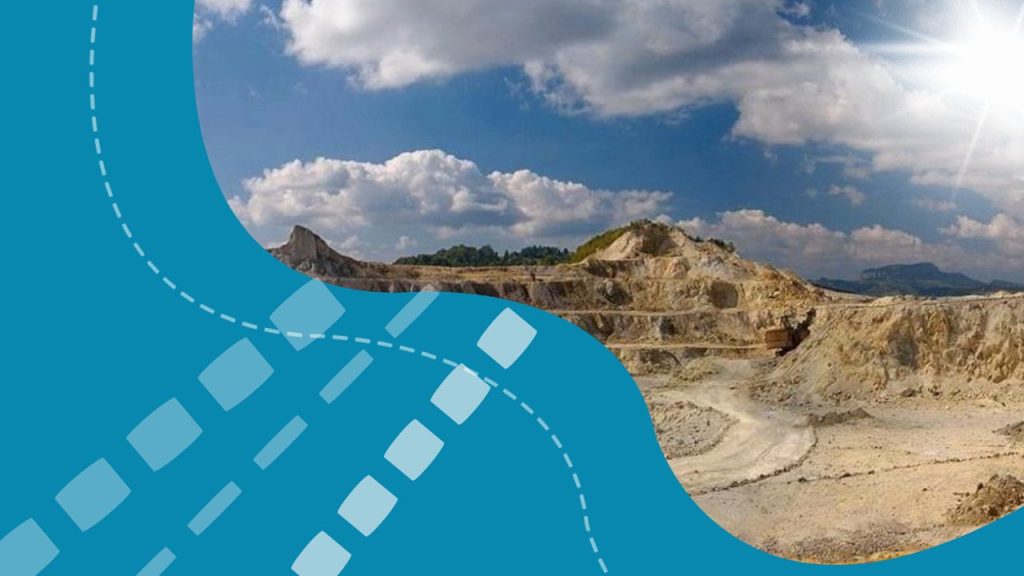
Romania emerges as one of the most significant potential contributors to Europe’s mineral security, holding reserves of graphite, titanium, boron, germanium, magnesium and copper, all on the European Commission’s critical and strategic materials list. Three of the 47 projects on the Commission’s first strategic list are in Romania, with combined value exceeding €1.3 billion. Euro Sun Mining’s Rovina copper project in Hunedoara County, valued at €300 million, is the EU’s second-largest copper and gold deposit. SALROM’s Baia de Fier graphite project in Gorj County is state-owned. Verde Magnesium’s Bihor County project, valued at approximately $1 billion, could become both the EU’s first magnesium mine and its largest magnesium deposit — addressing the material for which European dependence on China is most acute.
At national level, progress has been partial. Emergency Ordinance 61/2025 designated a single contact point for strategic project authorisation, but a more ambitious legislative proposal — L143/2026, which would have recognised critical minerals projects as public interest investments and introduced expedited judicial procedures — was rejected by the Senate, leaving a legislative gap that prolongs the competitiveness disadvantage.
Writing in an opinion piece, Lorena Novac of IJDELEA & Associates frames Romania’s situation as a historic opportunity that risks being squandered. “The alternative is straightforward: leave resources underground and import from China materials that already exist within Romania’s own subsoil. Europe has learned its lesson on energy security. The question is whether Romania will learn the lesson on mineral security before it is too late.”