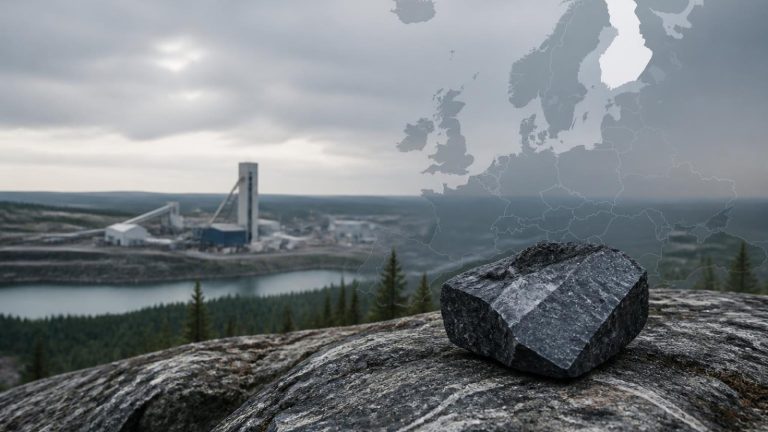
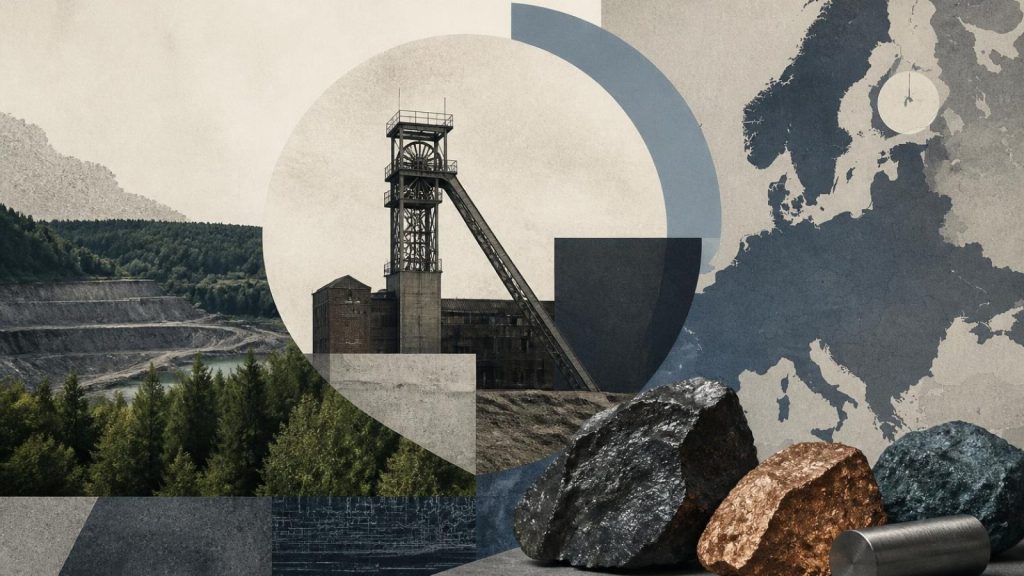
In a landscape where the demand for critical raw materials continues to rise, Europe is turning its gaze towards its old mining regions as potential hubs for new mineral supply. The case of Outokumpu in eastern Finland exemplifies this trend. Once a thriving mining town, Outokumpu boasts a rich history of copper ore extraction dating back to 1910. Although mining operations ceased in 1989, the industrial infrastructure remains intact, including an industrial park and a mineral-processing pilot plant operated by GTK Mintec, part of the Geological Survey of Finland. This existing framework raises an important question: can such regions expedite Europe’s journey towards securing new mineral supplies?
The journey from mineral discovery to production is often lengthy, averaging over 16 years. However, the Critical Raw Materials Act aims to streamline this process by establishing benchmarks for the extraction, processing, and recycling of strategic raw materials by 2030. While the act limits permitting for strategic extraction projects to 27 months, it does not address the entirety of the project lifecycle, which includes financing, technical studies, and securing buyers.
Old mining regions like Outokumpu may have a distinct advantage in this regard. With historical drilling data, existing operations, and a skilled workforce, these areas could potentially shorten the time required to produce commercially viable minerals. However, the article also highlights the importance of addressing inherited liabilities associated with these sites, such as environmental concerns and remediation obligations.
The concept of ‘strategic conversion zones’ emerges as a focal point in this discussion. These zones are defined as areas where sufficient conversion functions exist, allowing new projects to leverage existing resources rather than starting from scratch. Six key conditions are identified for a region to qualify as a strategic conversion zone: quality geological and historical data, infrastructure for energy and transport, processing capacity, skilled labour, community relations, and measurable legacy liabilities.
In Finland, various sites exemplify these conditions, including the Hautalampi nickel-cobalt-copper deposit, which has been designated as a Strategic Project by the European Commission. However, the success of these initiatives hinges on the ability to manage both inherited assets and liabilities effectively. As the mining industry seeks to balance the urgent need for new supplies with environmental responsibilities, the potential of old mining regions to contribute to this goal remains a critical area of exploration.
Read full artilce Europe’s Old Mining Regions: The Fastest Route to New Supply?
Author: Kai Siegmund, Strategic Marketing, Market Intelligence & Growth Positioning · Industrial B2B · Germany → Finland 2027/28