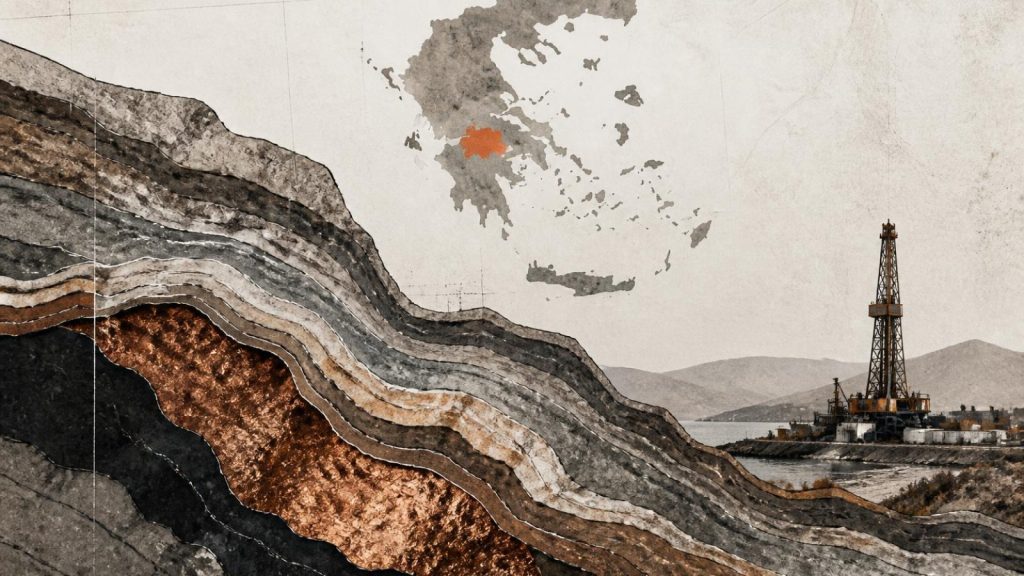
Greece is emerging as a significant player in the recovery of Critical and Strategic Minerals (CSMs), with substantial deposits that remain largely untapped. Dr. Nikolaos Arvanitidis, an Economic Geologist and expert in the SCRREEN project Network, outlines the potential for recovery of various critical minerals as by-products in a series of nine articles. This first article highlights key opportunities for the extraction of gallium, scandium, cobalt, palladium, antimony, arsenic, germanium, tungsten, and bismuth from Greece’s mineral resources.
The article details how gallium and scandium can be recovered from bauxite processing residues through the METLEN project, which has been granted EU strategic project status. Cobalt extraction from laterites is contingent on the deployment of hydrometallurgical technology, while palladium can be sourced from chalcopyrite concentrate at Skouries, which requires optimisation of smelter payability. Additionally, antimony and arsenic can be technically recovered from Olympias concentrates, although this necessitates investment in hydrometallurgical separation circuits. Other minerals, such as germanium at Molaoi and tungsten and bismuth at Kimmeria, also present promising opportunities for recovery.
Greece’s National Exploration Programme, alongside private sector initiatives from companies like METLEN, Rockfire, and Eldorado Gold, positions the country as a potential contributor to European CSM supply security. However, to realise this potential, a comprehensive understanding of CSM-related mineral systems is essential. Increased exploration efforts, targeted metallurgical research, and revised processing flowsheets are necessary to ensure that valuable critical metals are not lost to export concentrates or waste streams.
The article emphasises that while the metals are present and concentrated by existing industrial processes, the lack of metallurgical capacity and a commercial framework to capture them domestically is a significant barrier. The Bayer process, for instance, can upgrade scandium and rare earth elements in red mud, while flotation processes can concentrate antimony and arsenic at Olympias. Despite the physical presence of these valuable resources, they are not currently being monetised effectively.
Moving forward, the article calls for metallurgical test work on by-product recovery circuits for Olympias, Skouries, and red mud, along with a revised cut-off grade philosophy for Greek laterites. Systematic geochemistry and mineralogy studies are also recommended to establish recoverable bismuth resources in the Thrace epithermal systems. Furthermore, policy support is crucial to ensure that by-product recovery is prioritised as a strategic objective rather than an afterthought to primary metal production.
This series of articles aims to explore global value and supply chains for CSM and is intended for a wider audience, including relevant European Commission organisations and projects. The subsequent articles will delve into specific minerals and their potential within Greece’s mining landscape, highlighting the country’s untapped resources and the strategic importance of developing its CSM capabilities.