Website: Europe.com

  • Cornish Lithium Announces 50% Resource Increase at Trelavour Lithium Project

    Cornish Lithium Announces 50% Resource Increase at Trelavour Lithium Project

    Cornish Lithium has announced a significant 50% increase in the JORC-compliant Mineral Resource at its Trelavour Lithium Project in Cornwall, following a year of extensive drilling, sampling, testing, and modelling.

    The updated resource now stands at 88.5 million tonnes grading 0.21% Li₂O, equivalent to 183.5 thousand tonnes of contained lithium oxide. This equates to 454.5 thousand tonnes of lithium carbonate equivalent (LCE), representing a 50% increase compared to the 2022 estimate. Importantly, the upgrade includes a maiden declaration of resources in the Measured and Indicated categories, boosting geological confidence in the deposit.

    CEO Jamie Airnes highlighted the importance of the milestone: “Today’s resource upgrade also provides a strong foundation for our Feasibility Study, which we expect to publish later this year, moving us closer to our Development Consent Order application and commercial production. This is one more step in Cornish Lithium’s plan to secure the UK’s critical minerals supply, jobs and industrial future.”

    The project benefits from its location in a former china clay pit, with resources extending from the surface, resulting in a low strip ratio. To date, more than 20,000 metres of drilling have been completed, including exploration and geotechnical holes.

    Cornish Lithium aims to produce 10,000 tonnes per year of battery-grade lithium hydroxide, with commercial production targeted for 2029. The project is designed as a fully integrated operation with proprietary low-carbon processing technology, ensuring independence from overseas refineries and alignment with the UK’s clean energy transition.

  • European Green Transition Advances Olserum Rare Earth Project and Expands M&A Strategy

    European Green Transition Advances Olserum Rare Earth Project and Expands M&A Strategy

    European Green Transition PLC (AIM: EGT) has extended the key license for its Olserum Rare Earth project in Sweden until 2029, strengthening its position for partnership and sale discussions. The company noted that the project demonstrated district-scale potential in 2024, underscoring its strategic importance as Europe seeks to reduce dependence on imported critical minerals.

    EGT also confirmed a license extension at its Pajala copper project in Sweden until 2028, while the option agreement for the Altan Carbon credit project in northwest Donegal was extended by six months at no cost. The latter comes amid growing momentum in the carbon credit sector, bolstered by €3 million in peatland restoration funding from Meta, Microsoft, and Google.

    CEO Jack Kelly highlighted the company’s transition away from being a pure mining player: “This is not a mining company. We have mining and exploration assets which we are looking to partner or sell, but our key focus is on acquiring distressed, revenue-focused businesses.”

    The strategic shift is being led by Cathal Friel, EGT’s largest shareholder, who stepped in as executive chairman in June. Friel previously oversaw successful turnarounds at hVIVO and Amryt Pharma and is now guiding the company’s M&A strategy targeting revenue-stage businesses in the green economy.

    EGT reported a strong cash position of €2.9 million as of June 30, with no debt and no committed costs, providing flexibility to pursue acquisitions.

    On rare earths, Kelly stressed that Olserum remains a strategic asset: “There is no active rare earth mine in Europe today. Olserum could make a significant impact on European supply chains, especially as geopolitical tensions drive up prices and global players like Apple and the US government secure new long-term agreements in the sector.”

  • Neptune Energy Confirms 43 Million Tons of Lithium Resources in Germany’s Altmark Region

    Neptune Energy Confirms 43 Million Tons of Lithium Resources in Germany’s Altmark Region

    Neptune Energy has confirmed lithium resources of 43 million tons of lithium carbonate equivalent (LCE) in Germany’s Altmark region, positioning the area as one of the world’s largest project-based lithium deposits and a future cornerstone of Europe’s battery supply chain.

    The updated assessment, carried out with independent valuation agency Sproule ERCE, refines earlier estimates of 70 million tons of LCE announced by Neptune earlier this year. Despite the downward revision, the confirmed figure secures Altmark’s standing as a major resource, capable of supporting commercial extraction on a scale that could supply around 500,000 electric vehicles annually.

    “This new assessment underscores the great potential of our licence areas in Saxony-Anhalt. This enables us to contribute significantly to the German and European supply market for the critical raw material lithium,” said Andreas Scheck, CEO of Neptune Energy.

    Neptune has been testing direct lithium extraction (DLE) technology in the Altmark region since June, launching a pilot project in Steinitz using brine from existing gas wells and ion-exchange processes with its partner Lilac Solutions. A second pilot plant has since been commissioned to evaluate multiple DLE methods, and the company has already succeeded in producing battery-grade lithium carbonate.

    The company now holds three exploration licences in the Altmark – Mile A-L, Milde C-L, and Milde B-L – as well as the Jeetze-L production licence. Neptune plans to transition from pilot testing to commercial extraction in the coming years.

    Germany is ramping up efforts to secure raw material supply for its automotive sector, which hosts some of the world’s largest carmakers. Alongside Altmark, the country’s other key lithium projects include Zinnwald Lithium’s planned mine in the Ore Mountains and Lithium Energy’s work in the Upper Rhine Graben.

  • Middle Island Resources Begins Exploration at Bobija Polymetallic Project in Serbia

    Middle Island Resources Begins Exploration at Bobija Polymetallic Project in Serbia

    Australian copper and gold explorer Middle Island Resources announced on Wednesday that it has commenced exploration activities at the Bobija polymetallic project in western Serbia, which is prospective for gold, silver, copper, lead, and zinc.

    “The Bobija deposit and surrounding region remains inadequately explored and offers potential for the delineation of significant polymetallic mineralisation through a systematic exploration program. Furthermore, the full extent of the gold mineralisation is yet to be fully quantified, with gold potentially representing a major component,” the company stated.

    Earlier this month, Middle Island signed a binding share sale and purchase agreement to acquire local peer Konstantin Resources, whose Serbian portfolio includes the Bobija, Priboj, and Timok projects. Together, these projects cover 620 square kilometres and are prospective for gold and copper.

    The Bobija project itself comprises six mineral licences across 208 square kilometres. Historic work in the area included exploratory underground development and multiple drilling campaigns during the 1960s and 1980s by the former Yugoslav government, focused on barium, lead, zinc, and silver. Recent limited rock chip sampling by Konstantin Resources returned promising results, including assays of up to 5.24 grams per tonne of gold, 120 g/t of silver, 4.66% zinc, and 4.36% lead.

    Middle Island will seek shareholder approval for the acquisition of Konstantin Resources at a meeting scheduled for late October. The projects are located within the Western Tethyan Belt, a globally significant mineral province hosting major deposits such as Zijin Mining’s Čukaru Peki and Dundee Precious Metals’ Čoka Rakita in Serbia, as well as Rio Tinto’s Jadar project and Dundee’s Vareš project in Bosnia and Herzegovina.

  • Bulgaria and University of North Dakota to Research Rare Earth Metals

    Bulgaria and University of North Dakota to Research Rare Earth Metals

    The Bulgarian Energy Holding has signed a Memorandum of Understanding (MoU) with the University of North Dakota, USA, to conduct joint research on rare earth metals in Bulgaria. The agreement was formalized during Prime Minister Rosen Zhelyazkov’s visit to the United States for the 80th session of the UN General Assembly.

    “Today’s signing is extremely important for the development not only of the Bulgarian mining industry, but also for the technological progress of Bulgaria and the USA,” said Zhelyazkov. He emphasized that by leveraging the scientific potential of the University of North Dakota, Bulgaria can unlock new opportunities offered by its natural resources.

    The government press service noted that the collaboration marks a significant step in strengthening ties between the two countries in science, mining, and technology.

  • Pakistan and Poland Eye Expanded Cooperation in Energy, Mining, and Agriculture

    Pakistan and Poland Eye Expanded Cooperation in Energy, Mining, and Agriculture

    Federal Minister for Commerce Jam Kamal Khan met with Poland’s Ambassador to Pakistan, Maciej Pisarski, on Wednesday to discuss expanding trade, investment, and energy cooperation. Talks highlighted opportunities in hydrocarbons, mining, and agriculture as areas of mutual interest.

    Khan praised the longstanding presence of Poland’s state-owned energy firm ORLEN, which has invested approximately $500 million in Pakistan’s oil and gas sector over the past 26 years. ORLEN now plans to double its investment over the next decade, a move that could further strengthen bilateral energy ties.

    Ambassador Pisarski pointed to new exploratory concessions in Sindh and Balochistan as particularly promising, while also underscoring the need to resolve pending issues to sustain investor confidence.

    The commerce minister encouraged Polish companies to explore partnerships in Pakistan’s agriculture value chain, especially in cold storage and processing facilities for fruits and vegetables. He also urged Poland to consider investment in Pakistan’s mining sector, highlighting copper and lignite reserves.

    Pisarski noted Poland’s global expertise in both energy and mining and expressed Warsaw’s readiness to explore joint ventures. The two sides agreed to pursue concrete initiatives and high-level engagements to convert proposals into projects.

    Khan reaffirmed Pakistan’s commitment to facilitating Polish investors, while Pisarski emphasized Poland’s interest in deepening its economic partnership with Islamabad.

  • Kazakhstan and Germany Launch Consortium to Boost Mining and Metallurgy Education

    Kazakhstan and Germany Launch Consortium to Boost Mining and Metallurgy Education

    The second Kazakh-German Week, themed Science and Education: Partnership between Kazakhstan and Germany, opened on September 23 at Serikbayev East Kazakhstan Technical University in Oskemen (Ust-Kamenogorsk), the industrial hub of East Kazakhstan and a cornerstone of the nation’s mining and metallurgical sector.

    A central outcome of the opening ceremony was the creation of the Consortium for the Development of the Kazakh-German Institute of Science and Technology. Founded in 2024 at East Kazakhstan Technical University, the institute focuses on specialized training for mining and metallurgy professionals.

    The new Consortium unites leading academic institutions from both countries, including Serikbayev East Kazakhstan Technical University, Kazakh-German University, Freiberg University of Mining and Technology, Ruhr University Bochum, Clausthal University of Technology, Technical University of Dortmund, and the University of Duisburg-Essen. Its mission is to strengthen cooperation in research, academic exchange, technology transfer, and applied projects across mining, geology, rare earth metals, energy, and environmental engineering.

    Industrial leaders in East Kazakhstan, such as Kazzinc, the Ust-Kamenogorsk Titanium and Magnesium Plant, and the Ulba Metallurgical Plant, have pledged their support through partnerships in applied science and innovation.

    In a video message, Minister of Science and Higher Education Sayasat Nurbek highlighted the strategic importance of German universities in developing Kazakhstan’s future workforce. Officials emphasized that the consortium will play a vital role in ensuring the long-term sustainability of East Kazakhstan’s mining and metallurgical industries through the integration of science, innovation, and advanced technical education.

  • Pljevlja Coal Mine Marks 73 Years with Record Results and Long-Term Concession

    Pljevlja Coal Mine Marks 73 Years with Record Results and Long-Term Concession

    The Pljevlja Coal Mine celebrated Miners’ Day and its 73rd anniversary with a ceremonial session attended by government officials, energy sector representatives, business associates, and the local community. Despite a challenging year, the company highlighted record results, ongoing modernization projects, and progress on critical infrastructure.

    CEO Nemanja Laković praised employees for ensuring the country’s energy stability and confirmed that nearly 70% of work on the demanding Ćehotina riverbed relocation project has been completed. “The planned overburden will be exceeded by ten percent if the pace continues, ensuring sufficient coal for the Pljevlja Thermal Power Plant once it reconnects to the grid,” he said.

    The mine achieved positive financial results in the first half of 2025 without burdening its owner, Elektroprivreda Crne Gore (EPCG). Laković stressed that the company remains committed to both the energy sector and local community, with investments continuing despite the focus on urgent projects.

    Minister of Energy and Mining Admir Šahmanović acknowledged the year’s difficulties but commended miners for their dedication, emphasizing that the future of Montenegrin mining must align with modern standards and the principles of a just transition. EPCG chairman Milutin Đukanović added that the mine is well-positioned to support Montenegro’s green transition, including the development of large solar power plants.

    The event concluded with the signing of concession contracts extending coal exploitation rights in Pljevlja until 2050, securing the long-term utilization of reserves and reinforcing the mine’s role in Montenegro’s energy and economic landscape.

  • Boldyn Networks and Nokia Launch Private 5G to Revolutionize Mining at Callio Pyhäjärvi

    Boldyn Networks and Nokia Launch Private 5G to Revolutionize Mining at Callio Pyhäjärvi

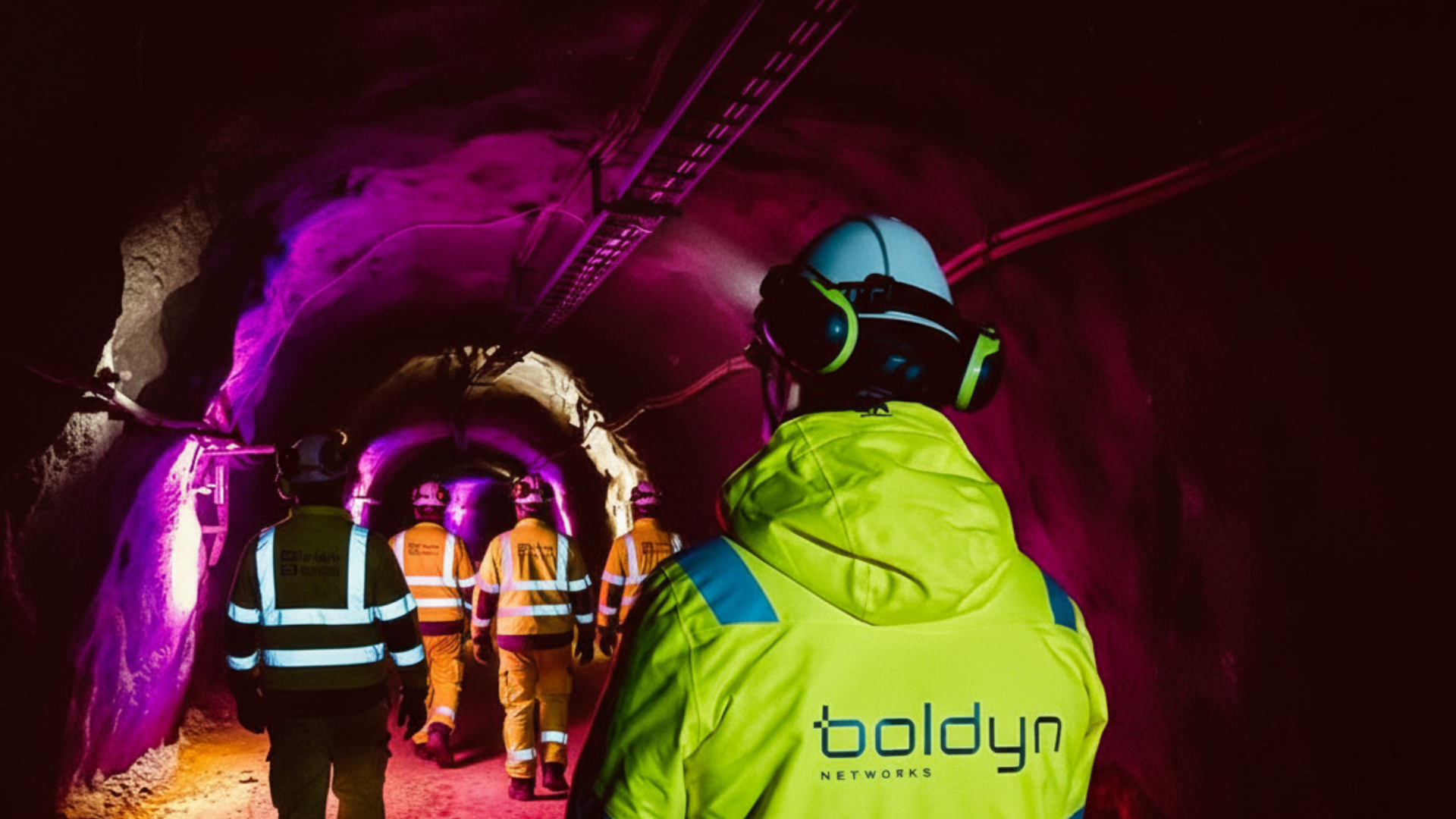
    Boldyn Networks, in collaboration with Nokia, has deployed a private 5G network at the Callio FutureMINE site in Pyhäjärvi, Finland. The project transforms one of Europe’s deepest mines into a next-generation testbed for mining innovation.

    The site, which operated as a copper mine for more than 60 years, now provides a real-world environment for technology companies to trial and validate mining equipment.

    Underground mines present some of the most extreme challenges for communications. Their depth, complex tunnel structures, and harsh conditions make reliable connectivity difficult to achieve. The Boldyn solution, powered by Nokia’s Modular Private Wireless (MPW), is designed to deliver stable, high-performance coverage across multiple underground levels and a tunnel system stretching several kilometres to depths of up to 1.5 kilometres. The network offers ultra-low latency and high bandwidth, enabling the deployment of advanced mining applications that improve safety, automation, and operational efficiency.

    The private 5G system forms the foundation of Callio’s ambition to operate as a fully automated test mine. It enables the remote control of machinery and vehicles from the surface, reducing the need for personnel in hazardous environments while maximising productivity and minimising downtime.

    Several advanced technologies are already being tested at the facility. Automation and tele-remote systems allow autonomous vehicles and equipment to be operated from above ground, supporting safer and more efficient mining. A next-generation voice communication system replaces outdated walkie-talkies with reliable mobile connectivity across all levels of the mine, enhancing coordination and response times.

    In addition, Finnish software firm Cybercube is testing digital twin and real-time positioning technology, which integrates 3D mapping with operational control. This provides continuous visibility of personnel, vehicles, and assets in environments where GPS is unavailable. Such tools improve situational awareness, evacuation planning, and overall safety management.

    The deployment demonstrates how secure, industrial-grade 5G networks can meet the unique demands of mining. By enabling automation, real-time control, and continuous communications, the Callio project showcases how next-generation connectivity can transform underground operations, making them safer, more sustainable, and more efficient.

  • JSW Declares Force Majeure After Fire at Borynia-Zofiówka Mine

    JSW Declares Force Majeure After Fire at Borynia-Zofiówka Mine

    Jastrzębska Spółka Węglowa (JSW), Europe’s largest coking coal producer, has declared force majeure following a fire at its Borynia-Zofiówka mine, forcing the company to revise its 2025 production targets.

    The fire broke out on September 12, 2025, in the Zofiówka section, where endogenous combustion led to the isolation of the C-2 longwall in seam 505/1. This prompted the suspension of operations and an expected shortfall of 156,000 tons of coking coal this year.

    On September 18, JSW’s management board formally announced the force majeure, notifying business partners of potential impacts on contractual deliveries. “As of the date of this report, it is impossible to determine the full impact of the incident on the future prospects of the company and the JSW group,” the company said in a stock exchange filing, adding that further updates will be issued if new information emerges.

    The fire underscores ongoing operational risks for JSW, which remains the EU’s top coking coal supplier to the steel industry. Similar incidents in recent years have raised concerns over production stability and the company’s ability to meet long-term supply commitments.

    Despite the setback, JSW’s future operations received a boost in August when regulators extended its license to extract coal and methane from the Borynia deposit until 2042. The deposit holds nearly 40 million tons of high-quality coking coal and over 80 million cubic meters of methane, ensuring long-term resource security for the mine and the surrounding region.