Website: Europe.com

  • Serbia’s Timok Discovery Poised to Reshape Global Copper and Gold Markets

    Serbia’s Timok Discovery Poised to Reshape Global Copper and Gold Markets

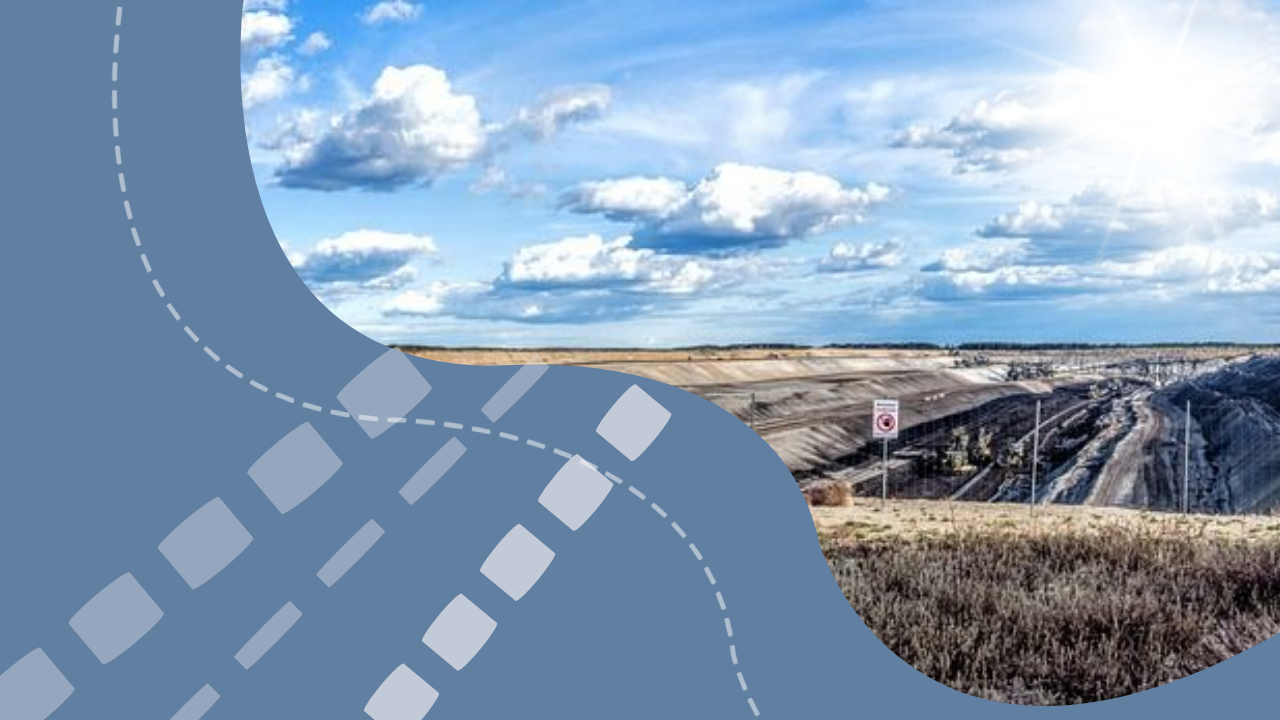
    Serbia’s Timok district, a region with a long mining tradition, has drawn international attention after Zijin Mining announced the discovery of extensive copper and gold deposits at the Malka Golaja site. With identified resources of 2.81 million tonnes of copper at an average grade of 1.87% and 92 tonnes of gold at 0.61 g/t, the find is considered highly significant and could elevate Serbia’s role in global commodity supply.

    The geological setting of the Timok district is key to its potential. Located within a metallogenic belt, the area hosts porphyry copper systems—large, lower-grade deposits—and high sulfidation zones, where both copper and gold are concentrated in higher grades. This dual mineralisation makes the region attractive for large-scale copper mining as well as high-value gold extraction.

    While the results are promising, analysts caution that the figures represent resources rather than proven reserves. Resources indicate estimated mineral quantities, whereas reserves are confirmed to be economically extractable under current market conditions. Further drilling, feasibility studies, and economic assessments will be needed before production can be confirmed.

    Economically, the copper grade of nearly 1.9% is considered high for such a large system, making the project particularly valuable in a world where copper demand is surging due to its central role in electric vehicles, renewable energy, and digital infrastructure. Gold, meanwhile, continues to serve as both a financial hedge and an essential input in electronics. The co-location of the two metals presents a cost-efficient mining opportunity.

    If developed, the Timok project could have far-reaching implications. Copper supply remains tight globally, with new high-quality projects in short supply, while gold continues to attract investors as both an industrial metal and a store of value. Serbia’s entry into the global copper and gold supply chain would not only reshape its domestic mining industry but could also influence long-term price dynamics.

  • U.S. and Ukraine Earmark $150 Million for Minerals Deal

    U.S. and Ukraine Earmark $150 Million for Minerals Deal

    The United States and Ukraine have committed $150 million to establish a reconstruction investment fund designed to channel foreign capital into Ukraine’s natural resources sector.

    Announced on 17 September by Ukraine’s Economy Minister, Oleksii Sobolev, the fund will see Washington and Kyiv invest $75 million each, with the U.S. contribution provided through the International Development Finance Corporation (DFC). Ukraine will finance its share in two instalments, drawn from this year’s and next year’s budgets.

    “This is definitely enough to make the first proper large-scale investments,” Sobolev told journalists.

    The initiative forms part of a wider U.S.-Ukraine resources agreement, signed in April, granting Washington favourable access to projects in natural resources, infrastructure, and defence. The fund will operate on a project-by-project basis, with both parties contributing only once an investment is approved.

    DFC officials visited Ukraine earlier this month, inspecting potential starter projects such as titanium, zirconium, and hafnium deposits in Kirovohrad Oblast. Mateo Goldman, DFC’s Senior Vice President for Investments, said: “Our $75 million investment is a major step to activating the fund and opening the Ukrainian market to new investment opportunities.”

    The fund’s board is expected to finalise its structure by late November, including the appointment of an administrator and approval of investment guidelines.

    Prime Minister Yulia Svyrydenko described the initial funding as a demonstration of “trust and long-term commitment” from Washington, noting that reinvested profits over the next decade will bolster Ukraine’s economic recovery.

    With U.S. interest in Ukraine’s critical raw materials and gas reserves, Kyiv hopes the partnership will accelerate both energy security and post-war reconstruction.

  • First Nordic Metals and Mawson Finland Merge to Form NordCo Gold, a C$259M Scandinavian Explorer

    First Nordic Metals and Mawson Finland Merge to Form NordCo Gold, a C$259M Scandinavian Explorer

    First Nordic Metals (TSXV: FNM), backed by Agnico Eagle Mines (TSX, NYSE: AEM), has announced an all-share acquisition of Mawson Finland to create NordCo Gold, a new gold exploration and development company focused on Sweden and Finland. The combined entity will have a market capitalization of about C$259 million ($187 million), positioning it among the most significant junior gold companies in Scandinavia.

    The move underscores a growing trend of consolidation in the gold sector, as companies seek greater scale and de-risked projects to attract capital in a competitive exploration environment. Investors are demanding larger, development-ready portfolios, and NordCo aims to meet that demand.

    First Nordic brings its 45–55% joint venture with Agnico Eagle at Sweden’s Barsele project, which hosts 324,000 indicated ounces and 2.1 million inferred ounces of gold. It also owns Finland’s Oijärvi project, with 143,000 indicated ounces of gold and 1.2 million ounces of silver. Mawson adds its Rajapalot project in Finland, holding 867,000 inferred ounces of gold with cobalt credits, and supported by a 2023 PEA outlining a 10-year mine life with 1 million ounces of recovered gold, an NPV (5%) of $211 million, and a 27% IRR at $1,700/oz.

    “This combination is about scale, quality and execution,” said First Nordic CEO Taj Singh. “Mawson’s Rajapalot project adds resource growth and development visibility across our expanded portfolio.” Mawson CEO Noora Ahola called the merger “the optimal path forward” for shareholders, citing improved capital markets access and technical expertise.

    The new company will control over 1,230 sq. km of ground across the Nordic region. A concurrent non-brokered financing aims to raise up to C$30 million at C$0.38 per subscription receipt, earmarked for exploration, transaction costs, and working capital.

    Under the deal, Mawson shareholders will receive 1.7884 shares of NordCo for each Mawson share. The merger follows a four-for-one consolidation of First Nordic shares, reducing the count to about 79.6 million. Post-merger and financing, NordCo is expected to have around 139 million shares outstanding. The transaction is subject to shareholder, court, and TSX Venture Exchange approval, with closing expected shortly after Mawson’s December shareholder vote.

    The Barsele joint venture offers exposure to multimillion-ounce resources, Rajapalot brings strong project economics and cobalt credits, while Oijärvi and Paubäcken add silver and exploration upside. Combined, NordCo aims to establish itself as the leading Nordic-focused gold developer.

  • Europe Opens First Rare-Earth Magnet Plant in Estonia to Curb Dependence on China

    Europe Opens First Rare-Earth Magnet Plant in Estonia to Curb Dependence on China

    Europe has launched its first rare-earth magnet production facility in Narva, Estonia, marking a critical step toward reducing reliance on China for components vital to clean energy and electric mobility. The Canadian-built plant, supported by the European Union, is expected to supply magnets for over one million electric vehicles and 1,000 offshore wind turbines annually.

    Permanent magnets, primarily made with rare earths, are considered essential for high-efficiency motors used in electric cars and renewable energy technologies. At present, China provides around 90% of the EU’s magnet demand.

    With an annual capacity of 2,000 metric tonnes, the Narva plant tailors magnet production to the specifications of European automotive manufacturers and wind turbine producers. The facility draws on rare-earth powders imported from Australia, processed alongside other metals to create the permanent magnets.

    The €75 million investment includes €14 million from the EU’s Just Transition Fund, designed to help regions most affected by the shift to climate neutrality. Currently employing around 80 people, the plant could eventually support up to 1,000 jobs.

    For Narva, long dependent on carbon-intensive oil shale extraction, the factory represents a turning point. “This kind of factory will bring new industrial companies. Of course, it forces us to develop our workforce,” said Narva’s mayor, Katri Raik, who described the investment as a vote of confidence in the city’s future despite its location on the EU’s border with Russia.

    Neo Performance Materials, the Canadian company behind the project, also operates a rare-earth separation plant and research facilities in nearby Sillamäe. For engineers such as Zorjana Mural, who once left academia for the oil and gas industry, the project has been transformative: “When I joined the project there was no building, no walls, nothing. Now it’s filled with machines. It’s really exciting to imagine the future.”

  • Savannah Resources Lifts Barroso Lithium Reserves by 40%, Reinforcing Europe’s Largest Deposit

    Savannah Resources Lifts Barroso Lithium Reserves by 40%, Reinforcing Europe’s Largest Deposit

    Savannah Resources (LON: SAV) has increased the reserve estimate for its flagship Barroso lithium project in northern Portugal by 40%, strengthening its role as Europe’s largest spodumene deposit.

    Following additional prospecting work, reserves are now pegged at more than 39 million tonnes, up from 28 million tonnes. The announcement pushed Savannah’s shares up 2.4%, giving the London-listed company a market value of £104 million ($141.5 million).

    Savannah highlighted the project’s importance to Europe’s battery value chain, noting its potential as both a strategic supplier of raw lithium and a long-term contributor to regional economic development. The company plans to develop four open-pit mines capable of producing enough lithium annually to power batteries for around 500,000 electric vehicles. Subject to permitting and financing, production is expected to start in 2027.

    At full operation, the mine is forecast to process 1.5 million tonnes per year over a 14-year lifespan, based on a resource of 20.5 million tonnes grading 1.05% lithium oxide.

    However, the project has drawn strong opposition from local communities and environmental groups. The Barroso region, recognized as a World Heritage agricultural site since 2018, has raised concerns over potential impacts on land, water resources, and biodiversity.

    Savannah said it expects to complete its definitive feasibility study and secure environmental licensing by the end of the year. The company also dismissed recent media reports claiming a United Nations committee had accused Portuguese authorities of breaching international law during the project’s approval process.

  • Ukraine and US Advance Minerals Deal with Site Visits for Investment Projects

    Ukraine and US Advance Minerals Deal with Site Visits for Investment Projects

    Ukrainian officials and representatives from the US International Development Finance Corporation have begun site visits to identify investment opportunities under a bilateral minerals deal signed in April, Economy Minister Oleksiy Sobolev confirmed on Saturday.

    The agreement, strongly promoted by US President Donald Trump, grants the United States preferential access to new Ukrainian mineral projects in return for investment. Kyiv views the deal as a mechanism to attract US financing for economic recovery and infrastructure rebuilding, while also shoring up continued US defence support amid the ongoing war with Russia.

    Sobolev told a conference in Kyiv, attended by Ukrainian, US, and European officials, that the government aimed to identify three pilot investment projects within the next 18 months. “Right now, there are site visits … from the US, and we are going to the regions tomorrow with them to look for an investment pipeline,” he said.

    Under the terms of the agreement, half of Ukraine’s revenues from new mineral extraction will be directed into a joint investment fund, with profits shared between Kyiv and Washington. Beyond minerals, the fund is also expected to invest in Ukraine’s energy sector and infrastructure.

    Ukraine has reserves of 22 of the 34 minerals deemed critical by the European Union for industries such as defence, green energy, and high-tech manufacturing. These include ferro alloys for steelmaking, non-ferrous metals for construction, as well as rare earths and precious metals.

    The initiative underscores Trump’s view that the US should gain direct economic benefits in exchange for its role as Ukraine’s largest military donor since Russia’s full-scale invasion in 2022.

  • MEPs Urge Swift Action on New EU Steel Safeguard to Protect Industry Amid Global Overcapacity

    MEPs Urge Swift Action on New EU Steel Safeguard to Protect Industry Amid Global Overcapacity

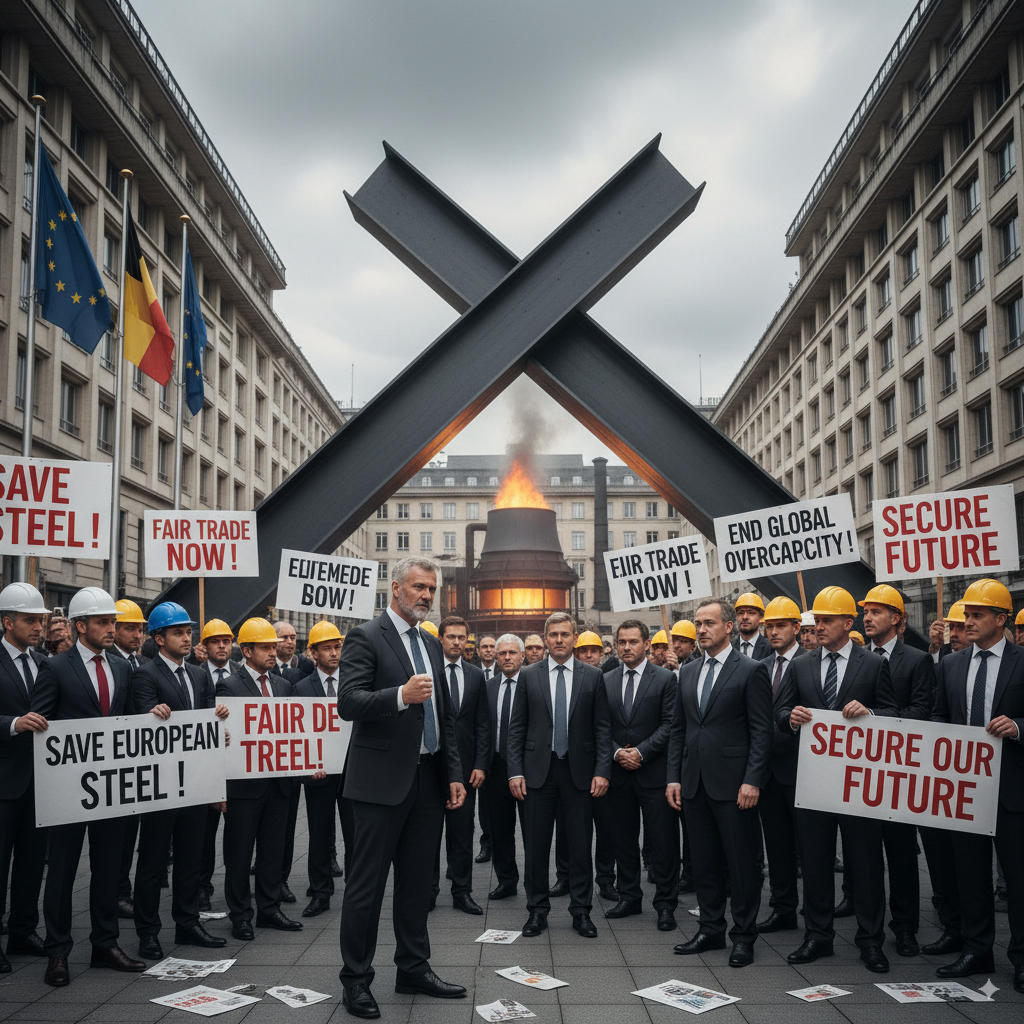
    A group of European lawmakers has written to the European Commission, calling for swift action to address the pressing issues facing the EU’s steel sector. The letter, signed by 105 MEPs and industry representatives, comes as the Commission prepares to launch a new trade protection framework for the industry.

    The lawmakers, who are members of the European Parliament’s Industry, Research and Energy Committee, are urging the Commission to implement a new trade instrument that will provide effective protection to the EU’s steel sector. They are calling for the framework to be operational by January 2026, with a view to bringing import market shares back to sustainable levels comparable to 2012-2013.

    The lawmakers argue that the current global overcapacities, which are forecast to increase to over 721 million tonnes by 2027, pose a significant threat to the EU’s steel sector. They are urging the Commission to adopt a comprehensive approach that will address the issue of circumvention, provide for a meaningful tariff on imports out of quota, and ensure that the framework is WTO-compatible.

    The lawmakers are also calling for the Commission to consider the competitiveness of steel-using sectors, arguing that the EU cannot afford to lose competitiveness in one industry at the expense of another. They are urging the Commission to adopt measures to boost the competitiveness of steel-using sectors, in addition to implementing a strong and highly effective trade safeguard for steel.

    The letter is a clear call to action for the Commission to take decisive steps to protect the EU’s steel sector. The lawmakers are urging the Commission to deliver a legislative proposal with urgency and ambition, in order to secure the competitiveness of the European steel sector.

  • Poland’s JSW Mined 1.01 Million Tons of Coal in August 2025

    Poland’s JSW Mined 1.01 Million Tons of Coal in August 2025

    Jastrzębska Spółka Węglowa (JSW) reported August 2025 coal production of 1.01 million tons, achieving 84% of its monthly target due to operational disruptions, including a fire at the Budryk mine, force majeure declarations, and challenging geological conditions. Despite this, the company’s cumulative January-August output reached 8.44 million tons, exceeding its annual plan by 0.5%.

    Coal sales in August totaled 1.18 million tons (95.3% of the target), with energy coal outperforming expectations at 135.4% of the monthly goal. Coking coal sales, however, dipped to 0.93 million tons against a 1.05-million-ton target. The coke segment proved resilient, with August production hitting 0.30 million tons (116.3% of the plan) and sales reaching 0.29 million tons (110.1%). Year-to-date coke output stands at 2.01 million tons, surpassing annual projections.

    JSW underscored its long-term stability after securing a license extension for the Borynia deposit until 2042, which holds 40 million tons of coking coal reserves. The company attributed its sustained performance to its Strategic Transformation Plan, ensuring operational resilience despite market volatility.

  • Ukraine Eyes Mining Waste as Strategic Source of Critical Materials

    Ukraine Eyes Mining Waste as Strategic Source of Critical Materials

    Ukraine plans to broaden its investment strategy for critical raw materials under the American-Ukrainian Reconstruction Investment Fund (AUIF), considering not only greenfield deposits but also alternative sources such as mining waste and tailings, Deputy Minister of Economy, Environment and Agriculture Yehor Perelyhin has said.

    In a column for Interfax-Ukraine, Perelyhin described decades-old mining and metallurgical waste as a potential “new raw material base” capable of supplying metals essential for batteries, electronics, aviation, and defense — while also addressing environmental damage from legacy industrial activity.

    He outlined six priority areas for exploration. The first involves tailings dams from mineral sands (titanium and monazite), where rutile, ilmenite, and zircon remain. Advanced processing and hydrometallurgy could unlock zirconium, hafnium, and scandium — vital for ceramics, optics, and aerospace.

    A second area is “red sludge” and slags from titanium dioxide pigment and alumina plants, which contain scandium alongside titanium, iron, and aluminum. Perelyhin noted that existing technologies allow scandium extraction modules to be integrated directly into production lines, reducing costs and accelerating output.

    Other promising sources include:

    • Phosphogypsum and phosphate waste, where rare earth recovery can be paired with gypsum production for construction.

    • Thermal power plant ash and coal dumps, which hold rare earths, gallium, scandium, aluminum, and germanium.

    • Tailings of iron, copper, and nickel ores, where cobalt, tellurium, germanium, vanadium, tungsten, and even gold and silver may be recovered with modern leaching methods.

    • Waste from uranium mining and processing, which contains vanadium, scandium, molybdenum, selenium, heavy rare earth elements, and yttrium, representing both strategic value and urgent environmental remediation needs.

    Perelyhin emphasized that this “brownfield” approach offers quicker access to marketable materials with lower capital investment than new mines, aligning with both Ukraine’s industrial strategy and global demand for critical minerals.

  • Boliden Warns of Investment Impact from Finnish Mining Tax Proposal

    Boliden Warns of Investment Impact from Finnish Mining Tax Proposal

    Boliden, the Swedish mining giant, has issued a stark warning to the Finnish government over its proposed tax reforms, which it claims will have far-reaching consequences for the EU’s critical metal supplies. The company, which owns the Kevitsa copper and nickel mine in Finland, estimates that the proposed tax hike will result in a 20-30 million euro annual increase in costs, the bulk of which is due to a quadrupling of the recently introduced Finnish mining tax.

    In a strongly worded submission to the Finnish government, Boliden argues that the proposed tax reforms are “inadequately prepared” and lack proper impact assessments, which could lead to “serious consequences” for the investment climate in Finland. The company also notes that the current proposals should be withdrawn in their entirety.

    The proposed tax hike has sparked concerns among EU policymakers, as both copper and nickel, as well as cobalt and PGMs (platinum group metals), are designated as strategic and/or critical metals by the EU. The Kevitsa mine is one of the largest producers of these metals in the EU, and any disruption to its operations could have significant implications for the bloc’s raw material supplies.

    “We understand the need for a balanced tax system, but this proposal is unacceptable,” said a Boliden spokesperson. “The increased tax burden will not only harm our business but also threaten the EU’s critical metal supplies. We urge the Finnish government to reconsider its proposal and engage in a more inclusive and evidence-based decision-making process.”

    The Finnish government is expected to make a final decision on the tax reforms in the coming weeks.