Website: Europe.com

  • EU Shortlists Tungsten, Rare Earths and Gallium for First Coordinated Critical Minerals Stockpile as Rotterdam Talks Begin

    EU Shortlists Tungsten, Rare Earths and Gallium for First Coordinated Critical Minerals Stockpile as Rotterdam Talks Begin

    The European Union has identified tungsten, rare earths and gallium as priority candidates for its first coordinated critical minerals stockpile, marking one of the bloc’s most concrete steps yet toward shielding its economy from supply disruptions after China tightened export controls on several strategic materials over the past two years.

    Discussions have begun with major logistics hubs including the Port of Rotterdam — Europe’s largest port and a key gateway for industrial supply chains — over potential storage arrangements for the proposed reserves. Sources familiar with the matter also indicated that magnesium is expected to be included on the priority list, with germanium and graphite also likely to make the final selection. Most of the minerals under consideration, with the exception of magnesium, appear on NATO’s list of materials considered critical to defence production.

    Ten EU member states are participating in planning groups led by Italy, France and Germany. France, holding the G7 presidency, is pushing for a permanent secretariat to oversee the initiative beyond the bloc’s rotating political leadership cycles — a sign of ambition to make the stockpile a durable institutional feature rather than a temporary political response.

    The initiative follows a late 2025 announcement of plans for coordinated stockpiling and reflects mounting concern that China could weaponise mineral exports during future trade or geopolitical disputes. Beijing’s export restrictions on gallium, germanium and graphite have already disrupted global markets in recent years, while restrictions on heavy rare earths imposed in April 2025 sent dysprosium, terbium and yttrium prices surging. China’s dominance is structural: the bloc imports 93% of its permanent magnets for wind turbines from Chinese suppliers, and the combined market share of the top three producing countries for key transition minerals rose from 82% in 2020 to 86% in 2024.

    Europe’s push to build domestic supply chains has encountered obstacles. Projects designated as strategic under the EU Critical Raw Materials Act, such as the Chvaletice manganese development in the Czech Republic, have faced lengthy permitting delays, with fast-track measures under the legislation yet to be fully incorporated into Czech national law.

    The stockpile discussions reflect a broader shift across Western governments from market-driven supply models toward more interventionist industrial policy as competition for strategic resources intensifies. The US, Japan and South Korea are also building reserves or financing alternative supply chains to reduce exposure to Chinese production dominance.

  • Russia Warns Against Western Critical Minerals Push in Central Asia, Calling It Attempt to Exclude Moscow From Its Own Backyard

    Russia Warns Against Western Critical Minerals Push in Central Asia, Calling It Attempt to Exclude Moscow From Its Own Backyard

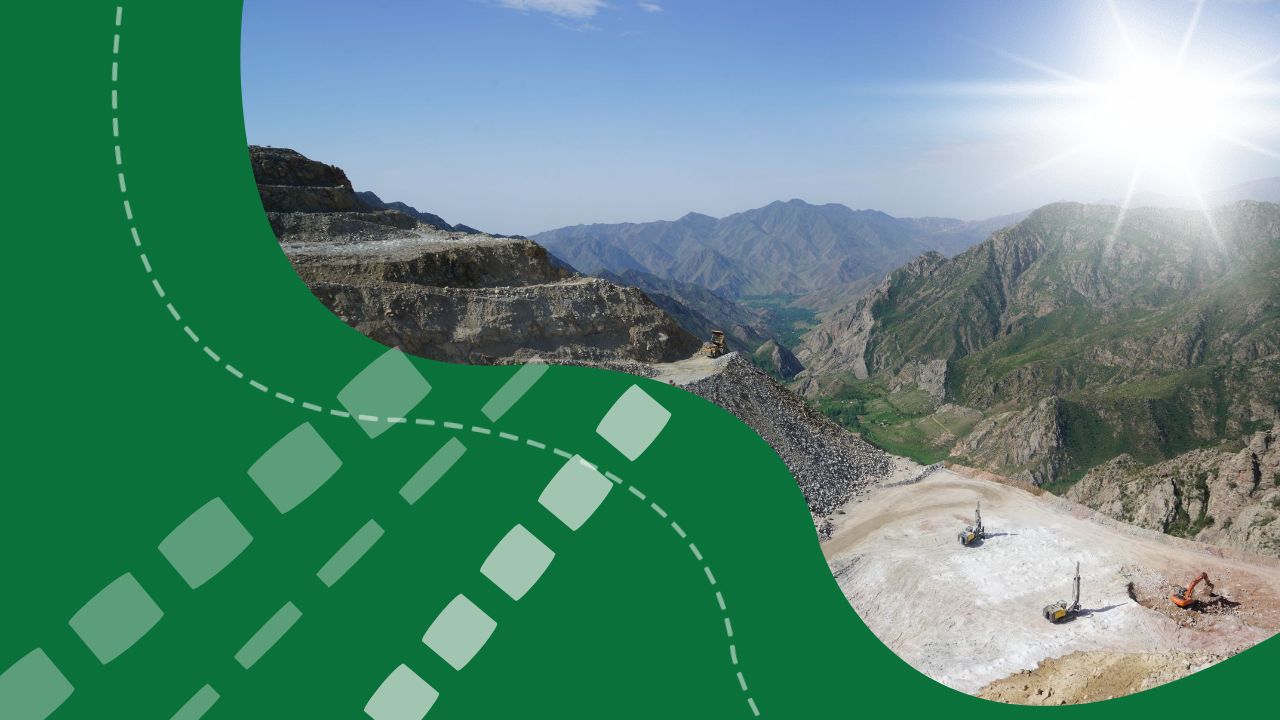
    Russia has publicly expressed concern about the accelerating pace of US and European efforts to secure access to rare earths and critical minerals in Central Asia, with Deputy Foreign Minister Mikhail Galuzin warning that Washington’s campaign goes beyond commercial competition and amounts to an attempt to build Western-controlled infrastructure on Russia’s borders.

    “We are concerned by the intensity with which Washington is pushing agreements on critical minerals and rare earth metals,” Galuzin told Izvestia in an interview published on Wednesday. “This is not merely about economic competition, but about an attempt to push Russia out and create a Western-controlled infrastructure in the immediate vicinity of our borders.”

    The remarks reflect Moscow’s growing unease as the G7 nations — including the US and EU member states — have intensified diplomatic and financial engagement with Kazakhstan, Kyrgyzstan, Tajikistan, Turkmenistan and Uzbekistan in pursuit of alternatives to China’s dominant position in rare earth and critical mineral supply chains. Russia has traditionally regarded the five Central Asian republics as its sphere of influence, a position now being tested simultaneously by Chinese economic expansion into the region and Western strategic outreach.

    The US has been particularly active. President Donald Trump hosted the leaders of all five Central Asian nations at the White House in November, describing critical minerals as a key administration priority and using the summit to advance new supply chain agreements. The US has since signed memoranda of understanding with both Kazakhstan and Uzbekistan and backed a $1.1 billion tungsten investment in Kazakhstan with Export-Import Bank financing.

  • Finland’s Terrafame Eyes Scandium Production From Uranium Plant, Potentially Becoming Europe’s Sole Supplier

    Finland’s Terrafame Eyes Scandium Production From Uranium Plant, Potentially Becoming Europe’s Sole Supplier

    Finnish metals company Terrafame is studying the feasibility of producing scandium from its existing uranium recovery operation, a move that could make it Europe’s only producer of the rare earth metal used in high-performance aluminium alloys, defence applications and other advanced industries.

    The Trafigura-backed company has launched a pre-feasibility study to assess whether scandium can be recovered as a side stream at its uranium recovery plant in Finland. A final investment decision is targeted for early 2027, with production estimated to begin approximately two years after that if the project proceeds. The study is expected to be completed by year-end.

    Approximately 85% of global scandium supply currently comes from China, which restricted exports of the metal last year as part of its broader retaliation against US tariffs — making European domestic production a strategic priority. Terrafame said the primary end-use target for its scandium would be high-performance aluminium alloys, where scandium additions enable lighter, stronger and more durable components with applications across aerospace, defence and transportation.

    The company said it would also approach potential customers and explore opportunities linked to national strategic stockpiling initiatives — a reference to the growing number of European government programmes seeking to build reserves of critical materials outside Chinese supply chains.

    Chief executive Antti Koulumies framed the initiative as a resource efficiency measure as much as a strategic one. “By exploring the recovery of scandium from Terrafame’s existing ore feed, we are utilising the full value of our resources, while also addressing the need for domestic European supply of this critical metal,” he said.

  • German Scientists Build Mobile Lithium Extraction Plant to Tap 300-Million-Year-Old Geothermal Brines Beneath North German Basin

    German Scientists Build Mobile Lithium Extraction Plant to Tap 300-Million-Year-Old Geothermal Brines Beneath North German Basin

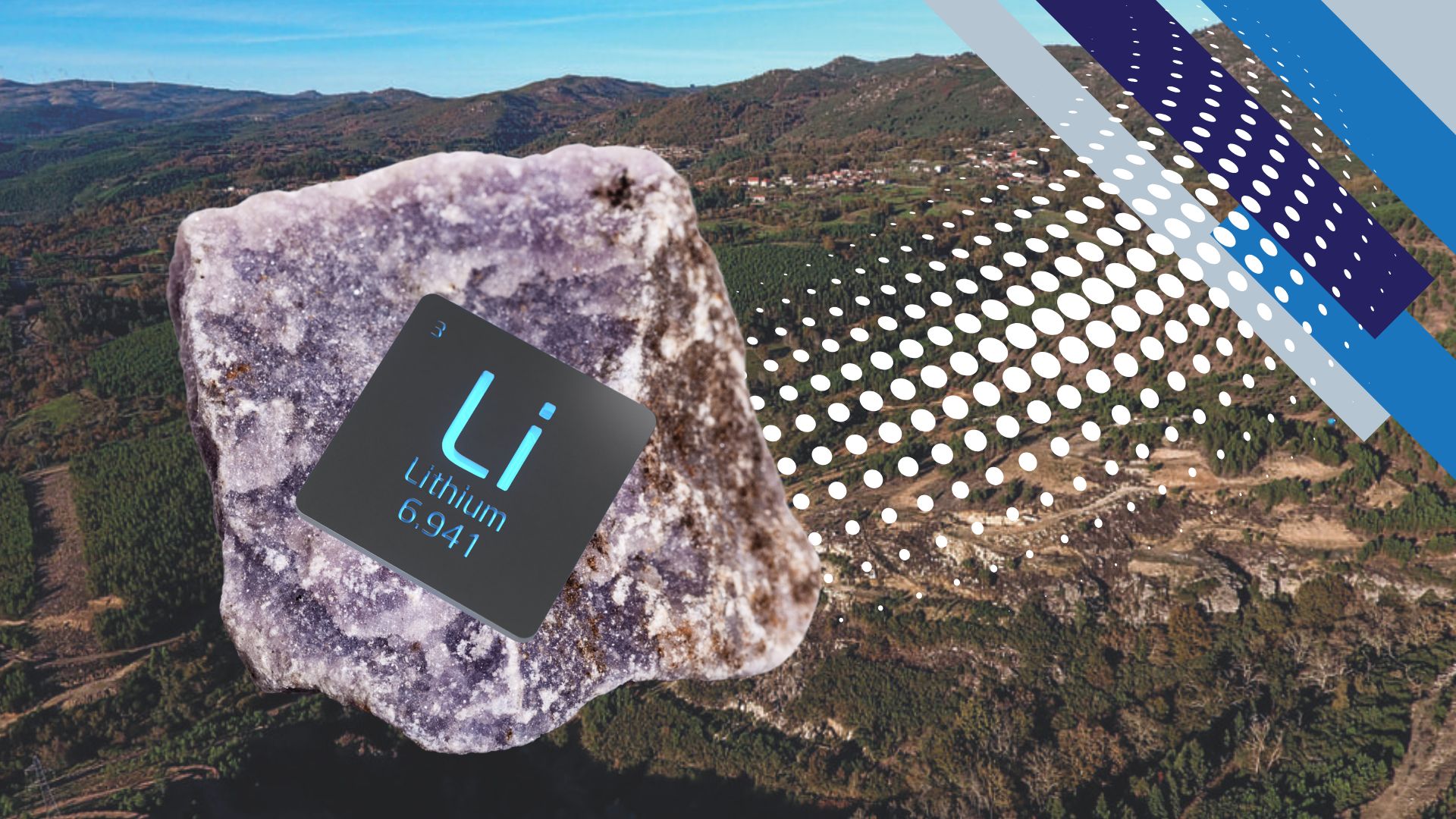
    Researchers at Germany’s Fraunhofer Research Institution for Energy Infrastructures and Geotechnologies have begun developing a mobile lithium extraction plant designed to recover the metal from deep geothermal brines beneath the North German Basin — a geological formation estimated to hold one of Europe’s largest lithium resources.

    The work is being carried out under the RoLiXX project, a $3.2 million initiative supported by the German Federal Ministry of Research, Technology and Space, involving Fraunhofer IEG and several academic and industry partners. The target is the Rotliegend — a 300-million-year-old layer of sandstone and volcanic rock several miles below the surface — whose geothermal waters are considered highly promising for lithium extraction. Estimates suggest the basin’s underground reserves could contain up to 1.27 trillion tonnes of lithium equivalent.

    The project aims to create a dual-use model in which geothermal heat production and lithium recovery happen simultaneously, allowing operators of existing geothermal facilities to extract lithium without disrupting power generation. The pilot system has been deliberately designed for mobility: it weighs approximately 250 kilograms, occupies roughly two cubic metres and can be transported by van or forklift directly to geothermal sites.

    A central engineering challenge is preventing corrosion and mineral buildup inside the extraction system, which the team is addressing through an adaptive plant capable of adjusting process parameters and chemical additives based on the local thermal water composition. The system also employs a solid-free extraction process to avoid mineral residues that could interfere with geothermal infrastructure.

    Fraunhofer IEG project manager Tilman Cremer said the initiative demonstrated that critical raw materials could be sourced locally. “Europe needs its own sources of strategic raw materials. By developing lithium resources in the North German Basin, Germany could in the future play a central role in covering both German and European demand,” he said. The team plans to analyse samples and drilling data spanning from the Dutch border to Poland to better understand how lithium accumulates and how it can be safely recovered.

  • Greenland’s Kvanefjeld Dispute Exposes Western Critical Minerals Strategy’s Blind Spot: Regulatory Credibility

    Greenland’s Kvanefjeld Dispute Exposes Western Critical Minerals Strategy’s Blind Spot: Regulatory Credibility

    The long-running dispute over Greenland’s Kvanefjeld rare earth project has delivered a lesson that Western governments are only beginning to absorb: a strategically important deposit is worthless to a supply chain if investors cannot trust that the regulatory framework governing it will remain stable long enough to justify spending the capital required to develop it.

    Kvanefjeld’s rare earth potential has never been in question. What has undermined the project is a cycle of legal uncertainty that has made it progressively harder to finance — regardless of its geological merits. Greenland’s particular stance on uranium-linked deposits, governed by the territory’s 2021 uranium law, means that projects where uranium extraction exceeds the legal threshold face a distinct political and regulatory hurdle that is difficult to price or plan around.

    The analysis emerging from the case identifies what may be Western critical minerals strategy’s most overlooked dimension. Governments and multilateral agencies have focused heavily on three questions: where deposits are located, how much processing capacity can be built outside China, and how much strategic stockpile buffer allied nations should maintain. Kvanefjeld points to a fourth question that is becoming equally decisive: whether investors believe the regulatory path will hold.

    This matters because of how project finance actually works. Capital does not assess deposit size or metallurgy in isolation — it assesses whether the legal and regulatory position will remain intact by the time funds must be committed and spent. When that credibility weakens, financing terms deteriorate. Lenders demand higher risk premiums, offtake partners hesitate to commit and equity investors apply steeper valuation discounts. A project can simultaneously be declared a strategic national priority and become effectively unfinanceable if markets believe the rules could shift before construction begins. In project finance, a clear rejection is often easier to price than prolonged uncertainty.

    Greenland itself is not uniformly hostile to mining. Its 2025 to 2029 Mineral Resources Strategy, a raw materials partnership with the European Union signed in 2023, and ongoing advances at the Malmbjerg molybdenum, Amitsoq graphite and Tanbreez rare earth projects all demonstrate that development continues under specific conditions. The territory is selectively open, not closed — but the conditions under which that openness applies are not always legible to outside investors before they commit significant due diligence capital.

    The broader implication for Western critical minerals policy is structural. Public funding, industrial partnerships and diplomatic agreements — including the EU-Greenland framework — can only do so much if investors remain unconvinced that regulatory processes are stable, transparent and predictable through a project’s full lifecycle. Faster permitting addresses one dimension of the problem; it does not resolve the deeper question of whether approvals, once granted, are politically durable. Governments that wish to attract long-term capital into critical minerals projects need to define the rules clearly and early — including being explicit about which deposit types or co-products are politically unacceptable, tied to measurable thresholds rather than shifting political sentiment.

    Kvanefjeld is, in this sense, less a story about one project in one territory than a warning about a systemic vulnerability in how Western governments are approaching the execution of their critical minerals ambitions.

  • Turkish Mining Industry Hits Back at Opposition Party Over Cyanide Claims and Smuggling Allegations

    Turkish Mining Industry Hits Back at Opposition Party Over Cyanide Claims and Smuggling Allegations

    Turkey’s mining sector has mounted a sharp defence of its operations and economic contribution after a senior opposition Republican People’s Party lawmaker made a series of allegations against the industry, accusing it of paying insufficient royalties to the state, smuggling gold by helicopter and using cyanide in ways that Europe has supposedly abandoned.

    The Mining Platform, an umbrella body of 18 non-governmental organisations, and the Turkish Miners Association jointly issued statements on Saturday rejecting the claims made by Gökhan Günaydın, deputy parliamentary group chair of the CHP, as factually incorrect and politically damaging to an industry employing approximately 150,000 people.

    On royalties, the Mining Platform said the sector paid more than 32 billion Turkish lira ($700 million) to the public treasury in state royalties last year alone. “A false perception is being created that mining enterprises pay very low shares to the state,” the statement said, adding that approximately 30 lira out of every 100 lira earned by a mining enterprise flows directly to the state through various taxes and levies.

    The Miners Association directly challenged the gold smuggling allegation, calling it incompatible with current production and inspection processes. It noted that mining activities operate under the supervision of more than 30 public institutions, and that every gram of gold produced must first be refined to 99.5% purity at accredited domestic refineries before being offered for sale on Borsa Istanbul, where the Central Bank of Turkey holds the right of first purchase.

    On the cyanide claim, the association said the assertion that EU countries have abandoned the method was simply untrue. It pointed out that 85% of gold produced worldwide uses the cyanide process and that modern gold facilities operating in Finland, Sweden and Norway employ it — countries the CHP implicitly held up as models.

    Both organisations framed the broader stakes as economic sovereignty. “We are sending more than $60 billion in total resources abroad because we are not adequately utilising the mines within our own territory,” the Mining Platform said.

  • Cornish Metals Secures £52 Million Credit Facility From National Wealth Fund and Vision Blue to Advance South Crofty Tin Mine Restart

    Cornish Metals Secures £52 Million Credit Facility From National Wealth Fund and Vision Blue to Advance South Crofty Tin Mine Restart

    Cornish Metals has secured £52 million in credit facilities from its two largest shareholders — the UK government’s National Wealth Fund and Vision Blue Resources — to advance the restart of the historic South Crofty tin mine near Pool in Cornwall, as the AIM-listed company pushes toward a final investment decision.

    The funding will be directed toward underground mine development and shaft refurbishment, surface facilities and infrastructure, and general operating and corporate purposes. Up to £16 million will also be used to credit the company’s escrow account.

    Chief executive Don Turvey said the facility provided the financial runway needed to progress through to the final investment decision while maintaining the high level of site activity required to continue de-risking the project. “It also signals the National Wealth Fund’s and Vision Blue’s continued support for Cornish Metals and our goal to restart tin mining in Cornwall, providing a sustainable supply of this critical mineral to the West,” he said. Turvey added that the company has been engaging with investment parties interested in financing South Crofty’s development as part of the broader project financing process.

    South Crofty, which Cornish Metals acquired in 2016, operated for more than 400 years before closing in 1998 due to falling metal prices and insufficient investment. The company says the mine could be producing tin again by 2028. The restart has attracted growing attention as tin prices have surged on demand from artificial intelligence infrastructure and electronics manufacturing, with the metal approaching $54,000 per tonne.

  • AMG Critical Materials to Acquire Full Control of Zinnwald Lithium in $56 Million Deal, Consolidating One of Europe’s Major Lithium Reserves

    AMG Critical Materials to Acquire Full Control of Zinnwald Lithium in $56 Million Deal, Consolidating One of Europe’s Major Lithium Reserves

    AMG Critical Materials has agreed to acquire the approximately 71% of Zinnwald Lithium it does not already own for approximately $56 million, funded equally in cash and new AMG shares, in a move the Dutch critical materials company describes as a major strategic step in consolidating Europe’s critical minerals industry.

    AMG has held a stake in Zinnwald Lithium and a board representative since 2023. The full acquisition brings under single ownership the Zinnwald Lithium project in Germany — a multi-product deposit containing lithium, potassium and tin, and one of the most significant hard-rock lithium resources in Europe. The transaction is expected to close in the third quarter of this year. In the interim, Zinnwald Lithium will continue limited test work and studies to maintain permitting and project status under an existing cash management plan.

    AMG chairman and CEO Dr Heinz Schimmelbusch said the company’s near-term focus post-completion would be on advancing technical development studies, with a staged approach favouring a smaller-scale initial scope over a single large-scale build. “This approach will enable AMG to leverage its world-class mining and processing capabilities,” he said.

    AMG Lithium CEO Dr Stefan Scherer outlined an 18 to 24 month programme to define and advance a sustainable and profitable project scope, combining AMG’s existing mining experience with newly developed processing technology aimed at improving the project’s environmental footprint and operating cost position. Community and stakeholder engagement is also planned as the project advances.

  • Arafura Rare Earths Locks In $145 Million Australian Government Financing as Nolans Project Reaches $659 Million in Committed Funding

    Arafura Rare Earths Locks In $145 Million Australian Government Financing as Nolans Project Reaches $659 Million in Committed Funding

    Arafura Rare Earths has finalised agreements with Australia’s National Reconstruction Fund Corporation for approximately $145 million in government support, bringing the total equity and equity-like commitments secured for its Nolans rare earths project in the Northern Territory to around $659 million.

    The agreements formalise a commitment whose key terms were first established in January 2025, with the final contracts now completed and the conversion price at which government support could be transformed into Arafura shares also defined. The National Reconstruction Fund Corporation is a state-owned body established to support domestic manufacturing and industrial capability.

    The latest milestone follows binding commitments secured in April 2026 from Germany’s raw materials fund and Export Finance Australia, which together significantly expanded the project’s financing base. The Nolans project is planned to become Australia’s first facility to combine rare earth mining with downstream processing at a single integrated site — a distinction that has attracted attention from governments seeking to build rare earth supply chains outside China.

    Despite the progress, several key steps remain before full financing can be achieved and a final investment decision made. Major project loan agreements still need to be finalised, shareholders must be engaged, and all conditions precedent to the investment decision must be satisfied.

    Arafura is seeking to supply neodymium-praseodymium oxide for use in permanent magnets for electric vehicle motors and wind turbines, with planned output of 4,440 tonnes per year from the second half of 2029.

  • EU Agrees Critical Medicines Act to Cut Drug Supply Chain Dependence and Build Emergency Stockpiles Across Member States

    EU Agrees Critical Medicines Act to Cut Drug Supply Chain Dependence and Build Emergency Stockpiles Across Member States

    The European Council and European Parliament have reached a political agreement on the Critical Medicines Act, a landmark piece of legislation designed to reduce the EU’s dependence on single-source pharmaceutical suppliers, expand domestic production capacity and establish coordinated emergency stockpile mechanisms across member states.

    EU Health Commissioner Olivér Várhelyi described the law as “Europe’s essential safety net,” saying it was designed to prevent shortages, reduce supplier concentration risk and strengthen local production to protect public health. “Patients in the EU must have access to the medicines they need, when they need them,” he said.

    The agreed legislation contains four main components. On supply chain diversification, member states will be required to promote resilient and diversified pharmaceutical supply chains in public procurement procedures. Where high dependence on a single or limited number of third countries is identified, public contracting authorities must give preference to EU-manufactured products — a buy-European provision that mirrors approaches being taken in critical minerals and semiconductor policy.

    On production capacity, the Act establishes a strategic projects mechanism to increase and modernise EU manufacturing of critical medicines and their active ingredients, with faster administrative support and easier access to financing. Projects producing medicines for rare diseases will benefit from accelerated approval processes.

    For emergency stockpiles, member states requiring companies to maintain reserves must ensure this does not compromise supply to other EU countries. A voluntary solidarity mechanism will enable member states to share information on available stockpiles and redistribute them in the event of a shortage emergency. Joint procurement provisions aim to improve access to critical medicines and medicines for rare diseases across the bloc.

    The agreement will now proceed to formal approval by both the European Parliament and the Council before entering into force.