Website: Europe.com

  • Türkiye Frames Energy Crises as Opportunity Under “New Energy Architecture” Strategy

    Türkiye Frames Energy Crises as Opportunity Under “New Energy Architecture” Strategy

    Türkiye is navigating successive global energy crises through a coordinated mix of policy planning, infrastructure investment, and strategic resource development, according to Energy and Natural Resources Minister Alparslan Bayraktar.

    In an article published in Turkish daily Sabah ahead of the second Istanbul Natural Resources Summit (INRES 2026), Bayraktar said the country has managed to transform recent geopolitical and market disruptions into opportunities under what he described as a long-term “new energy architecture.”

    He pointed to the last six years as a period defined by overlapping global energy shocks, including conflict-driven disruptions in key regions, arguing that Türkiye has been able to maintain stability through strong leadership, established infrastructure, and coordinated policy execution.

    Bayraktar highlighted milestones in Türkiye’s National Energy and Mining Policy, including the major 2020 natural gas discovery in the Black Sea region and subsequent development efforts that now supply domestic gas to millions of households. He also referenced oil production expansion in Şırnak’s Gabar region, where output has reached tens of thousands of barrels per day.

    The minister said Türkiye’s broader strategy is built on a “crisis-opportunity” framework, combining domestic resource development with international exploration efforts. These include ongoing drilling activities in Somalia and planned operations in Pakistan and Libya, alongside unconventional oil exploration projects within Türkiye.

    A key pillar of the strategy is the expansion of critical mineral production, particularly boron and rare earth elements. Bayraktar said Türkiye aims to strengthen its position as a global leader in boron exports while advancing refining capabilities in rare earths, with the goal of increasing value-added production and reducing reliance on raw material exports.

    He also outlined plans to diversify energy supply routes, strengthen infrastructure resilience, and expand international partnerships across natural gas, oil, and mining sectors. Electrification was described as a central element of Türkiye’s evolving energy system, intended to create a more flexible and integrated market structure.

    Bayraktar emphasized that the INRES 2026 summit will serve as a platform for international cooperation in energy diplomacy, bringing together officials and stakeholders from Europe, Asia, and Africa. The event is expected to focus on energy security, investment, and financing strategies amid ongoing geopolitical tensions.

    Türkiye continues to position itself as a regional energy hub through expanded infrastructure, cross-border cooperation, and increased domestic production across hydrocarbons and strategic minerals.
  • EU Warns Critical Raw Materials Race Is Becoming a Global Power Struggle

    EU Warns Critical Raw Materials Race Is Becoming a Global Power Struggle

    The global competition for critical raw materials is increasingly becoming a geopolitical battle for economic and industrial power, a senior European Commission official warned on Wednesday, as the European Union seeks to reduce its heavy dependence on China.

    Speaking at the EIT RawMaterials Summit in Brussels, Koen Doens, head of the European Commission’s department for international partnerships, said control over critical minerals now extends far beyond mining and includes refining, processing, transport, financing, and industrial manufacturing capacity.

    Doens argued that minerals such as lithium, cobalt, graphite, and rare earth elements now hold the same strategic importance that oil and gas carried during the 20th century. He described investment in secure supply chains as essential to Europe’s long-term economic resilience and strategic autonomy.

    The comments come as the EU continues efforts to diversify supplies of critical raw materials needed for clean technologies including batteries, solar panels, and wind turbines. Recent warnings from EU auditors suggested the bloc’s energy transition could be jeopardised by its continued dependence on China for key materials and processing capacity.

    Under legislation adopted in 2024, the EU set targets to meet 10% of its extraction, 40% of refining, and 15% of recycling needs domestically by 2030. However, the bloc still relies heavily on foreign partners for access to many strategic minerals, particularly rare earth elements not available within Europe.

    To reduce vulnerabilities, the EU has signed 16 international partnerships with countries including the Democratic Republic of Congo, South Africa, Zambia, and the United States through its Global Gateway initiative, which aims to strengthen Europe’s global infrastructure and resource ties while competing with China’s Belt and Road Initiative.

    Doens warned that Europe can no longer rely solely on market forces to guarantee secure access to raw materials and stressed that the bloc must also develop refining, processing, and manufacturing capabilities rather than focusing only on extraction.

    China currently dominates the global critical raw materials supply chain, accounting for around 60% of production and approximately 90% of refining capacity worldwide. According to European Parliament research, the EU depends on China for roughly 90% of its raw materials supply and 98% of its rare-earth magnets. Beijing has repeatedly imposed restrictions on rare earth exports in recent years, including in 2025.

    A recent paper by the European Union Institute for Security Studies proposed forming an “allied industrial bloc” with non-rival countries such as Malaysia, Brazil, Indonesia, India, and the Democratic Republic of Congo to reduce exposure to Chinese leverage. The study also called for major investment in European refining infrastructure and strategic mineral reserves similar to emergency oil stockpiles.

    The debate has intensified around proposals to speed up mining and processing approvals within Europe. The European Commission recently suggested reopening parts of the EU Water Framework Directive as part of a broader strategy to accelerate critical raw materials projects and reduce supply risks.

    The move triggered criticism from environmental groups and lawmakers concerned that weakening water protections could worsen water stress, environmental degradation, and climate-related risks. In a letter to Commission President Ursula von der Leyen, 27 lawmakers warned that reopening core environmental legislation could undermine public confidence and legal certainty.

    Despite the criticism, the Commission signalled it intends to continue simplifying regulations to boost industrial competitiveness and accelerate strategic projects across the bloc.

  • Europe Warned of New “China Shock” as Industrial Dependence Deepens

    Europe Warned of New “China Shock” as Industrial Dependence Deepens

    Europe is facing growing concerns over a new “China shock” that analysts warn could accelerate deindustrialisation across the continent, threaten local manufacturing, and deepen dependence on Chinese imports.

    Trade experts and industry representatives say the combination of heavily subsidised Chinese production, low-cost exports, and currency imbalances is placing severe pressure on European factories and supply chains. The concerns echo the original “China shock” experienced in the United States after China joined the World Trade Organization, a period linked to the loss of millions of industrial jobs due to rising imports.

    Jens Eskelund, president of the European Chamber of Commerce in Beijing, warned that the issue extends far beyond finished goods such as electric vehicles. According to Eskelund, Europe is becoming increasingly dependent on Chinese-made industrial components embedded throughout the continent’s manufacturing sector.

    The growing reliance on Chinese suppliers has prompted fresh discussions within the European Union over industrial resilience and supply chain security. European commissioners are expected to hold urgent talks later this month on possible measures to reduce strategic dependence, including proposals requiring companies to source critical components from multiple suppliers.

    Industry groups argue that Chinese state subsidies and exchange rate distortions are allowing Chinese products to undercut European competitors. German economist Jürgen Matthes suggested that the yuan may be significantly undervalued against the euro, making Chinese imports dramatically cheaper for European buyers.

    Oliver Richtberg, head of foreign trade at the European machinery and equipment manufacturing association VDMA, said European companies are increasingly choosing Chinese suppliers because they offer products at lower prices while approaching European quality standards. He warned that the trend is already damaging Europe’s industrial base and contributing to substantial job losses.

    Recent data cited by trade analysts highlights Europe’s growing dependence on Chinese chemical and industrial products. In sectors such as amino acids and polyhydric alcohols, Chinese imports account for the overwhelming majority of EU supply volumes, raising concerns that domestic production may eventually become economically unviable.

    Trade figures also show China’s surplus with the European Union continuing to expand. Analysts argue that tariffs imposed by the EU on Chinese electric vehicles in 2024 have been largely offset by exchange rate shifts and continued Chinese export growth.

    Germany has been particularly affected, with estimates suggesting that around 250,000 industrial jobs have disappeared since 2019. The automotive sector has experienced some of the sharpest declines, while China recently overtook the United States as Germany’s largest trading partner.

    Andrew Small, director of the Asia programme at the European Council on Foreign Relations, said existing EU measures are insufficient to address the scale of imports and industrial pressure facing Europe. He noted that while Brussels is preparing legislation such as the Industrial Accelerator Act and updates to cybersecurity rules aimed at limiting strategic dependence, most of the measures are unlikely to take effect before 2027.

    Analysts say the EU now faces mounting pressure to introduce faster support mechanisms for European industry while balancing concerns over trade retaliation from Beijing. Environmental, industrial, and geopolitical debates surrounding Europe’s economic relationship with China are expected to intensify in the coming months.

  • EU Faces Criticism Over Plans to Fast-Track Industrial and Energy Projects

    EU Faces Criticism Over Plans to Fast-Track Industrial and Energy Projects

    The European Commission is facing growing criticism after a new report by watchdog Corporate Europe Observatory (CEO) accused Brussels of weakening environmental protections in order to accelerate industrial and energy projects across Europe.

    Published on Tuesday, the report claims the EU is using the ongoing energy crisis to justify deregulation measures that could benefit fossil fuel companies, mining firms, hydrogen developers, and major technology corporations. According to CEO, proposed legislation would speed up approval processes for projects labelled as “strategic” or of “overriding public interest,” potentially allowing them to bypass environmental assessments and reducing opportunities for public scrutiny.

    The debate comes amid broader discussions in Brussels over balancing Europe’s industrial competitiveness and green transition goals with environmental safeguards and democratic oversight. The issue has gained further attention following the EU executive’s recent decision to increase free pollution allowances for energy-intensive industries under the bloc’s carbon market by nearly €4 billion.

    CEO researcher and campaigner Pascoe Sabido argued that while the energy crisis initially pushed Europe toward reducing dependence on fossil fuels, industry lobbying has transformed fast-track measures into tools for expanding polluting infrastructure.

    The report warns that the proposed reforms could weaken protections for local communities by limiting their ability to challenge projects affecting health, land, and livelihoods. Hydrogen transport systems, carbon dioxide pipelines, and large-scale data centres were identified as projects that could undermine environmental and social standards.

    Specific concerns were raised over mining developments in Sweden linked to critical raw materials for the energy transition, which campaigners say threaten Indigenous Sámi communities and local water systems. In Ireland, rapidly expanding data centres are reportedly placing additional pressure on the national electricity grid and increasing reliance on fossil fuel power generation.

    The report also highlights concerns over carbon dioxide transport pipelines associated with fossil gas infrastructure. CEO pointed to incidents in Yazoo County in the United States as evidence of potential health risks linked to pipeline leaks, including asphyxiation and long-term health impacts.

    According to the analysis, industry lobbying has influenced several upcoming EU legislative initiatives, including the Environmental Omnibus, the Grids Package, and the Industrial Accelerator Act. Campaigners argue these proposals could reduce environmental impact assessments, expand automatic permit approvals, and restrict access to legal appeals.

    Danish MEP Niels Fuglsang defended accelerated permitting procedures for renewable energy and grid projects, arguing that Europe must speed up clean energy deployment to strengthen energy independence, competitiveness, and the green transition. He also supported exemptions from certain EU water regulations for grid infrastructure projects, calling current procedures excessively time-consuming.

    The European Commission has defended its broader simplification agenda as necessary to accelerate the energy transition, improve industrial competitiveness, and reduce dependence on imported fossil fuels. Environmental groups, however, warn that easing restrictions for polluting infrastructure could lock Europe into long-term fossil fuel dependence rather than prioritising cleaner energy alternatives.

  • Erdoğan Says Türkiye and Syria Continue Joint Mining and Oil Operations

    Erdoğan Says Türkiye and Syria Continue Joint Mining and Oil Operations

    Turkish President Recep Tayyip Erdoğan announced that Türkiye is continuing joint mining and oil operations with Syria’s new government, describing the cooperation as part of Ankara’s broader strategy to strengthen energy independence and reinforce its position as a regional energy hub.

    Speaking at the second Istanbul Natural Resources Summit (INRES), Erdoğan said collaboration between Türkiye and neighboring Syria in the energy and mining sectors remains active. He emphasized that achieving full energy independence is one of Türkiye’s top strategic priorities and noted that the country aims to replicate in energy and mining the same level of success it has achieved in its defense industry.

    Erdoğan also highlighted Türkiye’s growing importance in global energy transit, stating that the country’s infrastructure currently enables natural gas imports from more than 50 companies across 39 countries. According to Erdoğan, upcoming investments will increase Türkiye’s daily LNG capacity from 161 million cubic meters to 200 million cubic meters, further strengthening its role as a key bridge between energy-producing and energy-consuming nations.

    The remarks came a day after Erdoğan reaffirmed during a phone call with U.S. President Donald Trump that Türkiye’s support for Syria remains ongoing, stressing that maintaining stability in the country is important for the wider region.

  • Europe’s First Full-Cycle Lithium Project Completes Construction in Finland as €783 Million Keliber Facility Prepares for Production

    Europe’s First Full-Cycle Lithium Project Completes Construction in Finland as €783 Million Keliber Facility Prepares for Production

    Finland has become the first European country to complete construction of a full-cycle battery-grade lithium project, with Keliber Oy’s €783 million ($922 million) facility in Syväjärvi in western Finland ready to begin production in the second quarter of 2026 and ramp to full output by 2028 — a landmark moment for a continent that currently imports 100% of its refined lithium, almost entirely from China.

    The Keliber project will produce battery-grade lithium hydroxide from domestically mined ore, with the entire supply chain — from mine to concentrator to refinery — contained within a 43-kilometre radius. At full capacity, the Kokkola refinery will produce approximately 15,000 tonnes of lithium hydroxide annually for at least 18 years, equivalent to around 10% of Europe’s current demand. Keliber Oy is 80% owned by South African mining major Sibanye-Stillwater, with the remaining 20% held by the Finnish state through Finnish Minerals Group.

    An additional €200 million ($235 million) has been committed by the Finnish government and Sibanye-Stillwater to support project ramp-up, while the European Investment Bank has contributed €150 million ($177 million) in financing. The project has been designated a Strategic Project under the EU’s Critical Raw Materials Act.

    Finnish Minister of Economic Affairs Sakari Puisto described the project as a key component of Finland’s National Battery Strategy that increases the country’s and the EU’s self-sufficiency in critical raw materials. Keliber CEO Hannu Hautala said the facility would help Europe reduce dependence on imports from Asian countries and Australia, with lithium hydroxide output destined for the European battery industry.

    The project spans more than 500 square kilometres with six additional mining sites planned in the area. Europe currently relies on foreign sources for approximately 81% of extracted lithium and 100% of refined lithium, with EU demand projected to grow twelve-fold by 2030 and twenty-one-fold by 2050.

  • KGHM Eyes African and European Acquisitions to Feed Polish Smelters as Copper Boom Fuels Expansion Ambitions

    KGHM Eyes African and European Acquisitions to Feed Polish Smelters as Copper Boom Fuels Expansion Ambitions

    KGHM Polska Miedz, the European Union’s largest copper producer, is pursuing an international expansion strategy focused on adding up to 100,000 tonnes of annual production through acquisitions in Europe and Africa while simultaneously evaluating takeover targets across the Americas, as record copper prices and surging demand from the energy transition drive the Polish miner’s most ambitious growth push in years.

    Chief executive Remigiusz Paszkiewicz said the company’s nearer-term expansion priority is securing long-term, stable raw material supplies for its Polish smelters — a strategic necessity given rising processing costs and the company’s deliberate policy of not over-exploiting its domestic deposits. A memorandum on potential investments in Morocco’s raw materials sector has already been signed, and several other locations are under consideration. “The plans for Morocco and several other locations are directly linked to the necessity of securing long-term, stable supplies for our smelters,” Paszkiewicz said.

    KGHM’s stock has surged 180% since the start of last year, lifting its market capitalisation to nearly $18 billion, as copper traded near record highs on demand from artificial intelligence infrastructure, electric vehicles and renewable energy deployment. The company has also benefited from its rare dual position as a significant producer of both copper and silver.

    In the Americas, the company is evaluating assets in Chile, Argentina, the US and Canada and expects to narrow its target list and make a final decision within several months. KGHM’s international operations, acquired primarily through its $2.84 billion purchase of Quadra FNX Mining in 2011, have only recently turned consistently profitable but now generate nearly half of group EBITDA despite accounting for just 20% of volumes. Its Sierra Gorda open-pit mine in Chile reported first-quarter C1 costs 47% lower than its Polish underground operations, underlining the financial rationale for further Americas exposure.

    Domestically, KGHM sees opportunity in Lumina Metals’ discovery of rich copper deposits near its existing Polish sites. Rather than viewing the Canadian company as a competitive threat, Paszkiewicz framed it as a processing opportunity. “There’s no better place for processing their raw materials than at our Glogow smelter,” he said, adding that Lumina’s investment could also provide impetus for reducing Poland’s copper extraction tax — a cost burden that weighs on domestic production economics.

  • Allied Critical Metals Secures $40 Million Financing and Off-Take Deal for Portuguese Tungsten Projects as Nasdaq Listing Targeted

    Allied Critical Metals Secures $40 Million Financing and Off-Take Deal for Portuguese Tungsten Projects as Nasdaq Listing Targeted

    Allied Critical Metals has announced a transformational $40 million financing and off-take package for its Borralha and Vila Verde tungsten projects in northern Portugal, positioning the Vancouver-based company for initial production at its Vila Verde pilot plant by the fourth quarter of 2026 and a potential Nasdaq listing later this year.

    The financing comprises a $25 million private placement at $2.05 per share, of which $10 million closed on 27 April 2026 with the remainder expected by mid-July, plus a separate $15 million project financing facility to fund construction of the Vila Verde pilot plant. The existing strategic investor has also entered into an off-take agreement covering 50% of tungsten concentrates produced at the pilot plant, underpinned by a floor price of $1,000 per metric tonne unit for 2026. Notably, the agreement includes flexibility for US Department of War agencies and Portuguese defence sector body IdD Portugal Defense — which has recognised the project as strategically important for Portugal, Europe and NATO supply chains — to purchase concentrates directly from the company.

    Allied’s total available liquidity now stands at over $45 million, covering both pilot plant construction and stated operational objectives through 2026. Chief executive Roy Bonnell said being fully financed through to the end of 2027 one year into the company’s public life represented a strong position.

    On the exchange front, Allied has applied for Tier 1 mining issuer listing on the TSX Venture Exchange, expected to complete within approximately four weeks. Upon completion, the company intends to file a Form F-10 registration statement with the US Securities and Exchange Commission to pursue a Nasdaq listing, aimed at broadening its shareholder base and enhancing share liquidity.

    At the Borralha project, a 20,000 metre drilling campaign is underway with six rigs now mobilised, targeting completion by end of July. Drilling has intersected over 200 metres of breccia with multiple zones of visible wolframite, molybdenite and chalcopyrite mineralisation at the newly identified Venise Breccia target. First assay results are expected in early June. A preliminary economic assessment published in April outlined a net present value of $473 million and an internal rate of return of 48.8% at a medium tungsten price scenario of $1,000 per mtu, based on a resource of 13 million measured and indicated tonnes grading 0.21% tungsten trioxide. At the Vila Verde project, long-lead equipment procurement for the pilot plant has begun, with delivery of major packages targeted for late 2026 and commissioning to follow.

  • Europe’s National Critical Minerals Funds Are Finally Writing Cheques — But Private Capital and Midstream Investment Remain the Missing Pieces

    Europe’s National Critical Minerals Funds Are Finally Writing Cheques — But Private Capital and Midstream Investment Remain the Missing Pieces

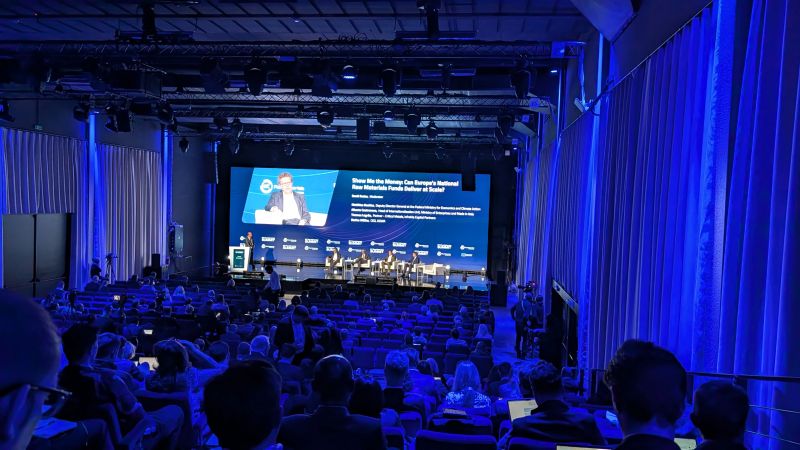
    Europe’s national raw materials funds are moving from commitment to deployment, but significant structural challenges remain between the billions pledged by France, Germany, Italy and the Netherlands and the actual financing of projects that can deliver supply chain security, according to a frank discussion at the EIT Raw Materials Summit in Brussels.

    The session, which brought together fund representatives and industry figures, centred on what participants described as the “valley of death” facing Europe’s raw materials sector — the financing gap between early-stage project development and the bankable infrastructure investments that traditional capital markets are willing to fund.

    A clear consensus emerged on the role these funds should play: catalyst, not replacement. The German and French models in particular emphasise minority positions and the necessity of robust private sector co-investment, with a target ratio of roughly one euro of public money for every euro of private capital. The objective is to de-risk projects sufficiently to attract commercial investors, not to substitute for the market indefinitely. The tension between strategic necessity and commercial viability was acknowledged as genuine: many projects that are vital for European sovereignty are currently un-bankable by conventional metrics, and the funds must navigate the gap between these two realities without becoming permanent subsidies.

    The discussion highlighted fragmentation as a persistent obstacle. Industry developers need a unified “Team Europe” signal — a coherent, harmonised approach across national fund criteria — but the current landscape of diverging eligibility requirements adds complexity and weakens Europe’s ability to compete with the more centralised approaches taken by the United States and China. Moving beyond national silos was identified as essential for credible global competition.

    Participants also flagged the midstream gap as underappreciated relative to its strategic importance. While mining dominates public and political attention, processing and refining capabilities represent a more immediate vulnerability — one that risks being permanently lost to global competitors if investment does not accelerate.

    The overall verdict was cautiously optimistic: the policy phase is over, the tools are in place, and deployment is beginning. Whether Europe moves fast enough will depend on its ability to synchronise national efforts, attract private capital at scale and protect midstream capacity before it disappears.

  • Europe Must Treat Smelting as a National Security Asset and Move 60 Strategic Projects From Paper to Production, Industry Leaders Warn

    Europe Must Treat Smelting as a National Security Asset and Move 60 Strategic Projects From Paper to Production, Industry Leaders Warn

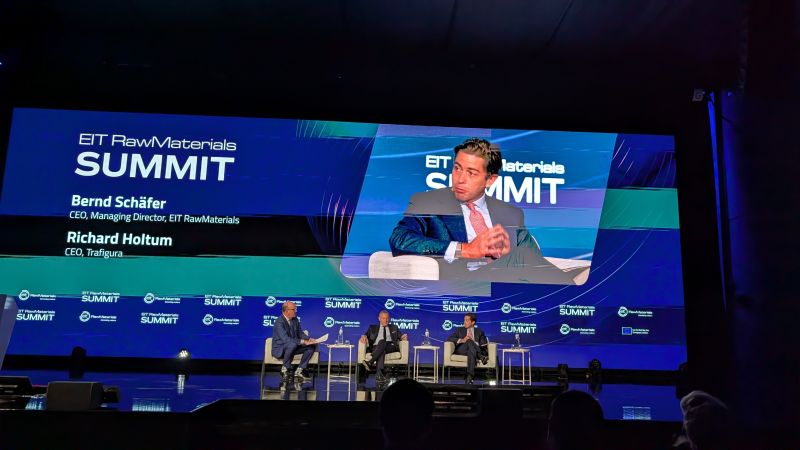
    Europe has built the regulatory architecture for critical minerals security — now it must actually build the infrastructure. That was the central message from a RawMaterials Summit session featuring EIT RawMaterials CEO Bernd Schäfer and Trafigura CEO Richard Holtum, who argued that the continent’s critical minerals strategy is approaching a decisive moment in which continued policy discussion without project delivery will itself become a strategic failure.

    The sharpest reframing offered at the session concerned smelting. Industry leaders argued that midstream processing capacity — smelting, refining, separation — should now be regarded as a pillar of national security comparable to defence capability, not as a commercial infrastructure question to be resolved by market forces. Relying on foreign powers for processing is no longer sustainable, the discussion concluded, and maintaining existing European capacity on what was described as “life support” is insufficient without a funded, long-term plan covering both capital and operating expenditure.

    The discussion pushed back against a tendency to evaluate critical minerals investment through the lens of short-term cost. The true metric, participants argued, is the cost of inaction — the economic and strategic price of failing to build domestic value chains. The American model of socialising capital expenditure to secure strategic advantages was cited as a template Europe needs to study and selectively adopt, prioritising long-term necessity over short-term price volatility.

    On execution, the session drew a clear line between the regulatory phase — now largely complete through instruments such as the Critical Raw Materials Act and various industrial accelerators — and the delivery phase that must define the coming year. A pipeline of more than 60 strategic projects has been identified and designated. The priority is now to move those projects beyond memoranda of understanding and into operational reality. The CRMA’s single-point-of-contact mechanism for strategic projects was identified as a genuine competitive advantage, with continued regulatory harmonisation needed to create the stable and predictable investment environment that long-term capital deployment requires.

    On international partnerships, the conversation reflected an evolution in European strategy beyond simple resource extraction agreements. The current emphasis is on creating local value in partner countries through infrastructure support, energy access, professional training and job creation — an approach framed as essential not only for ethical reasons but for the practical goal of building supply relationships durable enough to underpin multi-decade industrial planning.