Website: Europe.com

  • Poland Eyes Kazakhstan Energy Transition Partnership as Green Technology Companies Seek Foothold in Central Asian Market

    Poland Eyes Kazakhstan Energy Transition Partnership as Green Technology Companies Seek Foothold in Central Asian Market

    Poland sees significant and growing potential for energy sector cooperation with Kazakhstan, with a particular focus on green technologies, renewable energy and environmental infrastructure, according to the head of the Polish Investment and Trade Agency’s foreign trade office in Astana.

    Julia Horodecka told Trend that the Poland-Kazakhstan Business Forum held in Astana on 9 April 2026 drew a large Polish business delegation that included winners of the Ministry of Climate and Environment’s GreenEvo Green Technology Accelerator programme — companies selected for their innovation in sustainable technologies. “This confirms the growing interest in cooperation in this area,” she said.

    Horodecka identified energy efficiency, energy storage and the modernisation of energy infrastructure as the areas attracting the strongest interest from Polish companies, alongside renewable energy projects in wind and solar power. She also highlighted green technology solutions in waste management and water management as rapidly expanding sectors that are becoming an increasingly important part of Kazakhstan’s environmental and energy transition agenda.

    The engagement forms part of a broader deepening of Polish-Kazakhstani economic ties. Poland and the United States signed a critical raw materials memorandum earlier this month, and Poland has been among the European countries most actively building bilateral frameworks with Central Asian nations as the region’s strategic importance in global supply chains and the energy transition grows.

  • Criminal Charges Filed Against Canadian Miner Dundee Precious Metals as Lead Contamination Hits Over 300 Residents Near Bosnia’s Vares Mine

    Criminal Charges Filed Against Canadian Miner Dundee Precious Metals as Lead Contamination Hits Over 300 Residents Near Bosnia’s Vares Mine

    Four Bosnian environmental organisations have filed criminal charges against Canadian mining company Dundee Precious Metals following the discovery of elevated lead levels in the blood of more than 300 residents living near the Vares silver, lead and barite mine in central Bosnia — a development that has thrown the future of a community that had only recently begun to recover from decades of economic decline into serious doubt.

    The charges were filed on Wednesday with the Zenica-Doboj cantonal prosecutors’ office. Environmental group Opstanak (Survival) Vares was among those bringing the case. “We think that the situation is ripe to declare an emergency situation,” the group’s president Miroslav Pejcinovic told Reuters. “Somebody needs to take responsibility.” Charges were also filed against cantonal and regional government ministers accused of failing to act adequately to protect residents.

    The Vares mine opened in 2024 under the ownership of UK-based Adriatic Metals, which was subsequently acquired by Toronto-listed Dundee Precious Metals in September. The mine’s opening had initially brought genuine revival to the small mountain town — new roads, new houses, filled cafes and a growing population of workers and new residents. Blood testing, which DPM agreed to finance in December following an offer by the previous owner, initially covered 44 people living near the processing plant and waste depot, finding elevated lead levels in 17 of them. Subsequent testing by health institutes in Zenica and Sarajevo extended the picture substantially: more than 300 people, including some living further from the mine, were found to have lead in their blood.

    Of 238 blood tests conducted by the Zenica-based Institute for Health and Food Safety, 23% exceeded a danger threshold of 2.8 micrograms per decilitre and 13% surpassed 5 micrograms per decilitre. The Vares health centre said in March that results did not indicate acute lead poisoning but suggested long-term low-intensity exposure to environmental factors. Elevated lead levels can damage the nervous system and brain and cause learning difficulties in children, and doctors note that any level carries risk.

    A complicating factor acknowledged by local officials is that the area has a long history of mining activity, making it difficult to determine whether lead exposure stems from the current operation or from legacy contamination. DPM has joined a working group of town officials and physicians and initiated environmental testing of land, water, agricultural produce and dust around the processing plant and waste depot. The company said it took health and environmental matters seriously and believed issues should be “assessed on the basis of expert analysis, verified data and through the appropriate institutional procedures, without prejudging responsibility.”

    Among those affected is the Ahmedovic family, who live near the processing plant and have invested in cattle and crops through the town’s economic difficulties. After the family — including two children — tested positive for lead and the metal was detected in their cropland, they halted the planting of wheat, vegetables and fruit and are now considering leaving. “Life with lead is not easy,” the mother, Enisa Ahmedovic, said.

    Bosnia’s Federation Prime Minister Nermin Niksic said a government expert group was being formed. “The peoples’ health cannot be endangered because of someone’s negligence, or someone’s investment or someone’s interest,” he said.

  • China’s Zhaojin Mining Eyes West African Acquisitions as US and European Miners Exit and Gold M&A Wave Accelerates

    China’s Zhaojin Mining Eyes West African Acquisitions as US and European Miners Exit and Gold M&A Wave Accelerates

    Chinese gold miner Zhaojin Mining Industry is actively seeking to acquire additional gold mines in Africa and other regions, targeting assets being exited by European and American miners in politically stable West African countries including Côte d’Ivoire, Ghana and Guinea, the company’s chief investment officer has said.

    Speaking in an interview, Xu Jianzhuo said Zhaojin is also evaluating projects in Central Asia and the Asia Pacific as part of a broader international expansion strategy. The company’s first major overseas move came in 2024 with the acquisition of assets in Côte d’Ivoire, where the Abujar mine is on track to produce four to five tonnes of gold this year in line with earlier guidance.

    Zhaojin’s ambitions reflect a wider acceleration in gold sector consolidation. Record gold prices have driven miners globally to step up acquisitions, and Chinese companies have emerged as active participants in the M&A wave. Zijin Mining, Zhaojin’s largest domestic peer, moved earlier this year to acquire Canada’s Allied Gold Corp for $4 billion, adding mines in Mali, Côte d’Ivoire and Ethiopia to its portfolio.

    Xu described the M&A environment as highly active and expected the trend to intensify. “Gold M&As are very active at the moment. The trend will only become stronger. Even under such high gold prices, we still see deals being carried out to boost scale,” he said, adding that post-merger asset disposals by larger miners create additional acquisition opportunities for Chinese firms looking to pick up non-core properties.

    On gold prices, Xu said the recent pullback triggered by the Iran war is likely temporary, with structural drivers including central bank buying and dollar diversification remaining firmly intact.

    Beyond gold, Zhaojin is also building copper exposure, though Xu said the company would approach the industrial metal with caution given its high capital requirements. The focus is on relatively small copper projects in southern African countries including Namibia and Botswana. Zhaojin’s Hong Kong-listed shares have rallied more than 50% over the past year.

  • Cinovec Lithium Project Clears Key EIA Milestone as Czech Ministry Publishes Assessment and Cross-Border Process With Germany Begins

    Cinovec Lithium Project Clears Key EIA Milestone as Czech Ministry Publishes Assessment and Cross-Border Process With Germany Begins

    European Metals Holdings has announced meaningful progress in the environmental permitting of its Cinovec lithium project in the Czech Republic, with the Ministry of Environment completing its review and publishing the full Environmental Impact Assessment — clearing the path for a public hearing to be scheduled in the coming weeks.

    The EIA was submitted on 31 December 2025 and the ministry’s review process is now complete, marking a critical step on the path to final EIA approval. The public consultation phase, which will follow the hearing, is a mandatory prerequisite for the company to access grants from the EU Just Transition Fund and to advance toward a final investment decision.

    European Metals also disclosed that a cross-border EIA process has been initiated for the mining component of the project, reflecting the fact that the Cinovec deposit straddles the Czech-German border. The cross-border assessment will focus specifically on impacts on cross-border hydrology and mine scheduling as they affect German interests. A fully-detailed cross-border hydrological model covering both the Cinovec and neighbouring Zinnwald projects has been prepared jointly by ERM International Group and the Danish Hydraulic Institute. Relevant sections of the Czech EIA have been translated into German and transmitted to the Saxon State Council, with Geomet — the project’s Czech operating subsidiary — having already held a number of meetings with the council to facilitate the process.

    Executive Chairman Keith Coughlan described the ministry’s publication of the EIA as “a critical path item with regards the obtaining of the final EIA approval and progressing the Cinovec Project.”

    Cinovec hosts a measured and indicated mineral resource of 193.5 million tonnes and a proven and probable reserve of 128.1 million tonnes, positioning it as one of Europe’s most significant lithium assets. A final investment decision is expected by the end of 2026, with construction planned for 2027 and first production targeted for 2028.

  • Strickland Metals Faces Drilling Delay at Serbia’s Rogozna Gold Project as Ministry Approvals Stall and Community Protests Intensify

    Strickland Metals Faces Drilling Delay at Serbia’s Rogozna Gold Project as Ministry Approvals Stall and Community Protests Intensify

    Australian miner Strickland Metals has disclosed an unexpected delay to the launch of its exploration drilling programme at the Rogozna gold project in southern Serbia, after the country’s mining ministry has yet to approve expanded drilling work plans submitted more than five months ago.

    Strickland said in an ASX filing on Monday that it is awaiting ministry approval for the expansion of exploration drilling at the main Rogozna licence, which contains the existing Gradina, Shanac, Copper Canyon and Medenovac deposits. The company submitted the relevant approval documents in December 2024, noting that prior approvals have generally been obtained within three months of submission. The ministry had not responded to a request for comment at time of publication.

    The 8.6 million ounce gold equivalent Rogozna project spans approximately 184 square kilometres across four exploration licences. Strickland has said the project could potentially become one of the largest undeveloped gold deposits in the world and is targeting completion of a pre-feasibility study by mid-2027. While awaiting the main licence approval, the company said it has sufficient capacity under existing approved work programmes to proceed with drilling at the Obradov Potok and Jezerska Reka prospects, with preparatory works already underway.

    The permitting delay coincides with growing community opposition to the project. Local media reported protests in Novi Pazar, the city closest to Rogozna, and in recent weeks residents of nearby villages, students and environmental activists have been blocking forest roads leading to the site in an attempt to prevent further exploration activities, which they fear could lead to the opening of a mine with adverse environmental consequences.

    Strickland completed its acquisition of the project through Betoota Holdings and its Serbian subsidiary Zlatna Reka Resources in July 2024. Chinese mining giant Zijin holds a 5.55% stake in Strickland.

  • Cornish Metals Secures $210 Million Bond Financing to Restart Historic South Crofty Tin Mine as AI-Driven Demand Sends Prices Soaring

    Cornish Metals Secures $210 Million Bond Financing to Restart Historic South Crofty Tin Mine as AI-Driven Demand Sends Prices Soaring

    Cornish Metals has secured $210 million in bond financing to fund the restart of the South Crofty tin mine in Cornwall, moving the project closer to a final investment decision this summer after more than a quarter of a century of failed revival attempts at one of Britain’s most historically significant mining sites.

    The six-year bonds carry a fixed annual coupon of 13.5% and attracted strong demand from investors across Europe, North America and international markets. Chief executive Don Turvey said the financing means Cornish “expects to be fully funded” ahead of a final investment decision targeted for this summer. The company also received a non-binding letter of interest from the US Export-Import Bank for up to $225 million tied to future tin concentrate exports to the United States, announced in February.

    The timing is favourable. Tin prices have surged nearly 40% in 2025 and have gained a further 34% so far this year, approaching $54,000 per tonne, driven by rising demand from artificial intelligence infrastructure buildout and electronics manufacturing — sectors that rely heavily on tin for soldering and circuit board production.

    South Crofty operated for more than 400 years before low metal prices forced its closure in 1998. Several subsequent attempts to revive the mine failed before Cornish Metals acquired the project in 2016. The deposit is described by the company as the highest-grade tin project not currently in production, hosting 2.9 million indicated tonnes grading 1.5% tin and 2.63 million inferred tonnes grading 1.42% tin, alongside a near-mine exploration target of between 6 million and 13 million tonnes. A preliminary economic assessment released last year outlined a 14-year mine life with average annual production of 4,700 tonnes of tin and peak output of 5,000 tonnes in year four.

  • North Macedonia’s Antimony Project Divides Communities as US-Backed Critical Minerals Deal Puts Kriva Palanka on the Geopolitical Map

    North Macedonia’s Antimony Project Divides Communities as US-Backed Critical Minerals Deal Puts Kriva Palanka on the Geopolitical Map

    A planned antimony mining project in the Kriva Palanka region of eastern North Macedonia has rapidly evolved from a local planning dispute into a matter of national and geopolitical significance, after a €5 million US-backed financing agreement thrust the country’s critical minerals potential into the international spotlight.

    The funding deal, signed at the headquarters of the US International Development Finance Corporation, involves Pela Global Limited, a company already active in North Macedonia focused on gold, silver and antimony exploration near the Krstov Dol sites and the village of Luke. For the Macedonian government, the agreement represents an opportunity to position the country within the emerging global critical minerals supply chain and deepen integration with European and transatlantic structures. Antimony — used in flame retardants, batteries and a range of high-technology applications — has attracted growing strategic interest as Western governments seek to diversify supply away from China.

    But on the ground in Kriva Palanka, the picture is more complex. Community reactions are divided along familiar lines. Some residents are demanding clarity on what will be mined, how extraction will proceed and what environmental safeguards will apply, with concerns about water contamination, air quality and long-term land degradation prominent in local debate. In the village of Luke itself, however, support for reopening the mines is more pronounced — years of outmigration have hollowed out the local population, and for those who remain, the prospect of stable employment is a practical necessity rather than an abstract promise.

    The Macedonian energy ministry has been careful to frame its role. Officials stressed that North Macedonia is not a direct contracting party to the financing deal but “participates as a witness and partner supporting the process,” and that any mining would be subject to strict environmental standards. The current concession at the Luke site, granted in 2016 to RI Energetika Pela for 30 years, covers lead, zinc, gold, silver and copper but does not currently extend to antimony — meaning a separate permit would be required before any antimony extraction could begin. An adviser at the ministry told local media the project remains in an early exploration phase, with feasibility and profitability assessments still to follow.

    Kriva Palanka mayor Sasko Mitovski has set out a series of conditions he considers non-negotiable: a fully closed production process, no release of harmful substances, and no measurable impact on water, soil or air. He has also called for bank-backed financial guarantees to cover potential environmental damage and emphasised that decisions of this magnitude require broad input from experts, academics, civil society and local communities — not a simple binary vote. A local referendum remains a legal possibility under Macedonian law, though the mayor cautioned it must be grounded in factual and expert evidence rather than political narratives.

    Politics has nonetheless entered the picture. The opposition Social Democratic Union of Macedonia has alleged that companies linked to the project have ties to figures close to the ruling VMRO-DPMNE government led by Prime Minister Hristijan Mickoski — claims that, while unverified, have added to public scepticism in an already polarised environment.

    For many observers, Kriva Palanka has become a test case for whether North Macedonia can manage critical minerals development in a way that is transparent, environmentally responsible and democratically legitimate — or whether it will repeat cycles of industrial promises that generate lasting environmental and social costs.
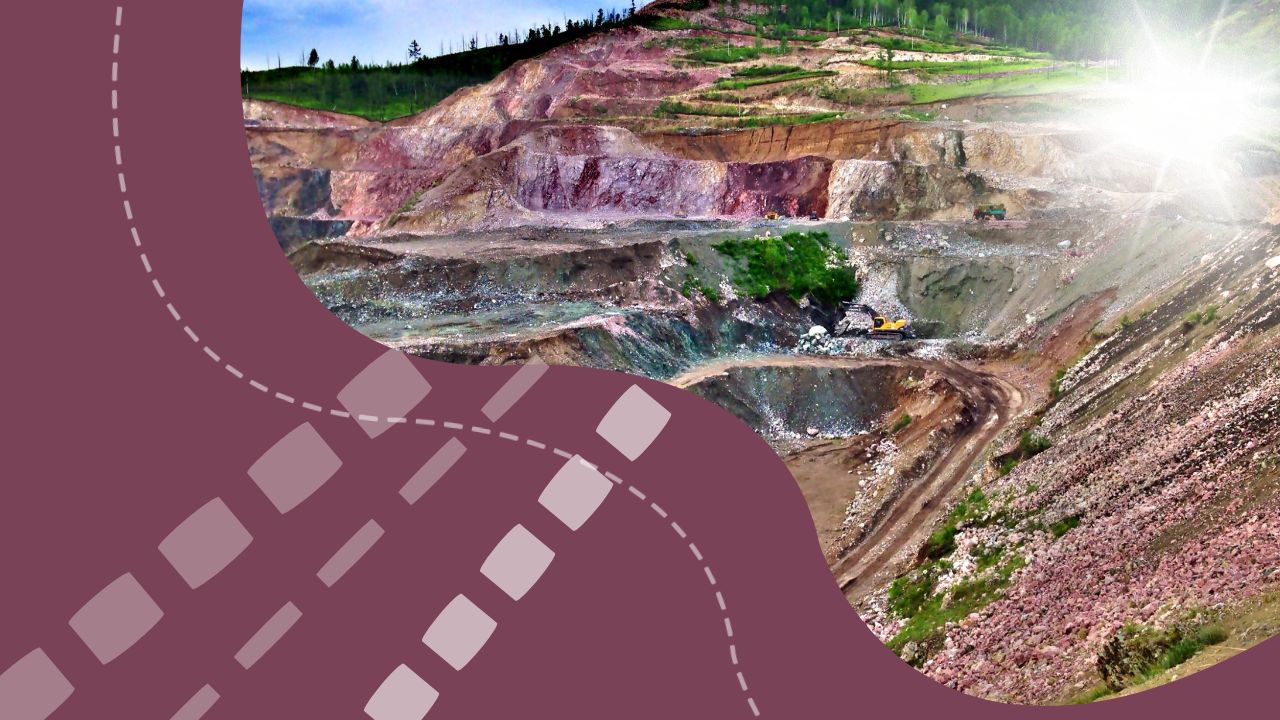

  • Poland and US Sign Critical Raw Materials Agreement Covering Rare Earth Processing, Geological Mapping and Deep-Sea Mining Research

    Poland and US Sign Critical Raw Materials Agreement Covering Rare Earth Processing, Geological Mapping and Deep-Sea Mining Research

    Poland and the United States have signed a strategic memorandum of understanding on critical raw materials, committing both countries to deeper cooperation across the full mineral supply chain from extraction and processing through to recycling, as Washington continues to build out its allied network of mineral partnerships.

    The agreement was signed by Poland’s Chief National Geologist Krzysztof Galos and US Under Secretary of State Allison Hooker, according to the Polish Ministry of Climate and Environment. It covers rare earth metal processing, geological mapping of resources in both countries, investment mobilisation, permitting streamlining and technological innovation — including research into advanced separation techniques and environmentally friendly deep-sea mining methods.

    A central objective of the partnership is supply chain diversification, with both governments explicitly framing the agreement as a tool to prevent mineral access from being weaponised as a form of political pressure. The pact aims to build what the two sides describe as a transparent market and to reduce dependence on single-source suppliers — language that reflects shared concern over China’s dominant position across multiple critical mineral supply chains.

    The agreement also addresses the financial and regulatory barriers that have historically slowed mineral project development, with both governments pledging to mobilise investment support and streamline permitting processes. Beyond primary extraction, the two countries will invest in recycling technologies designed to recover valuable metals from scrap and waste streams, reflecting growing recognition that circular economy approaches must complement new mining in meeting long-term mineral demand.

    Poland’s government described strengthening cooperation with strategic partners as a key national priority, noting that the deal aligns with its national raw materials policy.

  • Portugal Grants Savannah Resources Second Land Easement at Barroso Lithium Site as Village Resistance Intensifies

    Portugal Grants Savannah Resources Second Land Easement at Barroso Lithium Site as Village Resistance Intensifies

    The Portuguese government has granted Savannah Resources a second administrative easement over 24 plots of private and communal land in the Covas do Barroso area of northern Portugal, allowing the British-based mining company to proceed with geotechnical survey work at its contested Barroso lithium project — a decision that has deepened the conflict between the state and local communities defending what is designated a World Agricultural Heritage site.

    The easement, published in the state gazette Diário da República, was declared by the secretary of state for energy and grants Savannah access to the land for a period of one year. The company said the authorisation will allow it to complete geotechnical work to optimise its understanding of the foundations on which processing infrastructure and other facilities for the project’s next phases will be built. CEO Emanuel Proença described it as “another step in the development of the Barroso lithium project” and “a perfectly natural process in the development of any industrial project,” adding that the company would contact all affected landowners to arrange compensation.

    For the Union in Defence of Covas do Barroso, the decision represents another blow in a long campaign against a project they argue threatens their territory, their livelihoods and their legal rights. The group noted that the project involves four open-pit mines, daily water consumption of approximately one million litres, the use of explosives and a 140-metre-high toxic tailings dam. It also recalled that the Portuguese Public Prosecutor’s Office issued an opinion suggesting that the project’s Environmental Impact Statement should be annulled due to legal violations in the public participation process — a view the government has not acted upon. The state’s earlier decision to grant €110 million in public funding to the project drew particular criticism from the group, which described it as a perversion of the public interest in favour of a private company operating on contested land.

    The first administrative easement, granted in 2024, was temporarily halted by a court injunction obtained by villagers, who reported forced entries onto unauthorised areas and the presence of private security guards in the village during early survey work. Whether the community will mount a similar legal challenge to the new easement has not yet been confirmed.

    The project has received a favourable environmental impact declaration from Portugal’s state environment agency APA, subject to a number of conditions, giving it formal regulatory approval despite sustained local opposition. Savannah, which holds confirmed resources at Barroso of over 39 million metric tonnes — the largest lithium deposit in Europe — is targeting a final investment decision by the end of the year with construction planned for 2027 and first production in 2028.

  • US and EU Procurement Rules Are Shifting Rare Earth Buying Decisions Away From China, Lynas CEO Says

    US and EU Procurement Rules Are Shifting Rare Earth Buying Decisions Away From China, Lynas CEO Says

    New government regulations in the United States and European Union are beginning to change purchasing behaviour in the rare earth supply chain, pushing buyers toward non-Chinese suppliers as compliance requirements make sourcing from China increasingly difficult for companies selling into regulated markets, the chief executive of Lynas Rare Earths has said.

    Speaking at an event in Canberra, Lynas CEO Amanda Lacaze said the US is introducing procurement regulations next year that include restrictions on the acquisition of certain magnets, tantalum and tungsten, while the EU is bringing in sourcing restrictions under its critical raw materials framework. “In both cases, we are observing changed purchasing decisions so that consumers can comply with the regulations,” she said.

    The shift comes after years in which convincing international customers to pay more for non-Chinese rare earths proved difficult, despite China’s dominance as the world’s largest and lowest-cost producer of the metals and magnets used across automotive, defence and technology industries. Beijing’s decision to restrict exports of seven rare earth elements last year in response to US tariffs exposed global manufacturers to supply risk and accelerated government-level action to develop alternative supply chains.

    Washington has pledged to support higher prices for domestic and allied rare earth producers to stimulate non-Chinese supply, but regulatory mandates are proving a more immediate catalyst for changed procurement decisions than price signals alone. Lacaze called for governments beyond the US and Japan to go further, advocating for floor prices to be set as a tool to make non-Chinese rare earth production commercially viable at scale. Australia is revising its strategic reserve policies and its resources minister confirmed in March that the reserve will include a floor price element.

    Perth-headquartered Lynas, which operates a processing facility in Malaysia, is the world’s largest rare earth producer outside China and stands to benefit directly from the regulatory-driven shift in buying patterns.