Website: Europe.com

  • CRMA targets in Europe: Overcoming challenges for rare earths and lithium

    CRMA targets in Europe: Overcoming challenges for rare earths and lithium

    EU governments have recently approved domestic European mining and extraction of critical raw materials, despite concerns from environmentalists. The Critical Raw Materials Act (CRMA), proposed by the European Commission in March 2023, aims to reduce reliance on foreign suppliers, particularly China, and ensure a diversified supply chain. This move aligns with the European Green Deal, which aims for carbon neutrality by 2050.

    Under the CRMA, 34 critical and 17 strategic raw materials have been identified as crucial for green technologies, digital transitions, and defence and space industries. The new law establishes the following targets for the EU’s annual raw material consumption:

    1. 10% from local extraction
    2. 40% to be processed within the EU
    3. 25% to come from recycled materials

    Extraction projects will receive permits within a maximum of 27 months while recycling and processing projects should receive permits within 15 months. These materials are urgently needed for industries producing essential goods such as wind turbines, solar panels, electric cars, and computer chips. However, some lawmakers expressed concerns about the lack of explicit mention of community consent near mining sites and the need for stronger provisions related to protected areas. Despite these reservations, the CRMA aims to enhance the EU’s strategic autonomy by reducing dependencies on overseas sources.

  • KGHM Announces Impressive Results for 2023: Effective Production and Strategic Investments

    KGHM Announces Impressive Results for 2023: Effective Production and Strategic Investments

    KGHM, a leading global copper and silver producer, has released its results for the year 2023, highlighting efficient production, increased investments, financial stability, and a commitment to sustainable development.

    In 2023, KGHM exceeded its production targets for copper in concentrate, silver in concentrate, electrolytic copper, and metallic silver. Consolidated revenues of the KGHM Group reached PLN 33.5 billion, with adjusted EBITDA at nearly PLN 5.4 billion and equity of the Group at PLN 26.8 billion.

    Investments in 2023 focused on advancing mining projects, such as connecting the GG-1 shaft to the Rudna mine and commencing preparatory work for the GG-2 shaft. The company also completed work on a Central Air Conditioning System and a Surface-based Air Conditioning Station at the Rudna mine. Additionally, KGHM continued to develop the Żelazny Most Tailings Storage Facility and the Hybrid Smelter program at the Legnica Copper Smelter and Refinery.

    KGHM ended 2023 in a strong financial position, with PLN 33.5 billion in consolidated revenues and a Group operating result of nearly PLN 5.4 billion. Cash and cash equivalents increased by PLN 0.5 billion, and the company maintained a safe level of debt, with net debt/EBITDA at 1.1.

    The company is committed to sustainable development and has enhanced actions related to responsible production. KGHM is advancing its Climate Policy and projects involving energy transformation. By 2030, the company aims to significantly reduce CO2 emissions through the increased use of renewable energy sources.

    KGHM’s safety initiatives include operating under the “Zero harm” principle, employing early warning systems and innovative solutions to improve workplace safety, and conducting over 300 assistance and charitable actions in 2023. The company also commenced a KGHM Academy, which offers preventive programs, workshops, and pro-social actions.

    In summary, KGHM’s 2023 results demonstrate efficient production, increased investments, financial stability, and a commitment to sustainable development, positioning the company for continued success in the global copper and silver markets.

  • Ferrexpo soars higher as exports resume and production climbs

    Ferrexpo soars higher as exports resume and production climbs

    Ferrexpo PLC (LSE:FXPO) shares rocketed 11% higher as production at the Ukraine-based iron pellet maker hit its highest since the Russian invasion, while exports have also resumed from ports in the country.

    Output jumped 203% to 1.8 million tonnes of pellets in the first quarter of this year, though this was still some way short of the 2.8 million tonnes produced before the start of the war.

    Executive chair Lucio Genovese said production improved even though 669 employees are currently serving with the Ukraine military, the most since the outbreak of fighting.

    “It is pleasing that despite facing so many challenges, we are able to report solid production and sales numbers for the quarter,” Genovese said.

    “As long as we believe the level of risk is acceptable, taking into account the ongoing war in Ukraine, we will continue to use all the export capacity available to ensure that we are supporting the interests of all stakeholders.”

    “The ability to export through the Ukrainian Black Sea ports has been positive not just for our production and sales, but also for the morale of our workers. They can sense that the company is working hard to protect their jobs and livelihoods.

    “Although it is positive that we have been able to export through the Black Sea ports, it has not been without its challenges. Logistics have been complex and shipping and insurance costs have increased. As the ports provide access to larger vessels, we have, however, benefited from economies of scale.”

    Ferrexpo shares have been hurt recently by a legal action related to its principal shareholder, billionaire Konstantyin Zhevago, that sparked a provision of £105 million in its recent results.

    Shares were 5.7p up at 53.9p.

  • US and UK Impose Restrictions on Russian Metal Imports Amid Ukraine Conflict

    US and UK Impose Restrictions on Russian Metal Imports Amid Ukraine Conflict

    In a joint effort to disrupt Russian export revenue amidst the ongoing conflict in Ukraine, Washington and London have announced measures prohibiting metal-trading exchanges from accepting new aluminum, copper, and nickel produced by Russia. The move comes as part of broader sanctions targeting key Russian industries following Moscow’s invasion of Ukraine, which has resulted in significant casualties and widespread destruction.

    Russia, a major producer of aluminum, copper, and nickel, stands to be significantly impacted by the restrictions imposed by the United States and the United Kingdom. The measures aim to limit Russia’s ability to finance its military campaign in Ukraine by curbing revenue generated from metal exports.

    Both the US Treasury Department and UK officials emphasized the targeted nature of the sanctions, designed to minimize disruption to global metal markets while effectively restricting new Russian metal production. Existing stocks of Russian metal on global exchanges will be exempt from the restrictions to mitigate potential market instability.

    While bilateral contracts will not be affected by the measures, trading of Russian metals off the exchanges is expected to face discounts, thereby reducing Russia’s revenue from metal exports. The US and UK authorities will closely monitor the trading of Russian metal elsewhere to ensure compliance with the sanctions.

    The action marks the latest escalation in sanctions against Russia by Western nations in response to its invasion of Ukraine in February 2022. The US and UK had previously implemented economic measures targeting the metals and mining sector, with tariffs imposed on Russian metal imports.

  • France Unveils Plans to Revitalize Mining and Renewable Energy Sectors

    France Unveils Plans to Revitalize Mining and Renewable Energy Sectors

    In a bid to reduce dependency on imports and align with climate targets, France announces measures aimed at revitalizing copper mining and expediting lithium and geothermal energy projects. Finance Minister Bruno Le Maire outlined potential steps to streamline research permits for geothermal energy, mining, and carbon storage, with provisions allowing the repurposing of depleted oil and gas wells for carbon storage.

    Speaking at a geothermal drilling site in a Paris suburb, Le Maire emphasized leveraging France’s diverse energy resources, including wind, hydro, biomass, and solar energy, alongside untapped geological assets. The proposed legislation seeks to accelerate the revival of copper mining, halted for over two decades, to meet the rising demand for cables essential in renewable energy infrastructure and cross-border power connections.

    With lithium projects on the horizon, spearheaded by companies like Imerys SA, Eramet SA, and Arverne Group SA, France aims to cover a significant portion of its electric-vehicle battery needs by 2035. The national geothermal action plan, published in 2023, outlines ambitious targets to triple renewable heat production from deep geothermal energy and geothermal heat pumps by 2028 and 2030, respectively.

  • Serbian Women Stage Blockade to Protest Encroaching Mine

    Serbian Women Stage Blockade to Protest Encroaching Mine

    In a small village in eastern Serbia, a group of women has mounted a blockade on a bridge, protesting against an open-pit copper mine that they argue is polluting their land and water. Led by 78-year-old Vukosava Radivojevic, these women take shifts day and night, determined to halt trucks from entering the mine operated by a subsidiary of China’s Zijin Mining.

    The mine, which dominates the village of Krivelj, has triggered concerns among residents about incessant noise, tremors, and pollution. While Zijin has relocated some villagers, those who remain, mostly Vlachs, seek to move collectively, citing environmental degradation and health risks.

    Despite assurances from Zijin’s subsidiary, Serbia Zijin Copper, about addressing environmental issues inherited from previous operators, residents remain adamant about the adverse effects of mining activities. Since Zijin took over operations in 2018, production has quadrupled, exacerbating pollution concerns and causing visible environmental damage.

    The blockade, established in January, has become a symbol of the community’s resistance. For the women involved, it has evolved into a communal space, equipped with heating and amenities, where they find solidarity and support. Their persistence has yielded some concessions, with Zijin agreeing to halt large truck traffic through the village.

    However, the battle is far from over as residents continue to advocate for their relocation to a safer environment. Discussions revolve around establishing a new village while preserving essential community institutions.

    According to a study commissioned by Zijin, published in December, Krivelj’s environment is heavily polluted with lead, arsenic, and cadmium, posing significant health risks. Despite the company’s investments in mitigating environmental impact, concerns persist among villagers regarding their safety and well-being.

  • Ireland Strategic Investment Fund Backs Irish Minerals Fund with €30m Investment

    Ireland Strategic Investment Fund Backs Irish Minerals Fund with €30m Investment

    The Ireland Strategic Investment Fund (ISIF) has revealed a €30 million investment in an Irish fund dedicated to mining ventures. The recipient of ISIF’s investment is the Irish Minerals Fund, supported by Lionhead Resources, a private equity firm specializing in mining investments. The focus of the fund will be to pursue minority stakes in environmentally sustainable mining projects within the Republic of Ireland.

    The Irish Minerals Fund’s investment strategy will prioritize projects with established mineral deposits, particularly those centered around zinc extraction. Nick Ashmore, ISIF’s director, emphasized the significance of the investment in promoting responsible mineral extraction, highlighting its potential to bolster indigenous businesses and create skilled jobs, particularly in rural areas.

    Finance Minister Michael McGrath echoed these sentiments, noting the historical significance of the mining sector in Ireland and the potential for job creation in regional areas.

    Lionhead Resources, based in London and South Africa, specializes in investments that support the transition to a low-carbon economy and the needs of a rapidly urbanizing global population.

    The investment coincides with the European Union’s recent approval of the Critical Raw Materials Act (CRMA), aimed at reducing dependence on Chinese dominance in critical mineral supply chains, particularly for technologies essential to energy transition such as electric vehicles and renewable energy.

  • Vulcan Energy Initiates Local Lithium Production in Germany

    Vulcan Energy Initiates Local Lithium Production in Germany

    Vulcan Energy, a lithium supplier, has commenced the production of lithium chloride at its extraction plant in Germany, marking a significant milestone in producing battery-grade lithium hydroxide. The CEO, Cris Moreno, highlighted the historic achievement, emphasizing that it is the first locally produced lithium resource in Germany.

    With licenses covering over 1,000 kilometers of land in Germany’s Upper Rhine Valley region, Vulcan Energy is tapping into super-hot lithium-rich brine from underground reservoirs, utilizing geothermal energy to extract lithium. This innovative approach aligns with the European Union’s targets for sourcing critical metals needed for its green transition.

    Acknowledging the importance of securing access to critical raw materials, the German government has established a 1.1 billion-euro investment fund, reinforcing the nation’s commitment to high-tech and green projects, as announced by Vulcan Energy in February.

    Vulcan Energy, with offtake agreements with major automakers like Volkswagen, Stellantis, and Renault, has seen promising results from its lithium extraction optimization plant in Landau, Germany. The company is now gearing up for the conversion of lithium chloride into battery-grade lithium hydroxide at its new plant in Frankfurt.

    Looking ahead, Vulcan Energy aims to commission its first large-scale industrial plant by the end of 2026, with an expected annual output capable of powering 500,000 electric vehicles. Moreno expressed optimism about closing the financing for this ambitious project in the coming months.

    In February, Vulcan Energy received preliminary approval from the European Investment Bank (EIB) for debt financing of up to 500 million euros, signaling further support for its endeavors in the lithium production sector.

  • Uranium Exploration in Albania: Challenges and Consequences

    Uranium Exploration in Albania: Challenges and Consequences

    Collaborating with Chinese experts, research endeavors commenced in Nimçë, Kukës, and Muhur, Dibra. Despite encountering low exploitation prospects and challenging ore conditions, workers successfully reached their goal. Periodic reports detailing the research findings were submitted to the prime minister.

    “The results were reported to the Prime Minister by the expedition leaders… We aimed to establish the presence of such mineralization in Albania, which we achieved,” stated Gezim Shima, a geologist.

    “In Albania, we have Nimçen with industrial conditions but with very low reserves… we also have uranium in the phosphorite of Fushë Vardë and in the phosphorite of Guzmar,” revealed Qerim Ismeni, a metallurgist and environmentalist.

    Special devices were employed for the search, detecting radiation in the area, a clear indication of uranium presence, according to experts.

    “In all uranium-related facilities, discoveries are made by measuring radiation and through chemical analysis,” explained Qerim Ismeni.

    While the exploration met its objective of locating ore, the conditions were challenging, with few reserves. After an extensive research period, operations ceased. Today, the surviving mine workers can be counted on one hand, with irreparable health consequences.

    “The number of Nimçe workers still alive is almost… unfortunately, many have passed away at the age of 55,” lamented Qerim Ismeni.

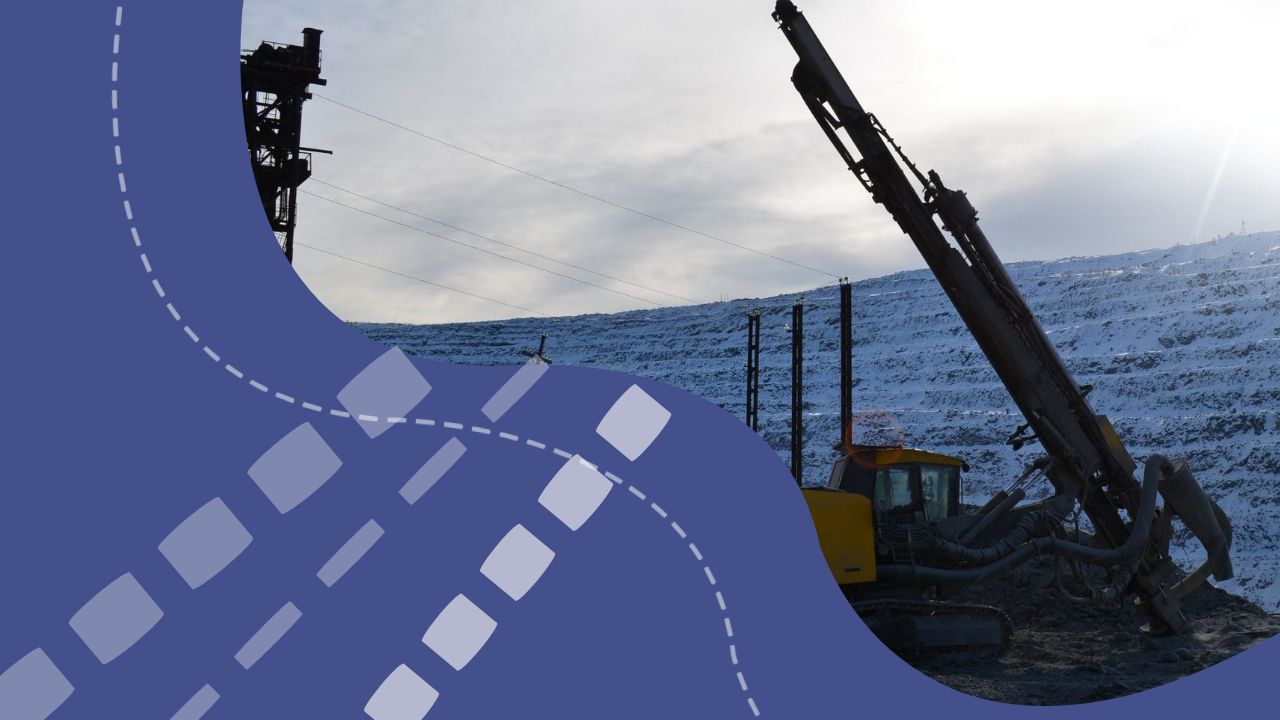
  • In Pit Crushing & Conveying (IPCC) and material handling system contract for TAKRAF in Guinea

    In Pit Crushing & Conveying (IPCC) and material handling system contract for TAKRAF in Guinea

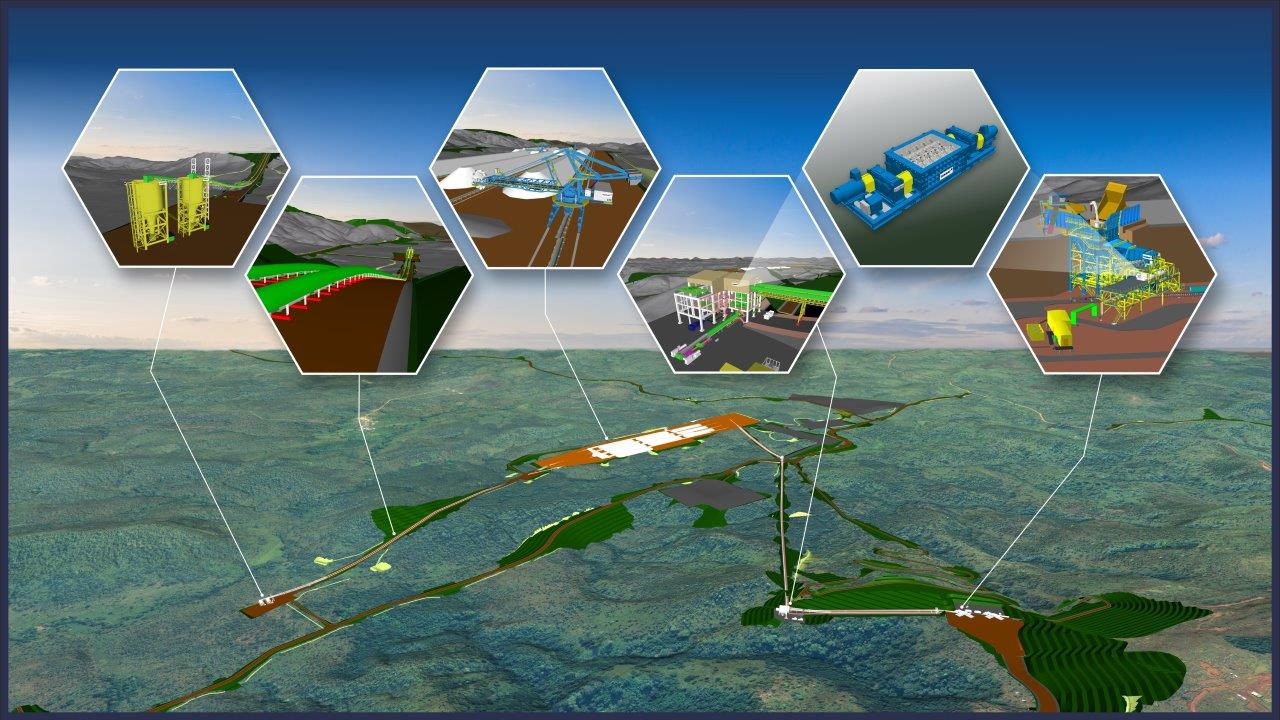
    The Simandou iron ore project is one of the largest unexploited high-grade iron ore deposits in the world. With the project’s development reaching an important milestone in March this year, the project’s partners have been able to kick off with development work, including support from the government of Guinea with defined requirements for the start of production.

    The contract entails the design, fabrication and delivery of an advanced and integrated IPCC and material handling system.

    Highlights include:

    • Two primary IPCC systems incorporating two TAKRAF X-TREME class sizers to crush extracted ore received by truck
    • A secondary In Pit Secondary Crushing & Conveying (IPSCC) system incorporating four TAKRAF sizers for further ore processing
    • Two rail mounted stackers for ore stockpiling
    • Two rail mounted reclaimers for ore reclaiming
    • Two wagon loading stations with buffer silos
    • A complex conveyor system with transfer stations for the above equipment, including a technically sophisticated long downhill conveyor between the secondary IPSCC system and the stockyard
    • Electrical and control equipment and stockyard auxiliaries

    In order to achieve the desired annual production rate the crushing system has been sized with a design capacity of up to 13,200 t/h. Please read more: In Pit Crushing & Conveying (IPCC) and material handling system contract for TAKRAF in Guinea – TAKRAF GmbH