Website: Asia.com

  • U.S. and Kazakhstan Forge Joint Venture to Secure Global Tungsten Supply

    U.S. and Kazakhstan Forge Joint Venture to Secure Global Tungsten Supply

    Following the announcement of the joint venture between US-based Cove Capital LLC and Kazakhstan’s National Mining Company, JSC Tau-Ken Samruk, further details have emerged regarding the development timeline and scale of the Northern Katpar and Upper Kairakty tungsten projects.

    Cove Kaz Capital Group LLC (“Cove Kaz”), a portfolio company of U.S.-based Cove Capital LLC, will hold a 70 per cent interest, with Tau-Ken Samruk retaining 30 per cent ownership of Severniy Katpar LLP, which owns the Northern Katpar and Upper Kairakty tungsten projects.

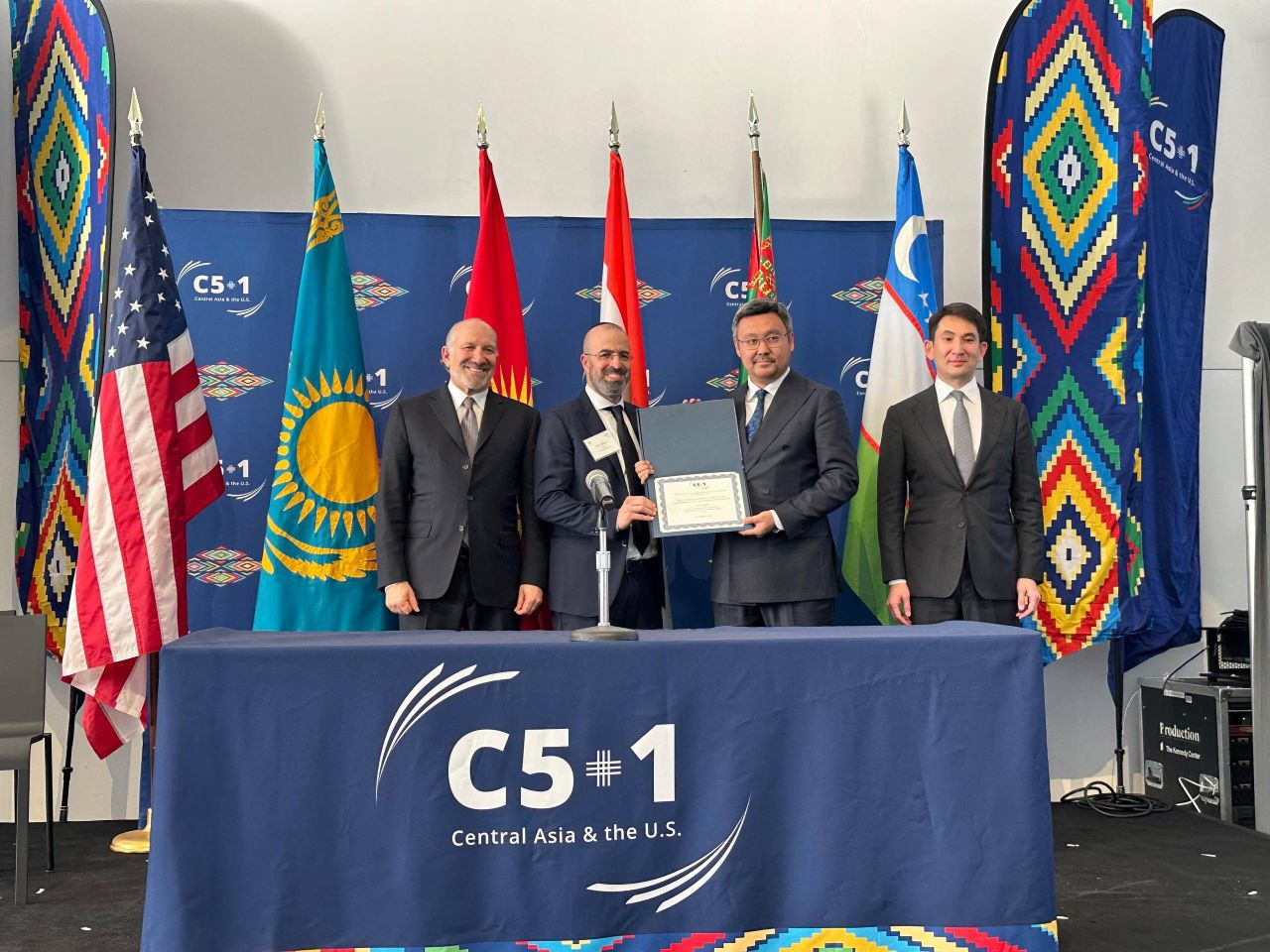
    Cove Kaz will oversee marketing of 100 per cent of project output and has entered into a Letter of Intent with the International Trade Administration at the U.S. Department of Commerce to prioritise supply for U.S. government and commercial needs.

    The announcement was made in Washington, D.C., during the C5+1 Leaders’ Summit by U.S. President Donald J. Trump and Kazakhstan President Kassym-Jomart Tokayev.

    Total development costs for the Northern Katpar and Upper Kairakty projects are estimated at USD $1.1 billion. The Export-Import Bank of the United States has issued a Letter of Interest for USD $900 million in financing, complemented by a similar commitment from the U.S. International Development Finance Corporation.

    Cove Kaz’s project team will be led by Dominic Heaton, who previously oversaw development of the Nui Phao integrated tungsten mine and refinery in Vietnam – the world’s largest tungsten operation outside China. Preparatory work has already commenced to support a Definitive Feasibility Study for Northern Katpar, including the establishment of downstream refining capacity in Kazakhstan to produce ammonium paratungstate (APT) and other tungsten compounds.

    Pini Althaus, Chief Executive Officer of Cove Capital and Cove Kaz Capital, expressed gratitude for U.S. and Kazakh government support:

    “On behalf of Cove Capital and Cove Kaz, I wish to thank President Donald J. Trump, Secretary of Commerce Howard Lutnick, and the U.S. Trade Advocacy Center for their exceptional engagement. Their efforts have aligned financing, offtake pathways, and policy support to deliver a secure, allied tungsten supply for America’s industrial and defence needs.

    “I also wish to thank President Kassym-Jomart Tokayev for his leadership and partnership. This collaboration is a win for both nations—strengthening U.S. supply chains while fostering investment and long-term prosperity in Kazakhstan.”

    Tungsten – A Critical Industrial and Defence Mineral

    Tungsten is ranked by the U.S. Defense Logistics Agency as a “material of interest” and by the European Union as the raw material of highest economic importance due to its unique physical properties: the highest tensile strength at high temperatures, the highest melting point of any metal, and exceptional corrosion resistance.

    Its density and durability make tungsten indispensable in high-performance cutting and drilling tools, aerospace alloys, semiconductor contacts, and radiation shielding. In defence applications, tungsten is used in armour-piercing munitions, missile components, aircraft ballast, and other high-stress environments.

    Currently, China controls over 80 per cent of global tungsten production and processing. In February 2025, China imposed new export restrictions on tungsten and tungsten-containing products to the United States.

    Severniy Katpar LLP

    Severniy Katpar LLP holds licences for two projects—Northern Katpar and Upper Kairakty—located approximately 30 kilometres apart in the established Karaganda mining district of central Kazakhstan, less than 160 kilometres south of the city of Karaganda.

    Feasibility studies completed in April 2023 report total JORC-compliant mineral resources of 1.4 million tonnes of tungsten trioxide (WO₃), accounting for around 70 per cent of Kazakhstan’s total tungsten resources. For comparison, the U.S. Geological Survey estimates China’s reserves at 2.4 million tonnes.

    Combined production from both projects is expected to reach 12,000 metric tonnes per annum (mtpa) of tungsten trioxide—approximately 15 per cent of current global output.

    Cove Capital’s Broader Commitment in Kazakhstan

    Cove Capital’s portfolio company, Kaz Resources LLC, became in 2023 the first U.S. entity to receive critical minerals and rare earth concessions in Kazakhstan. These include licences for 13 minerals such as lithium, tantalum, beryllium, niobium, and rare earth elements.

    In 2024, Cove Capital and Tau-Ken Samruk formalised a joint venture for exploration of rare earths at the Akbulak project in the Kostanay region, with Cove holding 75 per cent and “Qazgeology” JSC 25 per cent. Cove is fully financing exploration activities until reserves are booked.

    About Cove Capital LLC

    Founded in 2015, Cove Capital is a mining-focused investment and development firm headquartered in New York and Melbourne. Since 2018, the company has focused on critical minerals projects that enhance U.S. and allied supply chains. Led by CEO Pini Althaus, Cove Capital brings extensive expertise across exploration, mining, processing, and offtake structuring.

    About Tau-Ken Samruk

    Tau-Ken Samruk, Kazakhstan’s national mining company, manages the sustainable development of the nation’s mineral wealth. Through partnerships with international investors, it aims to strengthen Kazakhstan’s mining sector and support the country’s long-term economic growth.

  • Trump Hails “Incredible $100 Billion Deal” Between the U.S. and Uzbekistan

    Trump Hails “Incredible $100 Billion Deal” Between the U.S. and Uzbekistan

    The United States and Uzbekistan have signed a series of major agreements covering critical minerals, agriculture, infrastructure, aviation, and technology, marking what U.S. President Donald Trump called an “incredible trade and economic deal worth $100 billion.”

    The signing ceremony took place on November 6 in Washington, D.C., following a business roundtable attended by Uzbek President Shavkat Mirziyoyev and U.S. Secretary of Commerce Howard Lutnick. The deals involve both government bodies and major American corporations, signaling a new phase of strategic economic cooperation between the two nations.


    Key Agreements Signed

    • Rare Earth Elements Cooperation:
      Agreement between the Uzbek Ministry of Geology and Denali Exploration Group on the exploration and production of rare earth elements.

    • Critical Minerals Projects:
      The Uzbek Reconstruction and Development Fund signed an accord with Re Element Technologies to develop rare earth and critical metals projects.

    • Pumping Station Modernization:
      Partnership between the Ministry of Investment, Industry, and Trade and Flowserve Corporation to modernize Uzbekistan’s water infrastructure.

    • Water-Saving Technologies:
      Agreement between the Ministry of Agriculture and Valmont Industries Inc. on implementing advanced irrigation and water-efficient technologies.

    • Artificial Intelligence Cooperation:
      Memorandum between the Ministry of Digital Technologies and Palo Alto Networks to expand collaboration in artificial intelligence and cybersecurity.

    • Aviation Contract:
      Uzbekistan Airways signed a major expansion deal with Boeing, increasing its firm order for 787-9 Dreamliner aircraft from 14 to 22 jets.

    • Agricultural Trade:

      • Contract between Datacrop (Uzbekistan) and Louis Dreyfus Company (U.S.) for the supply of soybeans and soybean meal.

      • Agreement between Uzsanatexport and Cargill for the supply of cotton.


    Trump’s Statement

    On his Truth Social page, President Donald Trump announced the deal, calling it “one of the most significant trade achievements” between the two countries:

    “I am pleased to announce an incredible trade and economic agreement between the United States and Uzbekistan. Over the next three years, Uzbekistan will purchase and invest nearly $35 billion, and over the following decade more than $100 billion, in key U.S. industries including critical minerals, aviation, automotive components, infrastructure, agriculture, energy, chemicals, and information technology,” Trump wrote.

    He also thanked President Shavkat Mirziyoyev for his leadership and partnership:

    “I want to thank the highly respected President of Uzbekistan, Shavkat Mirziyoyev. We look forward to a long and fruitful relationship between our nations.”


    Strategic Context

    The landmark agreements underline Uzbekistan’s expanding cooperation with U.S. industries as it pursues rapid modernization across its energy, mining, and technology sectors.

    For Washington, the deal strengthens access to critical raw materials such as rare earths and lithium, aligning with broader U.S. efforts to diversify supply chains away from China.

  • Uzbek President Mirziyoyev Meets U.S. Business Leaders in Washington to Deepen Economic Partnership

    Uzbek President Mirziyoyev Meets U.S. Business Leaders in Washington to Deepen Economic Partnership

    At the conclusion of his working visit to Washington, D.C., President of Uzbekistan Shavkat Mirziyoyev met with representatives of major U.S. corporations, investment funds, and financial institutions to discuss expanding economic cooperation between the two countries.

    The meeting was attended by U.S. Secretary of Commerce Howard Lutnick, Special Assistant to the President Ricky Gill, Special Envoy Paolo Zampolli, and Deputy Secretary of Agriculture Stephen Vaden. Senior executives from leading American companies — including Traxys, FLSmidth, McKinsey, Meta, Google, Amazon, Boeing, Air Products, Axiom Space, Cove Capital, Freeport-McMoRan, Orion CMC, Cargill Cotton, John Deere, Honeywell, Valmont Industries, and Flowserve Corporation — also took part in the discussions.

    President Mirziyoyev highlighted that trade turnover between Uzbekistan and the United States has quadrupled over the past eight years, with more than 300 American companies now operating in Uzbekistan. He emphasized that this growth marks only the beginning of a new stage in bilateral cooperation, and that specific projects would be further discussed during his upcoming meeting with U.S. President Donald Trump.

    The Uzbek leader outlined priority areas for strategic partnership, including renewable energy, critical minerals, and digital transformation. By 2030, Uzbekistan aims to build a next-generation energy system with 18–20 gigawatts of renewable capacity, generating more than half of its electricity from solar and wind sources.

    In partnership with the United States, Uzbekistan plans to develop extraction and advanced processing of uranium, copper, tungsten, molybdenum, and graphite, establishing secure supply chains and adopting U.S. technologies in resource processing.

    The President also highlighted Uzbekistan’s ambitious transport infrastructure modernization program, with $12 billion in planned investments by 2030 to upgrade roads, railways, terminals, and airports.

    Digital cooperation is also expanding through joint initiatives with Google, Meta, and NVIDIA, including the launch of Apple Pay and Google Pay, the creation of a Digital Academy, and a nationwide startup hub network.

    Financial support for these initiatives will involve the U.S. International Development Finance Corporation (DFC) and the U.S. Export-Import Bank (Exim Bank).

    Concluding the meeting, President Mirziyoyev reaffirmed Uzbekistan’s commitment to support American investors and maintain the country’s reputation as a reliable and stable partner.

    “Uzbekistan remains a dependable partner and a guarantor of success for foreign investors,” the President said.

  • Turkey’s Miryildiz Mining to Launch Gold and Copper Production in Kazakhstan by 2026

    Turkey’s Miryildiz Mining to Launch Gold and Copper Production in Kazakhstan by 2026

    Turkish mining company Miryildiz Mining plans to begin gold and copper production in Kazakhstan by late 2026, the company’s CEO Emrah Erdem announced at the Kazakhstan Global Investment Roundtable (KGIR).

    “We are engaged in gold and copper mining. Our plants in Turkey have been operating for nearly ten years. I hope that by the end of 2026, we will start gold production in Kazakhstan,” Erdem said.

    According to him, Miryildiz Mining is currently working in cooperation with the Development Bank of Kazakhstan (DBK), a subsidiary of the Baiterek Holding.

    The company operates in five countries, extracting gold, copper, chromium, and other metals, with Turkey remaining its primary market. It produces around 1 million tonnes of copper ore annually.

    “We have now set targets for copper mining in Kazakhstan,” Erdem said, adding that the company sees strong potential for copper extraction in East Kazakhstan, particularly in the Abai and Pavlodar regions.

    He also highlighted promising opportunities in the gold and rare earth metals sectors, noting Kazakhstan’s untapped mineral wealth.

    $482 Million Mining and Processing Project

    Earlier this year, Miryildiz Mining presented a $482 million project to construct a mining and processing complex (MPC) in the Zhanan-Boko-Zaisan gold ore zone to Abai Region Governor Berik Uali. The facility is expected to employ around 2,000 workers.

    The company has already completed geological exploration and purchased some of the necessary extraction and ore-processing equipment.

    Global Footprint

    Miryildiz Mining holds over 100 exploration and production licenses worldwide and is active in Central African Republic (CAR)Sierra Leone, and The Gambia, where it is also building a gold mining operation.

    In Kazakhstan, its subsidiary MIRYILDIZ KZ Ltd plans to conduct metal exploration at the Takyr site in the Zhetysu and Abai regions between 2025 and 2030.

    Market Context

    The company’s expansion comes amid record-high commodity prices — copper surpassed $11,000 per tonne, and gold exceeded $4,000 per ounce in 2025 — boosting investment in mining and geological exploration across the sector.

  • Sarytogan Graphite Secures $1.4 Million Top-Up from EBRD to Advance Definitive Feasibility Study

    Sarytogan Graphite Secures $1.4 Million Top-Up from EBRD to Advance Definitive Feasibility Study

    Sarytogan Graphite Limited (ASX: SGA), a key player in the mining industry specializing in natural graphite extraction, has announced a $1.4 million top-up placement from the European Bank for Reconstruction and Development (EBRD). This follows a previous $5 million investment, bringing EBRD’s total investment in the company to $6.4 million. The funding is part of a broader package aimed at supporting Sarytogan’s Definitive Feasibility Study, which is on track for completion by mid-2026.

    The additional investment will increase EBRD’s shareholding in Sarytogan Graphite Limited from 17.3% to 19.99%. This increased stake reflects the EBRD’s confidence in the company’s operations and its strategic positioning in the critical raw materials market.

    Sarytogan’s primary project, the Sarytogan Graphite Deposit located in the Karaganda region of Central Kazakhstan, is recognized as a Strategic Project under the European Union’s Critical Raw Materials Act. This designation underscores the project’s importance in supplying sustainable critical raw materials, particularly for battery production and other strategic uses.

    The company’s focus on sustainable mining practices and its strategic location make it a vital player in the global supply chain for critical raw materials. The completion of the Definitive Feasibility Study will be a significant milestone, providing a clearer picture of the project’s potential and its role in meeting the growing demand for graphite in various industries.

  • Kazakhstan and the US Ink Critical Minerals Agreement

    Kazakhstan and the US Ink Critical Minerals Agreement

    A memorandum of understanding (MOU) on critical minerals was signed by Kazakhstan, the world’s leading uranium producer, and the United States government. The agreement was formalised by Yersayin Nagaspayev, Kazakhstan’s Minister of Industry and Construction, and U.S. Secretary of Commerce Howard Lutnick during a Washington meeting, as announced by the Press Office of the President of Kazakhstan on Thursday.

    The signing followed a meeting between Tokayev and U.S. administration officials, including Secretary of State Marco Rubio and Special Envoy for South and Central Asian Affairs Sergio Gor. In a separate statement, Tokayev highlighted the “excellent opportunities” for enhancing the strategic partnership between Kazakhstan and the U.S. through economic cooperation.

    Strategic Rare Earth Ventures

    The MOU signing marks another strategic move by the U.S. to secure future supplies of rare earth elements, aiming to reduce China’s dominance in this sector. Kazakhstan, largely unexplored, presents a promising opportunity. Earlier this year, the deputy chairman of Kazakhstan’s industry and construction ministry noted the nation’s “promising reserves” of rare earth minerals, suggesting it could become one of the world’s top 10 producers if forecasts are confirmed. This is supported by the discovery of the substantial Kuyrektykol deposit, which, if verified, would place Kazakhstan behind only China and Brazil in reserve size.

    According to official geologic data, Kazakhstan has over 980 solid mineral deposits. Since 2018, it has issued 2,906 exploration licenses and 111 production licenses, with only a dozen sites currently under exploration. Over the past five years, Kazakhstan has attracted about $1 billion in private investment into the mining sector.

    U.S. Investment and Tungsten Reserves

    U.S. investors are taking notice. In March, New York-based private equity firm Cove Capital formed a joint venture with JSC Qazgeology, Kazakhstan’s national geological exploration company, to advance the Akbulak Rare Earth Project in the Kostanay region. This project involves geological surveys, feasibility studies, and exploration work, with Akbulak hosting a historical resource of 380,000 tonnes of rare earth oxides, including neodymium and praseodymium.

    The Trump administration has been strengthening ties with Kazakhstan for some time. In September, the Commerce Department assisted Pittsburgh-based manufacturer Wabtec in securing a $4.2 billion locomotive order.

    Although Kazakhstan is not ranked by the U.S. Geological Survey among the top countries for recoverable tungsten deposits, it is estimated to have over 2 million tonnes of the mineral in reserve. China currently accounts for about 80% of global tungsten concentrate production, according to U.S. Geological Survey data.

  • Kazakhstan Confirms Central Asia–U.S. Summit in Washington on November 6

    Kazakhstan Confirms Central Asia–U.S. Summit in Washington on November 6

    Kazakhstan’s presidency has confirmed that a Central Asia–United States summit will take place in Washington, D.C., on November 6, bringing together the leaders of the C5+1 format — the United States and the five Central Asian nations: Kazakhstan, Kyrgyzstan, Tajikistan, Turkmenistan, and Uzbekistan.

    According to the press office of President Kassym-Jomart Tokayev, the Kazakh leader sent a letter of gratitude to U.S. President Donald Trump for the invitation to participate in the summit. Tokayev described the initiative as both “timely and important,” emphasizing that he shares Trump’s key domestic and foreign policy principles, including the promotion of traditional values, common sense, and global peace and security.

    The upcoming gathering will coincide with the tenth anniversary of the C5+1 diplomatic platform, launched in 2015 to strengthen regional cooperation and deepen U.S.–Central Asia engagement in areas such as energy security, trade, counterterrorism, and sustainable development.

    Regional media have confirmed participation from other Central Asian heads of state. Uzbek outlet Gazeta.uz reported that President Shavkat Mirziyoyev has received an invitation, while Kyrgyz media stated that President Sadyr Japarov will also attend. Invitations have reportedly been extended to all five Central Asian leaders, according to Azattyq.

    The announcement follows recent visits to Kazakhstan and Uzbekistan by U.S. Special Envoy for South and Central Asia Sergio Gor and Deputy Secretary of State Christopher Landau, underscoring Washington’s renewed diplomatic focus on the region.

    President Trump met both Tokayev and Mirziyoyev during the U.N. General Assembly last month in New York, where several multi-billion-dollar business deals were announced. Analysts suggest the upcoming summit aims to counterbalance the influence of Russia and China in Central Asia amid heightened global competition for access to the region’s critical minerals and strategic trade routes.

    In an October 20 letter, members of the U.S. House Foreign Affairs Committee urged President Trump to host the C5+1 summit before the end of the year. The letter highlighted U.S. strategic interests in developing regional critical mineral supply chains—notably tungsten, antimony, lithium, and rare earth elements—as well as advancing trade liberalization through the repeal of the Jackson-Vanik amendment and bolstering counterterrorism cooperation against the regional branch of the Islamic State group.

    The Washington summit is expected to mark a major step in U.S. efforts to strengthen political and economic ties with Central Asia, promote regional resilience, and enhance collaboration in energy, defense, and raw materials security.

  • Putin Orders Roadmap for Russia’s Rare-Earth Extraction as Global Competition Intensifies

    Putin Orders Roadmap for Russia’s Rare-Earth Extraction as Global Competition Intensifies

    Russian President Vladimir Putin has instructed his cabinet to develop a national roadmap for rare-earth mineral extraction by December 1, as global competition for critical raw materials intensifies and countries seek to reduce dependence on China’s near-monopoly in the sector.

    The directive, published Tuesday on the Kremlin’s website, also calls for the expansion of transport and logistics infrastructure at Russia’s borders with China and North Korea, including multimodal hubs and new railway links.

    Rare-earth elements—vital for smartphones, electric vehicles, wind turbines, and advanced weapons systems—have become a major point of strategic rivalry between the world’s largest economies.

    In April, U.S. President Donald Trump and Ukrainian President Volodymyr Zelenskyy signed an agreement granting the United States preferential access to Ukraine’s mineral resources and supporting U.S. investment in reconstruction projects. Moscow has since said it is also open to cooperation with the U.S. on rare-earth projects, though political and diplomatic tensions stemming from Russia’s ongoing war in Ukraine have stalled progress.

    Earlier this year, Kirill Dmitriev, Putin’s investment envoy, said U.S. firms had shown interest in Russian rare-earth ventures, but talks remain at an exploratory stage.

    Meanwhile, China, which dominates the global rare-earth supply chain, has tightened export controls in retaliation against Western tariffs, pushing Washington and its allies to accelerate domestic and alternative sources of supply.

    Putin’s order stems from discussions at the Far Eastern Economic Forum in Vladivostok in September, where he emphasized the strategic importance of developing Russia’s Far East as a resource and transport hub connecting Asia and Europe.

    According to the U.S. Geological Survey (USGS), Russia’s known rare-earth reserves total about 3.8 million tonnes, though Moscow claims much higher figures. The Russian Natural Resources Ministry estimates 28.7 million tonnes of reserves across 15 different rare-earth metals as of January 2023. Even by Moscow’s count, however, Russia’s share remains relatively small compared to China’s dominant position.

    Putin also ordered the construction of new multimodal transport and logistics centers along the country’s borders with China and North Korea, including upgrades to two existing railway bridges and the completion of a new bridge to North Korea by 2026.

    Both China and North Korea have deepened economic cooperation with Russia amid Western sanctions, making regional integration and resource development key components of Moscow’s broader pivot to Asia strategy.

  • Ferro-Alloy Resources Secures Major Cost Savings and Financing Boost for Kazakhstan Vanadium Project

    Ferro-Alloy Resources Secures Major Cost Savings and Financing Boost for Kazakhstan Vanadium Project

    Ferro-Alloy Resources Ltd (LSE: FAR) saw its shares surge 13% to 6.21p after announcing substantial cost reductions and a financing breakthrough for its flagship Balasausqandiq vanadium project in southern Kazakhstan.

    The AIM-listed mining company has signed an agreement with China National Chemical Engineering Sixth Construction (CC6) — one of the world’s top industrial contractors — for front-end engineering and design (FEED) work on the project.

    According to the company, CC6 has provided an indicative construction cost of $261 million, cutting the total funding requirement to $311.9 million — about 40% lower than previously estimated in the project’s feasibility study.

    The revised figures have significantly improved project economics, boosting Balasausqandiq’s post-tax internal rate of return (IRR) to 31% and its net present value (NPV) to $931.6 million.

    Adding to the positive momentum, CC6 has arranged a conditional, non-binding loan offer worth $221.8 million from the Bank of Communications (Hubei Branch), covering 85% of CC6’s construction scope.

    Discussions are also under way with Sinosure, China’s export credit agency, which could provide loan guarantees to reduce borrowing costs.

    “This partnership with CC6 demonstrates the potential to significantly enhance the project’s financial returns,” said Nick Bridgen, CEO of Ferro-Alloy Resources. “It also strengthens our path to production and positions Balasausqandiq as one of the most competitive vanadium operations globally.”

    The company is now in talks with potential strategic investors to fund the project’s equity component, while CC6’s FEED work — expected to last six months — will be followed by a final engineering, procurement and construction (EPC) contract once costs are finalized.

  • Zijin Mining Expands in Kazakhstan, Sees Over 200 Tonnes of Gold Potential at Raigorodok Deposit

    Zijin Mining Expands in Kazakhstan, Sees Over 200 Tonnes of Gold Potential at Raigorodok Deposit

    Chinese mining giant Zijin Gold International, a subsidiary of Zijin Mining Group, expects gold reserves at Kazakhstan’s Raigorodok deposit to exceed 200 tonnes, citing advanced recovery technology and favorable market conditions. The statement follows the company’s $1.008 billion acquisition of RG Gold, which owns the mining rights to Raigorodok — one of the largest active gold deposits in Kazakhstan’s Akmola region.

    The deal was finalized in mid-October, according to reports by inbusiness.kz. Initially valued at $1.2 billion, the final amount was adjusted due to existing liabilities. Zijin Mining, which raised $3.9 billion through a Hong Kong IPO in September, confirmed plans to invest an additional $500 million to build a new processing plant capable of treating 6–8 million tonnes of ore annually. The project is expected to create over 1,000 new jobs.

    Speaking at Kazakhstan Day, held during the China Mining 2025 exhibition in Tianjin, Liao Jiansheng, head of Zijin Eurasia Mining, said the company intends to make Raigorodok a model for green and high-tech gold mining. He emphasized that Zijin’s advanced extraction methods could increase gold recovery to more than 90%, significantly expanding proven resources.

    “The current plant and management are good, and local employees are highly skilled,” Liao said. “We’ll introduce our technologies carefully, ensuring a smooth transition. For us, this project is a shared success — both for Kazakhstan and Zijin.”

    Zijin plans to maintain compliance with Kazakh labor and investment laws, limiting the number of foreign specialists to the legal quota and prioritizing local employment. During the plant’s reconstruction phase, temporary Chinese technical experts will assist in modernization.

    The company holds a mining license valid until 2035, with the potential for renewal. The Raigorodok mine will continue to operate as an open-pit site, with Zijin exploring opportunities to expand its resource base through additional exploration and acquisitions in the Akmola region.

    Zijin also expressed interest in investing further in geological exploration in Kazakhstan, supported by Kazakh Invest and the Chinese Embassy, signaling its long-term commitment to the country’s mining sector.

    Founded in 1993, Zijin Mining Group is the world’s sixth-largest metal producer and China’s largest gold miner. As of 2024, the company controlled 4,000 tonnes of gold, 110 million tonnes of copper, 13 million tonnes of zinc and lead, and 17.9 million tonnes of lithium globally. In the first half of 2025, Zijin reported $23.4 billion in revenue and $3 billion in net profit, with operations in 17 countries and a workforce of 55,000.