Website: Asia.com

  • Chinese Sorting Technology Firm Meiteng Completes Tajikistan Lead-Zinc Trial as It Expands Across Central Asia and Russia

    Chinese Sorting Technology Firm Meiteng Completes Tajikistan Lead-Zinc Trial as It Expands Across Central Asia and Russia

    Tianjin Meiteng Technology, a Chinese intelligent mining sorting technology provider, has completed the trial operation of an ore sorting system at Tajik-China Mining’s lead-zinc operations in Tajikistan, successfully commissioning five XRT sorting units in a project that the company describes as a key milestone in its international expansion.

    Tajik-China Mining is one of Tajikistan’s largest mining enterprises and Asia’s largest lead producer, operating primarily in Sughd Province near Zarnisor with a fully integrated chain spanning exploration, mining, beneficiation and smelting. The company accounts for approximately 50% of Tajikistan’s total mining output. Despite its scale, its beneficiation plant has long contended with difficult operating conditions — ore grades are low, temperatures swing between -35°C and +40°C, and the combination has historically driven high grinding mill loads, elevated processing costs and equipment reliability problems.

    An earlier attempt to address these challenges with sensor-based sorting technology introduced in 2023 failed to achieve continuous and stable operation. In 2025, Tajik-China Mining brought in three XRT units from Meiteng to sort ore in the 70 to 30 millimetre and 30 to 10 millimetre size fractions. Trial operation began in October 2025, and by the time the system was formally commissioned in March 2026, the cumulative waste rejection rate had reached 14.83%, with lead and zinc grades in the tailings consistently controlled at around 0.4% — results Meiteng says exceeded all design expectations. Following project completion, Meiteng also retrofitted the previously installed third-party equipment that had failed to operate reliably, restoring it to normal production, and has since taken over operation and maintenance of all XRT units on site under a customer-authorised arrangement.

    The Tajikistan project forms part of a broader Central Asian push by Meiteng, which listed on Shanghai’s STAR Market eight years after its founding and has since formed joint ventures with two Fortune Global 500 companies — Shandong Energy Group and Jinneng Holding Group — to advance intelligent mineral processing technology. Following the Tajikistan delivery, the company established a Central Asia-dedicated spare parts warehouse, technical service team and commercial network. It has since deployed five additional XRT and TGS fine coal sorting systems across mining operations in Kazakhstan’s Karaganda Region and Russia’s Kemerovo Region, handling particle sizes from 400 millimetres down to 6 millimetres across underground, surface and open-pit applications.

  • Uzbekistan’s Navoiyuran Commissions Kizilkok Uranium Mine as Output Surges 35% to 7,000 Tonnes and Sulphuric Acid Costs Loom

    Uzbekistan’s Navoiyuran Commissions Kizilkok Uranium Mine as Output Surges 35% to 7,000 Tonnes and Sulphuric Acid Costs Loom

    Uzbekistan’s state uranium company Navoiyuran has commissioned the Kizilkok uranium mine in Navoiy Region, marking a significant addition to the country’s production base as it pursues an ambitious expansion programme targeting higher output by 2030.

    Pilot industrial operations at Kizilkok began in December 2024, and the project reached commercial production status within two years of active work, according to Navoiyuran director general Jamal Fayzullayev, quoted in a World Nuclear Association industry publication. The mine is expected to operate for 15 years with peak annual production of up to 1,200 tonnes of uranium, making a meaningful contribution to a national output target that has already seen dramatic growth. Navoiyuran produced 7,000 tonnes of uranium in 2025 — a 35% increase on the 5,200 tonnes extracted in 2024.

    Kizilkok’s reserves are estimated at 9,400 tonnes with resources of 10,900 tonnes, making it the third-largest asset in Navoiyuran’s portfolio after the Sugrali deposit at 20,800 tonnes and Uchkuduk at 14,800 tonnes. The company manages 43 uranium deposits in total, with a combined resource base of 151,100 tonnes including approximately 96,600 tonnes of reserves. The new mine is developed using oxygen-based in-situ leaching technology with low-activity chemical reagents, which reduces extraction costs. Navoiyuran’s total cash costs stand at $27 per pound of uranium oxide — higher than Kazatomprom’s C1 cost of above $18 per pound in 2025, though both companies benefit from the in-situ leaching method that dominates Central Asian uranium production.

    The production surge is generating a significant side effect: rapidly rising demand for sulphuric acid, a key reagent in the leaching process. The pressure on acid supply mirrors a trend already visible in Kazakhstan, where growing uranium output has similarly driven domestic demand to the point where exports ceased several years ago. Uzbekistan is set to commission a new sulphuric acid plant with capacity of 500,000 tonnes this year to supplement locally produced acid from metallurgical by-products — but the new facility will itself require large volumes of processed sulphur that domestic oil and gas cannot fully supply, creating a dependency on imports from Kazakhstan and other countries. With geopolitical pressures pushing sulphur prices to as high as $500 per tonne in some markets, rising input costs could weigh on Uzbekistan’s uranium production economics as output continues to grow.

    Financially, Navoiyuran reported revenues of $1.112 billion in 2025, with adjusted net profit rising to $472 million and an average realisation price of $69.50 per pound of uranium oxide. By comparison, Kazatomprom — the world’s largest uranium producer — recorded sales of approximately $3.9 billion at an average price of $65.32 per pound on volumes of 13,700 tonnes, with net profit of approximately $1.7 billion.

  • Fujian Hengwang to Invest $1.2 Billion in Steel Plant in Kazakhstan

    Fujian Hengwang to Invest $1.2 Billion in Steel Plant in Kazakhstan

    Chinese metallurgical company is set to build a major steel plant in Kazakhstan with an annual production capacity of up to 3 million tonnes. The project, valued at 1.2 billion dollars, is expected to create around 2500 jobs and supply both domestic and export markets.

    The initiative was discussed during a visit by Kazakhstan’s Minister of Trade,  to China’s Fujian province, according to official sources. The project had previously been outlined in February 2025 following talks between Prime Minister  and company chairman Zeng Zhaoqiang.

    Construction of the metallurgical complex is planned in the Zhambyl region, with initial works originally scheduled to begin in April 2025. The first phase, expected to be completed by 2027, will deliver an annual output of 1 million tonnes of steel. Full production capacity of 3 million tonnes per year is targeted by 2029.

    The plant will rely on locally sourced raw materials, including iron ore from deposits in the Ulytau, Karaganda, and Kostanay regions, as well as natural gas and lime.

  • China’s CMRG Takes On BHP in Historic Iron Ore Power Struggle — And Has Its Sights Set on Copper Next

    China’s CMRG Takes On BHP in Historic Iron Ore Power Struggle — And Has Its Sights Set on Copper Next

    China is closer than it has ever been to converting its status as the world’s dominant commodity consumer into genuine pricing power, driven by an opaque but politically connected state enterprise that has spent the past year locked in an unprecedented confrontation with mining giant BHP — and is already looking beyond iron ore.

    China Mineral Resources Group, known as CMRG, was established in July 2022 by the Communist Party’s central committee and the State Council, with industry veteran Yao Lin at the helm and a direct line to President Xi Jinping’s top economic adviser. With registered capital of 20 billion yuan (approximately $2.9 billion), it was designed from the outset not merely as a purchasing consortium but as a centralised instrument of commodity market power — a geopolitical blueprint, in the words of one academic who studies it.

    The confrontation with BHP began in September when CMRG instructed executives at several of China’s largest steel producers, via unexpected phone calls, to stop purchasing Jimblebar — a medium-grade iron ore shipped from Western Australia that is sold almost exclusively to Chinese buyers. The directive was deliberately targeted: BHP had been central to the 2010 shift toward index-linked spot pricing that stripped Chinese buyers of bilateral bargaining leverage, and Jimblebar’s near-exclusive Chinese market made it an ideal pressure point. When BHP did not respond as CMRG had hoped, the group escalated within days, urging major mills and traders to avoid all new dollar-denominated seaborne cargoes from the miner. By November, a second BHP product, Jingbao fines, had been added to the restricted list specifically to block blending workarounds, and port authorities were pressed to raise storage fees to curb foreign stockpiling.

    BHP’s incoming chief executive, Brandon Craig — currently the miner’s Americas boss and a former head of its Western Australian iron ore operations — is set to travel to Beijing imminently as he prepares to take the helm in July, with strong incentives to find a resolution. His predecessor Mike Henry described commercial negotiations as tough but said the overall relationship remained on track.

    The standoff has sent shockwaves through the industry. Fortescue and Rio Tinto have already made concessions, agreeing to drop the internationally standard Platts pricing index for early 2026 shipments in favour of a Chinese domestic alternative — a significant symbolic victory for CMRG, which has publicly argued that current benchmarks rely too heavily on thin spot trades and overseas futures markets and unfairly disadvantage the world’s largest consumer. Rio Tinto and Fortescue also extended long-term supply contracts with CMRG by six months into 2026. BHP, whose structural position in the market is stronger and whose exposure to Chinese shareholders and lenders is more limited, has held out.

    Yet even analysts sceptical of CMRG’s long-term leverage acknowledge the constraints are real for both sides. Australian iron ore remains structurally embedded in China’s steel supply chain for reasons of scale, quality and logistics reliability that cannot be easily replicated. “Neither side holds a credible exit,” said David Cachot, iron ore research director at Wood Mackenzie. “China cannot replace BHP’s iron ore, and BHP cannot replace China.”

    CMRG’s methods have not been without controversy domestically. Regional steel mills, whose operations are rooted in China’s provinces rather than Beijing, have shown resistance to directives from a body they see as an attempt to wrest control from established industry groups. Some state-owned traders have quietly worked around CMRG directives, accepting reputational risk in exchange for profit. And scholars point out that earlier Chinese attempts to consolidate commodity purchasing power — before markets became as financialised and complex as they are today — met with only fleeting results.

    What is different this time, proponents argue, is the degree of political support and the centralisation of power under Xi. CMRG’s elevated bureaucratic status has given it access to a wider range of coercive tools, from environmental and tax inspections of non-compliant mills to higher port fees. It has already displaced traditional trading houses as one of China’s top spot traders in iron ore, managing inventories across more than a dozen ports as a de facto strategic reserve.

    And its ambitions extend further. Several officials familiar with the group’s direction say CMRG has begun showing serious interest in copper — a development consistent with its name and the broader logic of its mission. In December, a CMRG researcher presented on the global copper market at a Shanghai industry forum. No formal move has yet been announced. As Fortescue CEO Dino Otranto observed: “They are the China Mineral Resources Group — they are actually a lot bigger than just iron ore. They are an investment vehicle.”

  • Japan and France Sign Critical Minerals Roadmap as Both Nations Race to Break Free From Chinese Rare Earths Dominance

    Japan and France Sign Critical Minerals Roadmap as Both Nations Race to Break Free From Chinese Rare Earths Dominance

    Japan and France have agreed to deepen cooperation on rare earths supply chains, signing a roadmap during French President Emmanuel Macron’s three-day visit to Tokyo for talks with Prime Minister Sanae Takaichi — the latest in a series of moves by both countries to reduce their exposure to China’s commanding grip on global rare earths production.

    At the heart of the agreement is joint support for Caremag, a rare earths refining project in southern France due to begin operations in late 2026. The plant is backed by Japan’s state-owned Japan Organization for Metals and Energy Security, gas company Iwatani and the French government. Japan is targeting approximately 20% of its future demand for dysprosium and terbium — heavy rare earth oxides used in EV motors, offshore wind turbines and electronic components — from the facility, providing a concrete near-term alternative to Chinese supply.

    The two sides also committed to securing raw material supply chains feeding into Caremag, and a joint statement from Takaichi and Macron is expected to call for broader diversification of rare earth and critical mineral supply away from China. French Finance Minister Roland Lescure was unambiguous on the rationale: “We cannot rely solely on specific countries, especially China.”

    The deal comes at a particularly tense moment in Japan-China relations. In February, Beijing prohibited exports of dual-use items — covering seven rare earths including dysprosium and yttrium — to 20 Japanese entities it said supply Japan’s military, following comments by Takaichi about Taiwan that angered Beijing. The restrictions have reinforced longstanding Japanese concerns about supply chain vulnerability, though analysts note that China’s leverage may be limited. “China is pursuing a strategy of using rare earths as a diplomatic card, and if US-China and Japan-China relations improve, exports could recover quickly,” said Kotaro Shimizu, principal analyst at Mitsubishi UFJ Research and Consulting.

    Japan has been diversifying its rare earths supply since a 2010 diplomatic incident in which China restricted exports to Tokyo, reducing its dependence on Chinese supply from 90% to around 60%. That effort is now accelerating across multiple fronts. Sojitz has a long-standing tie-up with Australia’s Lynas Rare Earths, one of the few Western-scale rare earths producers. Mitsubishi Materials this week agreed to acquire a stake in US-based ReElement, a rare earth recycling company, as Tokyo and Washington formalise an action plan for China alternatives. Japan and the US are also weighing joint development of rare-earth-rich seabed mud deposits near the remote Minamitori Island, and Japan is in talks with India to explore rare earths in the desert state of Rajasthan.

    The two countries also agreed to pursue cooperation in space, with companies from both nations expected to sign memorandums of understanding on twelve joint projects including space debris removal and rocket launches.

  • Race to Lock Up Rare Earths Supply Leaves Germany and South Korea Exposed, Warns Arafura CEO

    Race to Lock Up Rare Earths Supply Leaves Germany and South Korea Exposed, Warns Arafura CEO

    Germany and South Korea face a critical vulnerability in their rare earths supply chains as the United States and Japan move rapidly to secure long-term agreements with the world’s limited pool of non-Chinese producers, the chief executive of Australian rare earths developer Arafura has warned.

    The alert comes as China’s export restrictions on key rare earth minerals — imposed last year — continue to reverberate through the automotive and defence industries globally, accelerating a scramble among Western nations to lock up alternative supply. With only two Western producers currently operating at scale — Australia’s Lynas Rare Earths and US-based MP Materials at its Mountain Pass deposit — available supply outside China is extremely constrained.

    The US has already secured Mountain Pass output through a government deal with MP Materials, covering a significant portion of American demand. Lynas this month concluded a long-term supply agreement with Japan Australia Rare Earths running through 2038, alongside a shorter-term deal with the Pentagon. With Lynas’ supply now effectively committed, Arafura CEO Darryl Cuzzubbo said his company had observed a marked increase in urgency from prospective buyers. “The EU and in particular Germany, and Korea are quite exposed — where are they going to get their supply from?” he said.

    Arafura is positioning its Nolans project in Australia’s Northern Territory as one of the few remaining sources of meaningful non-Chinese supply. The project is planned to produce 4,440 metric tons per year of neodymium-praseodymium (NdPr) oxide — a key material used in rare earth permanent magnets for electric vehicles and wind turbines — from the second half of 2029, representing roughly 4% of projected global supply. The company already holds supply agreements with Hyundai Motor, Kia, Siemens Gamesa Renewable Energy and commodity trader Traxys.

    Arafura is now seeking to place a further 1,200 tons of NdPr oxide to bring secured supply to 80% of planned output — a threshold required by project lenders before a final investment decision can be made and construction begins. Cuzzubbo said negotiations were underway with multiple parties, with pricing the determining factor. “We haven’t put all of our eggs into one basket — the one that gets there first on the right sort of pricing regime is the one we’re going to go with,” he said. Arafura is seeking terms in line with those achieved by Lynas, which locked in a price of $110 per kilogram of NdPr oxide in both its recent deals. China-based spot prices currently sit at around $103 per kilogram.

    Beyond direct supply agreements, Arafura expects to participate in Australia’s A$1.2 billion ($836 million) strategic critical minerals reserve, which is due to begin operating in the second half of this year. Cuzzubbo called for the reserve’s floor price mechanism to be anchored to an independent international benchmark — such as that published by Benchmark Minerals Intelligence — rather than to Chinese market prices, which he argued have distorted the global market. “The market is broken — you need to create a functioning market,” he said. “A floor price will take uncertainty out of pricing, which has been very uncertain given China’s control, and that will help bring in investors.”

    He also framed the reserve as a strategic tool for Australian diplomacy. “It is a bit of a bargaining chip that the Australian government can use with its allies,” he said, adding that it could help accelerate project development across the sector.

  • The First Mining-Site Digital Product Passport in Turkey

    The First Mining-Site Digital Product Passport in Turkey

    Minespider, a leading traceability and Digital Product Passport (DPP) platform, and TETHYS Trans-Eurasian Gateway, a company specializing in bridging European technologies to mining projects in Turkey and Central Asia, announce the first Digital Product Passport (DPP) implemented at the Çataltepe Mining Project, marking a significant milestone in the digital transformation of the critical minerals sector.

    This is one of the first implementations of the Digital Product Passport in mining sites in Central Asia and Turkiye, which now positions Çataltepe as a pioneering project in the region’s transition toward transparent and traceable critical minerals supply chains.

    Following a collaboration that began in May 2025, the two companies launched a Digital Product Passport (DPP) pilot at the Çataltepe Polymetallic mine located in the Dardanelles (Çanakkale) in Turkey. The traceability project, including capturing and linking data of origin, processing, and ESG indicators, is planned to be introduced across the entire supply chain – from the Çataltepe Mine based in Lapseki, Çanakkale to the Yenice Flotation Plant, and finally to export.

    A New Standard for Critical Minerals Transparency

    The Digital Product Passport is a dynamic digital record that captures verified data across the full lifecycle of a product—from raw material extraction to end-of-life. The system will provide a transparent chain of custody for each shipment of lead concentrate, zinc concentrate and copper concentrate from the Çataltepe polymetallic mine, with the expected volumes of ~15,000 tonnes of ore processed monthly, yielding 1,000–1,200 tonnes of concentrate output. The introduction of Digital Product Passports will consolidate reporting, improve efficiency, and enhance trust with downstream customers and will help to ensure compliance with international regulations such as the EU Carbon Border Adjustment Mechanism (CBAM) and the Critical Raw Materials Act (CRMA).

    Driving Accountability Across the Critical Minerals Value Chain

    Digital Product Passports are rapidly becoming a cornerstone of the global transition toward sustainable and accountable supply chains. They enable the collection and sharing of product data across the entire value chain, closing information gaps and enhancing decision-making.

    Leyla Keser, Chairperson of TETHYS, stated:

    “At TETHYS, we define accountability not as an abstract principle, but as a measurable and traceable reality across the entire value chain. With the Çataltepe Digital Product Passport, we are embedding transparency at the very origin of critical minerals—where trust must begin. This is not only a technological milestone, but a strategic step toward aligning our region with global standards, strengthening responsible sourcing, and positioning Greater Central Asia, Türkiye, and the Balkans as reliable and future-ready partners in the global critical minerals supply chain.”

    Nathan Williams, Founder & CEO of Minespider, said:

    “We are entering a new phase where mineral supply chains must be not only efficient, but also transparent and verifiable by design. Each shipment can be traced back to its origin, with verified data on production and ESG parameters. This is a critical step toward enabling trusted, data-driven mineral supply chains that meet emerging regulatory requirements and industry expectations. We are proud that the Çataltepe project creates a new benchmark for sustainable mining projects in the region.”

    About Tethys

    Tethys operates across Greater Central Asia, Türkiye, and the Balkans, focusing on critical minerals, infrastructure, and sustainable value chains. Through its integrated approach, Tethys combines investment, technology, and ESG principles to deliver accountable, scalable, and future-oriented projects across strategic regions.

    https://www.tethysgateway.com/

    About Minespider

    Minespider is a leading European mineral traceability platform, trusted by global companies including Microvast, Renault, Minsur, TEMSA, PTL, Ford Otosan, and Tata Elxsi. Its blockchain-based system provides secure, transparent data sharing across supply chains in Digital Product Passports (DPPs) and Digital Battery Passports (DBPs) to support compliance and sustainability from mine to manufacturer.

    For more information about Minespider, please email marketing@minespider.com or visit our website at www.minespider.com.

  • Central Asia Sits on a Critical Minerals Goldmine — But Governance Gaps Are Holding It Back, OECD Warns

    Central Asia Sits on a Critical Minerals Goldmine — But Governance Gaps Are Holding It Back, OECD Warns

    Kazakhstan, the Kyrgyz Republic and Uzbekistan together hold some of the world’s most significant reserves of critical raw materials, yet systemic governance failures, outdated infrastructure and weak regulatory frameworks are preventing the region from capitalising on a once-in-a-generation opportunity, according to a new report from the OECD.

    Published in March 2026 and funded by the UK Foreign, Commonwealth and Development Office, the report — Advancing Security and Transparency for the Governance of Critical Raw Materials in Central Asia — warns that despite the region’s enormous mineral wealth, investment remains constrained by unreliable geological data, dominant state-owned enterprises and a history of disputes with foreign investors.

    Central Asia holds 39% of global manganese ore reserves, 31% of chromium, 20% of lead, 13% of zinc, and significant shares of titanium, aluminium, copper, cobalt and molybdenum. Kazakhstan alone — already the world’s largest uranium producer, accounting for 40% of global output — can export 21 of the 34 critical raw materials on the EU’s official list. The Kyrgyz Republic holds the world’s third-largest antimony reserves, a resource now in sharp focus following China’s export ban on the mineral. Uzbekistan, meanwhile, ranks eleventh globally for copper reserves and has begun developing lithium and molybdenum production.

    On responsible business conduct, the OECD found that awareness of international standards is growing across all three countries, but that implementation remains patchy. Mining sectors in each nation are dominated by a small number of state-owned enterprises, some of which play quasi-regulatory roles — creating conflicts of interest where ministry officials simultaneously hold positions in the companies they are supposed to oversee. Corruption in public procurement and a lack of transparency continue to erode trust between governments, investors and local communities. The report notes that affected populations are frequently excluded from consultations about the risks and impacts of mining operations, with no clear guidelines on compensation or resettlement.

    Environmental risk management presents a further challenge. While all three countries have adopted economy-wide strategies to cut greenhouse gas emissions, the OECD found these lack sector-specific mining targets. Water pollution, land degradation and hazardous waste — including the management of legacy Soviet-era tailings storage facilities with radioactive contamination risks — remain inadequately addressed in national frameworks.

    On taxation, the report identifies serious vulnerabilities to Base Erosion and Profit Shifting practices, including the under-pricing of mineral exports between related parties, uncommercial intra-group financing arrangements and offshore indirect transfers of mining licences that allow capital gains to escape domestic taxation altogether. While all three governments are gradually aligning their tax frameworks with international standards, legislative loopholes continue to allow legal profit-shifting that undermines public revenues.

    The OECD calls on governments across the region to modernise reserves reporting systems, strengthen the separation between state ownership and regulatory functions, introduce mining-specific environmental targets, and close tax loopholes through closer alignment with BEPS standards. With global demand for critical minerals forecast to rise sharply in the coming years, the report frames these reforms not merely as governance improvements, but as the essential foundation for attracting the foreign investment needed to unlock the region’s full economic potential.

  • Unpacking Kazakhstan’s $25 Billion Mining and Critical Minerals Revolution

    Unpacking Kazakhstan’s $25 Billion Mining and Critical Minerals Revolution

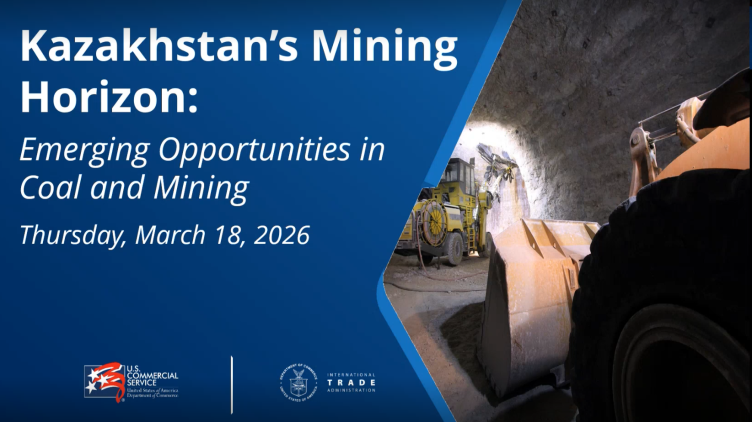
    On 18 March the US Commercial Service hosted a webinar featuring experts from the Kazakh government and industry. The central message was clear: Kazakhstan is no longer presenting itself simply as a resource-rich country. It is actively seeking to become a more significant destination for investment, processing, industrial partnerships and long-term supply chain co-operation.

    If you are tracking the global energy transition and supply chain security, this is a market that demands your attention. Here are my biggest takeaways from the session:

    A market defined by scale, ambition and strategic importance

    Kazakhstan’s resource base remains one of its greatest strengths. Speakers highlighted that mining and metallurgy continue to play a major role in the national economy, while reforms are being introduced to improve transparency, modernise infrastructure and create a more attractive environment for foreign investors.

    Particular attention was given to coal, mining and critical minerals as sectors with major growth potential. Kazakhstan is pursuing a pragmatic approach to energy development, combining its natural resource base with efforts to attract technology, financing and international partners. For U.S. companies, this is increasingly being framed not only as a commercial opportunity, but also as a chance to help build more resilient allied supply chains.

    The Sheer Scale of the Resource Opportunity

    Kazakhstan holds a formidable position on the global energy map, but it’s the untapped potential that is most striking:

    • Massive Reserves: The country sits on 33 billion tonnes of coal reserves, ranking 8th globally—enough to sustain production for over 300 years.
    • Cost Advantages: Kazakh coal prices hover around $25 to $50 per tonne—a fraction of the cost in other global markets. Furthermore, the cost of geological exploration is incredibly low at just $11 per square kilometre, compared to $167 in Australia and $203 in Canada.
    • The Coal Chemistry Boom: Currently, only 3% of Kazakhstan’s coal is processed. Shifting towards deep processing (synthetic fuels, ammonia, urea, methanol) represents a $25 billion untapped market.

    Modernising the Energy Grid

    As power demand surges—driven by industrialisation and the rise of AI—Kazakhstan is heavily focussed on modernising its infrastructure. The Ministry of Energy plans to introduce 26 gigawatts of new power capacity over the next decade. This includes a near-term plan to add 7.6 GW of new coal-fired capacity, requiring an estimated $16 billion in investment by 2030. The government is actively seeking technological partnerships for carbon capture and storage (CCS) and ultra-supercritical boiler technologies to ensure this growth aligns with clean energy standards.

    Critical minerals are becoming central to the conversation

    One of the most interesting aspects of the discussion was the growing focus on critical minerals and rare earth-related opportunities.

    Kazakhstan is developing a more comprehensive strategy for critical raw materials, with plans to define priority minerals, support processing and encourage higher-value production. The direction of travel is clear: the country wants to move further up the value chain and become more than simply an exporter of raw materials.

    This was particularly relevant in light of the tungsten discussion that followed.

    Resources:

    Looking ahead to 14-16 April: MINEX Kazakhstan Forum in Astana

    The next important date in the calendar is 15 April, when Julie M. Stufft , U.S. Ambassador to the Republic of Kazakhstan, will speak at the strategy session on Critical Minerals and Global Strategic Alliances at the 16th MINEX Kazakhstan Forum in Astana.

    Also speaking will be Dominic Heaton Dominic Heaton, CEO of Cove Kaz Capital Group, who will present the Severniy Katpar case study.

    This is especially significant because Severniy Katpar and Verkhnee Kairakty together hold 1.4 million tonnes of tungsten trioxide under JORC standards, representing around 70% of Kazakhstan’s total tungsten reserves. The project involves an estimated $1.1 billion joint venture investment, with potential support from U.S. EXIM and the U.S. International Development Finance Corporation totalling up to $1.6 billion.

    That level of financial and diplomatic backing underlines how strategically important this project could become, not only for Kazakhstan, but also for broader allied efforts to secure critical mineral supply chains.

    Why these matters

    What stood out most from the 18 March webinar was the alignment now emerging between Kazakhstan’s resource ambitions and international demand for secure, diversified supply chains.

    Kazakhstan offers scale, geological potential and a strategic location between major markets. The United States and other partners bring financing, technology and industrial expertise. If those elements come together effectively, the result could be a new phase of co-operation built around mining, processing, infrastructure and critical minerals development.

    For anyone following energy security, industrial policy or strategic resource investment, Kazakhstan is becoming increasingly difficult to ignore.

    The webinar made that case convincingly. The 15 April MINEX Forun sessions should offer an important next step in showing how these opportunities may translate into practical projects and partnerships.


  • Kazakhstan Considers Mandatory Disclosure Rules for Subsoil Users

    Kazakhstan Considers Mandatory Disclosure Rules for Subsoil Users

    Kazakhstan may introduce new transparency requirements for subsoil users, as lawmakers call for stricter disclosure of financial and production data across the mining and oil and gas sectors.

    Mazhilis deputy Yerlan Barlybayev has proposed legislative changes requiring all major subsoil users to publicly report their revenues and extraction volumes. Citing the constitutional principle that subsoil resources belong to the people, he argued that the state must ensure full transparency in how these resources are utilised and how related revenues are managed.

    Currently, disclosure requirements vary depending on corporate structure. While joint-stock companies are legally required to publish financial statements, many of Kazakhstan’s largest subsoil users, including Tengizchevroil, Kazakhmys Corporation and Kazzinc, operate as limited liability partnerships. As a result, they report only to their founders rather than the public. In addition, some major operators are registered in foreign jurisdictions or within the Astana International Financial Centre, further limiting public access to information.

    Barlybayev noted that this lack of uniform transparency prevents society from objectively assessing how national resources are being exploited. He proposed introducing mandatory public reporting standards for all large subsoil users, aligned with disclosure requirements applied to publicly listed companies under securities market legislation.

    As a longer-term measure, the deputy suggested that new legal entities seeking rights to develop strategic deposits should be required to register exclusively as joint-stock companies. According to him, this approach would not affect existing investors but would gradually improve transparency across the sector.

    At the same time, Barlybayev emphasised that the core issue lies not in corporate structure itself, but in the absence of unified transparency standards for major resource operators.

    The proposal follows the signing of Kazakhstan’s new Constitution on 18 March, which reinforces state ownership of subsoil resources and has prompted renewed debate over governance and accountability in the extractive industries.