Tag: Zhezkazgan

  • Kazakhmys and CNCEC Consortium to Construct New Sulfuric Acid Plant at Zhezkazgan Smelter

    Kazakhmys and CNCEC Consortium to Construct New Sulfuric Acid Plant at Zhezkazgan Smelter

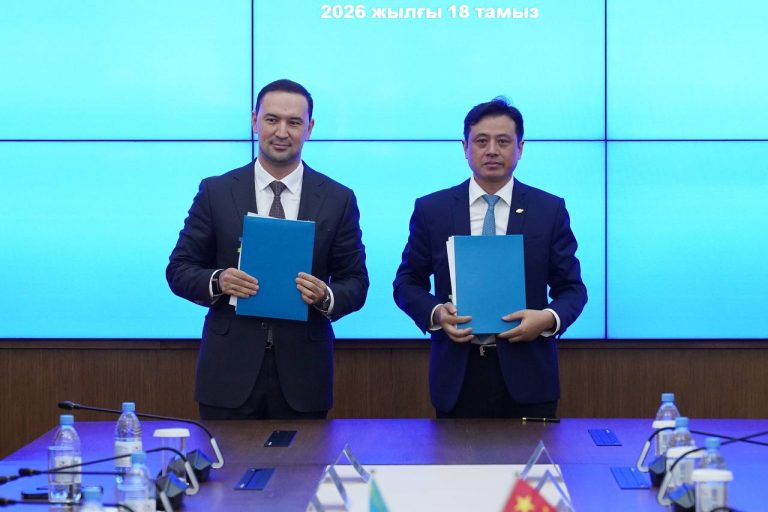
    Kazakhmys, a leading player in the mining and metallurgy sector, has announced a significant development in its operations with the signing of an agreement with a consortium from the China National Chemical Engineering Company (CNCEC) to construct a new sulfuric acid plant at its Zhezkazgan copper smelter in Kazakhstan. The engineering, procurement, and construction (EPC) contract is valued at approximately $213.76 million, marking a substantial investment in the modernization of the facility.

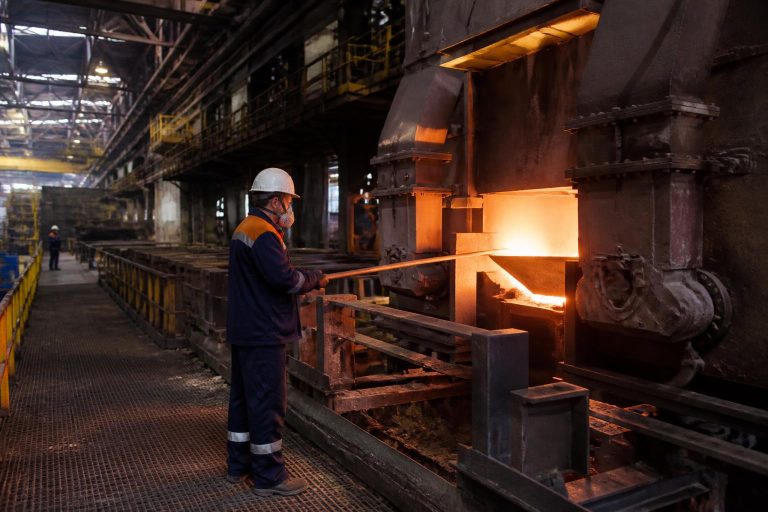
    The decision to build the new sulfuric acid plant is part of a broader initiative aimed at modernizing the Zhezkazgan copper smelter and aligning it with contemporary environmental standards. The existing metallurgical gas utilization infrastructure, which dates back to the 1970s, is in dire need of technological upgrades. The project will not only involve the construction of the new production facility but also the modernization of the process gas capture and purification system, which will include the installation of advanced equipment such as converter enclosures, cooling towers, and electrostatic precipitators.

    One of the key goals of this project is to enhance the efficiency of gas capture, with expectations that the new system will achieve a capture rate of 99%. Furthermore, the residual sulfur dioxide concentration in the treated gases will meet the stringent requirements outlined in the international Best Available Techniques Reference Documents (BREF), significantly reducing SO₂ emissions and the overall environmental impact of the Zhezkazgan smelter.

    The new sulfuric acid plant is designed to have a production capacity of 350,000 tons per year and will be capable of processing up to 300,000 normal cubic meters of process gases per hour. The commissioning of the plant is tentatively scheduled for 2028, with full-scale mobilization and preparatory work expected to commence by the end of 2026. The construction and installation phase is projected to take around 29 months.

    This initiative is a crucial part of Kazakhmys’ long-term modernization program for the Zhezkazgan copper smelter, aimed at improving the reliability of the gas purification system and ensuring compliance with modern environmental regulations. Kazakhmys Group, known for its vertically integrated operations in mining and non-ferrous metallurgy, ranks among the top producers globally, holding the 20th position in copper-in-concentrate production and 12th in blister and cathode copper production, according to the company’s website.


  • Kazakhmys Invests Over 25.2 Billion Tenge in Modernisation of Zhezkazgan Copper Smelting Plant

    Kazakhmys Invests Over 25.2 Billion Tenge in Modernisation of Zhezkazgan Copper Smelting Plant

    Kazakhmys Corporation has announced a significant investment of over 25.2 billion tenge aimed at modernising the Zhezkazgan Copper Smelting Plant, a key metallurgical facility within the group. The investment will be allocated towards capital repairs, technical re-equipment, and the enhancement of production infrastructure, with the overarching goal of ensuring the plant’s sustainable operation, improving industrial safety, and enhancing both technological efficiency and environmental performance.

    The comprehensive modernisation programme encompasses major production workshops, energy management systems, infrastructure facilities, and social amenities. A substantial portion of the investment, amounting to 15.9 billion tenge, is dedicated to the capital repair of critical metallurgical equipment. This includes extensive renovations to the second ore-thermal furnace, anode furnaces, and converter blocks, which are expected to bolster the reliability of the technological processes and extend the lifespan of the equipment.

    Additionally, 3.6 billion tenge will be invested in upgrading technological equipment. This includes the installation of 234 polymer concrete baths in the copper electrolysis shop, replacement of the power transformer, and the installation of a new bridge crane. The smelting shop will see the replacement of the carousel casting machine, while the heat supply shop will upgrade its turbocharger.

    The development of production infrastructure is also a priority, with 4.4 billion tenge earmarked for this purpose. Projects include the capital repair of cooling tower No. 1, roof replacement in the copper electrolysis shop, and restoration of the converter department’s roofing. Concurrently, the renovation of shower facilities in the administrative and domestic complex of the smelting shop is being completed to improve the working conditions for employees.

    By the end of the year, Kazakhmys plans to allocate an additional 1.4 billion tenge for the capital repair of equipment in the charge preparation shop and the establishment of a specialised area for the safe maintenance of crane equipment. This comprehensive modernisation effort is part of Kazakhmys’s long-term investment programme aimed at enhancing its metallurgical enterprises, ensuring more reliable production processes, improving equipment efficiency, and creating a safer and more comfortable working environment for its workforce.


  • Kazakhstan’s Copper Sector: Strategic Asset in a Tightening Market

    Kazakhstan’s Copper Sector: Strategic Asset in a Tightening Market

    Kazakhstan rarely commands the attention its copper endowment deserves. Producing roughly 900,000 tonnes annually from 35 million tonnes of registered reserves, it accounts for approximately 4% of global copper output — a share comparable to many of the names that dominate industry headlines. Yet Western investment community engagement with the sector remains shallow relative to the opportunity, and the geological case for what remains undiscovered is, if anything, more compelling than the production figures alone suggest.

    At a recent British-Kazakh Society webinar on copper in Kazakhstan — convened jointly with the Embassy of Kazakhstan in London and the UK Department of Business and Trade — geologists, exploration executives, and market analysts gathered to examine the sector in detail. The discussion made one thing clear: Kazakhstan’s copper story is not simply one of existing production. It is one of a sector arriving at a structural inflection point at precisely the moment the global market needs it most.

    The Resource Base

    Kazakhstan’s copper reserves are concentrated in two mature producing provinces. The Zhezkazgan deposit in central Kazakhstan is one of the great sediment-hosted copper systems on earth, developed since the post-war Soviet era and still the backbone of national production. Eastern Kazakhstan contributes largely through complex polymetallic deposits, of which Aktogai — a world-class porphyry system — is the most prominent. Together these provinces underpin an annual output of around 900,000 tonnes, placing Kazakhstan comfortably among the world’s significant copper producers.

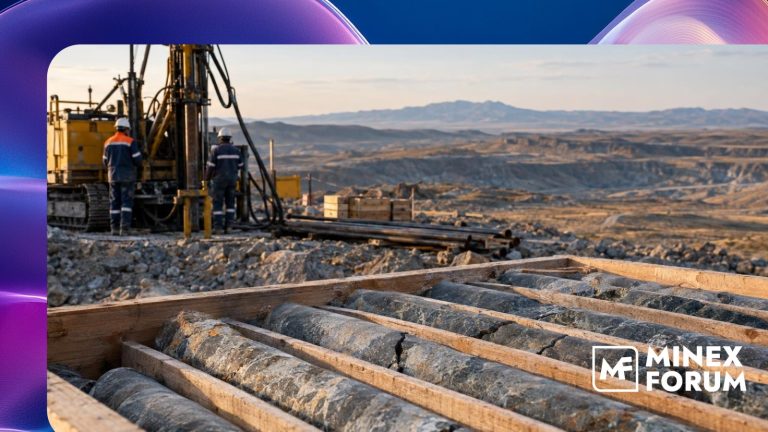
    The registered reserve figure of 35 million tonnes, however, almost certainly understates the country’s true endowment. USGS analysis of undiscovered global copper potential consistently identifies central and eastern Kazakhstan as among the most prospective territories on earth for porphyry copper systems. Two distinct porphyry belts cross the country. The younger Valerianov Belt connects, across the Uzbek border, to the super-giant Kalmakyr deposit; that belt, within Kazakhstan, remains largely undrilled. A substantial portion of central Kazakhstan lies beneath Aral Sea basin sediments with no surface outcrop and minimal modern exploration coverage. What has been found is not broadly what exists.

    The Data Opportunity

    Unlocking Kazakhstan’s exploration frontier depends significantly on data — and here, material progress is underway. The National Geological Service has scanned 97.5% of its Soviet-era archive, a vast repository of maps, drill logs, and technical reports accumulated over decades of intensive geological work. An AI and OCR programme now underway aims to render that material machine-readable by mid-2027, and a unified digital subsoil platform will eventually integrate it with online licensing and compliance functions.

    The Soviet geological archive has long been one of Central Asia’s most underleveraged assets — rich in detail, largely inaccessible to modern analytical methods. As that changes, the information barrier that has historically complicated early-stage investment decisions in Kazakhstan will begin to fall. The same technology has implications for Uzbekistan, Mongolia, and other jurisdictions carrying similar archival burdens.

    The Exploration Dynamic

    Despite over 3,500 active exploration licences — a market that has grown dramatically since Kazakhstan’s current mining code opened competitive licence pegging — major mining companies outnumber junior explorers among active operators. This is structurally unusual for a jurisdiction at Kazakhstan’s stage of geological maturity. Seventy percent of the world’s mineral discoveries are made by junior companies. The early-stage risk capital that drives discovery is underdeveloped relative to the opportunity.

    That is beginning to shift. Aurora Minerals Group, a Kazakh-rooted exploration services company with international technical partnerships, has spent years systematically de-risking early-stage copper targets — culminating in First Quantum Minerals taking an earn-in position on the Lakeside porphyry project in the northern Balkhash district. A second project targeting sediment-hosted copper in the Tenis Basin, an analogue setting to the Zhezkazgan deposit, is entering its first field season on ground only recently opened by the government for exploration. The model — patient local knowledge combined with international technical and capital partnerships — is one the market needs more of.

    Market Dynamics and Kazakhstan’s Position

    The global copper market is broadly balanced today, but the trajectory is clear. A supply deficit of around 140,000 tonnes is expected this year, widening materially into next. Exchange stocks, inflated by the US tariff distortion that pulled copper from China and Europe into COMEX warehouses at premiums of up to $3,000 per tonne above LME, are elevated but unwinding. Underneath the short-term noise, the structural picture is one of tightening supply against demand that governments and industries across the developed world are now treating as a strategic priority rather than a market variable.

    Kazakhstan sits well within that supply picture. It produces 24 of the 36 minerals identified in the UK’s critical minerals strategy. Its copper is exported into global supply chains that are increasingly subject to scrutiny over reliability and geopolitical exposure. The Astana International Financial Centre provides an internationally anchored legal framework. There is explicit political will to support long-term foreign investment — not extractive engagement, but sustained industrial partnership.

    The friction points are real: dual reserve reporting systems under GKZ and KAZRC create disclosure complexity for internationally oriented investors; permitting timelines warrant attention; and Kazakhstan’s position between China and a reengaging Western investment community requires careful navigation. None of these are disqualifying. All are manageable with the right local knowledge and structuring.

    The copper market’s structural shift is not speculative. The demand is real, the supply constraint is real, and the timeline for bringing new production online is unforgiving. Kazakhstan, with a large established production base, a geologically compelling frontier, and an improving investment environment, is one of the few jurisdictions that can contribute meaningfully to closing that gap — if the engagement comes early enough to matter.