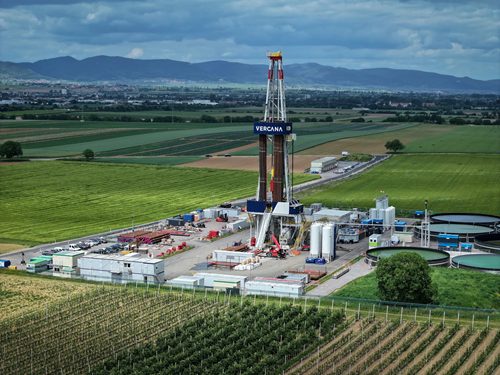
Vulcan Energy (ASX: VUL, FSE: VUL) has announced the completion of its Preliminary Feasibility Study (PFS) for Project Ludwig, marking a significant advancement in its lithium and geothermal energy production strategy in the Ludwigshafen region of Germany. This project is set to build on the successes and learnings from Vulcan’s first phase, Project Lionheart, and aims to establish an integrated lithium chemical and renewable heat production facility within the Upper Rhine Valley Brine Field (URVBF).
The PFS highlights robust economic metrics, projecting a pre-tax net present value (NPV8) of €2.6 billion and an internal rate of return (IRR) of 25.0% over a planned 30-year operational life. Notably, Project Ludwig is expected to produce 21,100 tonnes per annum (tpa) of battery-grade lithium carbonate (Li2CO3) while also generating 3,125 GWh per annum of renewable heat for both internal use and external sales. The capital expenditure (CAPEX) for the project is estimated at €1.26 billion, reflecting a 15% reduction in capital intensity compared to Project Lionheart, showcasing Vulcan’s commitment to capital efficiency and sustainable production practices.
The study indicates a significant increase in mineral resources, with indicated lithium resources rising from 655 kt LCE to 1,251 kt LCE, and inferred resources increasing from 2,128 kt LCE to 2,230 kt LCE. Additionally, a maiden geothermal resource estimate of 193 PJ has been established, further solidifying the project’s potential.
Vulcan’s Managing Director and CEO, Cris Moreno, expressed optimism about Project Ludwig, stating that it represents a strategic next step in the company’s phased development approach. The project aims to leverage Vulcan’s existing infrastructure and expertise gained from Lionheart, applying a proven integrated geothermal-lithium development model to enhance shareholder value and contribute to Europe’s critical raw materials supply chain.
The PFS was conducted with support from Worley and JordProxa, ensuring a comprehensive evaluation of the project’s technical and economic viability. As Vulcan prepares for a Final Investment Decision (FID) post-Lionheart production commencement, it is also pursuing an asset-level financing strategy to advance Project Ludwig, with strategic partner selection processes already underway. The project aligns with the European Union’s focus on securing sustainable domestic supply chains for critical raw materials, particularly lithium, as the demand for electric vehicles and battery storage continues to rise.
Project Ludwig not only aims to enhance Vulcan’s lithium production capabilities but also integrates renewable geothermal heat generation, positioning the company as a key player in the transition to a sustainable energy future in Europe.