Tag: Silver

  • Anglo Asian Mining Achieves Record First-Half Production as Demirli Copper Mine Ramp-Up Accelerates

    Anglo Asian Mining Achieves Record First-Half Production as Demirli Copper Mine Ramp-Up Accelerates

    Anglo Asian Mining Plc has reported record half-year production results, driven by the accelerated ramp-up of its Demirli copper mine in Azerbaijan. The company’s copper output surged to 5,129 tonnes in the second quarter of 2026, a 38% increase from the 3,711 tonnes produced in the first quarter. Demirli alone contributed 3,250 tonnes of copper during Q2, while the company’s Gedabek operation added 1,879 tonnes. Total first-half copper production reached 8,840 tonnes, a dramatic rise from just 1,188 tonnes in the same period last year. The company also generated a $39.9 million increase in net cash during the quarter, ending June with $69.8 million in cash and reducing debt to $12.2 million. Concentrate sales for the first half totaled 58,577 dry metric tonnes, valued at $125.9 million, with Demirli accounting for $71.4 million of that revenue. Gold production reached 12,329 ounces and silver output hit 92,855 ounces in the half year. Anglo Asian has reaffirmed its full-year guidance of 20,000–25,000 tonnes of copper, 28,000–33,000 ounces of gold, and 170,000–210,000 ounces of silver, with Demirli expected to reach steady-state production during the third quarter. The record performance underscores the successful execution of the company’s growth strategy in Azerbaijan’s mining sector, positioning Anglo Asian for continued strong output in the second half of the year.


  • Avrupa Minerals Regains Full Control of Sesmarias Project in Portugal

    Avrupa Minerals Regains Full Control of Sesmarias Project in Portugal

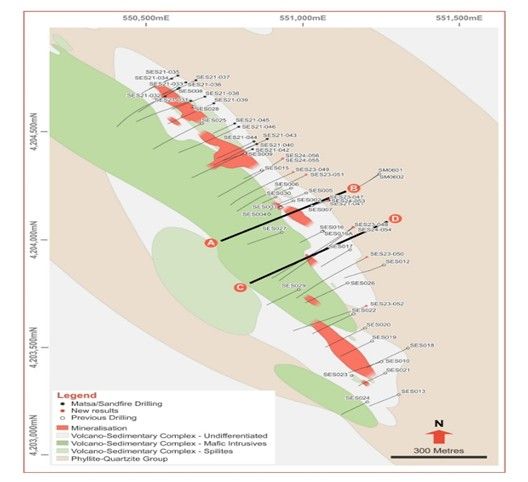
    Avrupa Minerals is reaffirming its commitment to the Sesmarias project in Portugal, even as it continues to expand its Finnish exploration portfolio. Sesmarias, the company’s flagship discovery since 2014, has seen significant progress through multiple joint ventures and self-funded efforts. Most recently, Sandfire MATSA supported exploration from 2020 to 2025, yielding impressive high-grade intercepts and expanding the project’s geological understanding.

    Despite these advancements, the project did not meet Sandfire MATSA’s internal criteria, leading to Avrupa regaining 100% ownership. With complex geology and promising mineralization—including intercepts like 26.95 meters @ 2.18% Cu and 28.60 meters @ 1.68% Cu—the company is now focused on securing a new strategic partner to advance towards a potential mining decision.

  • Kingsrose-BHP Alliance Uncovers High-Grade Copper and Precious Metals in European Exploration

    Kingsrose-BHP Alliance Uncovers High-Grade Copper and Precious Metals in European Exploration

    Kingsrose Mining Limited (ASX: KRM) has announced significant progress in its exploration alliances with global mining giant BHP, targeting critical minerals in Norway and Finland. The joint efforts, part of one of Europe’s largest generative exploration programs, have yielded high-grade copper, gold, silver, and platinum group elements (PGEs), signaling potential for major discoveries.

    In Norway’s Finnmark region, rockchip sampling revealed exceptional results, including 29.7% copper, 1.1 g/t gold, and 0.54 g/t palladium at the Porsanger target, and 4.4% copper with 1.8 g/t gold at Virdnechokka. These findings, hosted in sulphide veins, suggest proximity to deeper magmatic systems, akin to Anglo American’s Sakatti deposit in Finland. A 5,067-line km airborne gravity survey and 208 rockchip samples underpin the 2024 campaign, with helicopter-borne electromagnetic surveys slated for February 2025 to identify conductive bodies indicative of massive sulphides.

    In Central Finland, the alliance focused on the Kotalahti Nickel Belt, historically rich in nickel-copper deposits. Drone and ground magnetic surveys covering 4,980-line km identified new mineralized zones at the Rehula target, including a 0.46% copper and 110 ppm cobalt sample. The program aligns with Kingsrose’s strategy to discover new polymetallic “camps” through systematic geophysical and geochemical analysis.

    Managing Director Fabian Baker emphasized the success of advanced exploration techniques and stakeholder collaboration, stating, “These results underscore the prospective nature of these underexplored regions. Our commitment to environmental and social values ensures sustainable progress.” The company has engaged Indigenous communities and conducted biodiversity surveys to secure social licenses, particularly in Sami-inhabited areas of Norway.

    With 2.7millionofa5 million Year 1 budget spent, Kingsrose plans further fieldwork in 2025, leveraging BHP’s expertise to prioritize drill targets. The alliances highlight Europe’s growing role in supplying critical minerals amid global decarbonization efforts.

    Kingsrose, a ASX-listed explorer, holds 100% interests in the Finnmark and Central Finland projects, backed by BHP’s Xplor accelerator program. Forward-looking statements caution inherent risks, but the findings position the company as a key player in Europe’s mineral exploration frontier.

    For more details, visit www.kingsrose.com.

  • Tajikistan Seeks $100 Million Investment to Revive Lead-Silver Mining Complex

    Tajikistan Seeks $100 Million Investment to Revive Lead-Silver Mining Complex

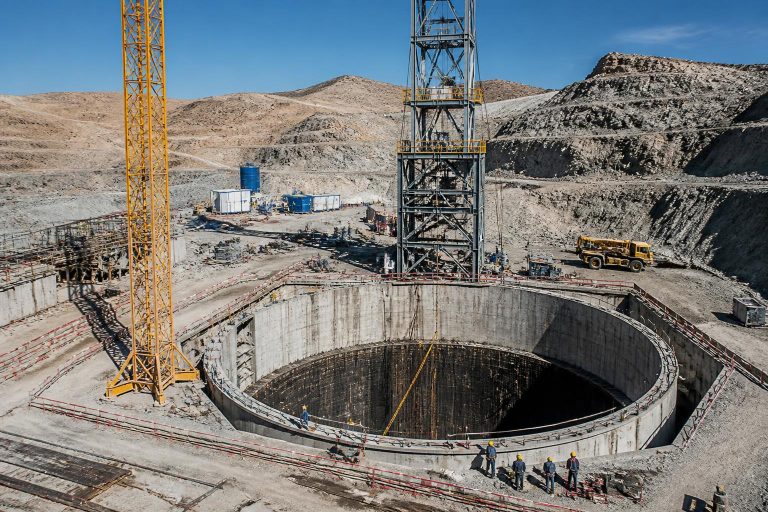
    Tajikistan is seeking a $100 million investment to modernise the Adrasman mining and processing plant.

    The plant’s raw material base consists of the Eastern and Western Konimansur deposits.

    The project’s first phase involves modernising the production facilities, while the second phase aims to increase capacity, construct a beneficiation plant, and build a metallurgical plant.

    The project’s phased approach to revitalising the plant includes the following stages:

    • Year 1: Repair and restoration work on mining sites and the beneficiation plant, procurement of essential equipment (mining machinery, transport vehicles, etc.), with the extraction and processing of 300,000 tonnes of ore and production of 6,000 tonnes of concentrate.
    • Year 2: Preparatory mining works for the next block. Extraction and processing of 500,000 tonnes of ore and production of 10,000 tonnes of concentrate.
    • Years 3-5: Extraction and processing of 1 million tonnes of ore per year, producing 20,000 tonnes of concentrate annually.
    • Year 6: Scaling up extraction and processing to 2 million tonnes per year, with a concentrate output of 40,000 tonnes.

    At the end of the project, the plant plans to produce up to 40,000 tonnes of concentrate annually.

    The concentrate produced by the plant will contain the following primary components:

    • Lead: 31-36%
    • Silver: 2,200-3,300 grams per tonne of ore, depending on ore quality and enrichment technology.

    To increase the company’s capacity, it is necessary to upgrade mine No. 12, which is in need of reconstruction, said company head Sobirjon Mamadjonov to Sputnik Tajikistan.

    The project has been developed by one of Uzbekistan’s geological institutes. According to the business plan, for the revival, upgrade, and expansion of mining capacities, production must increase to 1 million tonnes per year or more, as otherwise, the operation will not be profitable.

    Previously, the Russian company “Formula Svet” expressed interest in the launch of the Adrasman plant in Guliston.

    History of the Plant:

    The development of the Adrasman deposit was first discussed in 1944, when the USSR NKVD, under the direction of the Soviet government, began exploring uranium deposits in Central Asia, including in Adrasman.

    In addition to uranium, the Soviet government planned to extract bismuth and its concentrates at this site. Large reserves of lead and silver were later discovered.

    In 1970, based on the Karamazar mine, the Adrasman mining and beneficiation plant was established, specialising in the extraction and processing of lead-silver ores to produce lead concentrate. The plant’s capacity was over 650,000 tonnes of ore per year.

    In mid-2006, the Kazakh company “Kazinvest-Mineral” acquired 100% of Adrasman’s shares. In 2007, over 200,000 tonnes of lead-zinc concentrate were extracted and processed here.

    However, in July 2013, the Adrasman plant ceased production due to a decline in global silver prices, making the extraction and processing of this metal unprofitable.

    Since 2013, the plant has been inactive and declared bankrupt.

    In 2017, by decision of the Dushanbe Economic Court, Adrasman became the property of the Tajik government, which explained the move by stating that the Kazakh owners had failed to take measures to revitalise the enterprise.

  • Terra Balcanica Resources CEO Updates Exploration Progress in Bosnia-Herzegovina

    Terra Balcanica Resources CEO Updates Exploration Progress in Bosnia-Herzegovina

    Aleksander Miskovic, CEO of Terra Balcanica Resources, spoke with Steve Darling from Proactive to provide an update on the exploration drilling conducted within the Viogor-Zanik project in Bosnia-Herzegovina. The company completed approximately 2,200 meters of drilling, with a focus on a shallow, high-grade, silver-dominated, intermediate sulfidation polymetallic vein system at the Chumavichi locality.

    The maiden drillhole at Chumavichi Ridge yielded promising results, intercepting 824.2 grams per tonne (g/t) of silver equivalent (AgEq) over 4.0 meters from a depth of 29 meters, including 1,634.4 g/t AgEq over 2.0 meters. Another drillhole at Chumavichi Ridge intercepted 816.1 g/t AgEq over 2.0 meters. Additionally, exploration efforts targeted the Brezani area, revealing a surficial auriferous skarn overlaying an Ag-Pb-Zn-Au mineralized, northeast-shallowing structural system, situated above porphyry andesites stock from a depth of 550 meters. Drill testing of the 650-meter-wide conductivity high at Brezani resulted in intersections of 0.61 grams per tonne (g/t) of gold equivalent (AuEq) over 88.0 meters and 0.58 g/t AuEq over 28.6 meters.

    In uranium exploration, Terra Balcanica has acquired licenses on the outskirts of the Athabasca Basin in Saskatchewan. Partnering with Fulcrum Metals PLC, they aim to explore a 600 square kilometer area targeting Beaver Lodge and basement-style uranium mineralization. Initial steps include airborne geophysics and ground truthing, followed by drilling the ranked targets. Mišković expressed excitement about the potential for shear-hosted gold, VMS, nickel, and copper in the portfolio. The company anticipates a robust stream of news releases in the coming months, reflecting ongoing activities in Serbia and Bosnia, amidst favorable market conditions for gold and silver.

  • Growing value through discovery in the Balkans

    Growing value through discovery in the Balkans

    Terra Balcanica, a junior Canadian explorer of critical metals, eyes untapped opportunities at Europe’s doorstep.

    What do you get when you combine a millennia of mining history, two resource extraction-friendly European jurisdictions with clear paths to permitting mineral exploration concessions, a knowledgeable workforce, and a continent starved for critical metallic resources?

    Add to that a world class metallogenic expertise and a plethora of innovative geochemical and geophysical techniques that helped define grassroot drill targets in less than a year, all of which proved to be mineralised. Welcome to Terra Balcanica Resources Corp. and its ~350km² polymetallic portfolio of the Western Balkan Peninsula.

    Terra Balcanica is a junior Canadian explorer of precious and base metal resources in Europe’s front yard, where it has been advancing five exploration licenses in Bosnia and Serbia. Listed on both the Canadian Securities Exchange, and the Frankfurt Stock Exchange, the company has made strides since acquiring its flagship land package in eastern Bosnia in 2020.

    Called the Viogor-Zanik Project, the 215km² aggregate of licences surrounds the operation Sase mine (Mineco Ltd.) with an annual production of 350,000 tonnes of Pb-Zn-Ag+/- Sb concentrate, and is centred upon a mining district mined as far back as the Roman times when it was known as Argentaria.

    A multidisciplinary approach to target definition

    In slightly over three years, Terra’s technical and field teams have mapped, sampled, surveyed, and drilled two out of three highly prospective target zones within the only Oligo-Miocene manifestation of the highly prolific Western Tethyan orogen in Bosnia and Herzegovina.

    The belt, whose mapped southeastern extension reaches Afghanistan via the Balkans, Turkey, and Iran, features world class porphyry copper and epithermal gold-silver deposits (Sarcheshmeh, Sari Guni, Kişladag, Skouries, Olympias, Trepca), and terminates right at Terra Balcanica’s feet as the metalliferous Srebrenica Magmatic Complex.

    Here, a meticulously systematic approach of layering dozens of data sets obtained by months of lithological and structural mapping, combined by those gained from airborne geophysics, satellite multispectral terrain surveys, and thousands of rock and soil chemical assays revealed two genetically distinct, yet equally attractive targets worth drill testing.

    And drill, Terra did. Both the Cumavici and Brezani targets were tested to the tune of over 2,000m of diamond drilling, respectively, with attractive metal grades intercepted close to surface but the story does not stop with Bosnia.

    In neighbouring Serbia and another mining heavyweight of Europe (e.g. Timok District), Terra Balcanica operates two exploration concessions in the historic Rashka district, once home to many a medieval Saxon miner employed by the Serbian kings of the epoch.

    Here, the Ceovishte and Kaludra licences comprise a 130km² land portfolio rich in Zn-Pb-Ag-Au-Cu showings. Particularly interesting is the former, where Terra’s geologists have collected high-grade precious metal samples on-surface that overlay historical workings featuring highly enriched vein-hosted mineralisation. None of the Serbian targets have been drill tested to date, and remain Terra’s immediate focus for the 2024 Phase III campaign.

    As only the second (foreign) mineral explorer in Bosnia, Terra Balcanica is poised to capitalise on regional early-mover opportunities, while remaining a nimble, agile, and cost-effective explorer of choice in SE Europe.

    For many at Terra, discovering mineable resources needed by the world of tomorrow is not just a self-evident mission but an homage to the proud, century-long history of mining in Europe.

    The art of discovery

    Ours is a disciplined and creative team of mining professionals that has demonstrated an ability to make discoveries in places overlooked or abandoned by others, and to leverage these forgotten or neglected gems as incubators of the mining continuum, and value creators for our shareholders.

    Whether it is systematically rehashing volumes of archived data sets, modelling newly acquired geophysical data, or rapidly ground-truthing the rugged vast expanse of the Western Balkan Peninsula aimed at targeting the ‘sweet spots’ – discovery is in our geological DNA. Our leadership group and technical team are fully vested and singularly committed to this goal.

    The Čumavići target

    Within the Viogor-Zanik Project of eastern Bosnia and Herzegovina lies the Čumavići target. This shallow, high-grade, polymetallic target area extends for over seven kilometres NW/SE through the project. Tens of mineralised showings which returned assay grades up to 128 g/t silver and 20% zinc are visible alongside historic mining works. Silver-zinc-manganese-antimony all show anomalism in soil geochemistry, coupled with linear magnetic low responses (indicative of possible host structures).

    Terra has completed diamond drilling at two locations and discovered polymetallic veins and breccias returning assay grades up to 11m at 505 g/t silver equivalent (gold-silver-lead-antimony-zinc recalculated to the value of silver) in 2022 drillhole CMVDD004.

    Individual drill core samples have returned values as high as 1,420 g/t silver over 1.7m and 31% combined lead and zinc over 90cm. Terra has only scratched the surface of the Čumavići story and is excited to continue drilling in 2024. As more mineralisation is discovered within the Čumavići corridor it is worth noting the proximity of Terras discovery to the operating Sase Mine, actively depleting their ore reserves.

    The Brežani target

    Just 11km to the southeast, within the Viogor-Zanik Project. lies the Brežani target. A greenfield discovery in 2021, Brežani presents a kilometre-scale mineralised hydrothermal system first identified as a large magnetic anomaly, coupled with over 700m strike length of elevated gold in soil. Drilling at the target has revealed not only that the gold on surface extends down to 88m (results from drillhole BREDD002) but is also host to strong epithermal mineralisation at depth.

    The gold in drill core was consistent at 0.5 g/t, reaching up to 1.5 g/t for six metres. Brežani represents the only gold mineralised skarn (a calc-silicate rock) in Bosnia and Herzegovina and is set to grow with further drilling.

    Recently discovered and extensive epithermal mineralisation encountered downhole shallows to the east-northeast, where a similar element assemblage of silver-arsenic-antimony is present within rock and soil samples from a topographic low, coupled with a magnetic low. This offers shallower drill targets for this prospective polymetallic mineralisation.

    Prospective work at Ceovishte

    Terra Balcanica also operates in neighbouring Serbia, where it holds 80km² of highly prospective land in the historic Raška mining district. The Ceovishte Project represents a previously overlooked high grade gold-copper target with surface rock chip assay results up to 64 g/t gold and 2% copper.

    What is in store for 2024?

    As a regional Balkans explorer, Terra Balcanica has proven capabilities of identifying prospective projects and discovery mineralisation. Being on the doorstep of Europe, and given the demand for critical metals such as lithium, Terra has identified a prospective area and is looking to move into the battery metal exploration space.

    The western Balkan Li-B (lithium-boron) metallogenic zone spans for over 1,500km through Croatia, Bosnia and Herzegovina, Serbia, and Kosovo along its path to Turkey to the east. The Serbian portion of the zone hosts Rio Tinto’s Jadar Project, a sediment hosted lithium-boron deposit discovered in 2004 hosting indicated resources of 85.4Mt at 1.76% Li2O and 16.1% B2O3 with further inferred resources of 58.1Mt at 1.87% Li2O and 12.0% B2O3 as of 31 December 2021.

    Terra Balcanica is excited to commence its lithium exploration journey in 2024 and add value to an already diversified portfolio of assets.

    Sustainable mineral exploration practices

    At Terra Balcanica, we emphasise responsible engagement with local communities, municipal governments, and key stakeholders. The company is committed to proactively implementing Good International Industry Practice (GIIP) and sustainable health, safety, and environmental management.

    We are particularly proud of our workplace safety and environmental protection record that include safety trainings, baseline environmental surveys, and regular community initiatives. The goal is to have our employees return to their families safely while maintaining a minimal environmental footprint.

  • Chaarat inks deal to sell Armenia’s Kapan mine – DIGITALLOOK

    Chaarat inks deal to sell Armenia’s Kapan mine – DIGITALLOOK

    Chaarat Gold announced a binding agreement to sell its 100%-owned Armenian subsidiary Chaarat Kapan on Wednesday, which is responsible for the Kapan mining operation in southern Armenia.

    The AIM-traded firm said the deal, worth $55.4m, is between Chaarat and Gold Mining Company – a known entity in the Armenian mining space.

    It said the Kapan Mine had been functional since the 1960s, and was known for its polymetallic ore body, producing copper and zinc concentrates as well as by-products including gold and silver.

    Chaarat took ownership of the Kapan Mine in 2019, and since then, there had been significant improvements in the mine’s operational performance.

    It consistently met production guidance for between 50,000 and 65,000 gold equivalent ounces annually under Chaarat’s administration.

    The mine – Chaarat’s sole operating asset – brought in EBITDA of $22.7m in 2021 and $12.6m in 2022.

    However, its financial performance in the first half of 2023 was impacted by a persistently high Armenian dram against the dollar, as well as reduced production.

    The company said the sale’s consideration consisted of $55.4m, including $5m in cash and the remaining being offset by intra-group payables due to Chaarat Kapan.

    No adjustments would be made for debt, working capital, or other obligations.

    The board said completion remained contingent on a number of conditions, including approvals from Chaarat shareholders, Ameriabank, the Armenian Competition Protection Commission, and the buyer’s shareholders.

    Chaarat Gold justified the sale by highlighting its commitment to enhancing the Kapan Mine’s value over the years.

    Despite geopolitical challenges, including hostilities with neighbouring countries and the indirect effects of the Ukraine conflict, the firm said it managed to uphold its operational performance.

    However, the appreciation of the Armenian dram significantly affected its financial performance, with the sale set to allow Chaarat to concentrate on developing assets in Kyrgyzstan, and consider other external merger and acquisition opportunities.

    Post-sale, the proceeds would bolster Chaarat’s balance sheet, reducing its liabilities by $39m and offering a cash influx of $5m to support its ongoing projects, especially the Tulkubash project.

    With the sale, Chaarat would transition from a producer to a developer, as it planned to invest resources in its larger, low-cost development assets while simultaneously seeking funding for the ventures.

    Chaarat’s said its focus post-sale would be on its gold development assets, which had a combined book value of $82.5m and a potential production capacity of more than 350,000 ounces of gold annually.

    “The proposed sale allows Chaarat to focus on its growth pipeline in the gold sector with the aim of developing lower cost and higher value options within its portfolio,” said chief executive officer Mike Fraser.

    “It accelerates our strategic objective of developing the Tulkubash project and evaluating opportunities for inorganic growth options.”

    At 0908 BST, shares in Chaarat Gold Holdings were up 10.22% at 7.44p.

  • Adriatic Metals hails precious metals finds at Rupice

    Adriatic Metals hails precious metals finds at Rupice

    (Alliance News) – Adriatic Metals PLC on Wednesday gave an update on its Rupice northwest exploration which is part of the company’s Vares silver project.

    Adriatic Metals is a precious and base metals explorer and developer that owns the Vares silver project in Bosnia & Herzegovina and the Raska zinc deposit in Serbia.

    The company said it found 2.6 grams of gold per tonne, 409 grams of silver per tonne, about 12% zinc, 8.9% lead, 1.2% copper, 9% barium sulfate and 0.2% antimony in hole BR-30-23.

    Managing Director Paul Cronin said: “Additional exploration drilling, new geology, more tonnes at higher grades to the west of the current Rupice Northwest resource are adding significantly to the growth of Rupice. Faulting and folding have thickened and bent mineralization to vertical, with silver-gold-copper grades increasing in proximity to the deformation. Drilling will continue to define the western extent of RNW for a further resource update at the end of 2023.”

    Adriatic Metals rose 2.9% to 192.00 pence each on Wednesday morning in London.


  • KGHM silver certified by the London Base Metals Exchange

    KGHM silver certified by the London Base Metals Exchange

    The copper giant is one of the world’s most trusted silver producers. KGHM Polska Copper S.A. has been certified for the next consecutive year by the London Base Metals Exchange (LBMA) for responsible silver production in 2022. The certificate confirms Polish Copper’s compliance with the requirements set out in the LBMA Responsible Silver Guidance and allows it to gain entry to the LBMA’s prestigious Good Delivery list of the world’s most trusted silver producers.

    – The highest quality of both the product and the entire production process is the strength of the KGHM brand. Our customers know that we are a trusted partner who adheres to the highest standards throughout the supply chain. The LBMA certificate confirms that it is not a matter of declarations, but of actual actions – said Tomasz Zdzikot, CEO of KGHM Polska Miedź S.A.

    EXORBITANT STANDARDS

    The LBMA’s guidelines for responsible sourcing of gold and silver are designed, among other things, to combat human rights abuses and the financing of terrorism, avoid supporting military conflicts and ensure compliance with the highest possible anti-money laundering standards. The guidelines recommend the use of a five-step, risk-based supply chain examination procedure, in line with the OECD Guidelines for a Responsible Supply Chain for Minerals from Conflict and High-Risk Areas.

    As part of the certification process, an attestation service by an independent, LBMA-accredited auditing firm (PricewaterhouseCoopers Poland) was required. A positive assessment of KGHM’s procedures for the production, storage and sale of silver, as well as of the Policy and Procedure for a Responsible Supply Chain for Gold and Silver of KGHM Polska Miedź S.A. provided the basis for the auditor’s positive recommendation to award the certificate.

    SILVER MARKET LEADER

    KGHM has been on the podium of global silver producers for years. According to the World Silver Survey 2023, it ranks first in the list of “largest silver mines in the world”. In the category of “largest silver producers”, the copper giant was ranked second. Polish Copper produced 1,298 tonnes of silver in 2022.

    KGHM sells silver in the form of pig sow and granulate. Silver customers include, among others, financial institutions, the jewellery industry, the electronics and electrical industry, the photovoltaic industry, catalyst manufacturers and coin, bar and medal producers. Around 16% of the copper giant’s revenue comes, precisely from the sale of silver.

    FROM BLACK MUD TO SHINY PIG SOW

    Silver production at KGHM is carried out at the Głogów smelter, in the Precious Metals Division. PMD was established exactly 30 years ago specifically to recover the precious metals – silver and gold – present in the copper ore. These are found in the so-called ‘black mud’, i.e. the anode slime produced during the electrorefining of copper. From cathode silver with an Ag content of more than 99.99 per cent, metallic silver is produced in the form of granules packaged in 25 kg bags and pig sows of approximately 1,000 troy ounces, which amounts to about 31.1 kg.