Tag: Shavkat Mirziyoyev

  • Uzbekistan to Scrap State Coal Price Controls From June and Launch $494 Million Nishbosh Mine as Output Targets 11 Million Tonnes

    Uzbekistan to Scrap State Coal Price Controls From June and Launch $494 Million Nishbosh Mine as Output Targets 11 Million Tonnes

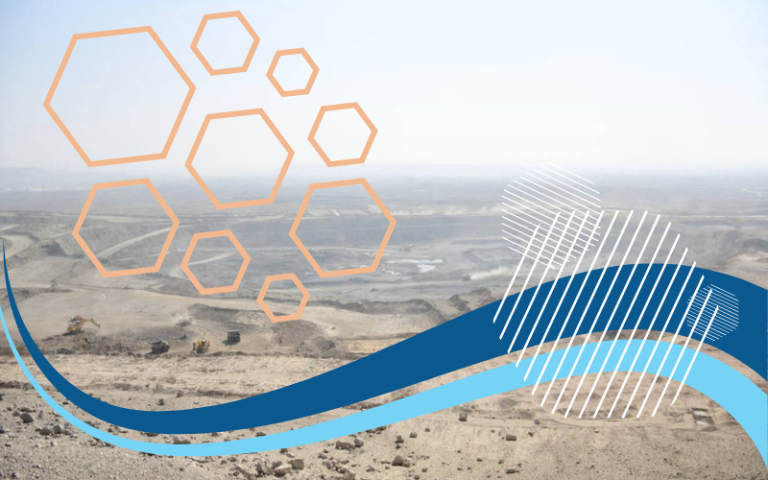
    Uzbekistan is overhauling its coal sector with a package of market-oriented reforms, including the abolition of state price controls from 1 June 2026, a $494 million investment in the Nishbosh coal deposit and plans for a 1.4 gigawatt power station — all presented to President Shavkat Mirziyoyev in a sector briefing.

    The administrative price regulation that has governed Uzbekistan’s coal market will be eliminated, with coal also removed from the list of strategically significant social goods subject to state pricing. From June, coal prices will be determined by supply and demand and traded through exchange-based auctions. Power stations and large consumers will purchase coal through a request-for-proposals mechanism at average exchange prices for the relevant reporting period. The government expects this to create an open competitive environment, attract new investment and incentivise producers to increase volumes and improve quality.

    To protect households and public institutions during the transition, a separate distribution mechanism will be introduced. Suppliers will be selected through an electronic system based on criteria including warehouse capacity, equipment availability and tax rating. Railway freight tariffs will be unified to eliminate regional price disparities. Vulnerable families registered in the Social Registry who purchase coal through the mycoal.uz platform will receive one-off financial assistance of up to 600,000 soum between June and December 2026.

    New quality and environmental standards will also be introduced for imported coal, covering sulphur content, calorific value and other parameters. Coal imports failing to meet the standards will be banned from sale or use on Uzbek territory, and all future coal imports will be conducted exclusively by rail.

    On new production, the Nishbosh deposit holds total reserves of 233 million tonnes with a projected annual extraction capacity of 10 million tonnes. The $494 million investment will create 880 permanent jobs. Adjacent to the deposit, a new 1.4 GW power station is proposed — four 350 MW ultra-supercritical units requiring $1.3 billion in investment, generating an estimated 9.8 billion kilowatt-hours of electricity annually and saving 2 billion cubic metres of natural gas per year. Construction will create 1,500 temporary jobs and 310 permanent positions.

    Uzbekistan’s coal output has grown from an average of 3.1 to 4 million tonnes in the first 25 years of independence to 10 million tonnes over the past nine years. The target for the coming autumn-winter season is 11 million tonnes. The number of private coal producers has reached 18, having invested $117.2 million and produced 2.4 million tonnes between 2023 and 2025. Mirziyoyev approved the proposals and issued instructions to responsible officials.

  • Uzbekistan to Launch Uranium Extraction at Four New Deposits

    Uzbekistan to Launch Uranium Extraction at Four New Deposits

    President Shavkat Mirziyoyev has reviewed the latest developments and future plans for Uzbekistan’s coal and uranium industries during a recent presentation, according to the presidential press service.

    Discussions centred on increasing coal output, strengthening competition within the sector, and improving the use of existing reserves. It was noted that during the 2025–2026 autumn-winter season, the country plans to extract 10 million tonnes of coal — 1.3 million tonnes more than last season. Production so far has reached 9 million tonnes, up by 590,000 tonnes year-on-year, with next season’s goal set at 11 million tonnes.

    Efforts will focus on faster development of deposits in the Tashkent and southern regions, expanding selective extraction, and engaging additional excavators and outsourced equipment. By supporting private entrepreneurs, authorities expect to produce an extra 2.5 million tonnes of coal in 2026.

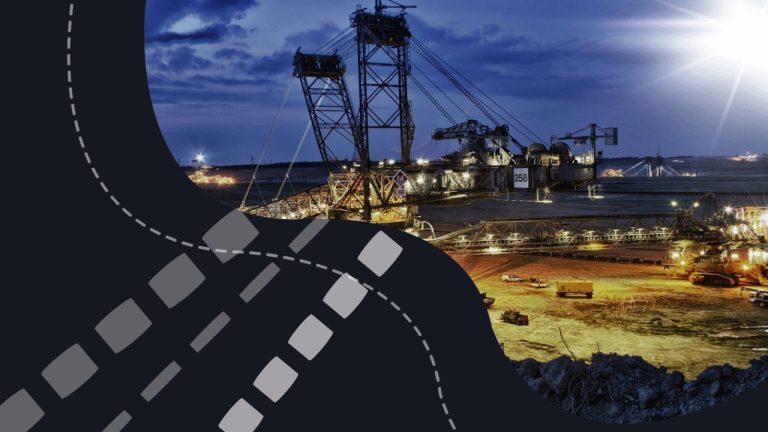
    Particular attention was given to the “Nishbosh” coal deposit in Angren, where a nearly $500 million investment project is set to begin production this year. With reserves of about 233 million tonnes, the site is expected to yield 1 million tonnes of coal in its first year and reach an annual output of 10 million tonnes. The project will also create around 880 permanent jobs.

    Separately, state company Uzkimyosanoat unveiled a $5 billion initiative to establish a new polymer production facility based on the chemical processing of coal. The plant will be capable of converting 8–9 million tonnes of coal into 1.18 million tonnes of polymer products annually.

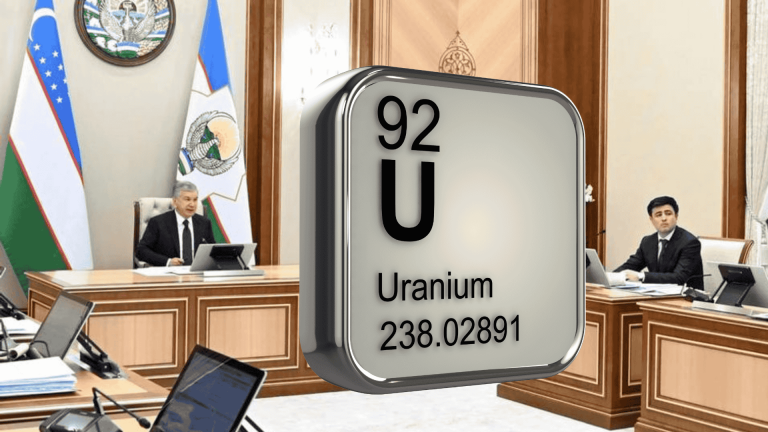
    In 2025, Uzbekistan produced 7,000 tonnes of uranium while confirmed reserves rose to 139,000 tonnes. This year, the government plans to start mining operations at four new deposits — ArnasayWestern KizilkukSouthern Jongeldi, and Eastern Agron. To accommodate rising output, additional uranium processing capacity will be developed, including stable supplies of sulphuric acid and technical sulphur.

  • Trump Hails “Incredible $100 Billion Deal” Between the U.S. and Uzbekistan

    Trump Hails “Incredible $100 Billion Deal” Between the U.S. and Uzbekistan

    The United States and Uzbekistan have signed a series of major agreements covering critical minerals, agriculture, infrastructure, aviation, and technology, marking what U.S. President Donald Trump called an “incredible trade and economic deal worth $100 billion.”

    The signing ceremony took place on November 6 in Washington, D.C., following a business roundtable attended by Uzbek President Shavkat Mirziyoyev and U.S. Secretary of Commerce Howard Lutnick. The deals involve both government bodies and major American corporations, signaling a new phase of strategic economic cooperation between the two nations.


    Key Agreements Signed

    • Rare Earth Elements Cooperation:
      Agreement between the Uzbek Ministry of Geology and Denali Exploration Group on the exploration and production of rare earth elements.

    • Critical Minerals Projects:
      The Uzbek Reconstruction and Development Fund signed an accord with Re Element Technologies to develop rare earth and critical metals projects.

    • Pumping Station Modernization:
      Partnership between the Ministry of Investment, Industry, and Trade and Flowserve Corporation to modernize Uzbekistan’s water infrastructure.

    • Water-Saving Technologies:
      Agreement between the Ministry of Agriculture and Valmont Industries Inc. on implementing advanced irrigation and water-efficient technologies.

    • Artificial Intelligence Cooperation:
      Memorandum between the Ministry of Digital Technologies and Palo Alto Networks to expand collaboration in artificial intelligence and cybersecurity.

    • Aviation Contract:
      Uzbekistan Airways signed a major expansion deal with Boeing, increasing its firm order for 787-9 Dreamliner aircraft from 14 to 22 jets.

    • Agricultural Trade:

      • Contract between Datacrop (Uzbekistan) and Louis Dreyfus Company (U.S.) for the supply of soybeans and soybean meal.

      • Agreement between Uzsanatexport and Cargill for the supply of cotton.


    Trump’s Statement

    On his Truth Social page, President Donald Trump announced the deal, calling it “one of the most significant trade achievements” between the two countries:

    “I am pleased to announce an incredible trade and economic agreement between the United States and Uzbekistan. Over the next three years, Uzbekistan will purchase and invest nearly $35 billion, and over the following decade more than $100 billion, in key U.S. industries including critical minerals, aviation, automotive components, infrastructure, agriculture, energy, chemicals, and information technology,” Trump wrote.

    He also thanked President Shavkat Mirziyoyev for his leadership and partnership:

    “I want to thank the highly respected President of Uzbekistan, Shavkat Mirziyoyev. We look forward to a long and fruitful relationship between our nations.”


    Strategic Context

    The landmark agreements underline Uzbekistan’s expanding cooperation with U.S. industries as it pursues rapid modernization across its energy, mining, and technology sectors.

    For Washington, the deal strengthens access to critical raw materials such as rare earths and lithium, aligning with broader U.S. efforts to diversify supply chains away from China.

  • Uzbek President Mirziyoyev Meets U.S. Business Leaders in Washington to Deepen Economic Partnership

    Uzbek President Mirziyoyev Meets U.S. Business Leaders in Washington to Deepen Economic Partnership

    At the conclusion of his working visit to Washington, D.C., President of Uzbekistan Shavkat Mirziyoyev met with representatives of major U.S. corporations, investment funds, and financial institutions to discuss expanding economic cooperation between the two countries.

    The meeting was attended by U.S. Secretary of Commerce Howard Lutnick, Special Assistant to the President Ricky Gill, Special Envoy Paolo Zampolli, and Deputy Secretary of Agriculture Stephen Vaden. Senior executives from leading American companies — including Traxys, FLSmidth, McKinsey, Meta, Google, Amazon, Boeing, Air Products, Axiom Space, Cove Capital, Freeport-McMoRan, Orion CMC, Cargill Cotton, John Deere, Honeywell, Valmont Industries, and Flowserve Corporation — also took part in the discussions.

    President Mirziyoyev highlighted that trade turnover between Uzbekistan and the United States has quadrupled over the past eight years, with more than 300 American companies now operating in Uzbekistan. He emphasized that this growth marks only the beginning of a new stage in bilateral cooperation, and that specific projects would be further discussed during his upcoming meeting with U.S. President Donald Trump.

    The Uzbek leader outlined priority areas for strategic partnership, including renewable energy, critical minerals, and digital transformation. By 2030, Uzbekistan aims to build a next-generation energy system with 18–20 gigawatts of renewable capacity, generating more than half of its electricity from solar and wind sources.

    In partnership with the United States, Uzbekistan plans to develop extraction and advanced processing of uranium, copper, tungsten, molybdenum, and graphite, establishing secure supply chains and adopting U.S. technologies in resource processing.

    The President also highlighted Uzbekistan’s ambitious transport infrastructure modernization program, with $12 billion in planned investments by 2030 to upgrade roads, railways, terminals, and airports.

    Digital cooperation is also expanding through joint initiatives with Google, Meta, and NVIDIA, including the launch of Apple Pay and Google Pay, the creation of a Digital Academy, and a nationwide startup hub network.

    Financial support for these initiatives will involve the U.S. International Development Finance Corporation (DFC) and the U.S. Export-Import Bank (Exim Bank).

    Concluding the meeting, President Mirziyoyev reaffirmed Uzbekistan’s commitment to support American investors and maintain the country’s reputation as a reliable and stable partner.

    “Uzbekistan remains a dependable partner and a guarantor of success for foreign investors,” the President said.

  • Uzbekistan Plans to Double Copper Production to 500,000 Tonnes by 2030

    Uzbekistan Plans to Double Copper Production to 500,000 Tonnes by 2030

    Uzbekistan aims to double its copper output to 500,000 tonnes annually by 2030, according to a statement from the press service of President Shavkat Mirziyoyev. The country is strengthening its raw material base to support the development of high-tech sectors such as electrical engineering, electronics, and the semiconductor industry.

    Currently, products with high added value make up about 60% of Uzbekistan’s copper exports, reflecting steady progress toward deeper industrial processing. The government reports that the sector’s investment portfolio includes 157 projects worth $2.1 billion, covering new mining, processing, and manufacturing initiatives.

    Plans are also underway to increase domestic copper refining capacity to 300,000 tonnes, with new enterprises and industrial clusters being established to produce finished copper products.

    One of the key projects is the Ahangaran Copper Cluster in Tashkent Region, where facilities will be set up to manufacture semiconductors, microelectronic components, and other high-tech copper-based products in cooperation with the Almalyk Mining and Metallurgical Complex (AMMC).

    The initiative is part of Uzbekistan’s broader industrial policy to expand value-added production, reduce dependence on raw material exports, and position the country as a regional hub for advanced manufacturing in Central Asia.

  • Uzbekistan to Boost Gold and Uranium Output Through New Exploration Methods

    Uzbekistan to Boost Gold and Uranium Output Through New Exploration Methods

    Uzbekistan plans to increase production of gold and uranium this year by introducing new approaches in geological exploration, President Shavkat Mirziyoyev told national broadcaster Uzbekistan 24.

    According to the president, the country’s total gold output stood at 86 tonnes in 2016, while by the end of 2025 it is expected to reach 118 tonnes. Uranium production volumes, he noted, have doubled over the same period.

    Figures from the World Gold Council show that Uzbekistan produced more than 129 tonnes of gold in 2024, placing it among the world’s top ten producers of the precious metal.

    In the first seven months of this year, Uzbekistan increased gold exports to $7.6 billion — 1.8 times higher than in the same period of 2024. Gold accounted for nearly 38% of the country’s total export revenues.

    Navoi Mining and Metallurgical Company (NMMC), the country’s largest producer, raised its gold output in 2024 to 3.10 million ounces (96.4 tonnes), up 5.4% compared to 2023. The growth was attributed to the launch of new processing facilities.

  • Uzbekistan Unveils $3 Trillion Mineral Reserve Potential, Invites Global Investment

    Uzbekistan Unveils $3 Trillion Mineral Reserve Potential, Invites Global Investment

    At the Tashkent International Investment Forum, President Shavkat Mirziyoyev announced that Uzbekistan holds mineral reserves valued at an estimated $3 trillion, underscoring the country’s vast potential in high-tech metals. Speaking to a global audience, the President called on international investors to engage in full-cycle mineral processing and manufacturing, offering state support for ventures that start from geological exploration.

    Among the incentives, Mirziyoyev promised a ten-year refund of rent taxes for companies that develop end-to-end production capabilities. He also emphasized that Central Asia could become a regional hub for mineral raw material processing, with construction already underway on technoparks in the Tashkent and Samarkand regions focused on rare and rare earth metals.

    Previously, the Uzbek government reported the discovery of over 30 rare and critical minerals across its territory, including lithium, vanadium, germanium, and titanium. A national development strategy published in March outlines 76 mineral projects worth a combined $2.6 billion.

  • Uzbekistan Signs Critical Minerals Investment Deals with U.S. Companies

    Uzbekistan Signs Critical Minerals Investment Deals with U.S. Companies

    Uzbekistan announced on Wednesday, April 9, 2025, that it has signed a series of agreements with U.S. companies to boost investment in its critical minerals sector. The deals come as global demand for essential minerals like copper, lithium, and cobalt continues to soar due to their key role in electric vehicle batteries, solar panels, and other high-tech industries.

    According to a statement from Uzbekistan’s trade ministry, the agreements—signed during a government delegation’s visit to Washington—cover investments in both the exploration and extraction of mineral resources. They also include plans for building grinding machinery and training Uzbek specialists.

    The move aligns with broader efforts by the United States and the European Union to reduce their dependence on China, which currently dominates the global critical minerals market.

    Uzbekistan, a former Soviet republic, has drawn increasing interest from Western nations looking to diversify their supply chains amid ongoing geopolitical tensions. President Shavkat Mirziyoyev has made liberalizing the economy a central priority of his administration. In March, he unveiled a $2.6 billion investment plan aimed at modernizing and expanding the country’s mineral sector.

  • Orano is investing up to $500 million in uranium mining in Uzbekistan

    Orano is investing up to $500 million in uranium mining in Uzbekistan

    French company Orano has expressed its intention to invest up to $500 million in uranium mining and processing in Uzbekistan, as revealed by the Minister of Mining Industry and Geology, Bobir Islamov. He mentioned the existence of a strategic partnership agreement between Uzbekistan and Orano. Currently, the French company is conducting geological exploration, and by the end of this year, a preliminary technical and economic justification for the project will be prepared.

    Islamov explained that the strategic agreement includes the exploration of two additional sites in the Tamdyn district of the Navoi region. The final decision regarding these sites will depend on the results of the technical and economic analysis. However, Islamov expressed optimism about the progress of the project.

    The minister emphasized that current uranium production volumes have already secured markets. As the production of nuclear fuel increases, Uzbekistan will consider expanding its exports based on market conditions.

    “When it comes to uranium, our prices are tied to global prices. If the price rises, our delivery costs increase as well,” stated the minister.

    Islamov highlighted the growth in uranium exports to various destinations this year, underscoring the importance of diversifying supply sources. In 2022, Uzbekistan increased uranium exports to the European Union by 2.71 times, reaching 441 tons.

    During a visit to Samarkand, French President Emmanuel Macron announced that Orano, in collaboration with the local joint venture Nurlikum Mining, had initiated a pilot project for uranium mining. President Shavkat Mirziyoyev expressed his support for the expansion of geological exploration for uranium deposits with Orano.

    Prior to Macron’s visit, Bloomberg reported that his objective in visiting Uzbekistan and Kazakhstan was to discuss the expansion of uranium supplies, as France considers Central Asia as an alternative to Russian nuclear fuel.

    In November 2022, the State Committee of Geology, Navoi Mining, and Orano signed a tripartite agreement to expand uranium mining and processing. Uzbekistan aims to follow the French model in the “nuclear fuel value chain.” Orano has stated its readiness to invest “several hundred million euros.”

  • France’s Strategic Pivot to Central Asia: Strengthening Ties with Uzbekistan and Shaping Regional Dynamics

    France’s Strategic Pivot to Central Asia: Strengthening Ties with Uzbekistan and Shaping Regional Dynamics

    In the wake of Uzbek President Shavkat Mirziyoyev’s visits to Paris in 2018 and 2022, French President Emmanuel Macron paid a two-day official visit to Uzbekistan on November 1 and 2. The visit holds profound symbolism, as it coincided with the 30th anniversary of the signing of the Treaty of Friendship and Cooperation between Paris and Tashkent. The visit’s importance resonated not only within Central Asia but also across Europe, given France’s substantial influence within the European Union (EU).

    The rationale behind France’s proactive efforts to bolster cooperation with Uzbekistan and the other Central Asian nations amid intense global power competition can be understood through several key factors.

    First and foremost, France is driven by its own ambition to adjust its status as a secondary actor in the strategically vital Central Asian region. The region is often viewed through a “great game” framework, with Russia striving to maintain its strong presence through organizations like the Collective Security Treaty Organization (CSTO) and the Eurasian Economic Union (EAEU), and China deeply embedding itself through the Shanghai Cooperation Organization (SCO) and the Belt and Road Initiative (BRI). France’s enhanced engagement with Central Asian countries serves as a counterbalance to ensure that no single power dominates the Eurasian region.

    Second, France is keen on intensifying cooperation with Central Asian countries, especially with Uzbekistan and Kazakhstan, to diversify its sources of energy. Recent disruptions in global energy markets, along with political tensions, have underscored the need for France to expand its energy import partners. Central Asia, with its untapped hydrocarbon reserves, offers a promising solution. Notably, Kazakhstan and Uzbekistan have significant uranium reserves, with Kazakhstan being the world’s largest producer and Uzbekistan the fifth largest. Given that approximately 70 percent of France’s electricity comes from nuclear power, deepening partnerships in the region could ensure a steady supply of uranium for French reactors.

    Third, France aims to enhance cooperation with Central Asian countries to reduce risks associated with the import of critical minerals, vital for the green energy transition. These minerals are essential in the production of a wide range of technologies, from smartphones and wind turbines to rechargeable batteries for electric vehicles. Despite being relatively underexplored, Uzbekistan and other Central Asian countries have the potential to assist France and other EU countries at large in reducing their heavy dependence on China for these essential minerals, thereby mitigating the risks associated with their technological advancement.

    At the same time, France’s deliberate efforts to step up cooperation with some Central Asian countries on a strategic level could open up various opportunities for Tashkent across political, economic, and environmental dimensions. Strengthened ties with France offer Uzbekistan a chance to diversify its international engagement and enhance its international standing, creating opportunities for collaborative diplomacy in light of recent global trends and geopolitical developments in Eurasia. Addressing crucial regional issues can foster stability not only in Central Asia but also in Afghanistan, promoting peace in the broader region. Furthermore, political cooperation with Paris can significantly support the Uzbek government’s “Uzbekistan – 2030” strategy, outlining the country’s vision for the next seven years. France’s expressed willingness to support Uzbekistan and Kazakhstan in their reform and modernization efforts aids in diversifying their international relations effectively.

    In addition to political collaboration, closer ties between Paris and Tashkent could facilitate greater economic and investment partnerships. The economic relationship between the two nations has flourished, marked by a tripling of joint ventures involving French companies in Uzbekistan. With an active project portfolio exceeding 10 billion euros, French businesses are poised to boost investments in Uzbekistan’s growing sectors. This collaboration not only promotes economic growth and job creation but also facilitates technology transfer. France’s expertise in technology, smart agriculture, and tourism can help Uzbekistan reduce its dependence on traditional industries, fostering economic diversification. Moreover, France, home to leading nuclear energy companies, can assist Uzbekistan in addressing the complexities of constructing a nuclear facility. This collaboration could promise a comprehensive and enduring partnership, contributing significantly to Uzbekistan’s energy sector.

    Beyond economic collaboration, Paris and Tashkent can join forces to tackle shared challenges related to water resources management. France’s expertise in sustainable water practices can assist Uzbekistan in efficient water use and conservation. Additionally, France can help mitigate the adverse effects of climate change by sharing green technologies and best practices. This support aids Uzbekistan in environmental conservation and sustainable development. Importantly, Paris can also mobilize public and private funding, particularly through guarantees and blending, to further increase investments for European initiatives like the Global Gateway on Water, Energy, and Climate.

    Despite all these positive rationales, there is a persistent challenge hindering enhanced cooperation between the two countries. This is the limited capacity of the Trans-Caspian Transport Route, also known as the “Middle Corridor.” which links China and Central Asia via the Caspian Sea to the Caucasus, Turkey, and Europe. In 2022, transit volumes through the Middle Corridor witnessed an impressive surge, nearly tripling compared to the previous year. This spike in trade activity has placed considerable strain on already overburdened borders, resulting in visible delays in cross-border transport operations.

    To address these challenges, France should collaborate closely with not only with Central Asian nations but also other EU countries to foster the development and prominence of the Middle Corridor. If achieved, it would reduce transit times from 38-53 days in the previous year to just 12-23 days. This would not only provide Europe with alternative optimal trade routes but also encourage the active participation of Central Asian nations in global connectivity and collaboration.

    In conclusion, France’s strategic moves in Central Asia, exemplified by Macron’s visit to Uzbekistan, are driven by a multifaceted approach, aiming to balance regional power dynamics, diversify energy sources, and ensure a stable supply of critical minerals for sustainable technological development. These efforts underscore France’s commitment to fostering cooperation and stability in the region, bearing broader implications for both Central Asia and Europe. At the same time, France’s deliberate efforts to strengthen cooperation with Uzbekistan can result in a multitude of opportunities for Tashkent. By focusing on political collaboration, economic growth, and environmental initiatives, both countries can foster mutual benefits, regional stability, and global partnerships.

    Looking ahead, the future prospects of the partnership between France and Uzbekistan are promising, offering mutual benefits in political, economic, and environmental dimensions. By leveraging each other’s strengths and addressing challenges collaboratively, both nations stand to gain significantly, contributing to regional stability, economic growth, and sustainable development in the years to come.