Tag: resource governance

  • Central Asia’s Uranium Endowment Turns Into a Strategic Test of Governance and Geopolitics

    Central Asia’s Uranium Endowment Turns Into a Strategic Test of Governance and Geopolitics

    Central Asia occupies a pivotal position in the global uranium market, combining vast geological resources with a legacy of extraction that continues to shape policy, public trust and international interest. The region holds one of the world’s largest concentrations of economically recoverable uranium, with Kazakhstan alone accounting for roughly 12–15% of known global resources and producing about 40% of annual world output. Uzbekistan ranks among the top ten global producers and holds the second-largest uranium reserves in the post-Soviet space, while smaller but sensitive deposits remain in Kyrgyzstan and Tajikistan.

    This resource wealth is inseparable from history. Uranium mining under the Soviet nuclear program was carried out with minimal environmental safeguards or community consultation. Sites such as Taboshar in northern Tajikistan and Mailuu-Suu in southern Kyrgyzstan remain contaminated decades after closure, with exposed tailings posing long-term health and environmental risks. These legacies continue to influence public attitudes toward new uranium projects, making transparency, safety and governance as critical as geology itself.

    As nuclear power regains prominence in the global energy transition, uranium has shifted from a technical commodity to a strategic asset. This transformation has intensified great-power competition in Central Asia, where Russia, China and Western actors pursue distinct strategies across the uranium and nuclear value chain.

    Russia remains the most deeply embedded external player. Through Rosatom, it offers a vertically integrated model that spans mining partnerships, reactor construction, fuel supply and long-term operation. In Kazakhstan, Rosatom is leading the consortium for the country’s first nuclear power plant, while discussions on a second plant could further entrench Russian technical standards. In Uzbekistan, agreements to build small modular reactors would significantly increase domestic uranium demand and lock in long-term reliance on Russian technology and fuel services. While this turnkey approach offers speed and financing, it also creates structural dependence and exposes projects to sanctions and governance risks.

    China has taken a more upstream-focused approach, prioritizing access to uranium resources rather than immediate reactor exports. Chinese state-owned firms hold stakes in Kazakh uranium ventures and maintain long-term offtake agreements to supply China’s rapidly expanding nuclear fleet. Beijing has also revisited uranium potential in Tajikistan, reflecting a patient, resource-first strategy tied to broader infrastructure investments. For Central Asian governments, Chinese involvement offers diversification and capital, but raises concerns over transparency, environmental oversight and debt exposure.

    Western engagement follows a different path. Rather than dominating mining or reactor construction, the United States and its allies focus on diversifying global supply chains, supporting high environmental and governance standards, and strengthening downstream and regulatory capacity. Companies such as France’s Orano and Japan’s ITOCHU have partnered with Uzbekistan’s uranium sector, emphasizing international safety norms. Western and allied reactor vendors have also participated in tenders and discussions in Kazakhstan and Uzbekistan, while broader cooperation extends to nuclear safety regulation, workforce training and remediation of legacy sites.

    For Central Asian states, this competition offers leverage rather than inevitability. By sequencing projects, maintaining competitive procurement and separating mining decisions from reactor build-outs, governments can avoid exclusive dependence and negotiate better terms. The primary risk lies not in geopolitical rivalry but in weak governance. Fragmented regulation, limited institutional independence, opaque licensing and underfunded remediation frameworks threaten to recreate the long-term liabilities of the past.

    Globally, uranium demand is rising as more than 60 reactors are under construction and over 100 additional units are planned. In this context, Central Asia is not a marginal supplier but a systemically important pillar of the nuclear fuel cycle. Kazakhstan’s low-cost in-situ leaching operations place it at the bottom of the global cost curve, while Uzbekistan’s expansion plans could further consolidate the region’s role.

    The economic upside, however, depends on moving beyond mining alone. International experience shows that the greatest benefits come from integrating across the value chain, supported by strong regulation and openness to high-standard investors. Without this, new projects risk repeating Soviet-era mistakes: environmental damage, social opposition and fiscal burdens that persist long after production ends.

    Ultimately, uranium development in Central Asia is a governance challenge as much as a geological one. Independent regulators, transparent licensing, enforceable financial guarantees for closure and remediation, and regional cooperation on transboundary risks are essential. Aligning national frameworks with international safety and ESG standards would not only protect communities and ecosystems, but also expand access to long-term, high-quality investment. In a sector where reputational risk is high and capital is mobile, governance quality is not a constraint on growth, it is the condition for sustainable participation in the global nuclear economy.

  • CIS Nations Discuss Subsoil Management at Astana Meeting

    CIS Nations Discuss Subsoil Management at Astana Meeting

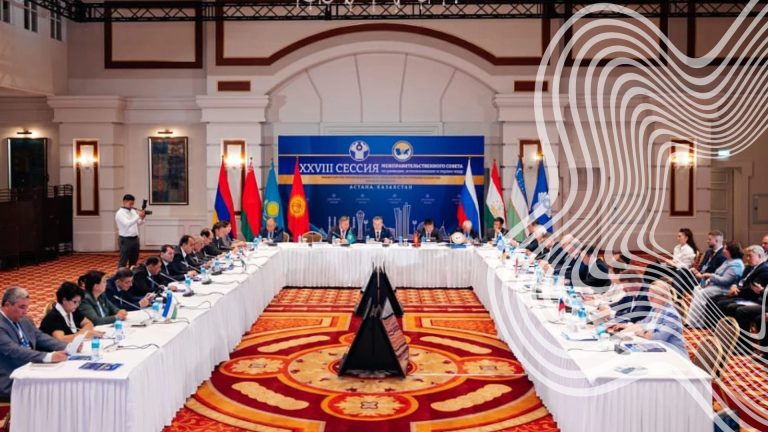
    The XXVIII Session of the Intergovernmental Council in Astana marked another step in ongoing efforts to strengthen cooperation among CIS countries in the field of geology and subsoil use. With delegates from Armenia, Belarus, Kazakhstan, Kyrgyzstan, Russia, Tajikistan, Uzbekistan and the CIS Executive Committee, the event reflected the region’s interest in consolidating expertise and maintaining a coordinated approach to mineral resource governance.

    The agenda addressed a broad range of issues, from modern methods of geological mapping and digitalisation of exploration processes to youth involvement and the preservation of geological heritage. This breadth indicates an awareness of the multiple challenges facing the sector, not only in economic terms but also in social and environmental dimensions.

    The 28th session of the Intergovernmental Council on Exploration, Use and Conservation of Mineral Resources (Межправительственного совета по разведке, использованию и охране недр) took place in Astana, Kazakhstan on 25September 2025, with representatives from seven post-Soviet states in attendance. The council’s primary objective is to promote cooperation and coordination among its member states in the field of mineral exploration, use, and conservation. However, the session’s proceedings also highlighted the challenges and tensions that arise from the extraction of Kazakhstan’s vast mineral resources.

    The council’s Chairman, Yerlan Esenaliuly Akbarov, emphasised the importance of strengthening cooperation and partnerships among member states to address the complex geological challenges facing the region. Marat Mammbetovich Jusupbekov, the Director of the Kyrgyz Geological Service, presented a report on the activities of the council during the 2024-2025 period, highlighting the progress made in implementing joint projects and promoting the development of modern geoscientific methods.

    While the council’s focus on cooperation and technology transfer is a positive step, concerns remain regarding the environmental and social impact of mineral extraction in Kazakhstan. The country’s extractive industries have faced criticism for their environmental record, and local communities have raised concerns about the lack of transparency and accountability in the decision-making process.

    The council’s discussion on modern methods and approaches to geological research and exploration suggests that the member states are aware of the need to balance economic development with environmental protection. However, the lack of concrete measures to address these concerns raises questions about the council’s commitment to sustainability.