Tag: nuclear power plant

  • Kazakhstan Set to Join Nuclear Club: Nation Builds First Power Plant

    Kazakhstan Set to Join Nuclear Club: Nation Builds First Power Plant

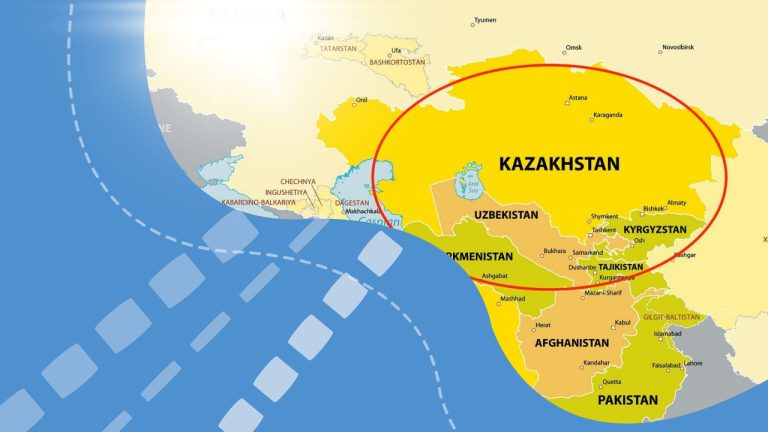
    Kazakhstan, a key ally of Russia and responsible for 43% of global uranium production in 2022, is embarking on a significant step towards nuclear power generation. Possessing 12% of the world’s uranium resources and previously operating a now-decommissioned Russian-built reactor, the nation is now actively pursuing its first nuclear power plant (NPP). This development, as reported by the World Nuclear Association, signals a potential shift in the global nuclear landscape.

    Currently, Kazakhstan focuses on producing nuclear fuel pellets, adding value to its uranium output. A new fuel fabrication plant, with 49% Chinese investment, is also under construction. In 2023, uranium production reached 21,112 tonnes, with projections of 21,000-22,500 tonnes for 2024. Kazatomprom, the national atomic company, manages 13 uranium mining projects, some in joint ventures with foreign entities.

    President Kassym-Jumart Tokayev recently emphasised the urgent need for the NPP, citing growing energy shortages and the country’s development goals. He instructed the government to create long-term plans for the nuclear industry and identify suitable locations for future plants, prioritising modern, safe technologies. The Almaty region is likely to host the first NPP, according to Kazakh news outlet Vlast.kz, quoting Prime Minister Olzhas Bektenov. President Tokayev reiterated the commitment to carbon neutrality, but with a more “rational” approach.

    The government aims for complete energy self-sufficiency and reserves of 15-20%, targeting an additional three gigawatts of energy capacity within two years. Strengthening the Western Zone’s electrical networks by 2027 is also planned.

    While Kazakhstan has considered nuclear power for decades, the legacy of Chernobyl and the Semipalatinsk nuclear test site has bred public scepticism. Concerns about nuclear safety, corruption, and dependence on foreign infrastructure remain. A recent referendum, however, reportedly saw 70% of voters support the construction of NPPs.

    Choosing a reactor vendor presents a geopolitical challenge. Russia, France, China, and South Korea are all potential suppliers, and balancing technical and commercial factors with international relations will be complex. Financing and localising the projects are also critical. Some fear Russian influence via Rosatom, but Kazakhstan’s growing capabilities, including fuel assembly production with French technology and Chinese investment, offer more options. Carnegie Politika suggests that Kazakhstan’s sovereign wealth fund and increasing availability of foreign loans can address financial needs.
    This move could mark the beginning of Kazakhstan’s nuclear era. While nuclear energy for civilian use is accepted in theory, its potential for dual use raises concerns. Kazakhstan’s development will make it the first Central Asian nation with a nuclear power programme, impacting the entire region. With both China and Russia having vested interests in Central Asia, particularly Kazakhstan, it is vital that this resource-rich region, seen as a bridge between East and West, does not become a stage for superpower rivalry.


    Prof. KN Pandita (Padma Shri) is the former director of the Center of Central Asian Studies at Kashmir University. This article reflects the author’s personal views and not necessarily those of EurAsian Times. He can be contacted at knp627 (at) gmail.com.

  • Rosatom CEO Confirms Readiness to Join Kazakhstan’s NPP Project

    Rosatom CEO Confirms Readiness to Join Kazakhstan’s NPP Project

    Rosatom’s CEO Alexey Likhachev has confirmed the Russian state nuclear energy corporation’s readiness to participate in the construction of Kazakhstan’s first nuclear power plant (NPP). This announcement follows discussions between the heads of government of Kazakhstan and Russia, and suggests a move towards closer collaboration on the project.

    “Based on what the heads of our cabinets [Olzhas Bektenov and Mikhail Mishustin] discussed, I think it is safe to say that we are heading toward joint resolutions,” Likhachev told Interfax-Kazakhstan.

    Likhachev emphasised the existing cooperation between the two countries in the nuclear sector, highlighting Kazakhstan’s significant expertise in nuclear technologies and its position as a leading uranium producer. He noted that Kazakhstan is approaching the project with a high level of professionalism, engaging with multiple potential vendors.

    A recent visit by a Kazakhstani delegation to the Leningrad NPP in Saint Petersburg, where they examined Russian nuclear technologies and infrastructure, further underscores the growing interest in Rosatom’s offerings. Likhachev reiterated Rosatom’s commitment to the project, stating, “We will work here with great pleasure.”

    Kazakhstan’s President Kassym-Jomart Tokayev has previously stated that the NPP will be built by an international consortium. Rosatom is among four shortlisted potential vendors, alongside China’s CNNC, South Korea’s KHNP, and France’s EDF. Kazakhstan’s Ministry of Energy aims to select the winning bidder by June. Rosatom’s public expression of interest signals a strong intent to secure the contract.

  • Designs chosen for mini nuclear reactors

    Designs chosen for mini nuclear reactors

    The government has selected designs from six companies for the development of the next generation of mini nuclear reactors. EDF, GE-Hitachi Nuclear Energy International LLC, Holtec Britain Limited, NuScale Power, Rolls Royce, and Westinghouse Electric Company UK Limited have been chosen to proceed to the next phase of the Small Modular Reactor (SMR) competition. This initiative is part of the government’s plan to derive up to a quarter of the UK’s electricity from nuclear power by 2050.

    SMRs, being smaller in size compared to conventional nuclear reactors, can be manufactured in factories, resulting in faster and more cost-effective construction. The government and Great British Nuclear have deemed these selected designs as the most capable of delivering operational SMRs by the mid-2030s.

    In the upcoming stage, the companies will have the opportunity to bid for government contracts. Successful bids from the six companies will proceed to the contract award stage in the summer of next year.

    Claire Coutinho, the Energy Security Secretary, emphasized the benefits of Small Modular Reactors in rapidly expanding nuclear power in the UK. She highlighted that SMRs will contribute to delivering cheaper, cleaner, and more secure energy for both households and businesses, while also creating well-paid, high-skilled jobs and fostering economic growth. This competition has attracted designs from around the world, positioning the UK at the forefront of the global race in developing this cutting-edge technology and solidifying its status as a leader in nuclear innovation.

    Gwen Parry-Jones, the CEO of Great British Nuclear, expressed the significance of this announcement in advancing the government’s objective of bolstering nuclear power in the country. The priority throughout this process has been to prioritize reliable and sustainable power supply to the grid at an early stage. Therefore, the initial focus was on technologies that were deemed most likely to achieve a final investment decision by 2029. The selected companies can now prepare for the subsequent stages of the competition, with the aim of reaching a final contract agreement in the summer. They may potentially benefit from significant support from public funds.

    Through these advancements, the UK is taking significant strides towards realizing its nuclear power goals, ensuring a reliable and sustainable energy future.

  • Poland issues environmental permit for first nuclear power plant

    Poland issues environmental permit for first nuclear power plant

    PEJ, the Polish government company that is progressing its policy to deploy up to six reactors at multiple sites in the country by 2040, submitted the environmental impact assessment (EIA) report for the first plant to GDOŚ on 29 March 2022. GDOŚ is an expert institution responsible for environmental protection and control of the investment process.

    The EIA report examined the environmental impact of constructing and operating a plant with a generating capacity of up to 3750 MWe in the area of ​​the municipalities of Choczewo, Gniewino and Korkowa in the province of Pomerania. PEJ said the final EIA report complied with the provisions of the decision of GDOŚ, which in 2016 defined the scope of the environmental report in relation to the considered location variants and their technical sub-options, as well as in relation to the infrastructure accompanying the power plant.

    The draft decision was reviewed by the Director of the Maritime Office in Gdynia, the State Sanitary Inspector for the Pomorskie Voivodeship, the Director of the Regional Board of Water Management in Gdańsk of the State Water Holding Wody Polskie, the President of the Polish National Atomic Energy Agency, and the Minister of Climate and Environment.

    GDOŚ has now issued its final decision, which PEJ said is “a key permit obtained in the investment process, as subsequent administrative approvals, including the location decision and the construction permit, must be consistent with the terms and conditions contained in the decision on environmental conditions”.

    The obtained decision on environmental conditions determines the site variant for the first nuclear power plant in Poland, at the Lubiatowo-Kopalino site in the Choczewo municipality. It also defines the conditions of using the environment at the stage of development and operation of the facility, requirements concerning the environment protection necessary to be included in the design documentation, requirements for counteracting the effects of industrial accidents, and it also imposes an obligation of the reassessment of environmental impact, as part of the procedure for issuing the construction permit.

    The decision was preceded by national and transboundary consultations with 14 countries that applied for participation in this procedure. The national consultations, held from 20 July to 18 August 2023, included all residents of Poland, who could review the documentation and submit their comments and conclusions. The transboundary consultations were held from September 2022 until July 2023. As part of the procedure, relevant protocols were signed with all the countries involved, including four protocols signed after intergovernmental expert meetings held under Article 5 of the Espoo Convention, which contributed to closing the process within the assumed timeframe.

    “The issued decision on environmental conditions is one of the most important stages in the permitting process and brings us significantly closer to the start of the construction of the first nuclear power plant in Poland,” said PEJ President Mateusz Berger. “It defines the conditions that must be met in order to execute a nuclear investment project in compliance with environmental regulations and requirements on both the national and international level.”

    PEJ – a special-purpose vehicle 100% owned by the State Treasury – has already obtained a decision-in-principle issued by the Ministry of Climate and Environment confirming that the company’s investment is in line with the energy policy implemented by the state. In August, it applied to the head of the Pomeranian Voivodeship for a location decision for the plant.

    The Polish government selected the Westinghouse AP1000 reactor technology for construction at Lubiatowo-Kopalino in Pomerania in November 2022.

    Westinghouse and Bechtel have just signed a formal agreement to partner on the design and construction of the plant. They expect to sign an engineering services contract with PEJ within the next week.

  • The perception of the population regarding the construction of a nuclear power plant in Kyrgyzstan

    The perception of the population regarding the construction of a nuclear power plant in Kyrgyzstan

    According to the survey conducted by the initiative group “Green Kyrgyzstan” regarding the construction of a nuclear power plant in Kyrgyzstan, it is evident that the population holds a predominantly negative sentiment towards this initiative. The survey revealed that approximately 89% of respondents associate the construction of a nuclear power plant with addressing the shortage of electricity in the country. The population recognizes the insufficiency of hydropower due to water scarcity and expresses concern about the energy crisis and its underlying causes.

    A significant majority, approximately 78.9% of those surveyed, believe that the country is not ready for the construction of a nuclear power plant. This sentiment primarily arises from the lack of information provided by the government regarding the measures taken to mitigate the risks associated with nuclear power. Transparency in discussing safety measures is also highlighted as a concern.

    The survey respondents expressed their reservations about the location of the nuclear power plant and the accountability of those responsible for its operation. They emphasize the need for specific details and assurance that all conditions will be met. The lack of trust is further amplified by a previous experience with a thermal power plant, where inadequate modernization resulted in malfunctions during the first winter.

    Regarding the involvement of foreign specialists in the construction and operation of the nuclear power plant, a majority of respondents (65.9%) stated that they would not consent to it. The population fears that foreign experts may leave after the project’s completion, relinquishing their responsibility for the safe operation of the plant.

    When it comes to domestic specialists, opinions were more divided. While 50.7% of respondents expressed willingness to entrust the construction to local experts, provided that all risks are shared, they also emphasized the need for enhanced training and expertise in the field.

    One of the primary reasons for the negative sentiment towards the nuclear power plant is the apprehension surrounding atomic electricity generation itself. The majority of respondents (75.9%) believe that thorough research on the risks and experiences of other countries has not been adequately conducted before discussing the construction of a nuclear power plant. They advocate for a comprehensive evaluation of long-term implications and decision-making based on foresight.

    The survey indicates that the population has concerns about the potential dangers posed by a nuclear power plant to the environment and the entire population of Kyrgyzstan. The disposal and storage of radioactive waste, the risks associated with corruption and human factors, as well as increased seismic activity in the mountainous region, are all identified as significant risks.

    Furthermore, respondents worry that a nuclear power plant could become a target for extremists due to its proximity to Afghanistan, potentially leading to destructive acts. The memory of past nuclear disasters, such as Chernobyl and Fukushima, also fuels anxiety, with 87.2% of respondents believing that a similar incident could occur in Kyrgyzstan.

    When asked about peaceful nuclear research, opinions were nearly evenly divided. While some expressed pride in Kyrgyzstan becoming a leading country in various nuclear research, others highlighted the potential risks associated with nuclear energy. A majority (59.4%) did not support the use of safe nuclear energy or the construction of a nuclear power plant in Kyrgyzstan, citing a lack of information about the country’s nuclear energy experience.

    In terms of decision-making, most of the population (63.3%) believes that the question of constructing and commissioning a nuclear power plant should be decided through a nationwide referendum. A significant portion (56%) also believes that competent individuals in the field should participate in the decision-making process, as there is limited trust in the government’s ability to make informed decisions due to frequent turnover.

    Ultimately, 64% of those surveyed expressed strong criticism and proposed a complete moratorium on the construction of nuclear power plants in Kyrgyzstan. These survey results reflect the deep concerns and fears held by the general population regarding the proposal to build a nuclear power plant in their country.

  • PEJ Submits Location Decision Application For First Nuclear Power Plant

    PEJ Submits Location Decision Application For First Nuclear Power Plant

    Polskie Elektrownie Jądrowe (PEJ) has submitted an application to the government of the northern Pomerania province seeking a location decision for Poland’s first nuclear power plant.

    The company said the move is “one of the most important steps” in the administrative process preceding the construction of a nuclear power plant. The proposed site lies within the Choczewo municipality in Pomerania.

    The decision will give PEJ the rights to acquire necessary land both onshore and offshore for the project’s construction, the company said.

    It will also outline the real estate to be covered by the investment and set forth conditions for implementation, including technical, environmental, conservation, and fire protection considerations.

    In November 2022, Warsaw chose US-based Westinghouse Electric to supply its AP1000 reactor technology for a three-unit nuclear power station at the Lubiatowo-Kopalino site in the municipality of Choczewo near the Baltic coast of Pomerania.

    The first AP1000 unit is expected online in 2033 with others planned to follow into the 2040s.

    Several other crucial administrative requirements have already been completed, including a decision-in-principle from the ministry of climate and environment affirming the project’s alignment with state energy policies, and a general opinion confirming the validity of safety analysis verification conducted by the national atomic energy agency. The process to obtain a decision on environmental conditions is also at an advanced stage.

    Nuclear new-build plans are a central part of Poland’s drive to fundamentally realign its energy sector by 2040. The venture is one of Poland’s most significant public works projects ever and will provide both energy security and support for a growing economy.

  • Joint Venture Submits Application For Decision-In-Principle On New Nuclear At Patnow Coal Site

    Joint Venture Submits Application For Decision-In-Principle On New Nuclear At Patnow Coal Site

    A Polish joint venture company has submitted an application for a decision-in-principle on the construction of a nuclear power plant consisting of at least two South Korean-supplied APR1400 reactors with a target date for commercial operation of 2035.

    PGE Pak Energia Jadrowa, a joint venture between state energy group PGE and private energy company Ze Pak, said the application was submitted to the Ministry of Climate and Environment for a nuclear power station at a coal site in the Patnow-Konin region of the Wielkopolska province in central Poland.

    PGE Pak Energia Jadrowa was formed earlier this year to be responsible for all aspects of the project to build at least two South Korean APR-1400 pressurised water reactor units at the Patnow coal plant site, including an initial feasibility study, site surveys, an environmental impact assessment, licensing procedures and securing of financing.

    In January, a Korea Hydro & Nuclear Power (KHNP) official said it would be feasible to deploy up to four of the company’s APR-1400s at Patnow.

    The site has two coal-fired power plants in commercial operation with a combined output of about 1,100 MW, which makes it one of Poland’s largest energy facilities.

    Ze Pak, which owns the Patnow site, has been looking at nuclear energy as an option to decarbonise its generation portfolio. The company operates four power plants in Poland and has interests in lignite mining.

    In October 2022, Ze Pak and PGE signed a letter of intent with KHNP for eventual deployment of APR1400 plants at Patnow.

    PGE said two reactors could provide Polish homes and businesses with about 22 TWh of energy, or about 12% of today’s energy consumption in Poland.

    Crucial Step In Planning Process

    The company said obtaining a decision-in-principle is crucial for starting further works related to the location, environmental studies and finally applying for a permit to build a nuclear power station.

    Jakub Rybicki, president of PGE Pak Energia Jądrowa, said: “We are starting negotiations with our Korean partner regarding the feasibility study, agreements on financing our project and the creation of a Polish-Korean company that will directly lead this process.”

    Poland is bullish on nuclear and a number of projects have begun to develop large-scale plants and small modular reactors.

    In July the climate ministry approved plans for the country’s first commercial nuclear power station, which will be built in Pomerania in the north of the country with for Westinghouse-supplied AP1000 plants.

    The ministry has also issued a decision-in-principle for copper and silver producer KGHM Polska Miedz’s plan to build a NuScale Voygr SMR plant with a capacity of 462 MW.

    KGHM wants to explore the deployment of SMR technology to repurpose or replace existing coal-fired power plants and provide electricity and heat for its industrial processes.

    KGHM said that by 2030, it wants 50% of the electricity it uses to come from its own sources.