Tag: nickel

  • Eramet Cuts 2025 Capital Spending and Seeks Lender Waiver Amid Falling Sales and Rising Debt

    Eramet Cuts 2025 Capital Spending and Seeks Lender Waiver Amid Falling Sales and Rising Debt

    French mining and metals group Eramet has lowered its capital expenditure forecast for 2025 and announced plans to unveil additional measures in December aimed at stabilizing its finances in the face of weak metal prices, operational challenges, and mounting debt.

    In a third-quarter sales statement released Thursday, the company said it now expects to spend €400 million–€425 million ($466 million–$496 million) this year, down from the previous range of €400 million–€450 million. The revision comes as part of a broader performance review launched in June by new CEO Paulo Castellari, focused on preserving liquidity and strengthening the balance sheet.

    Eramet also disclosed that it has requested a waiver from lenders to mitigate the risk of breaching its gearing covenant as of December 31, 2025. The group said more details about its cost-cutting and liquidity-improving actions will be presented in early December.

    Third-quarter sales dropped 10% year-on-year to €720 million, pressured by softer metal prices and logistics issues at its manganese operations in Gabon. Due to rail capacity constraints in the country, Eramet cut its 2025 target for transported manganese ore volumes to 6.1–6.3 million metric tons, down from 6.5–7.0 million tons previously — the second downward revision this year.

    The company maintained its 2025 production outlook for its Weda Bay nickel joint venture in Indonesia at 36–39 million wet metric tons, and for its new lithium project in Argentina, where it expects to produce 4,000–7,000 tons of lithium carbonate equivalent in 2025. Both figures were reduced earlier in July.

    Eramet, a key player in Europe’s critical minerals supply chain, has been under pressure from falling prices for nickel and manganese — metals vital to the green transition — as well as operational bottlenecks across its global portfolio. Castellari’s restructuring strategy is seen as pivotal to restoring confidence among investors and lenders as the group navigates an increasingly volatile commodities market.

  • Boliden Warns of Investment Impact from Finnish Mining Tax Proposal

    Boliden Warns of Investment Impact from Finnish Mining Tax Proposal

    Boliden, the Swedish mining giant, has issued a stark warning to the Finnish government over its proposed tax reforms, which it claims will have far-reaching consequences for the EU’s critical metal supplies. The company, which owns the Kevitsa copper and nickel mine in Finland, estimates that the proposed tax hike will result in a 20-30 million euro annual increase in costs, the bulk of which is due to a quadrupling of the recently introduced Finnish mining tax.

    In a strongly worded submission to the Finnish government, Boliden argues that the proposed tax reforms are “inadequately prepared” and lack proper impact assessments, which could lead to “serious consequences” for the investment climate in Finland. The company also notes that the current proposals should be withdrawn in their entirety.

    The proposed tax hike has sparked concerns among EU policymakers, as both copper and nickel, as well as cobalt and PGMs (platinum group metals), are designated as strategic and/or critical metals by the EU. The Kevitsa mine is one of the largest producers of these metals in the EU, and any disruption to its operations could have significant implications for the bloc’s raw material supplies.

    “We understand the need for a balanced tax system, but this proposal is unacceptable,” said a Boliden spokesperson. “The increased tax burden will not only harm our business but also threaten the EU’s critical metal supplies. We urge the Finnish government to reconsider its proposal and engage in a more inclusive and evidence-based decision-making process.”

    The Finnish government is expected to make a final decision on the tax reforms in the coming weeks.

  • Kazakhstan Unveils 38 Major New Mineral Deposits

    Kazakhstan Unveils 38 Major New Mineral Deposits

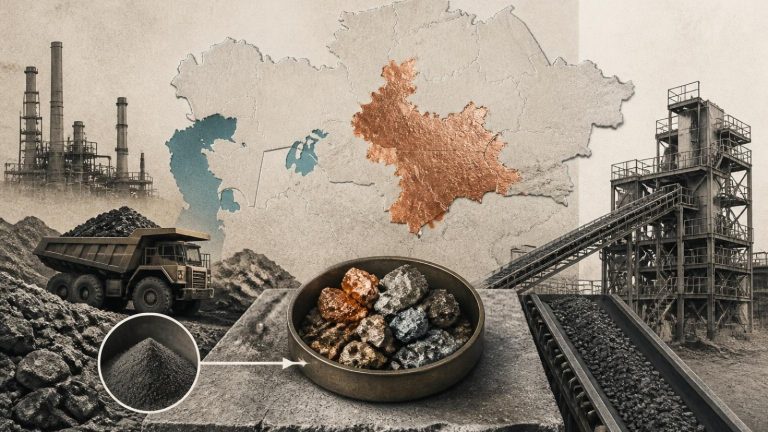
    Kazakhstan has announced the discovery of 38 new deposits of copper, nickel, coal, gold, and rare earth metals in the first quarter of 2025, according to an official government statement.

    The discoveries were made following extensive geological studies, including aerial photograph analysis, route surveys, drilling, geochemical testing, radiation and water sampling, and desk research.

    The newly identified deposits are estimated to contain:

    • 2.6 million tonnes of rare earth metals
    • 1.1 billion tonnes of brown coal
    • 3.7 million tonnes of copper and nickel
    • 19 tonnes of gold

    The total area of geological and geophysical exploration in Kazakhstan is expected to expand to 2.2 million square kilometres by 2026, up from just 2,000 square kilometres in 2024. This initiative follows a directive from President Kassym-Jomart Tokayev, who has instructed the cabinet to prioritise mineral exploration.

    To support this effort, the government has allocated $44.4 million for geological exploration between 2024 and 2026, with $14.8 million designated for 2025.

    Between 2018 and 2024, mining companies invested approximately $827.3 million in Kazakhstan’s mineral sector. In 2025 alone, exploration investments are expected to reach $206.8 million. A streamlined licensing process—requiring only reporting rather than predefined work volumes—has made the market more accessible to investors.

    Earlier this month, Eurasian Resources Group announced the discovery of a new copper deposit with projected reserves of 250,000 tonnes.

  • District Metals’ Viken Project Now Second Largest Uranium Deposit Globally Following Major Resource Update

    District Metals’ Viken Project Now Second Largest Uranium Deposit Globally Following Major Resource Update

    District Metals (TSXV: DMX) has unveiled a significant upgrade to its Viken uranium project in central Sweden, announcing a new resource estimate that positions the project as the second largest uranium deposit in the world. The update has driven a substantial increase in the company’s share price, reflecting investor enthusiasm.

    The updated resource now totals 456 million indicated tonnes with a grade of 175 parts per million (ppm) uranium oxide (U3O8), equating to 176 million contained pounds of U3O8. This marks an almost ninefold increase compared to the previous 2010 resource estimate. Inferred resources also saw a significant boost, growing by 44% to 4.33 billion tonnes at a grade of 161 ppm U3O8, yielding 1.53 billion contained pounds.

    District CEO Garrett Ainsworth expressed that the impressive growth in the resource estimate highlights the strong continuity in grade and thickness of the mineralized Alum Shale formation across the Viken deposit. He also mentioned the potential for further expansion of the inferred resource, further underscoring the project’s promising future.

    Following the announcement, District Metals’ shares surged by 23%, reaching C$0.35 per share in afternoon trading on Tuesday, giving the company a market capitalization of C$45.9 million.

    Sweden’s Uranium Revival
    The new resource estimate for Viken is bolstered by the growing momentum for uranium in Sweden. The country is on the cusp of lifting its 2018 ban on uranium exploration and mining. The Swedish government, led by Prime Minister Ulf Kristersson, has been pushing to overturn the ban since 2023, with legislative changes expected to come into effect by January 2024.

    While Sweden’s uranium output is small on the global stage, its resources represent 27% of Europe’s total, according to the Swedish Geological Survey. The global demand for uranium, driven by the need for zero-emission energy sources, is also creating a favorable environment for Sweden’s uranium projects.

    Global Ranking of Viken
    Viken’s resource estimate places it among the largest uranium projects in the world. District Metals’ analysis, compared to other global uranium projects, positions Viken just below BHP’s Olympic Dam polymetallic project in South Australia, based on the total contained uranium.

    Additional Critical Minerals
    In addition to uranium, the Viken deposit hosts significant amounts of other critical minerals. The indicated vanadium resource has increased more than 16 times, with 2.85 billion pounds of vanadium oxide (V2O5) at a grade of 2,836 ppm. The inferred vanadium resource has grown by 45% to 24.29 billion pounds at a grade of 2,543 ppm V2O5.

    The indicated zinc resource totals 413 million pounds, grading 411 ppm zinc, and the inferred resource adds 3.9 billion pounds at a grade of 417 ppm. The nickel resources are also notable, with 332 million pounds of nickel in the indicated category at a grade of 330 ppm, and 3 billion pounds in the inferred category at a grade of 321 ppm.

    Next Steps
    The Swedish government’s plans to lift the uranium mining ban will influence District’s decision on whether to proceed with a preliminary economic assessment for Viken in the fourth quarter of 2023. The new resource estimate is based on 122 holes, including drilling data from previous operators between 2006 and 2012.

  • Trump Suggests Ukraine Pay US Aid with Rare Earth Minerals

    Trump Suggests Ukraine Pay US Aid with Rare Earth Minerals

    President Donald Trump proposed on Monday that Ukraine compensate the United States for its substantial financial support in the ongoing conflict with Russia by supplying rare earth minerals, a critical resource for advanced technologies.

    Speaking to reporters at the White House, Trump emphasized the potential for an “equalisation” deal, referencing the nearly $300 billion in aid the United States has provided to Ukraine. “We’re telling Ukraine they have very valuable rare earths,” Trump stated. “We’re looking to do a deal with Ukraine where they’re going to secure what we’re giving them with their rare earths and other things.”

    The proposal highlights the strategic importance of rare earth minerals, a group of 17 metals essential for manufacturing electronics, electric vehicles, and other high-tech products. These minerals are crucial for power generation and motion technologies, with no known substitutes.

    While Trump did not specify exactly which minerals he was referencing, Ukraine does possess significant deposits of uranium, lithium, and titanium. However, the country is not considered a top-five global producer of these resources.

    The United States currently has limited rare earth mineral production, with only one operating mine and minimal processing capacity. In contrast, China dominates the global market for these critical minerals.

    The US Geological Survey identifies 50 minerals as critical for the country’s economic and national defense interests, including various rare earths, nickel, and lithium.

    The feasibility and potential diplomatic implications of Trump’s proposed mineral-for-aid exchange remain unclear, and further details have not been provided.

  • Ukraine: A Potential Key Player in the Global Critical Raw Materials Race?

    Ukraine: A Potential Key Player in the Global Critical Raw Materials Race?

    In a recent statement, U.S. Secretary of State Marco Rubio provided a clear outlook on the future of American policy regarding critical raw materials. As global supply chains for these materials continue to shift, Ukraine’s vast reserves of key minerals could play a pivotal role in reshaping the global balance of power, particularly in the ongoing confrontation between the U.S. and China.

    Rubio highlighted several critical materials essential for advanced technology, renewable energy, and national security, including neodymium, dysprosium, lithium, cobalt, nickel, and titanium. Remarkably, Ukraine is home to abundant reserves of these very materials—and more. With its substantial deposits of germanium and gallium, Ukraine is positioned to be a critical player in the global supply of strategic resources.

    A Treasure Trove of Critical Materials

    • Titanium Ore (Ilmenite): Ukraine ranks 11th in the world for ilmenite reserves, found in the Irshanske, Byrzulivske, and Malyshevske deposits across the Zhytomyr, Kirovohrad, and Dnipropetrovsk regions. Titanium is vital for aerospace, defense, and high-tech manufacturing.
    • Lithium: As a key component in batteries, particularly for electric vehicles and renewable energy storage, Ukraine holds 1% of the world’s lithium reserves—equivalent to 30% of Europe’s supply. Major deposits can be found in Polokhivske (Kirovohrad region) and Balka Kruta (Zaporizhzhia region). The strategic importance of lithium was recently highlighted by China’s attempts to use the resource as leverage in international relations.
    • Germanium and Gallium: Crucial for electronics and telecommunications, these materials are abundant in Ukraine’s coal and lignite deposits in the Donetsk and Lviv-Volyn basins. Before the full-scale war, Ukraine was the world’s third-largest exporter of germanium, although exports have been halted due to the ongoing conflict. Ukraine’s reserves of these rare metals remain a critical asset for global tech industries.
    • Rare Earth Elements (Neodymium and Dysprosium): Located in the Zhytomyr region, these elements are indispensable in the production of magnets for electric vehicles, wind turbines, and high-tech equipment.
    • Nickel and Cobalt: Essential for battery production, Ukraine’s nickel and cobalt reserves are also noteworthy, found in deposits like Devladivske (Dnipropetrovsk region), Lypovenkivske (Kirovohrad region), and Dereniukhivske (Mykolaiv region). While the reserves are smaller compared to other countries, they still contribute to Ukraine’s strategic importance.
    • Manganese and Iron: Ukraine is a major global player in manganese and iron ore production, with significant deposits in the Nikopol Manganese Basin and the Kryvyi Rih Iron Ore Deposit. These resources are fundamental to the global steel and metallurgy industries.

    Ukraine’s Growing Role in Global Supply Chains

    As the global supply chain for critical raw materials becomes increasingly volatile, especially with rising tensions between the U.S. and China, Ukraine has the potential to become a key partner for the U.S. in securing access to these vital resources. With its diverse array of minerals and metals, the country offers not only essential raw materials but also strategic geopolitical leverage in a rapidly changing world order.

    The country’s natural resources, coupled with its strategic location in Europe, make it a valuable partner for countries looking to diversify their supply chains and reduce reliance on China.

    By prioritising partnerships with the U.S. and other nations, Ukraine can play a pivotal role in shaping the future of critical materials and ensure its place as a key player in the global economy.

    The Road Ahead

    The ongoing geopolitical shifts present an opportunity for Ukraine to position itself as a leading supplier of critical materials. With strategic investments in its mining and extraction sectors, Ukraine can not only boost its economy but also secure its place in the new global order. Now more than ever, the world needs Ukraine’s resources, and Ukraine is ready to take center stage.

  • Putin Suggests Limiting Exports of Uranium, Titanium, and Nickel in Response to Western Sanctions

    Putin Suggests Limiting Exports of Uranium, Titanium, and Nickel in Response to Western Sanctions

    On Wednesday, Russian President Vladimir Putin proposed that Moscow should consider imposing export restrictions on key commodities such as uranium, titanium, and nickel in response to Western sanctions. During a televised meeting with Prime Minister Mikhail Mishustin, Putin stated, “Please take a look at some of the types of goods that we supply to the world market… Maybe we should think about certain restrictions – uranium, titanium, nickel.”

    Russia ranks as the fourth largest uranium producer globally, according to the World Nuclear Association. This suggestion follows U.S. President Joe Biden’s recent signing of a law that bans the import of enriched uranium from Russia, a trade valued at approximately $1 billion annually.

    In 2023, the United States and China were the largest importers of Russian uranium, followed by South Korea, France, Kazakhstan, and Germany. Additionally, Russia holds the position of the world’s third largest titanium sponge producer, a material used in the aerospace, marine, and automotive industries, despite having limited domestic titanium reserves. Russia’s Nornickel is also the leading producer of refined nickel worldwide.


  • KazNickel to Begin Cobalt and Nickel Extraction at Gornostayevskoye Deposit

    KazNickel to Begin Cobalt and Nickel Extraction at Gornostayevskoye Deposit

    KazNickel, whose ultimate owner is Kenes Rakishev, has announced plans to commence cobalt and nickel mining at the Gornostayevskoye deposit in the Beskaragay district of the Abay region. According to the company’s latest reports, the sole participant in KazNickel is Battery Metals Technologies LTD, a Singapore-registered entity controlled by Rakishev.

    The Gornostayevskoye deposit, located 100 km west of Semey and 30 km southeast of Kurchatov, has a well-developed infrastructure. The company previously conducted pilot-scale extraction at this site. The new project envisions the development of the left-bank section of the deposit using underground borehole leaching, with an annual production target of 10,000 tons of cobalt and nickel. The left-bank section covers an area of 26.25 square kilometers, and sulfuric acid will be used in the leaching process to extract the valuable ions directly underground without bringing the ore to the surface.

    Between 2026 and 2046, KazNickel plans to drill 32,900 boreholes, each with a depth of 15-40 meters and a diameter of 16.8-24.4 cm. The company will strip the topsoil to a depth of 20 cm before drilling, storing it outside the drilling area.

    In 2022, KazNickel reported plans to begin nickel concentrate production in 2023. The company also noted a significant increase in nickel prices on the global market starting in early 2022. However, the first phase of the project, from 2026 to 2035, is currently the focus. In 2019, KazNickel extended its pilot mining operations until 2022, and the Ministry of Industry and Infrastructure Development began reviewing contract amendments in 2022 to transition to the production phase.

    KazNickel plans to use 19,500 cubic meters of water during the first phase, most of which will be technical water (17,300 cubic meters). The company recorded a loss of 263.3 million tenge in 2022, an improvement from a 1.4 billion tenge loss in 2021, with cumulative losses totaling 3.4 billion tenge by the end of 2022. Its total assets decreased to 3.3 billion tenge at the end of 2022, down from 3.8 billion tenge a year earlier.

    As of December 31, 2022, the Gornostayevskoye deposit’s cobalt-nickel ores had identified mineral resources of 470,300 tons of nickel with an average grade of 0.57% and 32,300 tons of cobalt with an average grade of 0.039%, recognized by the state accounting of Kazakhstan’s subsurface resources.

    To continue the development, KazNickel received loans from related parties — Fincraft Resources and Ertis Ferroalloy Plant. On January 13, 2023, the sole participant decided to admit a new participant, Mining Technologies Company, by redistributing shares. The new participant committed to increasing the company’s charter capital by 4.7 billion tenge, which was 6 billion tenge at the end of 2022, in exchange for a 26% stake. The actual funds were received from Mining Technologies Company in March 2023.

    Kenes Rakishev ranks 19th among Kazakhstan’s wealthiest individuals, according to Forbes, with a net worth of $435 million. He solely owns Fincraft Group, through which he controls 78.85% of Fincraft Resources and BTA Bank.

  • New Nickel-Cobalt Deposit in Aktobe Region to Begin Development in 2025

    New Nickel-Cobalt Deposit in Aktobe Region to Begin Development in 2025

    A mining company plans to start extracting silicate-nickel ores from the Jusalinskoye deposit in 2025. The licensed area is located in the Aktobe region, and the project documentation has been published on Kazakhstan’s Unified Environmental Portal.

    The company plans to mine metals for 20 years. The reserves of the Jusalinskoye deposit were put on the state balance sheet in 2015 and amount to 44.2 thousand tons of nickel and 2.57 thousand tons of cobalt. Development will be carried out using open-pit mining due to the shallow occurrence of the components.

    By the fourth year, it is planned to achieve maximum annual productivity of the quarry, with over 63 thousand tons of ore expected to be sent for processing annually.

    The company “KazMetallGroup” previously announced a similar project and owns another nickel-cobalt deposit, Novo-Buranovskoye, in the same region. It is expected that the ore from both sites will be processed at a single mining and processing plant.

  • Indonesia’s Nickel Dominance: The Rise of Low-Cost Suppliers and the Global Market Shake-Up

    Indonesia’s Nickel Dominance: The Rise of Low-Cost Suppliers and the Global Market Shake-Up

    Indonesia’s low-cost nickel suppliers will wipe out rivals in the next few years, cementing the country as the world’s dominant producer of the metal vital to electric car batteries, the head of French miner Eramet has warned.

    The south-east Asian nation could end up accounting for more than three-quarters of the world’s highest class of pure nickel in five years from now, Christel Bories told the Financial Times, with radical consequences for competitors elsewhere.

    “It has really made a big part of the old traditional players structurally non-competitive for the future,” Bories said. “This part of the industry will either disappear or be subsidised by governments.”

    She added: “The uncompetitive mines elsewhere will close. I’m not sure there will be so many governments deciding to subsidise big production with a lot of money just to compete with Indonesia production.”

    The major shift in the market and tumbling nickel prices have already affected mining companies such as BHP, IGO and First Quantum, which have cut production and shut down mines in Western Australia.

    Eramet sits on both sides of the fence, with operations in Indonesia’s Weda Bay, the world’s largest nickel mine, as well as New Caledonia through its subsidiary Société Le Nickel.

    Bories’ comments come as Eramet wrangles with the French government — a holder of 27 per cent of its shares — on a solution for lossmaking SLN nickel facilities, which the group has refused to fund further.

    She said the company was close to finding a way to rearrange the loans offered to SLN by Paris so that they would no longer affect Eramet’s debt ratios, through either a different method of consolidation or quasi-equity loans.

    The nickel crisis has become so severe that Glencore has announced plans to sell its stake in the Koniambo mine in New Caledonia after making losses on the asset for more than a decade. Commodity trader Trafigura is also locked in negotiations with the French government over Prony Resources, the third major nickel producer in the territory.

    Bories said Eramet would continue to operate its mine for now but would “never” contemplate other nickel investments, including rescuing Koniambo.

    Nickel prices have dived more than 30 per cent to $17,462 a tonne in the past year after two years of elevated prices. Few bet against the glut disappearing any time soon as Chinese companies continue to plough investment into Indonesia’s resources.

    “There’s a serious structural challenge as a result of Indonesian nickel,” said Duncan Wanblad, chief executive of Anglo American, which has nickel mines in Brazil. “That is certainly putting cost pressure on most of the other ferronickel businesses that exist in the world today.”

    This week Eramet reported an 85 per cent slide in net income for 2023 to €109mn, including a €218mn impairment on SLN.