Tag: mining law

  • Serbia Launches Consultation on New Mining Law to Align with EU Standards

    Serbia Launches Consultation on New Mining Law to Align with EU Standards

    Serbia’s Ministry of Mining and Energy has launched a public consultation on a new law on mining and geological exploration aimed at modernizing the country’s resource management framework and aligning it with European Union standards on critical raw materials, sustainable development, and the circular economy.

    According to the ministry’s draft outline, the legislation will be harmonized with the EU Critical Raw Materials Act and the European Green Deal, supporting Serbia’s gradual integration into the EU’s framework for sustainable mining, climate neutrality, and secure mineral supply.

    The move follows the European Commission’s decision earlier this year to include Rio Tinto’s Jadar lithium and boron project in Serbia among the EU’s strategic projects for critical raw materials — the only lithium extraction project on the list.

    The proposed law seeks to establish a modern, transparent, and efficient system for managing Serbia’s mineral and geological resources, strengthening the state’s role as owner and steward of natural assets. It also emphasizes environmental and social responsibility, calling for clearer investor obligations regarding environmental protection, land reclamation, and site remediation.

    In line with EU reporting standards, Serbia intends to adopt the Pan-European Reserves and Resources Reporting Committee (PERC) framework, the UN Framework Classification for Resources (UNFC), and the Petroleum Resources Management System (PRMS). The law will also mandate the application of ESG (environmental, social, and governance) principles throughout all stages of exploration and mining.

    Other key elements include:

    • Improving legal certainty in exploration and mining rights, with stricter oversight and consistent application of sustainability standards.

    • Defining and protecting strategic mineral deposits, ensuring they are incorporated into Serbia’s spatial and development plans.

    • Digitalizing permitting procedures through a unified online system for electronic applications and public access to data on exploration and mining areas.

    The ministry said the reform aims to ensure a gradual alignment with the EU’s green and digital transition goals while fostering investor confidence and transparency.

    The public consultation will remain open until November 11, allowing citizens, organizations, and industry representatives to submit comments and proposals on the draft framework.

  • 15th MINEX Kazakhstan Forum Highlights Second Phase of Mining Law Reform

    15th MINEX Kazakhstan Forum Highlights Second Phase of Mining Law Reform

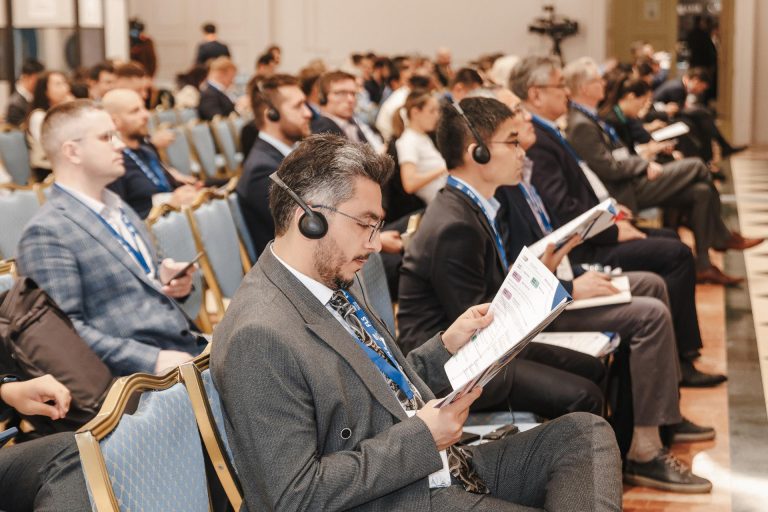
    The 15th anniversary MINEX Kazakhstan Forum has officially opened in Astana, bringing together over 450 delegates and more than 100 speakers from 30 countries, including Central Asia, Europe, the Americas, the Middle East, Southeast Asia, Africa, and Australia. The forum emphasizes Kazakhstan’s growing importance in the global mineral resource market.

    The central theme of the event is “A New Era in Kazakhstan’s Mineral Development: From Exploration to Processing.” Key discussions focused on sustainable development, ESG principles, technological innovation, digitization, investment, exploration, and cross-border cooperation.

    During the plenary session, Nikolai Radostovets, Executive Director of the Republican Association of Mining and Metallurgical Enterprises (AGMP), highlighted the need to continue reforms in subsoil use and taxation.

    He praised the government’s proactive efforts in attracting both domestic and foreign investment in geological exploration. Over 3,000 licenses have been issued, demonstrating momentum in the sector. However, Radostovets emphasized that a second phase of subsoil use reform is necessary to address remaining legislative gaps.

    Notably, he proposed splitting the current Subsoil Code into two separate laws — one for hydrocarbons and another for solid minerals — to better address the specific needs of each sector.

    Radostovets also outlined key priorities for transforming the sector:

    • Classifying exploration expenses as tax-deductible,

    • Introducing agreements for processing low-grade deposits,

    • Stimulating the processing of technogenic mineral formations,

    • Developing a new Tax Code with provisions tailored to the mining sector.

    One of the central issues is the introduction of royalties for new and existing deposits. While initial industry reactions were hesitant, similar to past transitions from contracts to licensing, Radostovets expressed optimism that fair and competitive royalty rates will encourage investment and higher value-added processing.

    The executive also called for greater alignment between the Subsoil Code and other legislation, such as the Water and Land Codes, to address legal inconsistencies.

    Legislative amendments — more than 60 proposals — are currently under review by the Ministry of Industry and Construction. A working group will begin public discussions in the coming weeks, and the finalized amendments are expected to be submitted to Parliament in September 2025.

    Radostovets stressed the importance of coal as a strategic resource, advocating for investment in coal chemistry despite global calls to move away from coal combustion. He also promoted the development of industrial clusters, including copper and aluminum clusters, to support local value-added production.

    “We are optimistic. The MINEX Kazakhstan Forum not only facilitates dialogue and debate but helps us move forward with meaningful reforms in Kazakhstan’s mining sector,” Radostovets concluded.