Tag: Kazakhstan energy

  • Kazakhstan Unveils 7.5 Trillion Tenge Energy Plan to Build 7.8 GW of New and Upgraded Power Capacity by 2030

    Kazakhstan Unveils 7.5 Trillion Tenge Energy Plan to Build 7.8 GW of New and Upgraded Power Capacity by 2030

    Kazakhstan has launched a national energy project targeting the construction and modernisation of 7.8 gigawatts of power generation capacity by 2030, as the government moves to address a chronic shortage of baseload electricity infrastructure that has constrained economic growth.

    The initiative, announced by the office of Prime Minister Olzhas Bektenov, will be financed entirely outside the state budget, requiring a minimum of 7.5 trillion tenge in private investment. It represents one of the most ambitious energy infrastructure programmes in the country’s post-independence history.

    At the heart of the plan are several large-scale new power stations. A coal-fired plant with a capacity of 2,640 MW will be built in Ekibastuz — Kazakhstan’s established coal power hub — while facilities of 700 MW and 500 MW are planned for Kurchatov and Zhezkazgan respectively. Advanced coal-fired combined heat and power plants will also be constructed in Kokshetau, Semey and Ust-Kamenogorsk.

    Alongside new builds, eleven existing power stations will be modernised during the same period, including the Aksu State Regional Power Plant, Ekibastuz GRES-2 and the Karaganda energy hub. The upgrades are expected to reduce the average wear rate of core power generation equipment across the sector by 12.6% within five years.

    Environmental standards feature prominently in the design of the new coal capacity. All new facilities will be built exclusively using clean coal technologies, incorporating high-efficiency electrostatic precipitators, catalytic nitrogen oxide reduction systems and wet flue gas desulphurisation equipment — measures the government says will bring emissions in line with international standards.

    The energy programme has been synchronised with upstream coal mining and rail logistics planning. Annual energy coal consumption in Kazakhstan is projected to grow by approximately 20 million tonnes by 2030 to fuel the expanded generation fleet. To meet that demand, the country’s fleet of gondola freight wagons will be expanded by 600 units per day, railway infrastructure will be modernised, and predictable tariff corridors for domestic coal supply will be introduced to provide pricing stability for power producers.

    The government also expects the national project to generate significant knock-on demand across the domestic manufacturing sector, including for locally produced boiler units, power transformers and industrial automation systems — embedding the energy build-out within a broader industrial development strategy.

  • Kazakhstan Targets Coal Output Growth as New Generation Plan Forecasts Rising Demand

    Kazakhstan Targets Coal Output Growth as New Generation Plan Forecasts Rising Demand

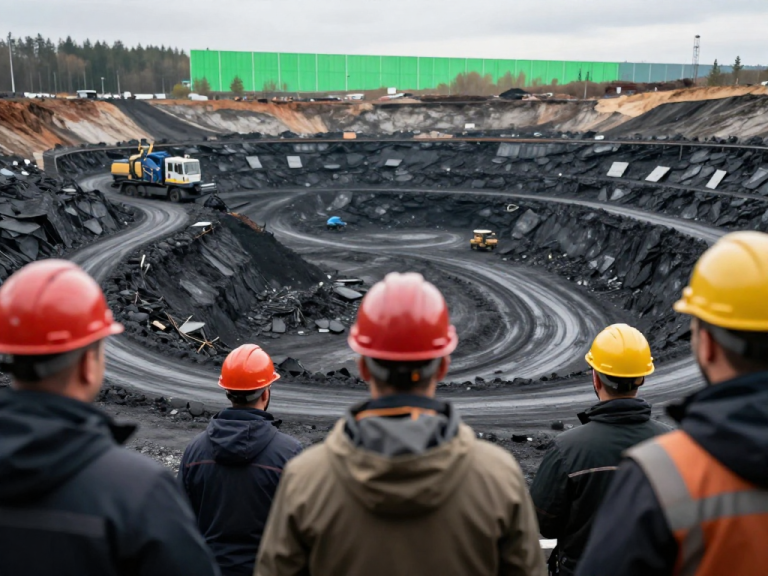
    Kazakhstan’s Ministry of Energy has held talks with the country’s largest coal producers to discuss implementation of presidential directives issued at the Fifth National Kurultai, alongside a newly adopted national plan for coal-fired power generation.

    The plan reaffirms coal’s role as a strategic asset for Kazakhstan, which holds reserves exceeding 33 billion tonnes. According to ministry forecasts, new industrial projects are expected to require an additional 19 million tonnes of thermal coal annually by 2032, placing pressure on producers to expand output capacity in the coming years.

    Major domestic mining companies have indicated readiness to meet the anticipated increase in demand. Bogatyr Komir, one of Kazakhstan’s largest coal producers, said it plans to raise production from 42.7 million tonnes to 45.2 million tonnes this year, with a longer-term target of 56.5 million tonnes annually by 2032.

    To achieve this expansion, the company intends to invest approximately KZT 360 billion in the launch of new cyclic-flow technology (CFT) complexes and the modernisation of its mining equipment fleet. The investment programme also includes the implementation of digital systems such as MES solutions for CFT operations and advanced haulage optimisation tools.

    Shubarkol Komir likewise confirmed plans to increase output to 16.1 million tonnes this year. Over the next six years, the company will invest KZT 95.5 billion in the second phase of its CFT infrastructure development, alongside nearly KZT 50 billion earmarked for new machinery and equipment purchases, including robotic systems.

    The ministry emphasised that coordinated industry efforts will be essential to maintain energy security and support industrial growth as Kazakhstan balances its resource base with evolving economic priorities.

  • Kazakhstan Drafts National Coal Power Project While Expanding Gas, Digital Energy Planning

    Kazakhstan Drafts National Coal Power Project While Expanding Gas, Digital Energy Planning

    Kazakhstan’s Ministry of Energy of Kazakhstan is preparing a National Project for the development of coal-fired power generation with a total potential capacity of around 7.6 GW, according to QazMonitor.

    Energy Minister Erlan Akkenzhenov said the initiative will prioritize modern “clean coal” technologies designed to meet environmental standards. As part of the programme, the ministry is overseeing the construction of three combined heat and power plants in Kokshetau, Semey and Ust-Kamenogorsk, with a combined capacity of 960 MW.

    The energy planning is being adjusted in the context of Kazakhstan declaring 2026 the Year of Digitalisation and Artificial Intelligence. Given the high electricity demand of data centres, the Energy Ministry and the Ministry of Digital Development, Innovations and Aerospace Industry will revisit timelines and volumes for new power capacity additions.

    Strengthening the gas sector
    To expand the country’s natural gas resource base, national gas company QazaqGaz is currently carrying out geological exploration across 14 licence areas, with preliminary resources estimated at about 515 billion cubic metres. In the medium term, the exploration portfolio is expected to grow to 30 sites, with total potential resources of roughly 1.7 trillion cubic metres.

    Around 50 subsurface blocks are planned to be offered via electronic auctions to attract investors and share geological risks. Exploration will be financed jointly by QazaqGaz, Samruk-Kazyna, and private investors.

    Digital map for hydropower development
    The ministry is also developing a unified digital map of Kazakhstan’s hydropower resources. The platform will integrate hydrological, topographical, infrastructure and legal data, helping to accelerate hydropower project design and shorten pre-investment preparation periods.

    Lower aviation fuel costs
    As part of efforts to develop aviation hubs, the price of jet fuel supplied directly to aircraft has been reduced from $1200 to $940 per tonne, with a further decrease to $890 planned. The ministry said the move has improved the competitiveness of Kazakhstan’s airports and supported the expansion of international routes, including services by Air Atlanta, Hungary Airlines and One Air.

  • Kazakhstan to Draft Gas and Coal Power Development Plan as QazaqGaz Expands Exploration

    Kazakhstan to Draft Gas and Coal Power Development Plan as QazaqGaz Expands Exploration

    Kazakhstan’s Ministry of Energy and the Samruk-Kazyna sovereign wealth fund have been tasked with developing a comprehensive programme for the development of coal-fired and gas-fired power generation within one month. The initiative will also include detailed planning for the development of new oil and gas reserves to ensure a reliable long-term supply of gas for future energy facilities.

    The national gas company QazaqGaz is expected to play a central role in strengthening the country’s resource base. According to the Ministry of Energy, QazaqGaz is currently carrying out an extensive geological exploration programme across 14 sites, where preliminary estimates indicate gas resources of around 515 billion cubic metres.

    The exploration programme is set to expand significantly in the coming years. QazaqGaz plans to increase its exploration portfolio to 30 sites, with the combined potential of these areas estimated at up to 1.7 trillion cubic metres of gas. This expansion is intended to provide a solid foundation for future growth in gas production, particularly against the backdrop of rising domestic demand.

    As part of these efforts, QazaqGaz announced on 12 January that it had signed an agreement with Agip Caspian Sea to carry out joint geological and geophysical studies on the Kamenkovsky block in the Pre-Caspian sedimentary basin, targeting hydrocarbon potential.

    In parallel, the authorities plan to attract investment and reduce exploration risks through a series of electronic auctions. Around 50 prospective subsoil plots are expected to be offered. Geological exploration on these sites will be financed jointly by QazaqGaz, Samruk-Kazyna and private investors.

  • Sinopec Begins Drilling Deep Exploration Well in Kazakhstan’s Sai-Utes Region

    Sinopec Begins Drilling Deep Exploration Well in Kazakhstan’s Sai-Utes Region

    Chinese energy giant Sinopec has commenced drilling operations on the C-1 exploration well in the Sai-Utes area of western Kazakhstan, marking a key phase in the region’s geological exploration campaign. The well, projected to reach a depth of 5,500 meters, will serve as a cornerstone for evaluating the area’s hydrocarbon potential.

    The drilling project follows two years of intensive preparatory work, including over 1,000 km of seismic surveys, and will cost approximately 4.7 billion tenge (around $10 million), according to Kazakhstan’s Ministry of Energy.

    During the pre-drill phase, Sinopec identified six potential hydrocarbon traps from the Carboniferous period and outlined two drill sites with estimated depths exceeding 5,000 meters. Officials stated that initial assessments of the site’s prospective resources are promising.

    This initiative comes alongside broader Chinese-Kazakh energy cooperation. In a related development, KazMunayGas and China National Offshore Oil Corporation (CNOOC) recently signed a 50/50 joint venture deal for exploration and production at the Zhylyoi field, which could hold over 185 million tonnes of oil, according to preliminary KazMunayGas estimates.