Tag: Euromines

  • Euromines Urges Stronger Raw Materials Integration in EU Industrial Accelerator Act

    Euromines Urges Stronger Raw Materials Integration in EU Industrial Accelerator Act

    The European Union’s proposed Industrial Accelerator Act (IAA) represents a significant step toward building a more proactive and coordinated industrial policy aimed at strengthening competitiveness, resilience and strategic autonomy across key manufacturing sectors. However, industry representatives warn that the legislation must more clearly integrate the upstream raw materials sector to ensure the effectiveness of Europe’s strategic supply chains.

    The IAA seeks to stimulate investment and accelerate the development of strategic industries by promoting the production of key technologies and introducing measures such as simplified permitting, “Made-in-EU” criteria and requirements related to low-carbon content. These provisions are intended to create stronger regulatory certainty and targeted incentives capable of mobilising private capital and supporting the EU’s green and digital transitions.

    According to industry association Euromines, these policy tools reflect a growing recognition within the EU that achieving climate and technological goals requires a comprehensive industrial strategy capable of aligning supply and demand across critical value chains.

    However, the organisation argues that the current framework does not sufficiently address the role of domestic raw materials production. Without stronger links between manufacturing policies and upstream resource extraction, increased demand for strategic goods could fail to translate into greater supply security within the European Union.

    Euromines also notes that the proposed reliance on non-preferential rules of origin primarily reinforces final manufacturing stages rather than recognising the strategic importance of raw materials produced within the EU. While cooperation with trusted international partners remains important, extending recognition of EU origin to certain Free Trade Agreement partners may do little to strengthen Europe’s internal resource base.

    The organisation has called for greater integration of raw materials policy into the Industrial Accelerator Act, arguing that minerals and metals form the foundation of all strategic industrial value chains.

    Euromines said it is prepared to work with EU lawmakers to address these gaps, emphasising that fully incorporating domestic raw materials production into the IAA will be essential for building resilient supply chains and achieving the bloc’s long-term industrial, strategic and climate objectives.

  • Euromines Event Highlights Europe’s Urgent Raw Material and Defense Challenges

    Euromines Event Highlights Europe’s Urgent Raw Material and Defense Challenges

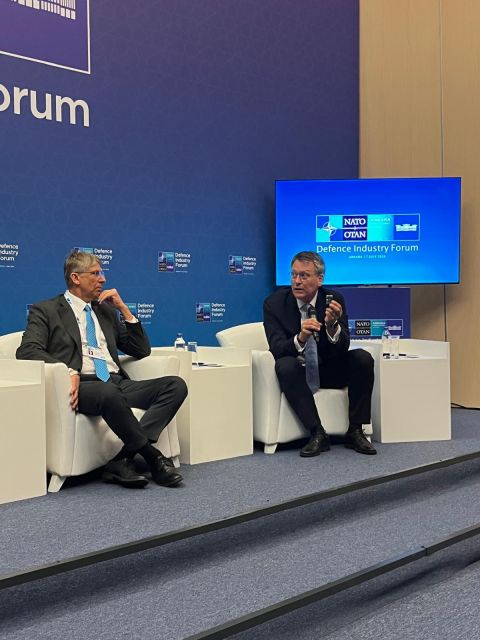
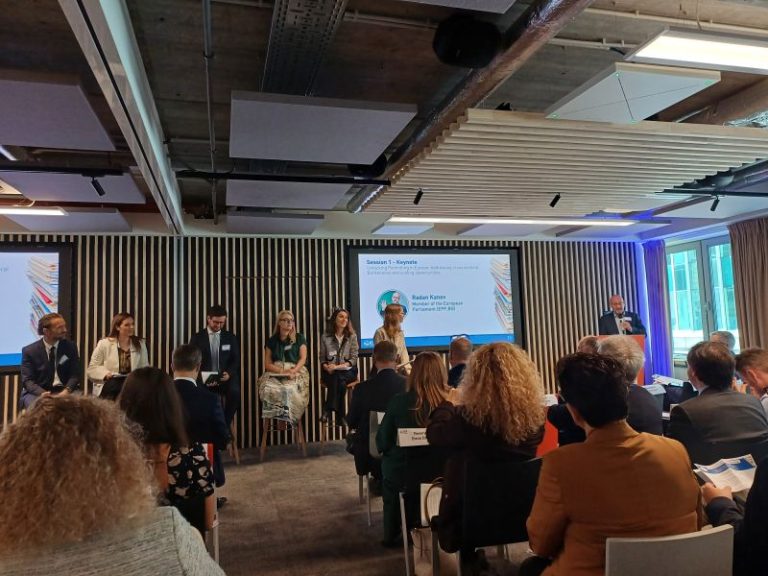
    On April 9, 2025, Euromines hosted a high-level conference in Brussels titled “Geopolitics at Play: The War Below for Europe’s Defense”, bringing together leading policymakers and industry experts to tackle the continent’s growing vulnerabilities in defense, energy security, and raw material supply chains.

    Amid escalating geopolitical tensions and fragile global supply networks, the event addressed how Europe can secure its industrial and strategic autonomy in an increasingly volatile world.

    Six Key Takeaways from the Event:

    1. Securing Critical Raw Materials for Defense
      The EU’s dependence on imports for rare earths, lithium, and titanium poses a serious threat to defense readiness. The Critical Raw Materials Act is a step towards ensuring the EU can access these materials independently and sustainably.

    2. Europe’s Defense Strategy: Readiness 2030
      As part of broader defense initiatives like “Readiness 2030” and “Rearm Europe”, the EU is addressing capability gaps while reinforcing material support to Ukraine and ensuring a sustainable supply of key defense-related inputs.

    3. Strategic Stockpiling and Policy Gaps
      The need for raw material stockpiling during crises was emphasized. However, funding mechanisms and legal frameworks to implement this effectively remain unclear, signaling a critical policy gap.

    4. Energy Security Amid Geopolitical Risk
      With the continued energy standoff involving Russia, Europe must diversify its supply chains and reduce dependence on China and other dominant suppliers by deepening international cooperation.

    5. Global Partnerships and Supply Chain Resilience
      Collaborations with resource-rich nations, including South Africa, and multilateral efforts like the Mineral Security Partnership are seen as pivotal for securing raw material flows and attracting private investment into the sector.

    6. Transatlantic Cooperation Is Key
      A united Europe-North America front remains vital in navigating current and future security challenges. Strengthened transatlantic ties are viewed as a foundation for Europe’s long-term defense and industrial resilience.

    The event underscored that securing Europe’s raw materials is no longer just an economic issue—it’s a matter of defense and strategic survival.

  • Sustainable raw materials for green technologies

    Sustainable raw materials for green technologies

    Euromines President invited European Institutions and Automotive sector to jointly assess the realities of supply of raw materials to European manufacturers. His two statements summarize the past decade approach to raw materials in the EU: “For years Europe was far too complacent in outsourcing pollution – and receiving raw materials for our consumption in return” – and yet “Nowhere else mining is happening at such a high level of environmental protection as in Europe”.

    From the rare earth crisis in the beginning of the 2000s, to the magnesium, gallium and germanium graphite crunch today – the intervals demonstrating European vulnerabilities are becoming shorter. The resulting dependency creates pressure on political leadership in the EU. European Institutions seem to have acknowledged this threat to competitiveness of the European industry. After all, the same materials are critical to achieving Green Deal made in Europe with or values, industry and society. Only by including all these aspects the green transformation can be a successful role model to copy for other countries.

    In 1957, European leaders had the incredible foresight to make war economically impossible and eventually unthinkable. At the heart of it: integrating the production of raw materials across borders of countries, obliging them to work together. Across various economic crises, Europe calibrated a systemic prosperity and comfort by trading, finding allies and ensuring access to energy and non-energy commodities.

    Today EU faces yet another challenge: climate change and the required energy, consumption and production transition, shift the rules of the game to a new level of fierce competition. War has returned to Europe, and it is not a given that allies and rivals alike step in for what Europe decided to outsource. Such increasing exposure is a serious to our prosperity and innovation power to find answers to the gargantuan task of tackling climate change.

    ESG and geopolitical imperatives while maintaining prosperity will depend on a commodity transition: metals and minerals will fuel the planet. The demand increase for metals needed for goods such as e-vehicles and the infrastructure to make this work will be enormous – we cannot even fathom it. This requires bold steps in how we treat and use raw materials: not just specific in form of applications or technologies but systemic across value chains. After all, the sustainability impact of driving an e-vehicle depends on the sustainability performance of the raw materials it is made of.

    European mining emerges as a strategic linchpin for autonomy in green, digital, and defence sectors. It can provide the raw materials needed to make a wind turbine run and a battery to store this electricity, but also serve as a benchmark for ESG standards for imported materials.

    Europe is not alone.

    The EU’s Green Deal is not the only sustainability transition policy – the race for raw materials will intensify even more, scrambling to get access to the most promising deposits. Control over extraction rights and refining capacity will be the defining geopolitical challenge for the decades to come. Europe needs to reckon with this on three accounts:

    Utilize Europe’s Resources: Europe must tap into its promising deposits for critical and strategic materials, utilizing the knowledge and expertise of EU mining companies with minimal environmental impact.

    Build Sustainable Partnerships: Outsourcing to areas with lower regulatory requirements is not an option. Europe must engage in partnerships with allies willing to uphold high standards in environmental, social, and governance issues.

    Circular Economy Integration: Beyond recycling, integrating mining into the Circular Economy concept can minimize primary raw material extraction for other sectors.
    Redefining Raw Material Approaches.

    Raw materials should no longer be considered merely a procurement issue. Confirming this disparity in approaches is the fact that for many sectors, supply of raw materials is sixth or seventh tier on their demand list. Yet, without securing the premium for the ESG criteria in sourcing them, the rift between downstream manufacturing and upstream mining companies will continue to render supply chains fragile, prone to disruptions and impede sustainability and human rights standards.

    Extraction, refining, and manufacturing need to compete on more than “just-in-time” and cheapest prices. This behaviour change is a catalyst to do more in a sustainable way and be honest in how we source and procure raw materials to fulfil our own sustainability ambitions.

    Sustainability is not an externality.

    Internalizing high production standards in upstream and security of supply externalities in downstream industries must go hand in hand to recognize costs and benefits of a sustainable raw materials extraction. Mining as the base of many Green Deal objectives – if done right – decarbonizes entire value chains. LKAB’s pellets are 7 times less CO2-intensive than sinter production and key for decarbonized steel production. Boliden’s Aitik and Kevitsa mines are prime examples of mine electrification -providing low-carbon copper and zinc that are needed for electrification through increased deployment of fossil free electricity.

    The EU raw materials mining industry has all the elements ready – from deposits, environmentally friendly extraction processes to a world-class R&D ambition to further reduce the impact of mining and providing critical and strategic raw materials. To make this happen Europe must act now! The Critical Raw Materials Act is a paradigm shift politically recognizing the benefits of our own backyard. The momentum initiated with the CRM Act must not be slowed down. There is a lot to do if we are serious about our role in the global green transition – starting with the production of our daily-life consumption.


  • Europe’s green dilemma: Mining key minerals without destroying nature

    Europe’s green dilemma: Mining key minerals without destroying nature

    [vc_section][vc_row][vc_column width=”1/6″][/vc_column][vc_column width=”1/2″][vc_row_inner][vc_column_inner][vc_empty_space][vc_column_text]

    Conservationists are spooked by Brussels’ plans to ramp up mining of critical raw materials, but advocates say it’s needed to hit the bloc’s green goals.

    [/vc_column_text][/vc_column_inner][/vc_row_inner][vc_empty_space height=”10px”][vc_row_inner][vc_column_inner width=”2/3″][widget-SocialWidget][/vc_column_inner][vc_column_inner width=”1/3″][link url=”https://www.politico.eu/article/europes-green-dilemma-mining-key-minerals-without-destroying-nature/” content_text=”News source”][/vc_column_inner][/vc_row_inner][vc_empty_space][vc_column_text]For decades, the environmental and human cost of mining minerals like lithium and cobalt has largely been hidden from Europe’s view. That’s about to change.

    As the EU looks to diversify its supply of critical raw materials away from China, it wants to make it easier to tap into domestic reserves of the minerals it needs to build green technology like wind turbines and solar panels.

    But locals and green campaigners warn that slashing red tape for extraction projects risks taking a wrecking ball to decades of work to preserve nature and biodiversity, pointing out that mining can cause serious water and soil pollution and lead to deforestation and biodiversity loss.

    In Tréguennec, a coastal area in Brittany in northwestern France, locals are living above what they say feels like a time bomb. Some 130 meters below their homes lies the country’s second-largest deposit of lithium, a key component of the batteries used to power electric cars.

    Mining that so-called “white gold” would involve digging up a protected nature reserve located on a migratory route for birds and destroying “something that took millions of years to create,” said Philippe Spetz, a 69-year-old pensioner who lives in Tréguennec. “We will never get nature back,” he warned.

    No company has applied to extract the resource yet. At the time, Bérangère Abba, who was then France’s junior minister for biodiversity, promised to “strike a balance” between protecting nature and mineral extraction. But locals and green groups worry the scales won’t tip in their favor.

    This clash between Europe’s appetite for critical raw materials and its nature protection ambitions — already playing out across the Continent, with local protests against new mining projects in PortugalGermanySweden and Spain — is only set to intensify after Brussels next week sets out new legislation to accelerate mining activities.

    An undated draft of the rules, obtained by POLITICO, suggests the European Commission may allow strategic mining plans to be designated as so-called projects of overriding public interest, which would give them priority in the event of conflicts with other EU legislation, for example with species conservation law.

    That echoes calls from industry groups, backed by liberal and conservative lawmakers, who argue that Europe can’t boost its supplies of key minerals without softening stringent environmental requirements that make opening new mines a major bureaucratic headache.

    “I think that the way that we mine in Europe is probably … one of the best ones in the world. But we don’t get permitted to do mining,” said Mikael Staffas, CEO and president of Swedish mining firm Boliden. He added that Europe “happily [imports] metals from other parts of the world” that mine with far lower environmental standards.

    But environmentalists and indigenous groups argue that the EU’s nature protection rules are a necessary safeguard, and that destroying local biodiversity in a quest to secure materials to become climate neutral would be counterproductive.

    “We’re talking about this green transition. For me, it’s not green, it is black, because it’s going to destroy the rest of the nature that we have left,” said Matti Blind Berg, who heads the National Confederation of the Swedish Sami. His community in the northern town of Kiruna has been fighting the expansion of the world’s largest iron-ore mine, which he argues has displaced locals and threatens their ability to herd reindeer.

    Faster drilling

    Getting the green light for a new mining project in Europe can take up to 15 years — something the EU wants to fix in its Critical Raw Materials Act.

    According to the draft, the Commission will allow mining projects designated as strategic to benefit from permitting deadlines of two years, with the aim of putting the bloc on track to lessen its dependency on imports more quickly.

    While the EU can’t supply all of the raw materials it needs, its most important lithium projects, for example, could satisfy 25 percent to 35 percent of Europe’s demand by the end of the decade, according to Michael Schmidt, a research associate at the German Mineral Resources Agency. Currently, some 78 percent of the bloc’s lithium comes from Chile.

    Mining companies have long argued that permitting can only be sped up if the EU also agrees to relax some environmental rules.

    The EU’s water laws, for example, require companies to pass “very high thresholds,” such as “zero emissions to water,” which is “quite difficult to do,” said Kerstin Brinnen, legal counsel at LKAB, a government-owned Swedish mining company.

    Mining projects in protected areas, while allowed, also need to undergo an additional impact assessment to show they won’t harm the integrity of the site.

    The industry has taken steps to minimize its environmental impact and compensate for damage to biodiversity, said Brinnen. But despite those efforts, “some kind of impact on the surrounding” area is “unavoidable.”

    Treating mining activities as projects of overriding public interest would solve a number of those issues, she said. Industry bodies Eurometaux and Euromines have called for similar measures.

    Because a majority of the bloc’s known reserves of critical raw materials are located in or near protected areas, the EU will have to make concessions to nature protection if it wants to exploit them, industry leaders say.

    “Mining cannot be moved,” said Boliden CEO Staffas. “So unless you’re willing to kind of accept that, then the whole Critical Raw Materials Act will not really make any difference” because it won’t in fact make it any easier to start new mining projects.

    That argument is getting traction among some liberal and conservative lawmakers in the European Parliament.

    “We keep expanding protected areas, and we can’t afford that anymore right now,” said Hildegard Bentele, an MEP with the conservative European People’s Party.

    Speaking during a plenary debate last month, MEP Emma Wiesner of the Renew Europe group said: “We can’t on the one hand say we want more raw materials and minerals. And then on the other hand, go regulate so it’s impossible to open a new mine in Europe.”

    Protecting biodiversity

    Conservationists insist the EU’s nature laws are there for a reason.

    “Especially in light of the climate crisis and the high rate of biodiversity loss, the priority cannot simply be: more mining, more mining,” said Michael Reckordt, section head for raw materials at the NGO PowerShift.

    Green groups have long fought against the expansion of mining in Europe, favoring efforts to reduce consumption and source raw materials through other means, including by recycling and developing alternative materials.

    In light of Brussels’ new plan, they’re now calling for EU nature laws to be upheld.

    “If mining was really green, then [following existing environmental] legislation shouldn’t be an issue” for the industry, said Diego Marin, policy officer for raw materials and resource justice at the European Environmental Bureau, an NGO.

    But campaigners are pessimistic about their concerns being heard. Their call for an explicit ban on mining activities in the bloc’s Natura 2000 network of protected areas so far only has the backing of one group — the Greens.

    NGOs lament that the Commission has tasked its internal market department, rather than the environment department, with leading work on its Critical Raw Materials Act.

    “I would like to see much more engagement from DG Environment in this file,” said Marin. “For the time being they have let DG GROW pretty much just take it on.”

    The fear is that the focus of the legislation will be on ramping up raw material supply at all costs, rather than limiting the impact of mining on the environment.

    Asked about his department’s input, Environment Commissioner Virginijus Sinkevičius told POLITICO in a written statement he is “actively engaged in drafting the proposal” and primarily focused on ensuring that raw materials are recycled as much as possible — both to “secure the supply” and “save energy.” The internal market department declined to comment.

    NGOs and experts warn that the Commission is shooting itself in the foot if it ignores the environmental concerns being raised in places like Tréguennec, where residents have vowed to protest any new mining projects, potentially derailing the EU’s goals.

    “I think we have to be looking much more squarely at the longer term impacts” of mining projects on communities, warned Julie Klinger, an assistant geography professor at the University of Delaware.

    “If we don’t actually take proper care at the outset, then this idea of Europe becoming a climate-neutral continent through provisioning its own critical raw materials is … sort of doomed from the outset.”

    CORRECTION: This article has been updated to correct that Bérangère Abba is France’s former junior minister for biodiversity.[/vc_column_text][vc_empty_space][epic_post_tag compatible_column_notice=”” font_size=”17px”][/vc_column][vc_column width=”1/6″][vc_text_separator title=”LATEST NEWS” color=”juicy_pink”][vc_empty_space height=”10px”][widget-LatestPosts post_number=”4″][vc_empty_space height=”10px”][vc_text_separator title=”MOST POPULAR” color=”juicy_pink”][vc_empty_space height=”10px”][widget-popular-posts post_count=”4″][vc_empty_space][vc_wp_search title=”Search”][vc_empty_space][lvs display_like=””][/vc_column][vc_column width=”1/6″][/vc_column][/vc_row][/vc_section][vc_section][vc_row][vc_column][distance desktop_type=”50″][/vc_column][/vc_row][vc_row][vc_column width=”1/2″][epic_block_28 compatible_column_notice=”” number_post=”6″ post_offset=”0″ first_title=”You may also like”][/epic_block_28][vc_empty_space][/vc_column][vc_column width=”1/2″][epic_hero_5 compatible_column_notice=”” hero_margin=”0″ content_filter_number_alert=”” post_offset=”0″][/vc_column][/vc_row][/vc_section]