Tag: Cornish Lithium

  • Cornwall Is the Engine Room of Britain’s Critical Minerals Future — But Only If Westminster Commits the Capital to Match the Ambition

    Cornwall Is the Engine Room of Britain’s Critical Minerals Future — But Only If Westminster Commits the Capital to Match the Ambition

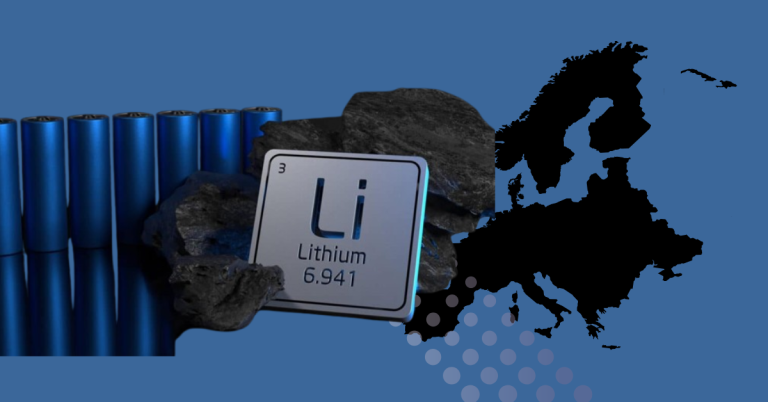
    The United Kingdom has set an aggressive benchmark: secure at least 10% of its critical mineral needs through domestic production by 2035. Achieving that target is a mathematical impossibility without unlocking the geological wealth of the South West. Cornwall is no longer simply a landscape of industrial heritage — it is the strategic engine room of the nation’s technological and economic future.

    The region holds world-class concentrations of tech-critical metals that map directly onto the materials the modern clean energy economy requires. Cornish Lithium and Imerys British Lithium are actively targeting the production of tens of thousands of tonnes of battery-grade lithium carbonate annually from hard-rock deposits and geothermal brines. The UK’s own strategy includes a standalone goal of producing 50,000 tonnes of domestic lithium per year by 2035 — sufficient to sustain a meaningful electric vehicle manufacturing ecosystem. The planned reopening of South Crofty by Cornish Metals, backed by $210 million in bond financing and a letter of interest from the US Export-Import Bank, positions the region as a primary domestic supplier of tin, the metal that binds virtually all modern electronics and green infrastructure.

    The geopolitical driver behind this Cornish renaissance is what strategists have taken to calling securonomics. China controls the dominant share of the global critical mineral supply chain, giving it leverage over Western manufacturing that has been demonstrated repeatedly through export controls and pricing policy. The UK’s updated Critical Minerals Strategy mandates that no more than 60% of any single critical mineral come from a single foreign partner by 2035. A domestically anchored Cornish supply chain directly insulates British automotive, aerospace and advanced manufacturing sectors from weaponised supply shocks, and aligns with the US-UK Critical Minerals Memorandum of Understanding which emphasises collaborative, secure supply chains among allied nations.

    Cornwall’s environmental credentials add a further competitive advantage. Unlike virgin mining projects in ecologically sensitive regions elsewhere, Cornwall’s ancient mining heritage provides pre-existing, adaptable infrastructure. Modern operators are pioneering a low-carbon co-located model, combining lithium extraction with geothermal power generation to achieve an ultra-low carbon footprint. This makes Cornish minerals particularly attractive to ESG-conscious automakers seeking verifiable sustainability credentials for their battery supply chains. The Camborne School of Mines at the University of Exeter provides the academic and technical depth to support next-generation sustainable extraction technologies at the regional level.

    The barriers are substantial. Scaling up requires capital that competes with the vast subsidy programmes deployed under the US Inflation Reduction Act and the EU’s Critical Raw Materials Act. While initial backing from the National Wealth Fund has helped de-risk midstream processing projects, the funding environment remains insufficient to match the pace of investment mobilised by international competitors. Without more aggressive public capital deployment and sustained regulatory support, the geological potential of Cornwall risks remaining precisely that — potential.

    Britain’s road to industrial independence and technological sovereignty does not bypass the South West. It begins there.

  • Cornwall’s Lithium Revival Offers Hope to England’s Most Deprived Mining Towns — But Jobs Promise Falls Short of the Legend

    Cornwall’s Lithium Revival Offers Hope to England’s Most Deprived Mining Towns — But Jobs Promise Falls Short of the Legend

    In a glass cabinet at the King Edward Mine Museum near Redruth, a bright blue display for Cornish Lithium sits incongruously among Victorian machinery and sepia-toned mining uniforms. It is, in its way, an apt symbol of what is happening beneath England’s most westerly county: the return of mining to a landscape that lost it, and the complicated question of what that return will actually deliver.

    Cornwall sits on one of Europe’s largest lithium deposits, a fact that has sent politicians into something approaching rapture. Boris Johnson called it the “Klondike of lithium” in 2021. Keir Starmer described critical minerals as “the backbone of modern life” last year. UK demand for lithium is projected to rise by 1,100% by 2035, driven by the government’s electric vehicle and battery storage ambitions. China controls roughly a quarter of global production and more than half of global processing capacity, and ministers are scrambling for alternatives. Cornwall, they hope, is part of the answer.

    Three companies are attempting to make that ambition real. Geothermal Engineering Ltd produced Britain’s first commercial battery-grade lithium earlier this year — somewhat accidentally, as the firm’s chief operating officer Tony Wilson acknowledges. GEL’s primary business is geothermal energy: water is pumped five kilometres into naturally heated granite, brought back to near boiling point and driven through a turbine to generate enough electricity for 10,000 homes. The lithium is a byproduct extracted from the brine before the water is returned underground. “Our lithium concentrations are actually going up rather than going down,” Wilson says. GEL believes it can produce enough lithium carbonate to supply around 250,000 electric vehicles a year within a decade, and targets around 10,000 tonnes of annual lithium carbonate by 2030 — approximately a fifth of the government’s projected UK demand.

    Cornish Lithium has been producing battery-grade samples through hard rock mining since late 2025 and targets a commercial plant by 2029. It projects a similar volume of output and 300 direct jobs over the 20-year lifespan of its Trelavour project, plus 800 during construction. The South Crofty tin mine — the UK’s last, closed in 1998 — is also being reopened to meet growing critical minerals demand.

    The jobs question is the one that matters most to communities like Redruth, which ranks among England’s most deprived towns. In its Victorian heyday, mining employed 30% of men aged 15 to 69 in the area. The collapse, when it came, was devastating — cheaper foreign tin and copper flooded the market, and tens of thousands emigrated in the late 19th century, giving rise to the old saying that at the bottom of every hole in the world, you will find a Cornishman. Today the economy runs on seasonal tourism, daffodil picking and foodbanks. Younger people leave. “Mining is well-paid, well-qualified work,” says David Ager, chairman of the King Edward Mine Museum. “This gives young people an opportunity to make a living here.”

    But the promise has already been punctured once. The most ambitious project on paper — a joint venture between British Lithium and French mining giant Imerys, sitting on one of the UK’s largest confirmed deposits near St Austell — was mothballed in February 2026 after Imerys pulled its funding. Global lithium prices had crashed more than 80% from their 2022 peak, driven by oversupply and slower-than-expected electric vehicle adoption. Between 40 and 70 employees were made redundant. The promised 300 jobs will likely not materialise.

    There is a further structural constraint even for the projects that do proceed. Cornwall can produce raw lithium — but that is only the first step. The metal must be refined and processed into cathode active material before it enters a battery cell. China controls around 60% of that processing capacity, meaning Cornish lithium could still be shipped east for processing before returning as battery components. Green Lithium’s planned Teesside refinery, targeted for completion by 2029, is the only domestic answer currently on the horizon.

    The Camborne School of Mines has relaunched its mining engineering degree at the University of Exeter, and early signs of workforce renewal are emerging. Wilson notes that staff are already working at GEL who would not otherwise be in Cornwall. A statue of a tin miner stands in the centre of Redruth, pick in one hand, ingot in the other. Whether a future statue will hold a battery and a bag of metallic powder remains uncertain. But the direction of travel, at least, has changed.

  • Cornish Lithium Becomes First UK Company to Produce Lithium Hydroxide Monohydrate

    Cornish Lithium Becomes First UK Company to Produce Lithium Hydroxide Monohydrate

    Cornish Lithium has announced that it has become the first company in the United Kingdom to produce lithium hydroxide monohydrate (LHM), a key component used in electric vehicle batteries, grid-scale energy storage, and consumer electronics.

    The breakthrough was achieved at a repurposed Сhina clay quarry in Cornwall, where the company used patented low-carbon processing technology to extract lithium from Cornish granite.

    Founder and Executive Chairman Jeremy Wrathall called it a landmark achievement for both the company and the UK’s battery industry:

    “We can test every single stage of it on an industrial scale — that’s why it is such an important day for us. Our faith in investing £10 million in this project has been vindicated.”

    The milestone marks a significant advance toward establishing a domestic lithium supply chain, a critical step as the UK transitions to electric mobility and renewable energy storage.

    Mining consultant James McFarlane praised the accomplishment, noting the rapid pace of development:

    “The company was only founded in 2016 and began exploring the hard rock potential in St Austell in 2019. To go from that to producing LHM domestically from their own deposit is a massive milestone that deserves recognition.”

    Cornish Lithium said it plans to construct a commercial-scale lithium processing and refining plant capable of producing up to 10,000 tonnes of LHM per year. The facility is expected to be operational by 2029, creating around 300 new jobs and contributing £800 million to the UK economy.

    The project is seen as a cornerstone of Britain’s effort to secure critical mineral independence and reduce reliance on imported battery materials, aligning with the UK government’s net-zero and green industrial strategies.

  • Cornish Lithium Announces 50% Resource Increase at Trelavour Lithium Project

    Cornish Lithium Announces 50% Resource Increase at Trelavour Lithium Project

    Cornish Lithium has announced a significant 50% increase in the JORC-compliant Mineral Resource at its Trelavour Lithium Project in Cornwall, following a year of extensive drilling, sampling, testing, and modelling.

    The updated resource now stands at 88.5 million tonnes grading 0.21% Li₂O, equivalent to 183.5 thousand tonnes of contained lithium oxide. This equates to 454.5 thousand tonnes of lithium carbonate equivalent (LCE), representing a 50% increase compared to the 2022 estimate. Importantly, the upgrade includes a maiden declaration of resources in the Measured and Indicated categories, boosting geological confidence in the deposit.

    CEO Jamie Airnes highlighted the importance of the milestone: “Today’s resource upgrade also provides a strong foundation for our Feasibility Study, which we expect to publish later this year, moving us closer to our Development Consent Order application and commercial production. This is one more step in Cornish Lithium’s plan to secure the UK’s critical minerals supply, jobs and industrial future.”

    The project benefits from its location in a former china clay pit, with resources extending from the surface, resulting in a low strip ratio. To date, more than 20,000 metres of drilling have been completed, including exploration and geotechnical holes.

    Cornish Lithium aims to produce 10,000 tonnes per year of battery-grade lithium hydroxide, with commercial production targeted for 2029. The project is designed as a fully integrated operation with proprietary low-carbon processing technology, ensuring independence from overseas refineries and alignment with the UK’s clean energy transition.

  • Cornish Lithium Lifts Trelavour Resource by 50%, Targeting 10,000 tpa LiOH for 20+ Years

    Cornish Lithium Lifts Trelavour Resource by 50%, Targeting 10,000 tpa LiOH for 20+ Years

    Cornish Lithium has announced a 50% increase in its JORC-compliant Mineral Resource for the Trelavour Lithium Project in Cornwall, following 12 months of additional drilling, sampling, testing, and modelling. The upgrade underpins plans to produce ~10,000 tonnes per year of battery-grade lithium hydroxide for at least 20 years and provides the platform for a Feasibility Study due by end-2025.

    The updated Mineral Resource stands at 88.5 Mt @ 0.21% Li₂O (equivalent to 183.5 kt Li₂O or 454.5 kt LCE), comprising 63.0 Mt Measured & Indicated and 25.5 Mt Inferred—a 50% increase versus the 2022 estimate. The resource extends from surface within a former china clay pit, implying a very low strip ratio.

    The update incorporates 18,616 m of Mineral Resource drilling (56 diamond, 88 RC holes), with more than 20,000 m completed across resource, exploration, and geotechnical programs. Cornish Lithium says the project is fully integrated, producing refined battery-grade lithium hydroxide domestically with no reliance on overseas refineries, utilising proprietary low-carbon processing technology now fully owned by the company.

    CEO Jamie Airnes welcomed the milestone as “one more step” toward securing UK critical minerals, jobs, and industrial capacity, noting the upgrade’s role in supporting the Development Consent Order (DCO) application and the path to commercial production from 2029. Planned next steps include completing the Feasibility Study and advancing permitting to keep the project on its targeted timeline.

  • Cornish Lithium raises £5.1m through crowdfunding

    Cornish Lithium raises £5.1m through crowdfunding

    UK-based Cornish Lithium has raised £5.1-million through crowdfunding on a platform called Crowdcube, marking it as one of the largest crowdfunding endeavours undertaken in the UK this year.

    Cornish launched the crowdfunding to provide exiting shareholders, as well as new retail shareholders, the opportunity to invest alongside a landmark £53.6-million fundraise announced on August 8 by UK Infrastructure Bank, Energy and Minerals Group, and TechMet.

  • Cornish Lithium raises $6.2m to keep UK project alive

    Cornish Lithium raises $6.2m to keep UK project alive

    British start-up Cornish Lithium has successfully raised £5.1 million, or approximately $6.2 million, through an impressive crowdfunding campaign. This campaign stands out as one of the largest of its kind carried out in the UK this year. In fact, it holds the distinction of being the largest campaign by a B2B business on Crowdcube in 2023. Existing shareholders were given priority access to the financing round with Crowdcube, resulting in a remarkable investment of £1 million, or $1.2 million, in just 27 minutes.

    The crowdfunding initiative, launched in early September, aimed to provide both existing shareholders of Cornish Lithium and new retail shareholders the opportunity to invest alongside the £67 million, or $82 million, granted by the UK Infrastructure Bank, the Energy and Minerals Group, and TechMet. With this comprehensive investment package, as well as the funds raised through the crowdfunding campaign, Cornish Lithium will be able to advance its Trelavour project, which focuses on extracting lithium from hard rock in Cornwall, southwest England. The project’s objective is to produce approximately 8,000 tonnes per year of battery-grade lithium hydroxide.

    The Trelavour hard rock lithium project comprises an open pit mine of lithium-enriched granite and associated processing facilities that will yield a concentrate of lithium-bearing mica. The mica concentrate will then be used to produce lithium hydroxide at an industrial site near the mine. According to a scoping study supported by the UK’s Automotive Transformation Fund and the Advanced Propulsion Centre, the Trelavour mine is projected to produce 25 million tonnes per annum. With an estimated operational life of 20 years, the mine aims to generate an average of 7,800 tonnes of lithium hydroxide annually.

    Cornish Lithium had initially targeted commencing production by 2026, which would have strategically positioned the company to take advantage of the European Union’s ongoing efforts to rebuild its automotive supply chains around battery metals and promote the widespread adoption of electric vehicles. It is worth noting that another company, British Lithium, has also set its sights on Cornwall for its battery metals ambitions. In collaboration with France’s Imerys, British Lithium plans to establish a mine capable of producing enough lithium to power 500,000 electric vehicles annually by the end of the decade.

    Currently, the UK relies on lithium imports from leading global producers, namely Australia and Chile, as it does not possess any domestic lithium operations. Recognizing the need for a secure and sustainable domestic supply of lithium, Cornish Lithium and other companies are actively working towards filling this gap in the market. Furthermore, with the European Commission’s ambitious plans to construct large-scale battery plants that will support the production of cells for at least six million electric vehicles by 2025, British carmakers face mounting pressure. The UK government has made a commitment to cease the sale of new diesel and gasoline vehicles by 2035, further emphasizing the urgent need for sustainable alternatives such as electric vehicles.

  • Cornish Lithium secures £53.6m to open first mine for the metal in Britain

    Cornish Lithium secures £53.6m to open first mine for the metal in Britain

    The startup opening Britain’s first lithium mine in Cornwall has secured $67m (£53.6m) of investment led by the UK Infrastructure Bank, in a much-needed boost to efforts to extract the metal that is used for making vehicle batteries.

    Cornish Lithium is to receive the funds from the Treasury-funded bank and other investors as part of a larger funding package of up to $210m (£168m).

    The funding package is expected to speed up progress towards British mining of battery-grade lithium compounds, which are key to production of batteries for electric vehicles and renewable energy storage.

    The investment is part of a push to boost financing for climate crisis-related infrastructure projects, and to create a hub for supplies of lithium to Europe from Cornwall.

    The initial investment is led by the UKIB alongside the Energy & Minerals Group (EMG), a US private investment firm focused on energy and minerals, and TechMet, which invests in clean energy and electric vehicle technologies and counts the US government’s development finance corporation among its backers.

    The UKIB and EMG will each put in £24m while TechMet, Cornish Lithium’s largest shareholder, is investing a further £5.6m, bringing its total investment in the business to £30m.

    Core samples from Cornish Lithium’s exploratory drilling at its research site, August 2022.
    Core samples from Cornish Lithium’s exploratory drilling at its research site, August 2022. Photograph: Jim Wileman/The Guardian

    Cornish Lithium aims to increase its 70-strong workforce to more than 300 people once it is in commercial production. It had warned in its annual accounts in June that there would be material uncertainty over its future if it did not raise bridge funding by July to buy it time before its next fundraising round. The company plans to raise a further £6.9m by selling shares to small shareholders through Crowdcube, with a focus on existing investors.

    Lithium is a vital ingredient in the current generation of batteries used in portable devices ranging from mobile phones to electric toothbrushes. But vastly more lithium will be needed for electric vehicles as combustion engines are phased out around the world.

    Cornish Lithium is one of several projects that seek to revive Cornwall’s 4,000-year-old mining heritage. Another company, British Lithium, has teamed with the French mining firm Imerys to start a mine in Cornwall and to extract enough lithium to power 500,000 electric cars a year by the end of the decade.

    Jeremy Wrathall, founder and chief executive of Cornish Lithium, said it was “essential to secure funding from institutional investors with the financial muscle to bring our projects into commercial production”.

    He said the funds would enable the company to advance its project at Trelavour, near St Austell, to “construction-ready status” and allow it to “complete the engineering design work required to build a demonstration-scale geothermal waters extraction facility”.

    John Flint, chief executive of the UKIB, said: “Globally the supply of lithium is far outpaced by demand, and yet in the UK it remains a nascent market.”

    He said the investment would “greatly accelerate domestic production of a mineral which is critical to the future of electric vehicle battery production and decarbonisation of the transport sector”.

    Andrew Griffith, economic secretary to the Treasury, who visited Cornish Lithium on Tuesday, said the investment would improve the domestic supply of lithium, helping “the UK’s transition towards net zero whilst also boosting local and regional economic growth”.

    Kemi Badenoch, business and trade secretary, said that, coupled with Tata Group’s recent pledge to build a £4bn electric car battery gigafactory in Somerset last month, the investment would ensure the UK automotive sector is “well set for the future”.

  • Lithium and the dream of Cornwall’s mining revival

    Lithium and the dream of Cornwall’s mining revival

    [vc_section][vc_row][vc_column][distance desktop_type=”30″][lvs][distance desktop_type=”30″][vc_btn title=”Source – theiet.org” color=”sky” i_type=”material” i_icon_material=”vc-material vc-material-perm_device_information” add_icon=”true” link=”url:https%3A%2F%2Feandt.theiet.org%2Fcontent%2Farticles%2F2023%2F07%2Flithium-and-the-dream-of-cornwall-s-mining-revival%2F|target:_blank”][distance desktop_type=”30″][vc_column_text]Cornwall rests on a trove of one of the world’s most desirable metals: lithium. There are hopes that its mining economy could be reborn as part of a nationwide green industrial revolution. That dream might just become a reality – but nothing can be taken for granted.

    Lithium, the lightest metal element, is a vital resource for the energy transition. It is used in batteries for EVs and grid-scale energy storage – a single Tesla Model S battery contains 12kg of lithium.

    Cornwall happens to be sitting on a massive lithium deposit, prompting former Prime Minister Boris Johnson to describe it as the “Klondike of lithium”. Would-be miners – most notably the companies British Lithium and Cornish Lithium, both based in the county – have descended on the Cornish landscape, poring over old geological maps to search for buried treasure. At present, there is no full-scale operation or any certainty of a full-scale operation. However, pilot projects have yielded encouraging results, and the companies hope that by 2030 they could be extracting thousands of tonnes of lithium every year.

    There is sincere hope that this will come to fruition. Cornwall’s mining heritage reaches back to the Bronze Age. Its landscape is so sculpted by abandoned mines that the Cornwall and West Devon Mining Landscape was recognised as a Unesco World Heritage Site in 2006. However, the decline of its mining industries through the 20th century has left it the second poorest area in Northern Europe, in no small part dependent on tourism and, until recently, EU funding. The dream is that the Cornish mining industry might be revived – this time, without harming its people and environment – and become an important part of that green industrial revolution the UK has been promised.

    The energy transition is driving demand for lithium to unprecedented heights. According to US-based alliance Li-Bridge, demand for lithium-ion batteries in the US alone is set to grow sixfold by 2030. “I think the world has realised that lithium is obviously an essential element, and demand is going to go up massively,” says Jeremy Wrathall, CEO of Cornish Lithium. “We’re talking about five million tonnes of [annual] demand by 2035.”

    At present, lithium production is dominated by a few countries. Australia is the leader (approaching 100,000 tonnes of annual production), followed by Chile, China, Argentina, Zimbabwe and Portugal. Not unusually for energy transition metal mining, lithium mining often comes at great environmental and human cost. Geothermal lithium extraction as performed in South America, for instance, involves laying out lithium-rich brine in colossal evaporation pools beneath the Atacama sun. In Chile’s lithium-rich Salar de Atacama salt flat, mining activities consume almost two-thirds of the area’s water, contributing to devastating water shortages. There is an increasing feeling that lithium mining must be carried out more responsibly if the world is to reap its benefits fully. This could be an opportunity for the UK to distinguish itself. It would have a long way to go to catch up with the big lithium producers in terms of volume, but it may be able to mine the world’s most sustainable lithium.

    Of course, there are other reasons why the UK government might be interested in domestic lithium production. The US and its allies are scrambling to establish supply chains for technologies of strategic importance – from solar panels to semiconductors – that circumvent China, which is the world leader in both raw critical minerals and lithium-ion battery production. Domestic lithium mining, along with domestic battery manufacturing, would be strongly in the UK’s geopolitical interests. Then-minister Nadhim Zahawi said in 2020: “The potential to become self-sufficient in lithium, which Cornish mining represents, will, I think, be incredibly important to the British economy.”

    Cornish mining: on the rebound?

    There are two potential avenues for lithium production: hard-rock mining and direct extraction from brines. The more traditional approach is hard-rock mining. This involves digging rocks, crushing and grinding them to separate the lithium micas (a group of pinkish minerals rich in the element), then subjecting them to various processes to extract the lithium.

    Both British Lithium and Cornish Lithium are experimenting with hard-rock mining around St Austell. The former is using its own patented technology for the extraction stage, and the latter is using technology from Australia-based Lepidico. Both companies seem confident. Notably, British Lithium has identified a suitable lithium resource in a former china clay mine which could support annual production of 20,000 tonnes of lithium – enough to meet a third of national demand around the end of the decade.

    Whether lithium extracted via hard-rock mining can be considered sustainable hinges mainly on the question of energy. All of that crushing and grinding is incredibly energy-intensive. British Lithium acknowledged in a 2021 interview that if it and Cornish Lithium ran operations concurrently, they would overload the grid. Hopefully, nothing of the sort will come to pass. Both companies are interested in establishing private power networks supplied by local renewable resources like solar and offshore wind (Imerys, which carries out related operations in Cornwall, already has its own private network).

    In 1864, a brine ‘rich in Lithia’ was discovered in a mine near Redruth. Cornwall sits on a 280-million-year-old granite sheet, through which water has trickled, absorbing and dissolving lithium in its path. This leaves lithium-rich springs beneath the Cornish landscape. With hard-rock mining, Wrathall says, the rock must be cracked to get the lithium solution out, but, with these brines “nature has already done it for you”.

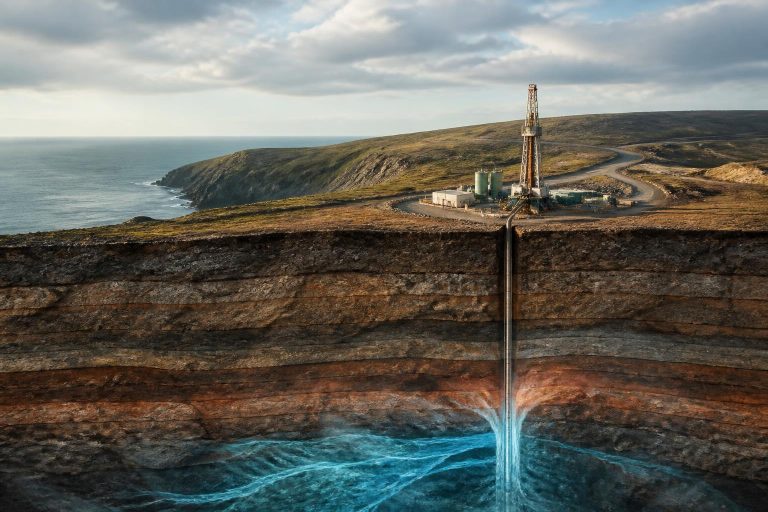
    Extracting lithium from brine is a more experimental approach. Cornish Lithium, which is attempting it, prefers not to call it ‘mining’ at all. The company aims to take brine up to ground level, directly extract the lithium (concentrating the brine via reverse osmosis, followed by an extraction step), then put it back in the ground. This could be a remarkably undisruptive way to produce lithium. In terms of infrastructure, it would require little more than a shed-sized plant and two boreholes: one to collect the brine and one to return it. In 2020, the company confirmed it had found ‘globally significant’ levels of lithium in waters under Cornwall. It recently drilled its third borehole and hopes to have small-scale production (up to 300-500 tonnes a year) running by 2025.

    Cornish brines are much less lithium rich than South American brines (220-260mg/L vs 2,000mg/L), but have certain advantages that bode well for sustainability. Elsewhere in the world, these brines surface at very high temperatures and need to be kept under high temperature and pressure to prevent the dissolved solids from crystallising. Cornish brines surface at just 80°C, making them easier and more energy-efficient to process. While not hot enough for geothermal power generation, they are hot enough for district heating networks. Cornish Lithium is already supplying some heat to local clotted cream company Rodda’s and is discussing the possibility of providing heat for greenhouses.

    Professor Karen Hudson-Edwards of Camborne School of Mines, an expert in sustainable mining, acknowledges that further work could be needed to ensure this process is truly sustainable – such as understanding the impacts of changing the chemical composition of these brines – but concludes: “In terms of overall impact I think geothermal lithium mining is as sustainable as we can get. It’s not going to create a lot of waste, the footprint is small, and Cornish Lithium are very committed to sustainability, so that’s a big plus as well.

    “Mining has a bad reputation with many people, for [good] reasons. Really, it has not been a great performer in the past but I think the companies are waking up to the fact that people are demanding – well, insisting on – sustainability and good practice or they won’t fund the mining companies if they don’t do that. Things are changing quickly.”

    Thanks to its natural resources and the sincerity of the companies involved, there is plenty of potential for sustainable lithium mining in Cornwall. Some hope that this – along with renewables and perhaps even a battery factory (St Austell and Newquay MP Steve Double has pressed the government on the possibility) – could place Cornwall at the forefront of a green industrial revolution that is good for the economy, communities in deindustrialised areas, and the environment.

    “I absolutely, categorically do think [lithium extraction] could be part of a green revolution in Cornwall,” Wrathall says. Among other benefits, he emphasises that lithium production could offer a great incentive for ambitious young people to stay in their home county.

    This is a critical consideration. There is a strong feeling that Cornwall must benefit from this mining revival, rather than having its labour and resources exploited by others (this is complicated by big questions about land ownership, still dominated in the county by hereditary landowners like the Duchy of Cornwall). An important part of ensuring that Cornwall benefits from lithium mining is investing in skills and infrastructure to support the industry. “The metal might be in the ground; you might be able to extract it technologically and economically, but we’ve got skills gaps at the moment. [Local] people haven’t had the opportunity to study and get to a stage where they would be able to easily or naturally go into these jobs,” says Dr Eva Marquis, also of Camborne School of Mines.

    “Then you’ve got a social tension if you can’t get people in the county with the right skillset and you want to get these mines up and running in the next five to 10 years. If you don’t invest in the talent pipeline now, you’re […] going to have to bring people in, and that will probably skew the social divide even more. There would be some benefit to having more people down here but we’re already in a housing crisis, so there are lots of underlying challenges.”

    The amount of work required to make the most of Cornwall’s lithium deposits should not be underestimated. It will be a complex, costly endeavour and inherently risky – will markets be willing to pay a large enough green premium to make it economically feasible? The recent collapse of lithium-ion battery start-up Britishvolt, before it was bought out of administration by an Australian firm, should remind us to take nothing for granted.

    Experts agree that the challenge is bigger than the main two companies involved, and call for a clear, coordinated strategy to support this green industry and others. Wrathall says: “It doesn’t help that our government hasn’t got an industrial strategy. If we’re to retain the car industry in the UK, that would be helpful. The odds are against us at the moment, but I think Cornwall has got the potential to restore its legacy of innovation and technological leadership.”

    SETTLEMENTS

    What’s next for mining towns?

    Former mining settlements can, with serious cash and co-ordinated action, become home to sustainable new industries. Australia’s Latrobe Valley has been moving away from coal mining to renewable energy and emerging industries like hydrogen production in a transition supported with funding from the Victoria state government for infrastructure, job training programmes and partnerships between industry, government and community groups.

    In having the potential to revive its mining heritage, Cornwall is particularly lucky. A recent Nature Communications paper estimates that just 7 per cent of rural towns in coal-mining systems have the potential to mine energy transition metals like lithium, as these resources are not usually co-located.

    “These towns may be best positioned to prosper through rapid workforce re-deployment from a coal economy to an energy transition metals economy, although they would face significant challenges in adapting,” says the University of Göttingen’s Dr Kamila Svobodova, an author of the paper.

    “Favourable geography alone may not be enough to revive deindustrialised areas. Other factors, such as infrastructure and local knowledge and expertise, also play a crucial role in the success of these projects. For example, the development of local supply chains and the availability of skilled labour can help create a sustainable green economy in a region. A key challenge for successful industrial transition is boosting the ability of a region and its industries to break out of locked-in paths of development by pursuing innovation, new technological pathways and industrial renewal. This must be place-based and time-specific. Ensuring this transition is done in a socially acceptable and just way is fundamental to growth and well-being in the region.”[/vc_column_text][distance desktop_type=”30″][/vc_column][/vc_row][/vc_section]