Tag: construction

  • Qarmet Advances Major Construction Projects to Enhance Production Capacity

    Qarmet Advances Major Construction Projects to Enhance Production Capacity

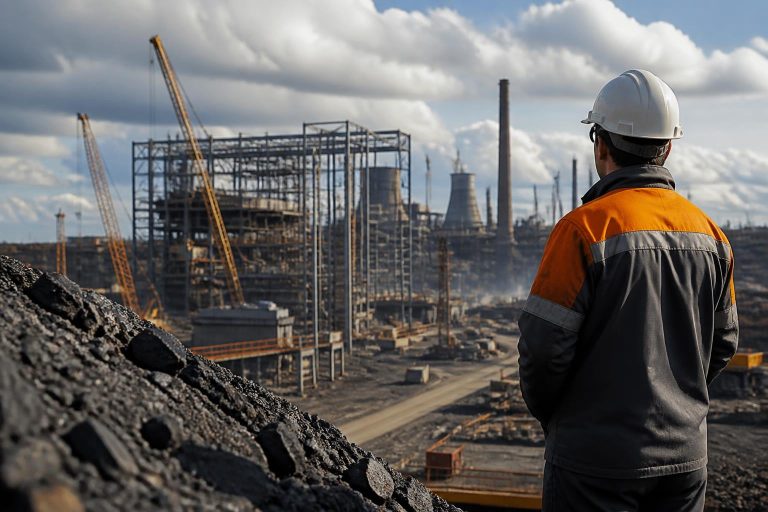
    Qarmet is making significant strides in the construction of strategically important facilities that are set to underpin the company’s future production growth, product line expansion, and extensive technological upgrades. The new production capacities are taking shape, with massive concrete foundations and installed metal structures and technological equipment already visible on-site.

    A key project in this initiative is the construction of a new section rolling mill, with engineering, equipment supply, installation supervision, and construction work being managed by CERI. To date, over 1,500 tonnes of rebar and more than 1,500 tonnes of metal structures have been delivered to the site. The complex will feature 11 overhead cranes, with construction activities progressing across the entire site: specialists are pouring concrete for the foundations of buildings and technological equipment, erecting reinforced concrete frames, and installing metal structures and crane equipment.

    The project is currently in an active implementation phase. Once the new section rolling mill is operational, Qarmet will be able to produce an additional 540,000 tonnes of metal products annually. The facility will also commence the production of high-strength rebar grades A600 and A1000, alongside new product types that are in demand in both domestic and international markets, including angles and channels.

    Simultaneously, large-scale construction is underway at the new coke battery No. 8-9 site. Currently, the coal tower structure is being erected at a height of +5.3 meters, and the upper foundation slab for coke battery No. 9 is being reinforced. Specialists are also working on soil development and reinforcing the flue gas ducts of the transverse bore, constructing the walls of the longitudinal bore of KB-9, and laying the foundation for the future chimney.

    At coke battery No. 8, the installation of metal structures continues, with 300 out of the planned 500 tonnes already installed. The groundwork for the end platforms of coke batteries No. 8 and No. 9 has been fully completed. Once the complex is operational, its production capacity will reach 1.5 million tonnes of dry coke per year. The implementation of this project will strengthen Qarmet’s raw material base and enhance the resilience of its complete metallurgical cycle.

    “The new section rolling mill and coke batteries No. 8-9 are crucial elements of Qarmet’s extensive investment programme and a clear testament to the company’s ongoing technological renewal. Today, the construction sites are not only forming the bodies of future productions but are also laying the foundation for the new industrial strength of the enterprise. The implementation of these projects will increase output volumes, expand the range of in-demand metal products, strengthen the raw material base, and enhance the resilience of the entire production cycle,” noted Qarmet specialists.

    Tons of concrete and metal structures are already taking shape in the outlines of new productions. Step by step, Qarmet is renewing key links in the technological chain, implementing modern solutions, and creating capacities that will define a new level of efficiency, reliability, and competitiveness for the company for decades to come.


  • Tokayev Pushes for Faster Nuclear Power Plant Construction in Kazakhstan

    Tokayev Pushes for Faster Nuclear Power Plant Construction in Kazakhstan

    Kazakh President Kassym-Jomart Tokayev has called for the acceleration of nuclear power plant construction in Kazakhstan. According to Tokayev, the country may build two or three large nuclear stations to advance its nuclear energy sector.

    “We are currently focused on major infrastructure projects, digitalization, artificial intelligence, and nuclear energy. These are the key strategic areas for the development of our country. The government must prioritize these critical issues in its work,” the president emphasized.

    Tokayev also discussed the future of nuclear energy in Kazakhstan, noting the need for faster progress.

    “Regarding the construction of nuclear power plants — we need to speed up. As I mentioned in an interview, we plan to build two large plants, possibly three. We must transform Kazakhstan into a country with a developed nuclear energy sector, a nation where artificial intelligence functions and digitalization is fully implemented,” he concluded.

    On October 6, 2023, Kazakhstan held a referendum on the construction of nuclear power plants in the Almaty region. Tokayev had stated that, should the public approve, the construction would be undertaken by an international consortium of companies.

    The referendum results showed that 71.12% of Kazakh citizens voted in favor of nuclear plant construction. The Ministry of National Economy announced that the state would not fund the project. Instead, the government is considering project financing, with funds potentially provided by a consortium of international financial institutions. The state would repay this loan not from the national budget, but from the revenue generated by the nuclear plants.

    Kazakhstan is currently considering four companies as potential suppliers of nuclear technology: CNNC (China), Rosatom (Russia), KHNP (South Korea), and EDF (France).

  • Granit Acquires Local Mining Company Lep-Kop Invest for 5,000 Euro

    Granit Acquires Local Mining Company Lep-Kop Invest for 5,000 Euro

    North Macedonia-based construction company Granit announced the acquisition of local mining company Lep-Kop Invest for 5,000 euro ($5,528). According to a statement filed with the bourse on Tuesday, Lep-Kop Invest specializes in the extraction of gravel, sand, clay, and kaolin.

    The acquisition was completed on September 2. On the same day, Granit’s shares were trading at an average price of 1,565 denars ($28.1/25.4 euro) on the Macedonian Stock Exchange, based on the latest available data.

    Granit, established in 1952 and privatized in 1996, focuses primarily on the construction and rehabilitation of roads. The company also operates several concrete and asphalt plants, along with stone quarries.


  • Construction of Small Nuclear Power Plant to Begin This Summer in Jizzakh Region

    Construction of Small Nuclear Power Plant to Begin This Summer in Jizzakh Region

    Construction of a small nuclear power plant (330 MW) based on a Russian project will commence in the Jizzakh region this summer. This marks Rosatom’s first export contract for building such a station. According to the official statement, “the chosen site has already been surveyed, confirming its suitability and safety.”

    Uzbekistan will host the first small nuclear power plant in the region using Russian technology. Documents regarding this were signed on May 27 during the state visit of Russian President Vladimir Putin to Uzbekistan. The Directorate for the Construction of Nuclear Power Plants under the Agency for Atomic Energy of the Cabinet of Ministers of Uzbekistan and the company Atomstroyexport (an engineering division of Rosatom) have signed a contract to build the small nuclear power plant (SNPP) in Uzbekistan. Additionally, a protocol was signed to amend the intergovernmental agreement on cooperation in the construction of a nuclear power plant dated September 7, 2018.

    According to the press release from the Agency for Atomic Energy and Rosatom, the SNPP with a capacity of 330 MW (six reactors with 55 MW each) will be built in the Jizzakh region near Lake Tuzkan. Rosatom will serve as the general contractor for the construction, and Uzbek companies will also be involved.

    Construction work at the site will begin this summer. “The chosen site has already been surveyed, confirming its suitability and safety, which will significantly shorten the project implementation timeline,” the press release notes. “According to forecasts, the demand for energy resources in Uzbekistan will nearly double by 2050, and it is clear that for the stable operation of the energy system and economic development, our country must ensure itself with a basic energy source in addition to renewable energy sources,” said Azim Ahmedkhadjaev, director of the Agency for Atomic Energy.

    For Rosatom, this is the first export contract for the construction of a small nuclear power plant. “And this is not just a preliminary agreement, we are starting construction immediately this summer,” commented Alexey Likhachov, General Director of Rosatom.

    President of Uzbekistan Shavkat Mirziyoyev emphasized the importance of this project: “Practically all leading states in the world ensure their energy security and sustainable development through nuclear energy. With substantial uranium reserves and exporting it to third countries, this project is vital for us if we think about advancing to a new stage of development for Uzbekistan.”

    The project is based on the water-cooled reactor RITM-200N. The thermal power of the RITM-200N is 190 MW, electrical power is 55 MW, and its service life is up to 60 years. The RITM-200 series reactors have been tested in Arctic conditions on Russian icebreakers. Since 2012, 10 RITM-200 reactors have been manufactured for the nuclear icebreakers Arktika, Sibir, Ural, Yakutia, and Chukotka. The first three are already in operation and fulfilling their commitments in the Arctic.

    An SNPP based on the RITM-200N reactor is also being built in the Yakut village of Ust-Kuyga. The launch of the first power unit is expected in 2027, and commissioning in 2028. The facility will supply electricity to industrial enterprises, including the development of the Kyuchus, Deputatskoye, and Tirekhtyakh deposits.

    “The nuclear power plant based on RITM-200N features a fully integrated layout, which ensures high economic efficiency of the project and the highest level of safety,” the official statement emphasizes. The safety of the planned small nuclear power plant will be achieved through multi-level systems and containment barriers, which prevent accidents and eliminate the release of radioactive substances into the environment.

  • British Concrete Canvas Ltd. to Establish Concrete Production Plant in Kazakhstan

    British Concrete Canvas Ltd. to Establish Concrete Production Plant in Kazakhstan

    British company Concrete Canvas Ltd. has revealed plans to construct a concrete slab manufacturing plant in Kazakhstan, as reported by Kazakh Invest. Originally intending to build the facility in Russia, geopolitical circumstances led to the decision to opt for Kazakhstan. The envisioned project, according to British investors, is poised to address critical challenges in the construction and renovation of irrigation systems in the country. The initiative is expected to significantly enhance the operational reliability of irrigation systems, eliminate water loss within the country’s agro-industrial complex, and reduce budgetary expenditures on canal renovation programs, protective dams, and other civil infrastructure assets. Concrete Canvas, known for producing geosynthetic cement composite mats that prevent water loss during filtration while maintaining material durability, has already established a presence in Almaty. The company is currently assessing market needs, engaging in discussions with relevant ministries and local executive bodies. Concrete Canvas Ltd. was among the 21 companies relocating to Kazakhstan from Russia and Belarus, as announced by the government in late December 2022. Furthermore, in November 2023, during a working trip to the United Kingdom, Kyrgyzstan’s Prime Minister, Akylbek Zaparov, proposed that Concrete Canvas consider establishing a plant in the republic.

  • European Lithium and Sizzle conclude business merger

    European Lithium and Sizzle conclude business merger

    European Lithium has finalized a strategic partnership with Sizzle Acquisition, resulting in the establishment of Critical Metals.

    This collaboration positions the Wolfsberg Lithium Project as the inaugural flagship asset of Critical Metals, with the company’s immediate focus on advancing the mine’s construction and commissioning.

    The successful conclusion of the transaction and subsequent listing of Critical Metals on the Nasdaq represent significant milestones in bolstering the development of this pivotal lithium asset, essential for Europe’s transition to green energy.

    As part of the agreement, European Lithium has received 67,788,383 ordinary shares in Critical Metals, securing the company’s status as the largest shareholder with an 83.03% stake in the issued capital.

    The estimated value of European Lithium’s investment in Critical Metals currently stands at $839 million (A$1.3 billion), based on the closing share price of $12.38 per share as of February 29, 2024.