Tag: Bishkek forum

  • B5+1 Business Forum in Bishkek Draws Largest-Ever US Commercial Delegation to Central Asia as Private Sector Leads Engagement Push

    B5+1 Business Forum in Bishkek Draws Largest-Ever US Commercial Delegation to Central Asia as Private Sector Leads Engagement Push

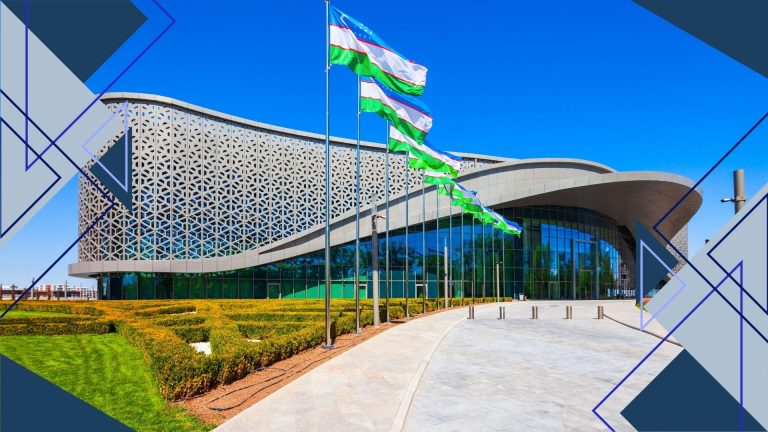
    More than 50 US companies gathered in Bishkek on 4 February for the second B5+1 Business Forum, the private-sector counterpart to the C5+1 diplomatic format linking the United States with Kazakhstan, Kyrgyzstan, Tajikistan, Turkmenistan and Uzbekistan, in what US Special Envoy Sergio Gor described as the largest and most comprehensive American commercial delegation ever to visit Central Asia.

    The forum, co-organised by the Kyrgyz government and the Center for International Private Enterprise, is designed to bring companies and policymakers together to identify investment barriers and propose cross-border regulatory changes. The Bishkek agenda centred on reviewing progress against the 21 private-sector recommendations produced at the inaugural B5+1 forum in Almaty in March 2024, and setting priorities for the next phase of work.

    Gor framed the forum as a deliberate shift in Washington’s approach to Central Asian engagement. “The private sector, not intergovernmental agreements, will become the key instrument of interaction,” he said, identifying electronic commerce, artificial intelligence, critical minerals, agriculture and transport infrastructure as priority areas. He also referenced the TRIPP transport corridor as a vehicle for connecting Central Asia through the South Caucasus to global markets — “a historic opportunity to strengthen economic integration and long-term prosperity across the region.”

    Kazakhstan’s Industry and Construction Minister Yersaiyn Nagassayev used the event to make the case for treating Central Asia as a single investment market rather than a collection of bilateral relationships. He noted that more than 600 US companies currently operate in Kazakhstan and said foreign investors increasingly assess the region as a unified commercial space with aligned regulations and investment conditions.

    Kyrgyzstan used the forum to highlight its domestic economic performance within that regional context. First Deputy Chairman Daniyar Amangeldiyev said Kyrgyzstan’s economy grew 11.1% in 2025, which he described as one of the highest growth rates in the region. Gor also met separately with Kyrgyz President Sadyr Japarov to discuss economic cooperation, trade expansion and investment attraction.

    The B5+1 is being positioned as a standing mechanism with an ongoing cycle of working groups, private-sector proposals and annual meetings, rather than a one-off event. Any updated recommendations from the Bishkek forum are expected to be published following additional consultations rather than issued as immediate communiqués at the event itself.

  • Bishkek Forum Highlights Transparency and Investment as Keys to Kyrgyzstan’s Mining Future

    Bishkek Forum Highlights Transparency and Investment as Keys to Kyrgyzstan’s Mining Future

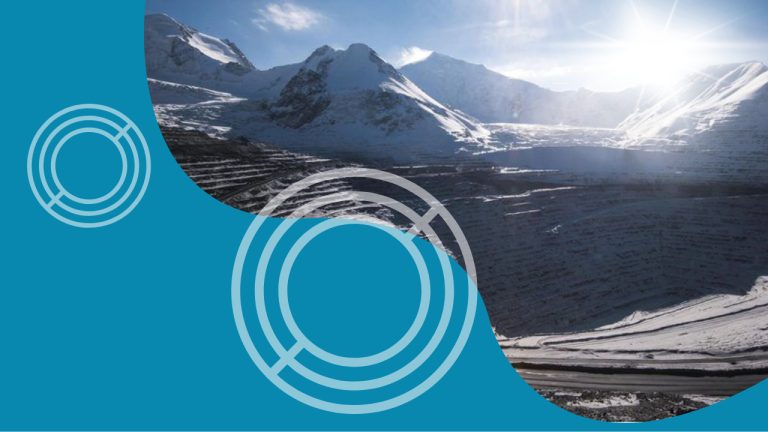
    Government officials, business leaders, civil society representatives, and international experts gathered in the Kyrgyz capital for the “Dialogue on the Extractive Industry: Investment, Transparency, Development” forum, aimed at fostering an open exchange on the future of Kyrgyzstan’s mining sector.

    The event, organized by the Ministry of Natural Resources, Ecology and Technical Supervision of Kyrgyzstan with the support of the World Bank, the Extractive Industries Transparency Initiative (EITI), and consulting firm Data Lab, focused on advancing reforms to make the country a competitive and sustainable hub for critical mineral investment.

    According to the ministry, the forum’s main goal was to build a framework for cooperation grounded in transparency, accountability, and sustainability — principles vital for developing industries tied to the global energy transition.

    World Bank representative Brian Land emphasized that Kyrgyzstan needs deep and sustained reforms to attract exploration and mining investments, while Arkady Rogalsky, a data consultant for the Bank, noted that the EITI standard remains essential for building trust between government, business, and citizens by promoting openness, anti-corruption measures, and equal rules for all participants.

    At the conclusion of the discussions, participants adopted a resolution outlining future priorities:

    • The government was urged to continue reforms and strengthen coordination in preparation for the EITI 2027 validation.

    • The private sector was encouraged to enhance corporate responsibility and environmental transparency while promoting equal opportunities.

    • Civil society was called to engage more actively in public oversight and dialogue.

    • International partners were invited to support Kyrgyzstan in advancing transparency and sustainable growth.

    Deputy Director of the Kyrgyz Geological Service Ruslan Kalilov stressed that citizen participation and transparency are the cornerstones of trust, adding that the mining industry can become a driver not only of economic growth but also of social development.

    A dedicated session addressed gender inclusion in transparency practices. Data Lab presented a gender analysis of EITI implementation, highlighting the importance of women’s participation in decision-making and leadership roles. Gulnura Toralieva, head of Data Lab, noted that the goal is to foster a “culture of transparency” based on respect and openness, not merely to produce compliance reports.

    The forum concluded with a joint commitment to prepare Kyrgyzstan for the 2027 EITI validation and to continue collaborative efforts to strengthen trust and sustainable development within the extractive industry. As participants agreed, when government, business, and civil society work in concert — the whole country benefits.